My Favorite Books of 2020
The following is a review of the favorite books that I completed last year. Some started the year before, or even earlier, but they go in for this year if I completed them this year. And, of course, I started some books in 2020 that I've yet to finish. I include most of the books that I read last year. There are two reasons for this. One, I read even more news articles and essays than usual to keep up with current events (and my goodness it was a busy year on that account). And, two, I'm a very selective reader. I usually won't start a book unless I'm confident that I'll be getting something worthwhile out of taking the time and effort to read it. Most of the books I will cite I've reviewed, although a couple of late reads haven't been reviewed yet and I don't tend to review well-known fiction.
So, on to the list.
Just Mercy: A Story of Justice and Redemption
This was an outstanding book, at once uplifting and horrifying. Uplifting as we read about Stevenson and his colleagues and clients struggling for justice. Horrifying as I read about the South (mostly) in the 1990s maintaining a legal system that seems little different than of Jim Crow days. One would have thought that the world of To Kill a Mockingbird would be long past, but not with many of Stevenson's cases.
The Principles of History and Other Writings in Philosophy of History
Okay, first, I read this book quickly before this, but this was a careful and complete reading. And I won't bore you with details, as this is clearly a work of limited interest to most people. But if you've any interest in thinking very deeply about history (and you've already read his The Idea of History), then this book is a must.
Earning the Rockies: How Geography Shapes America's Role in the World
This book now holds a special resonance with me. When I read it in early 2020, I had no idea that C and I would be moving later that in the year from Brooklyn to Colorado, now living where we can see Pike's Peak out our front windows. This made Kaplan's road trip (which continued on to San Diego) all the more poignant. But even if you don't make this trip, like all of Kaplan's work, it's a deep reflection on the State of America and the world. He combines a journalist's eye with a scholar's learning.
My review.
Secret Body: Erotic and Esoteric Currents in the History of Religions
This book, like the other books by Kripal that I've read, provides the intellectual equivalentof a roller-coaster ride. The book revolves around Kripal's personal story,which begings with him as a devout Catholic kid from a small town in southeast Nebraska, then becoming a monk, then becoming a scholar of Hinduism, then a chronicler of Esalen, and then becoming an explorer of the fringes of reality in contemporary America, which includes UFOs and other weird (paranormal) phenomenon. And he approaches all of these topics as an extraordinary scholar-explorer. My review.
The Return of Holy Russia: Apocalyptic History, Mystical Awakening, and the Struggle for the Soul of the WorldI'm an established fan of Lachman's work, so my appreciation of this work should come as no surprise. Lachman isn't a scholar, at least in the traditional sense of holding an academic post or by concentrating his inquiries on one limited topic. Perhaps he can best be described as an intellectual journalist whose main interest centers on aspects of the Western intellectual and cultural tradition that are no longer (or never where) on the center stage of Western intellectual life. In this book, he takes an intellectual journey east to Russia. For those, like me, who held only a partial and fragmented sense of Russian history, culture, and thought, this book is a great boon. Lachman, with his usual patience, thoroughness, and lucidity, provides a grand tour of Russian thought and culture from its Byzantine and Viking roots up to the present.
My review.
Men in Dark Times
Even bum times have some rewards. One upside for me was that I took advantage of a "pandemic" offer that opened up the Hannah Arendt virtual reading group to all comers.
(It's sponsored by the Hannah Arendt Center at Bard College.) This was the first work that we discussed when I joined. I'd read some of this book before, but not all of it. It's a book of biographical essays about a wide array of individuals: Karl Japters, Pope John XXIII, Isak Dinesen, Bertolt Brecht, and others. What more need I say: it's Hannah Arendt!
New Leviathan: Or Man, Society, Civilization, and Barbarism (Revised)This wasn't my first reading of The New Leviathan, but my first reading of this edition that Collingwood scholar David Boucher edited. It includes Boucher's introduction and some additional material. But one needs no excuse to read and re-read this great work. Its continued relevancy is apparent to anyone looking around our world today. My review.
Breath: The New Science of a Lost Art
Breath? We all breathe, so what's the big deal? Read this book and you'll find out. Like my choice of Scott Carney's book (below), Nestor is a hands-on investigative journalist who not only researches his topic, but he also dives into experiments and travels to out-of-the-ordinary places (such as the catacombs of Paris) to make his story vivid and complete.
The Golden Day: A Study in American Literature and Culture
Lewis Mumford is one of the great humanists of the twentieth century and a great explorer and expositor of the American experience. This early work about some of the greats of American literature and letters is a wonderful appreciation of those who shaped the American experience with their reflections, writers such as Emerson, Thoreau, Hawthorne, and Melville (whom Mumford helped rescue from obscurity).
My review.
Essays in Understanding, 1930-1954: Formation, Exile, and Totalitarianism
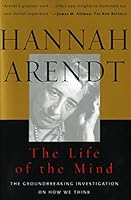
These are the early essays of Hannah Arendt that run from her days as a young scholar in Germany (with the prologue of a television interview in Germany from the early 1960s) on through 1954, shortly after she'd burst onto the American scene with her work The Origins of Totalitarianism. A must for any serious student of Arendt; i.e., anyone who wants to think deeply about politics. Alas, no review, too much that could be said! (Lame excuse.)
Collingwood's The Idea of History: A Reader's Guide
Perhaps you're not ready for a dive straight into Collingwood's
The Idea of History, or you want a considered overview and assessment (as I did), then this is an excellent choice.
My review.
Mavericks, Mystics, and Misfits: Americans Against the Grain
One perk of throwing one's book reviews onto the internet, not only on my blog, but also onto Goodreads and Amazon, is that occasionally an author will contact me to ask if I would read his or her book and share a review. If the book looks like it would suit me, I agree to do so, and this book is one such instance. And a happy one indeed. Hoyle gathers a series of biographical essays about a wide array of American characters, beginning with the early American divine Roger Williams to persons living among us today. The diversity of these characters (some known to me beforehand, some not) is counter-balanced by the sense that they are all Americans and a part of our shared American experience. The book provided an enjoyable and valuable read.
My review.
The Wedge: Evolution, Consciousness, Stress and the Key to Human Resilience
Like James Nestor (
Breath, above), Scott Carney is a hands-on investigative journalist who takes a thourough and intriguing look at the interactions of the human body and mind. A fun and informative read as Carney, like Nestor, travels far and wide to investigate his topic, and, like Nestor, he undertakes some exciting (and risky) ventures to provide first-hand insights into his topics. All in all, fun and instructive.
My review.
Angle of Repose
For a long time, C has described this novel as one of her favorites. So, as we contemplated our long trek in a rental truck from Brooklyn to Colorado Springs this past June, the audio version of this novel received a nomination for a listening project and was so selected. And what a great choice it was! We thought something that related to the American West would be most appropriate given that we were moving to the Mountain West. This novel provides a wonderful tale that flips back and forth between the late nineteenth century and the 1970s. Thanks to C for tolerating (nay, enjoying) another trip through this novel. No review from me, but plenty of takes are available of what is perhaps the best work of this outstanding novelist.
Commanding Hope: The Power We Have to Renew a World in Peril
In September I learned that Thomas Homer-Dixon was releasing a new book, and I bought it as soon as it was available. I'd read his book The Upside of Down and gotten through a chunk of his The Ingenuity Gap (see below). I've also read many shorter pieces and watched presentations by Homer-Dixon. He is, for my money, one of the most important voices addressing issues surrounding climate change and environmental degradation. In this book, Homer-Dixon asks--in a very deep and considered way--whether we can realistically hope to change the disastrous course upon which our civilization remains intent upon. Homer-Dixon trained as a political scientist, but his scope of expertise reaches into the natural sciences and the humanities. It's a bracing but also hopeful book.
Prairie Nocturne: A Novel
C and I decided to read to each other after we finished The Angle of Repose. This book, by another writer centered in the American West, Ivan Doig, is set in the 1920s. It's a fine tale. It's at the end of a trilogy, but that wasn't any impediment to our enjoying it.
One of Ours
Another read-aloud. We'd read aloud Cather's My Antonia years ago, and enjoyed it. In fact, C has read most of Cather's works, but not this one. So into it we went. This one begins in rural western Nebraska before the First World War and runs into the war (in more than one way). It was quite an engaging story centered on Claude, a young man coming of age and trying to find his place in life. The tale moves from the Nebraska prairie to New York harbor to a troopship crossing the Atlantic to the battlefields and villages of France. I was deeply impressed by Cather's mastery of so many characters and settings. An outstanding work.
The Ingenuity Gap: How Can We Solve the Problems of the Future?
As I mentioned above about Homer-Dixon's
Commanding Hope, I'd started his
The Ingenuity Gap long ago but never finished it. This year I took the opportunity to read it all the way through. It is worth it, to say the least. Alas, it's insights recorded a generation ago are still all too relevant to the world today.
My review.
The Grapes of Wrath
Another read aloud, and a great one. I'd read some Steinbeck before (The Pearl, in high school--it's a wonder that I can remember that far back), but nothing since then, so I really only know him by reputation. As it turns out, his reputation is well-earned. Not only is this a powerful, deeply moving tale, but the writing is quite extraordinary. In one brief chapter, Steinbeck describes a turtle crossing the road with the attention to detail of a great painter. And, of course, he moves his readers with the pathos and tribulations of his characters and the horrible injustices that they face. It's a portrait of America, complex and disturbing. A great book.
The Inevitability of Tragedy: Henry Kissinger and His World
One of the great traditions about the end of each year are lists of best books chosen by different folks. This book, and the following two, come from these lists. Thse three books allowed a strong finish to the non-fiction reading year. This book centers on Henry Kissinger, a figure who's been both honored and reviled, but who can't be ignored. Gewen delves into Kissinger's role and decision in Chile and Vietnam, but the most intriguing part of the book is Kissinger's relation to other Jewish refugees from Nazi Germany who thought deeply about politics. All were exiled from their native country (Germany) and all of them eventually settled and worked in the U.S. The three, Leo Strauss, Hannah Arendt, and Hans Morgenthau became seminal figures in American political thinking. (But only Morgenthau had a close relationship with Kissinger). An outstanding work of intellectual history.
My review.
The Price of Peace: Money, Democracy, and the Life of John Maynard Keynes
I described the preceding book as "an outstanding work of intellectual history." So is this work and the following one. A trifecta! In this work (review forthcoming), Carter traces the career of John Maynard Keynes and his most noteworthy intellectual progeny. One would not have thought it possible, but my appreciation for Keynes increased significantly having read this work.
Time of the Magicians: Wittgenstein, Benjamin, Cassirer, Heidegger, and the Decade That Reinvented Philosophy
The final entry for this year and another strong contender. These four individuals were the giants of German philosophy in the period from 1919 to 1929, and they taught or influenced some of the most important thinkers who came after them. I came away with a better understanding of the project of each of them. I now enjoy a greater apprecation of Wittgenstein; I still think Heidegger a stinker and Benjamin an enigma (I still don't grasp what others find valuable in him); and I have a new found interest in Cassirer. Cassirer is the oldest, most "bourgeois," and traditional of the four, and the one of the four whom I definitely intend to read more of. I suppose that says a lot about me. I suppose that I'm a philosophical fuddy-duddy, but so be it. I y'am what I y'am.
In reviewing my list, especially the last three books and my continued reading of Arendt and Collilngwood, highlights my interest in the period from the First World War to the conclusion of the Second World War. I'll be reading more of thinkers from this period and more about this period. This was a period of social, political, economic, cultural, and intellectual upheaval. Sound familiar? As I write this, the U.S. Capital is under siege from a mob. (History doesn't repeat itself, but it does rhyme. A cliche? Perhaps, but some truth in it, nevertheless.)
Now, for my top picks. In fiction, The Grapes of Wrath by John Steinbeck, with a strong showing by Stegner and Cather.
For the non-fiction, I will exclude consideration any works by Arendt or Collingwood, as they are sui generis. And I will avoid anything else too nerdy and pick something that most folks might read. Thus, the award goes to James Nestor's Breath, with Scott Carney's The Wedge a strong second and Bryan Stevenson's Just Mercy also a strong contender. You can't go wrong with any of these. If you want to take a deeper dive, read Thomas Homer-Dixon.
So, hope you all had a great reading year and on to 2021!