Wednesday, February 24, 2021

Thoughts for the Day: Wednesday 24 February 2021


1942 masterwork on political thought & crisis


26. 76. Historians to-day know that all history consists of changes, and that all these changes involve ‘reversals of fortune’. But the historical idea of a revolution implies that normally the course of history flows, as if by the Newtonian First Law of Motion, uniformly in a straight line: then it waggles, and you are surprised. This is how people really did think about history in the seventeenth and eighteenth centuries; it is one of the many signs that they did not know very much history.

Weimar’s collapse owed much to the weakness of a liberal-democratic conservatism.

Among the intellectual-made Utopian myths, none was weaker than the liberal myth of self-organizing market society. (Sorel might have added a later liberal myth, the myth of the end of myths.)

They [Nazi collaborators] felt (after they no longer needed to fear God, their conscience cleared through the bureaucratic organization of their acts) only the responsibility toward their own families. The transformation of the family man from a responsible member of society, interested in all public affairs, to a “bourgeois” concerned only with his private existence and knowing no civic virtue, is an international modern phenomenon.

Bismarck’s legacy was quite the opposite. Few statesmen have so altered the course of history. Before Bismarck took office, German unity was expected to occur through the kind of parliamentary, constitutional government which had been the thrust of the Revolution of 1848. Five years later, Bismarck was well on his way to solving the problem of German unification, which had confounded three generations of Germans, but he did so on the basis of the pre-eminence of Prussian power, not through a process of democratic constitutionalism. Bismarck’s solution had never been advocated by any significant constituency. Too democratic for conservatives, too authoritarian for liberals, too power-oriented for legitimists, the new Germany was tailored to a genius who proposed to direct the forces he had unleashed, both foreign and domestic, by manipulating their antagonisms—a task he mastered but which proved beyond the capacity of his successors.


Tuesday, February 23, 2021

Thoughts for the Day: Tuesday 23 February 2021


Sociology, with all of its limitations, can be serious and valuable: an exhaustive (and sometimes comprehensive) study of a society or of a definite portion of it.
sng: Sociology is anantomy to history's physiology; structure vs. process; narrative vs. analysis. Of course, many of the most important thinkers imcorporate and blend these dichotomies in their work.

THE IDEA THAT our mind does not only depict or reflect reality but also independently lends it a format was of course the central idea of Kant’s critical philosophy and his so-called Copernican revolution.

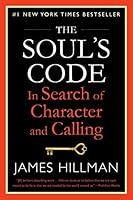
In Aion, Jung presented the idea that the archetypes evolve, and that we were currently caught in the shift from one “psychic dominant” to another—rather as Jean Gebser believed that we are moving from one “consciousness structure” to another. The new age, for Jung, would be one that would “constellate the problem of the union of opposites” and this would come about through the “individual human being, via his experience of the living spirit.”

A representation may be a work of art; but what makes it a representation is one thing, what makes it a work of art is another’ (PA 43).

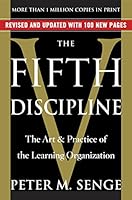
There are two distinct types of feedback processes:  reinforcing  and balancing.  Reinforcing  (or amplifying) feedback processes are the engines of growth. Whenever you are in a situation where things are growing, you can be sure that  reinforcing  feedback is at work.  Reinforcing  feedback can also generate accelerating decline—a pattern of decline where small drops amplify themselves into larger and larger drops, such as the decline in bank assets when there is a financial panic.

The best response is often "You're probably right."

Nothing is gained by arguing with someone over something that doesn't matter.

--Farnum Street blog


“I come from a family where my grandparents fled anti-Semitism and persecution. The country took us in and protected us. And I feel an obligation to the country to pay back. And this is the highest, best use of my own set of skills to pay back. And so, I want very much to be the kind of attorney general that you’re saying I could become. I’ll do my best to try to be that kind of attorney general.”

--Attorney General nominee Judge Merrick Garland


Monday, February 22, 2021

Thoughts for the Day: Monday 22 February 2021


Published in 1942. Collingwood's book on political thought & crisis. 


The process of civilization would thus be one of asymptotic approximation to the ideal condition of civility.

The formulation of a general concept presupposes definite properties; only if there are fixed characteristics by virtue of which things may be recognized as similar or dissimilar, coinciding or not coinciding, is it possible to collect objects which resemble each other into a class. But—we cannot help asking at this point—how can such differentiae exist prior to language? Do we not, rather, realize them only by means of language, through the very act of naming them? And if the latter be the case, then by what rules and what criteria is this act carried out? What is it that leads or constrains language to collect just these ideas into a single whole and denote them by a word? What causes it to select, from the ever-flowing, ever-uniform stream of impressions which strike our senses or arise from the autonomous processes of the mind, certain pre-eminent forms, to dwell on them and endow them with a particular “significance”?

Ralph Waldo Emerson said, “A political victory, a rise of rents, the recovery of your sick, the return of your absent friend, or some other favorable event raises your spirits, and you think good days are preparing for you. Do not believe it. Nothing can bring you peace but yourself. Nothing can bring you peace but the triumph of principles.”

“Knowing that I could be painfully wrong and curiosity about why other smart people saw things differently prompted me to look at things through the eyes of others as well as my own. This allowed me to see many more dimensions than if I saw things just through my own eyes.”

In Wealth and Democracy, the political commentator Kevin Phillips uses examples and statistics to show that the last time we had similarly large numbers of corporate scandals was in the Gilded Age (the last three decades of the 19th century)—precisely when the flawed doctrine of Social Darwinism was most popular among the American elites.


Sunday, February 21, 2021

Thoughts for the Day: Sunday 21 February 2021


2018 publication


The solution to the “economic problem” is not economic, it is social and political. Simply continuing to stoke the furnace of human greed is a dead end.

To be great, one must make great work, and making great work is incredibly hard. It must be our primary focus. We must set out, from the beginning, with complete and total commitment to the idea that our best chance of success starts during the creative process.

America, we like to think, has been specially “graced.” Set apart. The first child of the Enlightenment, it was “declared” to others as the harbinger of a new order. Yet this rationally founded nation was also deeply devotional, a redeemer nation. Reason and religion, which should have contended near our cradle, conspired instead. If we kept ourself isolated from others, it was to avoid contamination. If we engaged others, we did so from above, to bring light into their darkness. To deal with others as equals would betray our mission.

As we perform an act, make a choice, we believe there are options. Options, Personal Agency, Choices, Decisions—these are the catchwords Ego thrives on. But if we look up from the engagement for a moment and speculate, Necessity’s implacable smile says that whatever choice you make is exactly the one req uired by Necessity. It could not be otherwise. At the moment the decision falls, it is necessary. Before it is decided, all lies open. For this strange reason, Necessity guarantees only risk. All is at risk in each decision, even though what is finally decided upon at once becomes necessary.
For the ancient Greeks, hope was the personified spirit, or daemon, Elpis. She carried a bundle of positive and negative connotations, some like our modern understanding of hope but others resembling today’s expectation and foreboding. Classicists and other scholars have debated back and forth intensely whether the fact that Elpis stayed trapped in the jar was intended as a boon or bane for humanity, an eternal gift left behind to ease the pain of the escaped ills or, maybe, a perpetually taunting source of illusion and emotional trauma. My guess is that the parable is saying that hope is both: the ancient Greeks— or Hesiod, at least— understood that hope is ambiguous in its very essence.

It [the relationship of emotion & style] is a point to labour, as being the very purpose of writing a fully historical biography; one, that is, that manages to re-create how a life was lived and then takes its moral measure again, two generations later. The mind searches for a style (in Nietzsche’s usage), shaped and reshaped by certain passions, which it struggles to make congenial to thought, and applies this style to the comprehension of its experience and the knowledge it will yield. The great stylists of philosophy whom Collingwood briefly typifies in the book—“the classical elegance of Descartes, the lapidary phrases of Spinoza, the tortured metaphor-ridden periods of Hegel”—are stylish precisely because such are the accommodations these men found for their passions as these compelled and were harnessed by their thought.

The idea of separating a bubble from the water it floats in is nonsensical. The water around it defines the bubble. The bubble has no existence outside of the water. In the same way a human being is defined by its environment, and the idea of removing a human being from its environment is equally nonsensical. We do not exist outside of our environment.


Jung the Mystic by Gary Lachman


2010 publication 


When I finished this book and recorded my completion on my Goodreads account, I was immediately asked to rate it on their 1-5 star system. I don't give lower than a 3 (I'd likely wouldn't bother to start let alone complete a book that I didn't find at least solid, worthwhile), and this book is clearly beyond that baseline. So a 4 or a 5? Normally, I award a 5 if a book is a game-changer, one that significantly alters or expands my perceptions or beliefs about a topic. This requires a book to be both well-written and in some way unique. A 4 then is something less than a game-changer, but still rates as a high-compliment. (N.B.: I rate fiction on somewhat different criteria, and I less often review works of fiction.) I should note that I'd previously read Lachman's biographies of Emmanuel Swedenborg and Rudolf Steiner, and I gave them both a 4-star rating. How did the Jung book rate more highly? Let me explain. 

First of all, let's look at the full title and subtitle: Jung the Mystic: The Esoteric Dimensions of Carl Jung's Life and Teachings--A New Biography. Thus, when I opened and began this book, I knew, in a broad sense, what I was going to get. My reading record on Goodreads currently shows I've completed 14 of Lachman's books along with one in progress, several on deck, and numerous shorter pieces. I wouldn't keep coming back to his works if they weren't rewarding. In fact, on topics and persons related to the esoteric, occult, spirituality, subterranean philosophy, consciousness, and so on, I've found Lachman a thorough, reliable, and well-grounded reporter. This book doesn't vary from Lachman's modus operandi that I just described. I came to this book with a wide but somewhat shallow and incomplete knowledge of Jung. I realized as I read this book, that I'd read very little written by Jung himself (more about this in a bit), although I'd read a fair amount by "Jungians." Also, I'd never read a biography of Jung. Lachman's account provides a thorough account of Jung's life above and beyond its aspects that are related to the esoteric or occult, although the publisher wants us to know that the "bonus" of this particular biography is its willingness to delve into the "non-scientific" aspect of Jung's life and body of work that Jung was quite hesitant to share. Jung wanted, like Freud, to be thought of as a "scientist" and his work thought of as "science," so pioneers of psychoanalysis emphasized the aspects of their work that they hoped would receive scientific acceptance. But as Lachman points out about Jung, without Jung's openness and experience with the "paranormal" (my term, not Lachman's), Jung's thought would not have been the Jung we know. In this regard, Lachman's book provides a real service. In addition, because of his deep knowledge of the field, he can draw interesting parallels and comparisons between Jung and contemporaries like William James, Rudolf Steiner, and Gurdjieff, among others. 

Lachman also is fair and balanced (really!) in his treatment of Jung's strengths and foibles. Lachman does his homework both in Jung's writings and those writing in his tradition or about him. Lachman points out that Jung's prose can be, at least at times, prove quite dense and taxing, what Lachman describes as Jung's "Herr Doctor Professor" mode. Also, Jung had affairs with patients and he could at times be a real horse's ass toward those around him. He, like Freud, could become rigid with followers and dogmatic about his practices. That any of us--but especially persons of genuine genius--often fail in human relationships is no newsflash and doesn't undermine (necessarily) their body of work. The thoughts and the person are (at least in some measure) separate. And as Jung was, in some measure, an artist--a producer of beautiful thoughts and images--we know that there's always a measure of dissonance between the beauty and perfection of the art and the uglier realities of th artist (as it is with all of us). Lachman deals with both the beauty and value of Jung's work and his personal strengths and foibles with an admirable even hand (as I've come to expect of him). Lachman also dispenses with claims that Jung was a Nazi sympathizer after thoroughly reviewing the evidence of such claims. (Jung, but the way, was a Swiss national.) In fact, it turns out that Jung cooperated with Wild Bill Donovan and OSS (precursor to the CIA) during the war. 

At the end of this work, Lachman provides some brief but quite useful comments upon those who've continued the line of thinking initiated by Jung, including many of the women ("Valkyries," as someone dubbed them) who worked directly with Jung, as well as later and more independent figures such as James Hillman and Anthony Storr. And last but not least, Lachman explores Jung's Red Book, a journal that Jung kept around 1915 to 1930 but which wasn't published until 2009. This work didn't prove to be the Holy Grail of Jungian studies, but, according to Lachman's account, it did shed new light on Jung's project and obviously provides a valuable contribution to understanding the man and his project. 

Now back to this Goodread's rating. If I could award a finer-grained rating, I'd go with a 4.5, somewhat around the B+/A- designation. But, like my alma mater, a "B+" on the comments or on the professor's posted sheets was still just a "B" on the official transcript, and an "A-" was still an "A" on the transcript. The grader has to choose. What tipped me to an "A" for this book? In the end, I gave it the small boost it required because Lachman is such a consistent student (and teacher) in his writings, a "career achievement" bonus if you will. When I begin and complete my next Lachman book, I have little doubt that I'll find the occasion both an enlightening and enjoyable read, and that's merits an "A" rating for an author in my book. 

Gary Lachman, "A" student


Saturday, February 20, 2021

Thoughts for the Day: Saturday 20 February 2021


To be sure, every revolutionary movement has been led by the disinterested, who were motivated by compassion or by a passion for justice, and this, of course, is also true for Marx and Lenin. But Marx, as we know, had quite effectively tabooed these “emotions”—if today the establishment dismisses moral arguments as “emotionalism” it is much closer to Marxist ideology than the rebels—and had solved the problem of “disinterested” leaders with the notion of their being the vanguard of mankind, embodying the ultimate interest of human history.


Because of the undeniable relevance of these self-chosen properties to our appearance and role in the world, modern philosophy, starting with Hegel, has succumbed to the strange illusion that man, in distinction from other things, has created himself. Obviously, self-presentation and the sheer thereness of existence are not the same.


Because British conservatives avoided the dead ends and calamities of the nineteenth-century right in France and Germany, it is tempting to treat conservatism in Britain as a historic exception, perhaps a type all its own.

Rist says, “All human activities without any exceptions whatever involve some degree of assent. A totally non-voluntary act is an impossibility” (Stoic Philosophy, p.42). Seneca, for example, says “impulse never exists without the mind’s assent” (De Ira II.4 [Long and Sedley, The Hellenistic Philosophers, vol. 1, p. 419]). But one might wonder about the phrase “all human activities without any exceptions.”

The idea that biological properties and the structure of organisms arise from lower-level entities, but are novel and irreducible to the particulars from which the whole has emerged, became an increasingly significant theme in biology and in philosophy of biology by the late twentieth century. Arguments of emergence and complexity became important, too, in organizational management and systems theory, in which Polanyi’s work found new applications by the 1990s. [From the forward by Mary Jo Nye.]
You’re not obligated to win. You’re obligated to keep trying to do the best you can every day. 
– Marian Wright Edelman

From @HeatherCoxRichardson quoting and writing about President Joe Biden: 

Democracy is under assault around the world, he said. “We are in the midst of a fundamental debate about the future and direction of our world. We’re at an inflection point between those who argue that, given all the challenges we face — from the fourth industrial revolution to a global pandemic — that autocracy is the best way forward, they argue, and those who understand that democracy is essential — essential to meeting those challenges.”

“… [D]emocracy will and must prevail. We must demonstrate that democracies can still deliver for our people in this changed world. That, in my view, is our galvanizing mission.”

. . . . 

In his speech, Biden emphasized not just the importance of democracy, but also how much work it is to keep it. “Democracy doesn’t happen by accident,” he said. “We have to defend it, fight for it, strengthen it, renew it. We have to prove that our model isn’t a relic of our history; it’s the single best way to revitalize the promise of our future.”

He did indeed sound like FDR when he concluded: “if we work together with our democratic partners, with strength and confidence, I know that we’ll meet every challenge and outpace every challenger.”

. . . . 


Friday, February 19, 2021

Thoughts for the Day: Friday 19 February 2021


2018 publication


What is this strange need to lead, and the equally strange one to follow? What is this will to power? Why do we pursue it? Must it always corrupt? Charismatic leaders cast a spell over their followers in the same way that a magician casts one over those he wants to enchant. The power of the image, of glamour, of one’s self-confidence, is at work in both—as it is in the confidence trickster. The medium is the imagination, whether in its traditional forms or in its new electronic version.


Mazzini [19th-century Italian exponent of Italian unity] was an exponent of political style, an artist depending on the incantatory effect of words like ‘God’, ‘people’, ‘republic’, ‘thought’ and ‘action’ – terms that demanded submission rather than cogitation.


In any society which recognized only external goods, competitiveness would be the dominant and even exclusive feature… We should therefore expect that, if in a particular society the pursuit of external goods were to become dominant, the concept of the virtues might suffer first attrition and then perhaps something near total effacement, although simulacra might abound.

If defense has a clear advantage over offense, and conquest is therefore difficult, great powers will have little incentive to use force to gain power and will concentrate instead on protecting what they have. When defense has the advantage, protecting what you have should be a relatively easy task. Alternatively, if offense is easier, states will be sorely tempted to try conquering each other, and there will be a lot of war in the system.


It is much harder and more complicated to build something, as the Democrats are trying to do, than it is to destroy something. This means it will be harder to give a clear daily picture of the Biden administration than it was of the previous administration. The status of the $1.9 trillion coronavirus relief package, for example, is not clear right now because it is being marked up in committees, as such a bill should be. While the contours are likely what they were when they went in, what will emerge and then be put into a draft bill is not yet clear enough that we can talk about it definitively.

--Heather Cox Richardson