Showing posts with label Bernie Sanders. Show all posts

Friday, February 7, 2020

Pete Buttigieg: First to the Post in Iowa & the BIG WINNER

Big winner
On one hand, a candidate and his (in this case) supporters declaring a victory in the Iowa caucus is like saying that your horse won a race by nosing-out the closest contender at the first pole. Nice, but the race has a long way to go, and the other horses are still running hard and expect to close the gap.

Bernie Sanders claims that he received the most votes (I've seen no press reports to confirm that), but this is the thinking that brought us President Al Gore and President Hillary Clinton--oh, wait, that's not how the system works (disliked it as one may). Neither does the Iowa caucus work as a candidate plebiscite (although that's the way its portrayed). Iowa Democrats and Republicans choose delegates to go on to county conventions and then to the state convention, which then selects delegates to the national convention. Indeed, the horse race isn't even over yet in Iowa! (But the media hates to have to deal with subtlety.)

The "winner" by the official count is Pete Buttigieg, by a whisker over Sanders. But in the larger sense, this outcome (for all the fuss about the speed of learning the results) proves a huge win for Buttigieg and a real political earthquake. He just beat (to the post, as I said) three sitting Senators and a former Vice-President. Sanders, his closest rival, has been in Congress since 1991 and campaigning for the nomination since 2015. Sanders has a lifetime--a long lifetime at 78 years of age--in politics and a committed core of supporters. Indeed, Sanders is more a prophet (of democratic socialism) than he is a politician. (On this distinction, see this post that channels Garry Wills on the topic.) One even discerns that Sanders has more faithful than he does supporters. And, of course, Biden, too, at 77 years of age and decades in the Senate (1977-2009) and eight years as vice-president, has the greatest name recognition, and he's still the leader in national polls (which count for nothing in this process except as another form of bragging rights). Yet, Biden finished a distant fourth. Senator Klobuchar from neighboring Minnesota finished a distant fifth. And Elizebeth Warren, from Massachusetts, which Dems seem to love (Kerry, Dukakis, and--a winner by a whisker--JFK (thank you, Mayor Daley)) finished about 8 percentage points (with less than half the delegates) behind the leaders Buttigieg and Sanders (who essentially tied in delegates).

And this is not to mention those who either didn't get out of the gate or who scratched from the race completely. How in the heck did Buttigieg, whom almost no Iowans had ever heard of before 2019 (or even 2020) get to the top over such well-known and well-funded rivals? Name recognition, piles of cash, and long-standing connections usually carry the day.

Let me quote from Storm Lake Times (Iowa) newspaper editor Art Cullen, who wrote in the Washington Post about Buttigieg's perhaps not-so-surprising success in Iowa:

Pete Buttigieg surged from nowhere to the top of Iowa’s caucus race, fair and square, by working places most candidates forgot or wrote off.
In late January, the former mayor of South Bend, Ind., took his rural Rust Belt revival message to places like Orange City, Iowa, a place where books about homosexuality had been burned. He drew a crowd of more than 200 in that deep-red town of 6,000 in a county that voted 6 to 1 for Donald Trump. They had seldom so much as seen a Democrat before. 
Mayor Pete stumped Storm Lake, my town of about 10,500, four times. He twice called me for interviews, in which he candidly discussed his views on race and owned the actions of South Bend’s police department. He talked about how immigrants had revitalized both his Indiana town and Storm Lake. About how agriculture could lead the way out of our climate crisis by capturing carbon. About how we can treat each other with decency. 
That’s how you win Iowa. You show up. You understand the issues and you press the flesh in 99 counties. You meet real people and hear about real concerns (not that much about impeachment). And then you organize.
The horse race is far from over, but this 38-year-old from South Bend may yet pull off an upset over his more established rivals. The Iowa Democrat Caucus gave us the first woman to receive a major party nomination (and winner of the popular votes for president, the participant's trophy) and it gave us our first African-American nominee and president. It may prove to have been the first marker for our youngest president (among his many other potential firsts). Wow!

Wednesday, January 29, 2020

Running Against the Devil: : A Plot to Save America from Trump--and Democrats from Themselves by Rick Wilson


When, as in a John LeCarre novel, an agent from the KGB comes to the West and offers all the goods, one must pause. Members of the CIA or MI6 must ask: "How can we know that we can trust this guy, that what he's the real thing and not a plant for sowing misinformation? Are we being played? Perhaps he's a mole. Why should we trust someone who's done us in so many times in the past?" Democrats should be asking these questions of Rick Wilson, a Republican operative since the 1980s who's been slaying Democrat candidates for almost three decades. "Why should we trust him, the dirty, stinkkin' Republican?" 

Wilson realizes that he needs to prove his bona fides before anyone will heed his plea, and he has done so by publishing a previous book by the title Everything Trump Touches Dies: A Republican Strategist Gets Real About the Worst President Ever (2019 update) and by spending about the first 75 pages of the current book bad-mouthing (even foul-mouthing) Trump. His public recantation of Trump establishes his Never-Trumper credentials. He's proven--at least for the 2020 election--that he wants to see the Democrats vanquish Trump and his ilk. One may suspect that he won't retain this attitude if the Republican Party returns to a vision of center-right normalcy and fidelity to constitutional and democratic norms. But for now, Wilson and those steadfast few who've remained Never-Trumpers have earned their place in the fight against this nefarious foe of constitutional government, the rule of law, and democratic norms. 

Indeed, I became impatient with his recitation of Trump's almost innumerable sins: tell me something I don't know. It's like a KGB agent spending his de-briefing explaining how bad life is inside the Soviet Union. We already know that, let's get to giving us your playbook. When Wilson gets down to giving us his tradecraft and analysis, the message he provides isn't so secret. In some sense, it's already in the open but Democrats don't want to believe it. Here's an executive summary: 

1. The president is elected by the Electoral College and only the Electoral College. To say that Hillary Clinton or Al Gore won the popular vote is like commenting upon how big, bright, and shiny your runner-up trophy is. It means nothing. All power goes to the winner of the Electoral College. 

2. A corollary of the first point: the election will be won or lost in 15 states that could go either red or blue. The Democrat nominee must kiss California and New York and all the loyal blue states good-bye at the convention and tell them "I'll be back right after the election." After the nomination up to Election Day, the nominee will need to focus--even obsess--on 15 states. 
3. For the record, I list the states Wilson identifies as controlling the outcome of the 2020 election. I list them in their order of Electoral College magnitude. I include the 2016 winner and electoral votes:

  • Florida (T-29)
  • Pennsylvania (T-20)
  • Ohio (T-18)
  • Georgia (T-16)
  • Michigan (T-16)
  • North Carolina (T-15)
  • Virginia (C-13)
  • Arizona (T-11)
  • Minnesota (C-10)
  • Wisconsin (T-10)
  • Colorado (C-9)
  • Iowa (T-6)
  • Nevada (C-6)
  • Maine (C-4)
  • NewHamphsire (C-4)

Of these 15 states, Trump carried nine of them in 2016 for a total of 141 electoral votes. Clinton received only 46 electoral votes from the in-play states. Wow. For the Democrats to beat Trump in 2020, they will need to drastically change this list and hang-on to their other states. But as Wilson notes, most Democrats will crawl over broken glass to vote against Trump, so there's little reason to believe that solid blue states will defect. 

3. Democrats must focus on winning the Electoral College. (This mantra repeats throughout the book.)

4. This upcoming election will not be like Federer-Nadal tennis final with the contestants holding a deep respect for one another and the game of tennis while playing under carefully delineated rules governed by an umpire, line-judges, and infallible re-plays. Oh, no! It will be a  knife-fight with Butch Cassidy rules--it's the only way Trump fights; it's the only method by which he can win.  If the Democrat nominee doesn't come ready for a knife fight, he or she will be gutted before realizing what happened. 

5. Like all presidential elections involving an incumbent, the election will be a referendum on the incumbent. The election will have one issue: Donald Trump. The best thing that the Democrat can do is run against Donald Trump: his corruption, his ineptitude, his ignorance, his cruelty, his lying. Details about issues may play for some in the primaries, not in the general election. No voter reads the party platform and decides how to vote based upon it. Most voters are only marginally informed and are motivated by feelings like trust and fear. Trump feeds on fear, Fox News feeds on fear. The Democrats must neutralize the fear factor by promoting a candidate who disarms fear and instills trust. Wilson sums-up his point:  

This race has absolutely nothing to do with policy. This race is about Trump and a competing candidate’s personality and presentation, not about soon-forgotten policy papers and the administrivia of running a government. . . . Policy is a luxury good in this election because this race is against a man, not a party, a platform, or an ideology. Democrats are fighting a cult and a cult leader, until they realize that the referendum against Trump is about Trump, he has the winning hand.

6. Democrats gained control of the House by winning over suburbanites, women, and disaffected Republicans. The Democrat nominee can't afford to alienate these groups. Also, there are Obama-Trump voters out there who can be won back. Farmers, businesses, and wage-earners have all taken economic hits with Trump's trade shenanigans, the stock market and overall favorable economy news notwithstanding. These folks, too, can be won back. But the Democrats need to figure out one big problem. 

7. The Culture Wars. Democrats will have to set aside long-running habits, accentuated by some of late, toward ideological purity. The great temptation is to mirror the Republicans who have exiled (as all revolutionaries do) those who might challenge the most extreme ideological purity, who might taint the revolution by questioning the leadership or confusing the masses. Instead, the Democrats will need to find a way to defuse topics like abortion, immigration, guns, and other like emotional issues. What might this entail? Wilson makes some suggestions that don't seem unreasonable. Democrats must find a way to make anti-abortion, immigration, and "2nd Amendment" voters realize that Democrats won't take radical steps on these issues but will act in ways that are reasoned and sensible. (By the way, such positions of a moderate, reasoned nature will sell well with most folks who self-identify as Democrats.) Wilson suggests that Democrats will need to change some minds and that what sells in Berkeley, Boston, and Bronx-Queens won't sell so well in the heartland areas of the swing states. Dems are going to win in Berkeley, Boston, and Bronx-Queens (AOC's district) in any event. Wilson makes his point: 

What do you think sells in western Pennsylvania? Mike Rowe, or some stern-faced, super-woke, commissar telling a white working-class guy he’s got to give up eating meat, driving a truck, and hunting? You may want him to, but how well do you think that sells? The guy who used to make $37 an hour in a union auto-parts manufacturer doesn’t give a flip flying f#@k about climate change, genderless bathroom mandates, or paper straws. He does care about getting and keeping a real job that can support his family and--stop me if you’ve heard this one before – his guns and religion. 276

I could go on at length about various other perspectives and recommendations, but this sampling should provide a sense of Wilson's offering. He writes in blunt words that are at times rough and scatological. One non-scatological example: "Trump loves digital advertising. He loves it like a fat kid loves cake." Certainly a vivid image, but perhaps not the best register of discourse in a book about a very serious topic. He describes his recommendations as "tough love," and one has to take it for what it's worth. But I certainly believe that Democrats ignore him at their peril. 

And one final topic before signing off. Wilson doesn't say much about the Democrat field of candidates. He does describe Pete Buttigieg as " a man who is demonstrably smarter than most of the field," an assessment that I agree with. Of Elizebeth Warren, he writes: 

For being a clunky and terrible candidate in a number of areas . . . Warren has gotten closer to a winning message, broaching the ideas that government doing socialist-adjacent things doesn't have to be socialist itself. It's smart politics. My conservative eyebrows are raised. As an ad guy and message strategist, I think she's closing in on something that resonated with Trump base the first time around--that the little guy without an army of lobbyists in Washington, D.C. gets f@#%ed and everyone else gets rich. I hate to admit it, but she's not even wrong. 
 
This is a message window for the Democrats if they can just skip plying "The Internationale" at the convention. 

But Wilson expends the most ink about any candidate (other than Trump) on Bernie Sanders. Because I'm planning on writing a blog to come about the Sanders phenomenon (he's not just a candidate, he's a phenomenon), I'll keep it short. Here's a part of what Wilson writes about Sanders: 


In a year when Democrats had a stark, bright-line ideological contrast before them--sane, stable-to-a fault HRC vs Donald F@#$%^&* Trump--one group stood out in switching their party preferences radically: the Bernie bros. Somewhere between 10 and 15 percent of Sanders voters switched their preferences on Election Day to Trump. These aren't principled progs; they’re arsonists. 

Bernie is Trump re-election insurance.  

If he's the nominee, I say to my Democrat friends, get ready to lose forty-five states. 

Now the first thing to say about this quote is that the only gravity that binds Wilson and Sanders is the Dark Star, Donald Trump. In normal times they are light-years apart in their thinking about political economy and travel in entirely separate orbits. Thus, one can argue for all his tell-it-like-it-is-tough-love, Wilson's judgment is warped by his ideological animus toward Sanders. But because Wilson isn't the first, nor certainly the last, to raise these points, his words to give me pause. After all, what if he's correct? Well, that's a minefield to traverse in a later blog. 

Tuesday, May 10, 2016

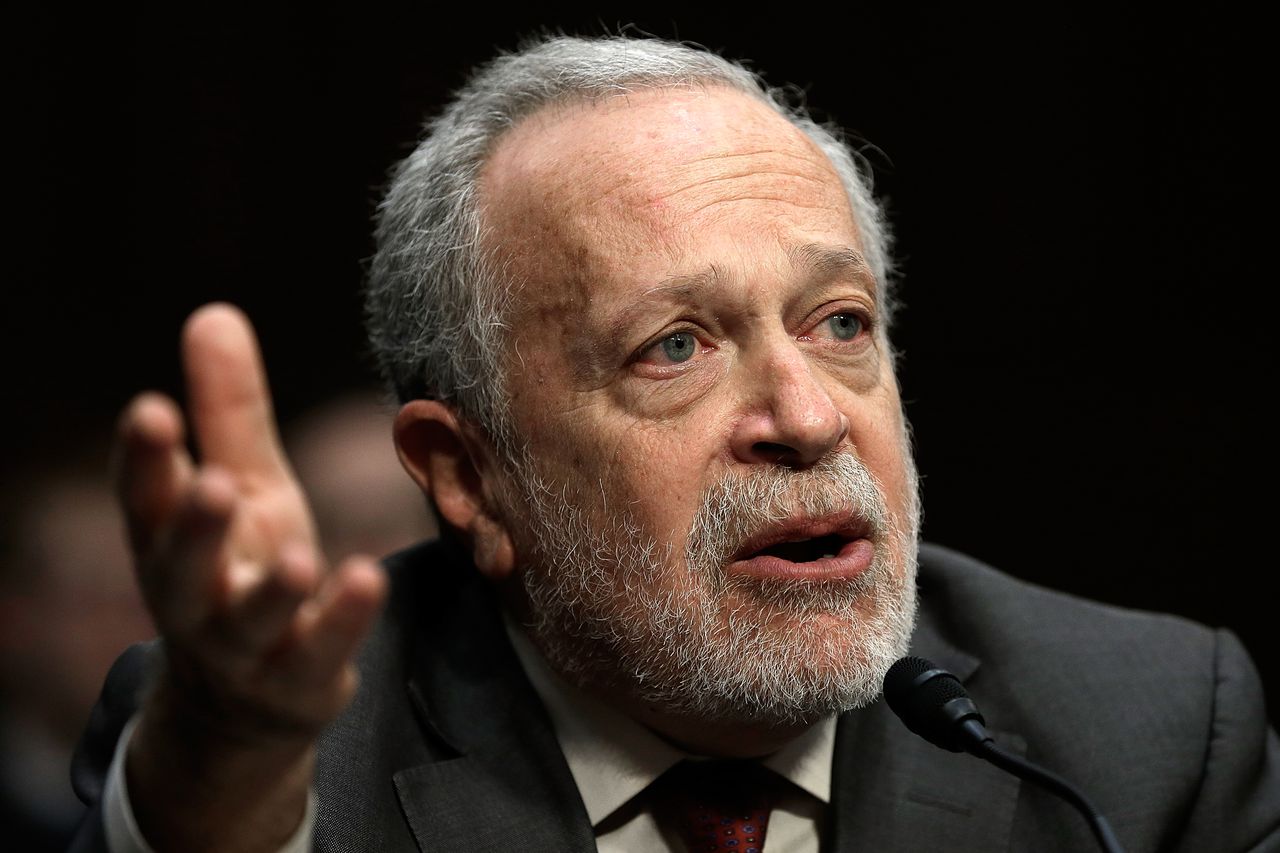
Ezra Klein, Robert Reich, and Theda Skocpol

Ezra Klein
Ezra Klein, founder of Vox.com & now podcaster
Ezra Klein of vox.com has launched a podcast featuring interviews a variety of guests, and I've listened to two interviews so far, Robert Reich and Theda Skocpol. I recommend both, and based on these samples, others will likely prove worth listening to. And since these two interviews proved informative and provocative, they merit some comments.

Robert Reich: progressive, Sanders supporter, Clinton knower
Robert Reich served as Secretary of Labor during Bill Clinton's first administration. For this, he is perhaps best known. During the podcast, I learned that he went on a date with Hillary Clinton (she at Wellesley, him at Dartmouth), he worked for Robert Bork (Yale Law connection), and he was friends with John Kenneth Galbraith. Each point merits some further consideration. As for Galbraith, he was very tall, while Reich is very short. (I can personally attest to this as he campaigned in Iowa City for Bill Bradley in 2000, speaking at fellow lawyer Jim Larew's office. When Reich arrived, I could only tell by the slight commotion. He was hard to see. But, what he lacks in physical stature, he makes up in intelligence and general panache.) As to Bork, he liked Bork personally, but he disagreed with him about politics and antitrust. (He worked for Bork at the DOJ on antitrust issues.) And finally, despite what seems to have been a pleasant introduction to Hillary and a later friendship with Bill, Reich has endorsed Bernie Sanders. What gives?

Die-hard anti-Clinton folks or HRC conspiracy types will be disappointed. He shares not anti-Clinton animus.Instead, he believes that Sanders represents a movement that can transform American politics, and Reich argues, our politics needs some serious transformation. Here's where his thoughts become thought provoking and bear some discussion.

I agree with Reich that the growing inequality in society and the distorting role that big money plays in our politics are of primary concern. Both of us want to remedy this situation. He argues that Sanders represents change, while HRC represents the best management of the status quo. (By the way, he labels Hillary "a thousand times better" than any Republican alternative.) He argues that like Obama before her, HRC would work within the system and make more marginal changes. He believes that Sanders can bring about much more.

I disagree. He cites, for example, FDR as a role model. But FDR, who brought about a major realignment of American politics, did not do so as the head of a movement, but as a cautious, calculating, and canny politician. FDR would throw bones as to the right, such as austerity and balanced-budget nonsense (that extended the Depression as a consequence) while he crafted significant changes in our laws and political landscape. Lincoln, too, was a cautious, calculating, and canny politician who, like Roosevelt, was careful not to get too far ahead of this electorate or the Congress. (Consider Spielberg's film about Lincoln and the 13th Amendment, as well as Emancipation, as examples of this.) As Garry Wills argues, prophets, like Martin Luther King, Jr., or other activists, get out ahead on issues, politicians follow behind and put things in order. We need both. As head of a cause or movement, Sanders has hit upon a nerve, showing a base for progressive change (as Trump has discovered a base for a nativist populism). The energy and spirit of the Sanders movement are vital and could crucial to progressive success, but a movement alone can't get things done. Sanders, as a governing politician, would prove wonderful on the ideas and speeches, but weak on getting legislation enacted. (Sanders displays shortcomings on the realities of getting legislation passed, and progressives like Paul Krugman have had to call him out on this.) The president is the person who must work with Congress to get real results. Congress, by its very nature, makes sausage; it's not gourmet, but it feeds people. Sanders offers fillet minion, but Congress couldn't serve fillet minion in a million years. It didn't' during the New Deal, the New Frontier, the Great Society, or at any other time. (They do, some of them, seeming willing to try to serve pie-in-the-sky, but let's pass on that.)

Reich makes as good a case for Sanders as can be made and does so without any anti-Clinton animus, but it falls short, as does the Sanders candidacy.

Theda SkocpolTheda Skocpol, whom Klein also interviewed (separate podcast), is a respected political scientist at Harvard. Her insights, from political science as a discipline to the Tea Party to right-wing American politics in general, are insightful. But one thing I take from her and from many other sources is key. While Donald Trump is a joke with the potential for a disaster, the people who have voted for him have valid concerns. Not well expressed or understood (thus their susceptibility to Trump's demagoguery), but real. Elites and political parties this group at our peril and to the peril of our Constitutional system.

Ezra Klein did a good job with both interviews, and I look forward to more of them.


Thursday, April 21, 2016

Eduardo Porter Overstates His Case

Eduardo Porter in “Liberal Biases, Too, May Block Climate Change” blasts those on “the left” who question the use of nuclear power to mitigate the discharge of carbon that contributes to global warming. His allegation and its premises require careful consideration.

Porter aims his case against those on the left who oppose or doubt the need to adopt nuclear power as the “the only technology with an established track record of generating electricity at scale while emitting virtually no greenhouse gasses.” Porter quotes Netscape founder Marc Andreessen that “the left is turning anti-science” and has become “reactionary”, with Andreessen citing resistance to the use of genetically modified foods and the expression of doubts about the displacement of workers by technology as two examples a “reactionary” trend. Porter, by citing the quote (and in the remainder of the article) apparently shares this view. Porter cites survey results that 65% of members of the American Association for the Advancement of Science support nuclear power. He fails to reveal or discuss the grounds upon which the 65% supporting the use of nuclear energy or the 35% who oppose it base their decisions. Porter even notes—suggesting, I think, that we (liberals) should be shocked—that more Republicans support the use of nuclear power than Democrats.

While Porter remarks that climate change denial as espoused by Senator Cruz is “absurd,” he counter-balances Cruz’s absurdity by stating: “But Bernie Sanders’s argument that “toxic waste byproducts of nuclear plants are not worth the risks of the technology’s benefit” might also be damaging.” Porter fails to follow-up on this quote by explaining how this concern isn’t legitimate. Instead, Porter moves into a discussion of “our scientific and technological taboos”, suggesting that Sanders statement is an example of yielding to such a taboo.
Porter’s argument turns toward issues like evolution and general relatively (Einstein’s theory) as examples of how beliefs and interests affect a person’s willingness to adopt a scientific proposition. No doubt that this is true, but it’s not equally true or consequential for every possible scientific theory or decision based on a theory. For instance, Christian fundamentalists question or deny the theory of evolution because it conflicts with a literal reading of the Bible. Porter compares this with those on the left “who said scientists either disagreed or were divided on the safety of storing nuclear waste”, suggesting that this, too, is a belief motivated by bias against science based on some other beliefs. Porter ignores the 35% of members surveyed by the American Association for the Advancement of Science referenced earlier who didn’t support building more nuclear plants—or are those scientists “the left” in that group who are subject to reactionary taboos?
In another balancing point, Porter notes that the right favors smaller government and free enterprise and are therefore motivated to deny climate change because doing so would require a modification of those ideological beliefs. Fair enough, but then look at the other side:
On the left, by contrast, people tend to mistrust corporations — especially big ones — as corrupt and destructive. These are the institutions bringing us both nuclear power and genetically modified agriculture.
Porter seems to suggest that we should be asking ourselves “why on earth would someone adopt such a foolish attitude about big corporations? What they told us about the safety of cigarette smoking and their concealment of global warming evidence was so honest, forthright, and helpful to all of us!”. (I leave other examples to your sound recollection.)

Porter concludes with this peroation:

Fixing it [what exactly?] won’t require just better science. Eliminating the roadblocks against taking substantive action against climate change may require somehow dissociating the scientific facts from deeply rooted preferences about the world we want to live in, on both sides of the ideological divide.

For Porter it’s simple: just follow the scientific facts.

Now I should put my cards on the table.

I’m skeptical but not actively opposed the expanded use of nuclear power. As someone who’s been around for almost all of the nuclear age, including fallout from atomic testing, Three Mile Island, Chernobyl, and Fukushima, I have a profound concern about the harm that nuclear energy can unleash, as well as an appreciation of its potential benefits.

I understand that if we drastically reduce the use of carbons for fuel, we could suffer a reduction in the amount of energy available to us in our daily lives. Generally speaking, the greater the energy supply, the more complex the society, and a more complex society allows a better quality of life. Thus, I take a reduction in the energy available to society as a threat to our collective well-being if taken to an extreme. Of course, conservation, walking, and taking public transportation, for instance, are examples of reducing demands on the energy grid that won’t hurt—and make actually improve—the quality of life. But if taken too far, we all will suffer. As for alternative energy sources, they remain a hope, not a reality. Thus, we spurn any source of energy at our peril.

But the critique of Porter’s argument must go to a deeper level, addressing the conceptions of science, engineering, and risk assessment upon which Porter bases his argument.

Porter notes that science changes its opinions continually and sometimes drastically. Science and its practical application in engineering are human projects subject to human strengths and weaknesses. While science has continued to push back the barriers of ignorance and engineering has allowed the creation of increasingly sophisticated structures and systems, both still carry the curse of human fallibility. Science knows a lot and really smart scientists know that we are ignorant of a great deal more, both because of the inherent limitations of the human thinking and as a result of the biases that we all struggle with. As to creations that we build, we create amazing things, and we create catastrophic failures. Having seen what failings nuclear plants can suffer as a result of Nature’s unpredictability (Fukushima) or as a result of human flaws of design and operation (Three Mile Island and Chernobyl), caution should be our guide. While we can push back against the tide of ignorance and failure, we can never fully defeat it. Science and engineering are not monolithic gods to whom we should bow before in a new idolatry. Instead, they are human enterprises that must remain subject to an awareness of  our limitations. Hubris is the greatest enemy of science and engineering; it always has been, and I suspect this will remain so.

But to warn of hubris on the part of science and technology in believing that these enterprises can move beyond failure and ignorance is a meta-perspective. We need to address the particular problem of nuclear energy. As the advisability of using nuclear power, we should ask about the specific risks and benefits. Having spent more than three decades as a practicing lawyer—and because I believe that certain legal principles provide a wide-ranging and sensible set of guidelines—we should ask about issues of liability if problems with a nuclear plant develop (and not limit ourselves to fuel waste). What liability insurance coverage does a nuclear plant in the U.S. receive? What is required? How does an insurance carrier measure the risk? How is the likelihood of risk measured? How is the magnitude of damage measured? What standard of liability applies? Strict liability (liability regardless of fault, say because of an earthquake or tsunami) or ordinary negligence (a foreseeable risk that a reasonable person in like or similar circumstances could have avoided). Are there any caps on damages? In other words, what is the largest loss that any carrier or guarantor (i.e., taxpayers) would be expected to pay out? What are the other available options and how do they compare on these and other relevant criteria, such as technical feasibility? And last but not least, what Black Swans lurk in the field? Or in Rumsfield language, what are the unknown unknowns? If the Deepwater catastrophe did x amount of harm, what can we expect from the next nuclear disaster?

There are some answers to these questions. The U.S. nuclear industry does have insurance coverage, although it's backed up by the government. But I question (and don’t presume to have a final answer) whether the appreciation of the risks has been appropriately addressed. Before I’d say yea or nay to further plants—and without any concern for Porter’s imagined taboos—I’d have to review and consider these risks and the available alternatives.  


The point of this exercise is not that Porter is wrong to argue in favor of using nuclear power to ameliorate the carbon loading that increases the likelihood of catastrophic climate change. This argument can and should be made. However, to argue that those who question the wisdom of using nuclear power are Luddites who refuse to worship the god of Science and Technology is a calumny. It presents a naïve view of science, and it fails to consider the demanding issues of weighing risks and benefits. We can and must do better. Mr. Porter should do better by his readers.