Showing posts with label Chris McDougall. Show all posts

Thursday, June 17, 2021

Thoughts for the Day: Thursday 17 June 2021


Greeks ancient to contemporary & Paddy Leigh Fermor 


Instead of bowing down to saints and miracles, the Greeks worshipped problem solvers and hard how-to. They understood the difference between heroism and impulse, and they devised an easy, two-step test for telling them apart: 1. Would you do it again? 2. And could you?

Just as the original sense of the word ‘cause’ is what I have called the historical sense, according to which that which is caused is the act of a conscious and responsible agent, so the original sense of the word ‘necessary’ is an historical sense, according to which it is necessary for a person to act in a certain way: deciding so to act and acting therefore freely and responsibly, yet (in a sense which in no wise derogates from his responsibility) ‘necessitated’ to act in that way by certain ‘causes’, in sense I [#1] of the word ‘cause’.
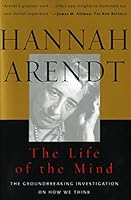
The decision the will arrives at can never be derived from the mechanics of desire or the deliberations of the intellect that may precede it. The will is either an organ of free spontaneity that interrupts all causal chains of motivation that would bind it or it is nothing but an illusion.

As the accompanying graph shows, the only fats that could be found in any American kitchen up until about 1910 were those that came exclusively from animals: lard (the fat from pigs), suet (the fat from around an animal’s kidneys), tallow (a harder fat from sheep and cattle), butter, and cream.

He [Walter Lippmann] further identified the rupture between past and present—in the democracies as well as the dictatorships—with two revolutionary developments in modern politics he believed to be “wholly without precedent in history.” First was the active and self-conscious participation in government by “the masses of men,” making of “modern government in our Western World, even under the dictatorships,” something of “a daily plebiscite.” The legitimacy of any government thus had come to depend on its ability to solve problems and formulate policies to which the governed would offer consent, both active and passive.


Saturday, February 13, 2016

Favorite Books Read in 2015

Now that the real new year has arrived, the Year of the Monkey, here in Vietnam and back in China, it’s time to review the best books I read in 2015 (using the Western calendar for my cut-off date).  So here are some favorites in a variety of categories.

Favorite Re-read Fiction: TheName of the Rose by Umberto Eco (English translation 1983). I’ve read this book several times before, but I thought—and then confirmed—that it would be an excellent introduction to Italy, where we were planning an extensive summer visit. This book is clever and intriguing on so many levels that it’s hard to cite exactly what makes it worth reading. Of course, it’s a murder mystery, the setting is a Benedictine monastery, and the detective is a Franciscan proto-Holmes. But that’s just for starters. What intrigued me most about this reading was the extensive information that Eco provides about the tremendous social upheaval in the late medieval era, the intersection of economic and social change, religious conflict, and personal power. Sound familiar? As always, highly recommended.

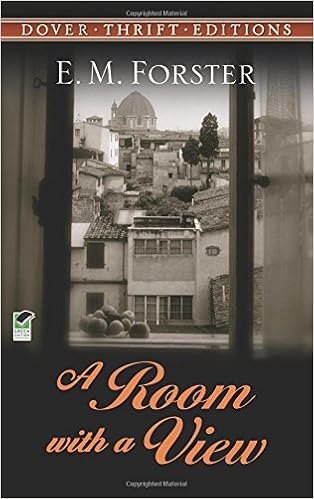
Classic Fiction: A Room with a View by E.M. Forester (1908). Another book read in anticipation of our visit to Florence. Compared to other Forrester works, this is a bit of a frolic, a romance. The setting is not limited to Florence and Italy (the setting moves “home” to England), but that’s where the nub of the story unfolds. In the end, it’s a “who-marries-who” story and a delightful one at that. Good for a visit to Italy or any occasion. (The Merchant-Ivory film production, by the way, does a fine job of translating the book into a film.)


Product DetailsProduct Details
Recent Fiction: Science in the Capital Trilogy: Forty Signs of Rain, Fifty Degrees Below, and Sixty Days and Counting by Kim Stanley Robinson. These three well-integrated books aren’t so much science fiction as imaginative fiction about contemporary science and life. Stanley’s novels follow a small group of scientists and their friends as they attempt to grapple with the scientific, political, and personal consequences of climate change. Read the headlines and then read these titles, and you’ll note a strong correlation as any number of the characters might note. The characters are quirky and engaging, with intrigue and adventure mixed into family life and the quotidian world. It’s the type of fiction that doesn’t rock you with poetic insight, but that does give you insight into the world in which we live. Very enjoyable, despite the frightening topic.


You'd Never Read This Before? The Best and the Brightest by David Halberstram (1972). As I read this book last fall, while visiting south China and while anticipating our current visit to Vietnam, I kept asking myself how I’d not read this book before. It was often assigned to college classes and was everywhere for a while. I doubt that it’s ever been out of print. The author was well-known. I’d just never gotten to it, but last fall I did, and I was enthralled. The book details the men [sic] of the Kennedy and Johnson administrations who led the U.S. into the Vietnam War (or the American War, as it’s known here). As Halberstam notes, these men were considered the best and the brightest, the top-notch, get-it-done guys who would lead the fight against Communism based on their brains and their will power. And then things went to hell. Halberstam, writing after the release of the Pentagon Papers and with lots of personal interviews and experience as a correspondent in Vietnam, paints carefully measured portraits of the players involved (McNamara, the Bundy brothers, Dean Rusk, etc.) and brings them each into focus as he details the unfolding of events. This book is a first draft of history, and an exemplary effort. In a sense, Halberstam is an American Thucydides, attempting to chronicle and understand how this horrible failure of judgment and policy unfolded. While there are now other works that I want to read on this subject, I can’t imagine a better place to start when considering the acts of the decision-makers. I was just young enough to avoid having to face being drafted, but I am old enough to know how the war tore our nation apart and how it shattered this beautiful country. Given the ways of the world, we’d do well to burn these lessons into our psyches.


Nerd Reading. The Idea of History and The Principles of History and Other Writings on History by R.G. Collingwood. I finally read The Idea of History, one of the great works on the topic and according to The Guardian, one the outstanding English non-fiction works published after the Second World War. Collingwood remains a relatively little-known figure compared to others philosophers in the U.K. during his time (the inter-war years), such as Wittgenstein, Russell, Moore, Ayer, and so on, yet he was—and remains—a formidable thinker. His work and training as an archeologist of Roman Britain, along with his thorough grounding in the history of philosophy and the history of history (as a discipline and way of thought) give him the intellectual muscle to complete this momentous task. His assessment of his predecessors and his original perspective creates an amazing work. And The Principles of Historybased on manuscripts discovered by Oxford University Press in the 1990s—over 50 years after Collingwood’s premature death—helps round out our sense of Collingwood’s project. It’s deep, nerdy, and amazing.


General, Overall Fun Favorite: Natural Born Heroes by Christopher McDougall. This book had it all, like a great salad: some greens, some crunch, some sweet meat, all properly dressed. My review pretty much says it all, but I’ll say it again—it was a fun read and listen.


A lot of fine, fun books are ignored on this list, but these are some of the highlights. Happy reading to all in the year of the monkey! 

Sunday, November 6, 2011

QT: More Chris McDougall on Running

If anyone could convince me to run, it would be Chris McDougall. I joke that I only want to run if I'm chasing or being chased. But more likely, it just wasn't ever comfortable, whatever that means. Anyone, here is more McDougall (of Born to Run fame) on the latest in barefoot running. Don' miss this video, either. I just might try it!