Showing posts with label Franklin Delano Roosevelt. Show all posts

Saturday, June 5, 2021

Thoughts for the Day: Saturday 5 June 2021


FDR’s first inaugural address was a bold assertion of public authority over the banking sector and a nakedly populist attack on the titans of high finance. “Plenty is at our doorstep, but a generous use of it languishes in the very sight of the supply,” Roosevelt said. “Primarily this is because the rulers of the exchange of mankind’s goods have failed, through their own stubbornness and their own incompetence, have admitted their failure, and abdicated. Practices of the unscrupulous money changers stand indicted in the court of public opinion, rejected by the hearts and minds of men….They know only the rules of a generation of self-seekers. They have no vision, and when there is no vision the people perish.”

Money dignifies what is frivolous if unpaid for.

“Truth, for Goethe, is “a revelation emerging at the point where the inner world of man meets external reality.... It is a synthesis of world and mind, yielding the happiest assurance of the eternal harmony of existence.”

39. 2. I will now conclude this theoretical account of civilization with some remarks gathered up under two heads: the first ‘Law and Order’, the second ‘Peace and Plenty’. 39. 21. Both are familiar phrases. Each is a name for civilization in one of its main aspects. The first is a name for civilization as a task: it is a name for what you have to do to be civilized. The second is a name for civilization as a product: it is a name for what you get by being civilized, the fruits of the civilized life.

There is a considerable conceptual affinity, indeed, between reason of state and Pascal’s wager in that both involve action on opinions whose low probability is compensated for by a high payoff; deceit for reason of state is justified in terms of the allegedly overriding consideration of the safety of the realm, while acting as if one believed in God is recommended by the wager on account of the infinite gain to be expected, and loss to be avoided, if religion is true.

Friday, January 22, 2021

Thoughts for the Day: Friday 22 January 2021


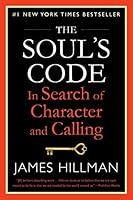
My current read. Fascinating & well-done


In party politics, for the hard right, the modern liberal status quo is not something to be proud of but something to be overturned. Outside party politics, among the right’s ethical and cultural critics, that same status quo is a wrong and ugly way to live.

In party politics, for the hard right, the modern liberal status quo is not something to be proud of but something to be overturned. Outside party politics, among the right’s ethical and cultural critics, that same status quo is a wrong and ugly way to live.


One major drawback to this concentration upon the worst [Hitler] is that lesser crooks and smoother murderers slip by. By looking closely at Hitler, we may miss the demon closer to home. Faceless corporate boards and political administrators make decisions that wreck communities, ruin families, and despoil nature. The successful psychopath pleases the crowd and wins elections. The thick glass of the TV tube and its chameleonlike versatility in displaying whatever is wanted favors distance, coldness, and the front of charm, as do many of the sleek accoutrements of high station in the political, legal, religious, and corporate structures. Anyone who rises in a world that worships success should be suspect, for this is an age of psychopathy. The psychopath today no longer slinks like a dirty rat through the dark alleys of black-and-white 1930s crime films, but parades through the boulevards in a bullet-proof limo on state visits, runs entire nations, and sends delegates to the U.N. Hitler is therefore old-style and can divert us from seeing through the mask worn by the demonic today, and tomorrow. The demonic that is timeless nonetheless enters the world disguised in contemporary fashion, dressed to kill.

The ghost of a silly seventeenth-century squabble still haunts our classrooms, infecting teachers and pupils with the lunatic idea that studies must be either ‘classical’ or ‘modern’. I was equally well fitted to specialize in Greek and Latin, or in modern history and languages (I spoke and read French and German almost as easily as English), or in the natural sciences; and nothing would have afforded my mind its proper nourishment except to study equally all three; but my father’s teaching had given me a good deal more Greek and Latin than most boys of my age possessed; and since I had to specialize in something I specialized in these and became a ‘classical’ scholar.

Davos, the debate of the century, the monad of a decade. Stretched to bursting from within, on March 26, 1929, it gave birth to two radically different answers to the same eternal question: Where can we find the essence of philosophizing? Or indeed: What is a human being?

But in truth the U.S. government simply had no interest in creating an international order that would diminish American power. The Roosevelt administration was clear-eyed about raw-power realpolitik considerations, but FDR and many of his top diplomats were also influenced by misunderstandings about the causes of the Great Depression and infused with a righteous Wilsonian sense of national destiny.