Showing posts with label Michael Dirda. Show all posts

Saturday, October 9, 2021

Thoughts: 9 October 2021


True understanding is distinguished from public opinion in both its popular and scientific forms only by its refusal to relinquish the original intuition. To put it in a schematic and therefore necessarily inadequate way, it is as though, whenever we are confronted with something frighteningly new, our first impulse is to recognize it in a blind and uncontrolled reaction strong enough to coin a new word; our second impulse seems to be to regain control by denying that we saw anything new at all, by pretending that something similar is already known to us; only a third impulse can lead us back to what we saw and knew in the beginning. It is here that the effort of true understanding begins.

The cosmopolitan outlook of Smart America overlaps in some areas with the libertarian views of Free America. Each embraces capitalism and the principle of meritocracy: the belief that your talent and effort should determine your reward.

And even as he urged nationalization of the railroads, Keynes faulted FDR for taking too hard a rhetorical line with business interests, courting unnecessary conflict. They were not “wolves and tigers” but “domestic animals” who “have been badly brought up and not trained as you would wish.”
sng: What would Keynes say today about "business interests" such as Big Tech, Big Oil, Big Pharma, and Big Money in general? Are they poorly trained pets or are they beasts that need to be caged and tamed?
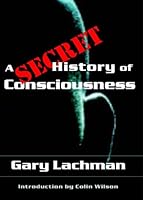
This cyclical view of history, whether in Joyce, Rattray Taylor, Vico (Joyce’s source), Hegel-and-Marx, etc. is only part of the truth, but it needs to be stressed because it is the part that most people fearfully refuse to recognize. Whether we speak in terms of Taylor’s Matrist-Patrist dialectic, Vico’s cycle of Divine, Heroic and Urbanized ages, the Marx-Hegel trinity of Thesis-Antithesis-Synthesis, or any variation thereon, we are speaking of a pattern that is real and that does repeat.
sng: Patterns: yes. Eternal (or unchanging) patterns: no.
‘What is the status of mathematical entities, such as numbers for example, in the realm of things?’ The number ‘two,’ for example, is in some sense exempt from the flux of time and the necessity of position in space. Yet it is involved in the real world. The same considerations apply to geometrical notions—to circular shape, for example. Pythagoras is said to have taught that the mathematical entities, such as numbers and shapes, were the ultimate stuff out of which the real entities of our perceptual experience are constructed. As thus baldly stated, the idea seems crude, and indeed silly.

Technological change is neither additive nor subtractive. It is ecological. I mean “ecological” in the same sense as the word is used by environmental scientists. One significant change generates total change.

Political freedom, Arendt insisted in the book’s [On Revolution] final pages, “means the right ‘to be a participator in government,’ or it means nothing.” The colonial townships and assemblies, building pyramidally to the constitutional conventions, were paradigms of citizen participation, but the popular elections that Americans today consider the hallmark of their democratic republic are hardly the same thing.
sng: An important point. Elections are a necessary but not (at all) sufficient condition for democracy. We in the U.S. would do well to try to reinvigorate local and state governments as decision-making bodies that use more citizen participation, such as sortition.
Responding to Fukuyama’s thesis [about the end of history arriving] in 1989, Allan Bloom was full of foreboding about the gathering revolts against a world that ‘has been made safe for reason as understood by the market’, and ‘a global common market the only goal of which is to minister to men’s bodily needs and whims’. ‘If an alternative is sought,’ Bloom wrote, ‘there is nowhere else to seek it. I would suggest that fascism has a future, if not the future.’ The English political philosopher John Gray warned of the return of ‘more primordial forces, nationalist and religious, fundamentalist and soon, perhaps, Malthusian’ that the Cold War had tranquillized; he pointed to the intellectual incapacity of liberalism as well as Marxism in this new world order.
sng: I've never quite gotten a handle on Bloom and don't know Gray's book, but I contend that Fukuyama is often sold short. He didn't write The End of History, he wrote The End of History and The Last Man. The Last Man refers to Nietzche's dire prophecy. It takes the shine off of the end of history euphoria, more a popular attitude than Fukuyama's thesis.

The novelist’s task, as Joseph Conrad famously said, is simply “to make you see.”

Thursday, August 12, 2021

Thoughts for the Day: Thursday 12 August 2021


Somewhat surprisingly to Americans today, [Johan Stuart] Mill held that the most dire threat to freedom comes not from state repression but from social conformity, which leads to a shortage of diversity—diversity of inclination and interest and talent, but especially, he implied, diversity of opinion. “Precisely because the tyranny of opinion is such as to make eccentricity a reproach, it is desirable, in order to break through that tyranny, that people should be eccentric.” His stark conclusion: “That so few now dare to be eccentric marks the chief danger of the time.”

[Jonathan] Haidt likens trolling to terrorism, inasmuch as they both exploit the emotional dynamics of outrage, baiting us to overreact. Rationally, we may understand that rising to the bait makes the trolls (or terrorists) more visible and influential. But emotion rules.

Instead of being pluralist, [some on the political left] are purist. Instead of seeking to pit biases against other biases and prejudices against other prejudices, they seek to eliminate bias and prejudice from the get-go—an Augean task which first polices culpable words, then culpable ideas when different words are recruited, and finally culpable minds when bad ideas keep popping back up.

But Keynesianism was also developed to prevent war, and it remains one of the great tragic ironies of intellectual history that the very catastrophe Keynes had attempted to avert for nearly two decades would be the event that finally demonstrated the viability of his economic ideas on the world stage. Both The General Theory of Employment, Interest and Money and The Economic Consequences of the Peace achieved their political apotheosis in the same calamity.

What did Strauss mean by philosophy? Not what it was commonly understood to be. Philosophers were not to be found teaching in colleges and universities around the country because instructors in philosophy departments were no more likely to be true philosophers than instructors in art departments were to be true artists. Philosophy wasn’t an academic discipline or the stepping-stone to a career defined by the structures and customs of higher education. It was a personal commitment, a way of life, inspired by a sense of wonder, much like a religion though without the dogma. Philosophers were devoted to wisdom but didn’t propound doctrines or claim to have discovered the Truth. Their wisdom, like that of the prototype Socrates, consisted of an awareness that they knew nothing. Insofar as they could be said to possess knowledge, it was of the questions, not the answers, and philosophers ceased to be philosophers, Strauss said, when certainty replaced Socratic doubt.

[Q]uantum leaps, in outlook ala Teilhard de Chardin, occur with a fantastic jump to a new horizon or level of perception. This insight usually comes from a revolutionary overview which realigns or transforms former thinking into a new and more enlightening frame of reference.

The calling is a crucial link between the individual and the public world. Work in the sense of the calling can never be merely private.

(We do tend to forget, as the poet Randall Jarrell quipped, that the people who lived in a golden age probably went around complaining how yellow everything was.)

Ultra-nationalism and imperialism were a corollary of this hatred of ineffective democracy, liberal individualism and materialism.


Tuesday, April 27, 2021

Thoughts for the Day: Tuesday 27 April 2021

"Hannah Arendt Cheat Sheet" by Samantha Rose Hill

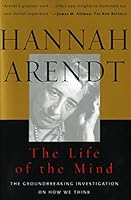
And since thinking, the silent dialogue of me with myself, is sheer activity of the mind combined with complete immobility of the body—“never am I more active than when I do nothing” (Cato)—the difficulties created by metaphors drawn from the sense of hearing would be as great as the difficulties created by the metaphor of vision. (Bergson, still so firmly attached to the metaphor of intuition for the ideal of truth, speaks of the “essentially active, I might almost say violent, character of metaphysical intuition” without being aware of the contradiction between the quiet of contemplation and any activity, let alone a violent one.

"Lies are often much more plausible, more appealing to reason than reality, since the liar has the great advantage of knowing beforehand what the audience wishes or expects to hear." — Hannah Arendt

Along with this “will to the now,” there is a kind of hoarding of the past, an “archive mania” which, paradoxically, denies the past its true character. In its hands the past becomes a mere source of “information.” Unlike true historical scholarship, there is no discrimination between what is worthy of being saved and what is not, what tells a story and what does not. Like Jorge Luis Borges's unfortunate character Funes the Memorius, today's “information junkies” are either unable or unwilling to forget anything.

Evolution has a broad and general tendency to move in the direction of: increasing complexity, increasing differentiation/integration, increasing organization/structuration, increasing relative autonomy, increasing telos.

Benedict Spinoza: “Sedulo curavi humanas actiones non ridere non lugere neque detestari, sed intelligere.”—“I have laboured carefully, when faced with human actions, not to mock, not to lament, not to execrate, but to understand.”