Showing posts with label thinking/thought. Show all posts

Wednesday, December 30, 2020

Thoughts of the Day: Wednesday 30 December 2020


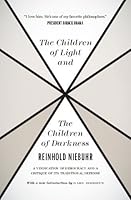
One of the facts about man as man is that his vitalities may be elaborated in indeterminate variety. That is the fruit of his freedom. Not all of these elaborations are equally wholesome and creative. But it is very difficult to derive “in a necessary fashion” the final rules of his individual and social existence. It is this indeterminateness and variety which makes analogies between the “laws of nature” in the exact sense of the words and laws of human nature, so great a source of confusion. It is man's nature to transcend nature and to elaborate his own historical existence in indeterminate degree.

When everybody is swept away unthinkingly by what everybody else does and believes in, those who think are drawn out of hiding because their refusal to join in is conspicuous and thereby becomes a kind of action. In such emergencies, it turns out that the purging component of thinking (Socrates’ midwifery, which brings out the implications of unexamined opinions and thereby destroys them—values, doctrines, theories, and even convictions) is political by implication.

Can a story really be so powerful that it overrides experience, scientific evidence, logic, and common sense? Of course it can, as Eric Hoffer showed us long ago in his book The True Believer.--David Sloan Wilson.

Today [2020], the most important politician in the developed world lives by facts supplied via political chat shows on his favoured propaganda network, tweets from unknown origins and his own rampaging id.--Nicholas Gruen, Australian economist.

Comparing these two time scales, [Brian] Arthur estimates that technology evolves at roughly “10 million times the speed of natural evolution.”


Thursday, December 10, 2020

Thoughts for the Day: 10 December 2020


Collingwood wishes us to see that history is systematic knowledge. Its purpose is not to provide emotional satisfaction, but ‘to command assent’ (Principles of History, 73).

And third, once we have come up with a good design for an institution, we still face the often huge challenge of overcoming political opposition to it, or (to put it differently) devising the political bargain among different interest groups that will actually allow the institution to be created.

And what we can do for our memories of the past, we can also do for our visions of the future: we can insert sequences of our imagined future consciousness into our present consciousness.

The Hitler biographer Alan Bullock has written, “despite the Gestapo and the concentration camps,” his power “was founded on popular support to a degree, which few people cared, or still care, to admit.”

Quite simply, the Nazi movement was built on Hitler’s oratory. There are numerous testimonies to the otherworldly spell he could weave with his words. Hanfstaengl declared, “He had the most formidable power of persuasion of any man or woman I have ever met, and it was almost impossible to avoid being enveloped by him.”

Understanding precedes and succeeds knowledge. Preliminary understanding, which is at the basis of all knowledge, and true understanding, which transcends it, have this in common: They make knowledge meaningful.

In other words, there are no truths beyond and above factual truths: all scientific truths are factual truths, those engendered by sheer brain power and expressed in a specially designed sign language not excluded, and only factual statements are scientifically verifiable. Thus the statement “A triangle laughs” is not untrue but meaningless, whereas the old ontological demonstration of the existence of God, as we find it in Anselm of Canterbury, is not valid and in this sense not true, but it is full of meaning. Knowing certainly aims at truth, even if this truth, as in the sciences, is never an abiding truth but a provisional verity that we expect to exchange against other, more accurate verities as knowledge progresses.