Thursday, May 9, 2013

A Review of A Delicate Truth by John le Carre


One of the perks of living in India is early release: some movies and books are released here before they are in the U.S. In our recent pass through the Delhi Airport, I spied John le Carre’s latest in paper for Rs 499 ($9.20). Sold! And I was underway as soon as we plopped down in the plane, having run late with browsing and grazing.
After completing the book, I read two reviews in the NYT. One by resident reviewer Michiko Kakutani, which was critical, and the other in the Sunday Book Review by fellow author Olen Steinhauer, which was much kinder. In a sense, I agreed with both. Le Carre, especially since the GWOT (Global War on Terror), has been almost obsessed with American heavy-handedness, blundering, and worse. As an American reader, I say to myself, “Really, we're not that dumb and brutish—are we?” Even recalling the worst of the Bush years—really? In short, Americans (acting under explicit or implicit government authority) are cast as bad guys. One must admire le Carre’s righteousness and his willingness to confront what he perceives to be the malign powers that should be wearing the  white hats: the U.S. and U.K. Such plot attributes will keep Hollywood light years away from producing a film version. Ditto BBC? But there is also an artistic price: I agree with Kakutani that Le Carre creates too Manichean a world for him to reach the heights that he did in the Smiley books that arose out of the Cold War.
Also, as Kakutani remarked, this le Carre book, similar to some of his more recent efforts, takes an almost Hitchcock-like focus on rather ordinary folk pulled into waters far over their heads. Or, as Steinhauer describes it in his review, the focus has gone from spymasters to whistle-blowers. In this case, the protagonists are two U.K. Foreign Service officers, neither of especially high rank. They have been, they both learn, played and marginalized, and they seek to set things straight. In this way, le Carre pulls us into their stories, and here is where le Carre still shines: in setting, character, and dialogue The little things that can make his world of spies so much larger than that of others writing with in the genre occurs because it contains wives, daughters, lovers, mentors, Cornwall, London, among other things, all finely sketched. Of course, it also contains plenty of conversations that record the machinations of politicians and bureaucrats. 

In the end, I must say that the Official Secrets Act and le Carre’s description of new star-chamber proceedings (which they hold the copyright to) doesn’t allow for any sense of British superiority over the gung-ho Americans. Steinhauer, by the way, appropriately defends le Carre against charges of anti-Americanism. It is the failure of American leaders to stand up for important values that he deplores, not the people as a whole. Many of us can say “Amen” to opposing many U.S. government actions in the last . . . . well, going back a long time. 

In the end, as usual with le Carre, we aren’t awarded a happy ending, but we receive lots of ambiguity. How do these characters continue their lives? In what I must warn as a potential spoiler alert, the story as a whole and the ending especially reminded me of the 1970s Robert Redford-Faye Dunaway flick, “The Days of the Condor”, which C and I had watched not long before we left for India, and which I rate very highly within the genre. 


Saturday, May 4, 2013

Faces & Figures from Jaipur, Rajathan

Iowa Guru in her most recent blog gives a narrative of our walking tour last Saturday. I want to share some of the faces and figures that we saw on her tour (and a couple of a few of these are redundant of her post).


Starting at one gate into the Pink City with a few faces in the crowd
A typical Jaipur "school bus". The one on the left has had enough!

For those needing a munchie along the way

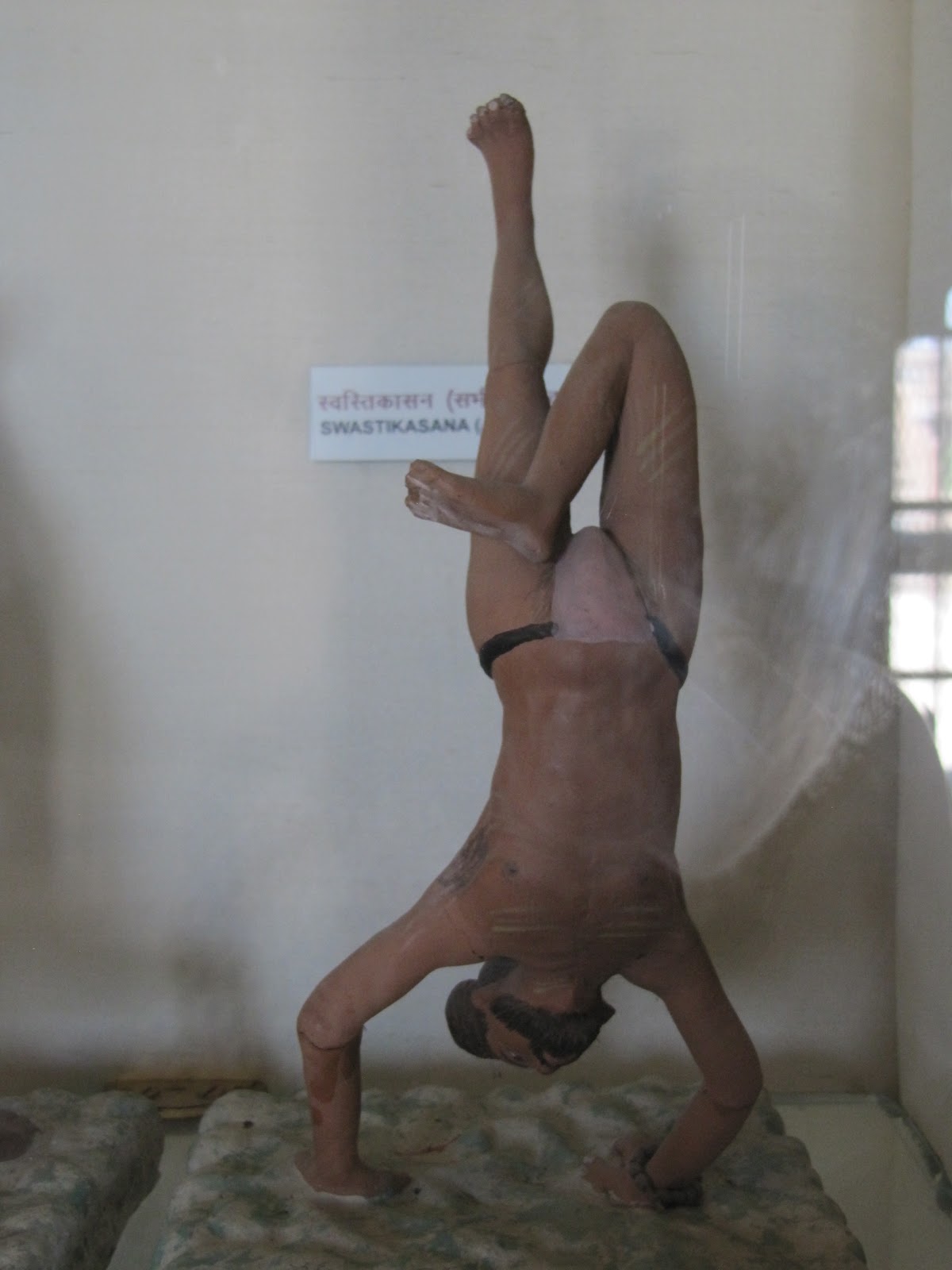
It wouldn't be India without the cow. By the way, is this cow face pose, yogis?

Making yogurt

Talkative school girls who hailed Iowa Guru with their English & ended up getting quizzed in an mini English class!

Making bowls, really.

Pounding out pans. Yes, that's a hammer!

Our brief fling as rock stars. Great smiling faces, even with Saturday school

Typical statuary.

Another big shot, although I don't recall whom.

A full-figured look

Gautama Sakyamuni, a/k/a Buddha

How'd he get in here?

I'm still working on this one.

Ah, this one, too.
A few of the faces and figures of India. All photos by the lovely Iowa Guru.

Reviews of "To Show and To Tell" by Phillip Lopate, "The Made-Up Self" by Carl Klaus, and "A Room of One's Own" by Virginia Woolf


As challenging as it often is, being a writer (not a Writer) is a rewarding calling. Professionally, much of a lawyer’s work consists of writing. This sometimes creates mountains of god-awful legal prose, but it can be done better—much better. Demand letters and briefs are especially fun challenges, and I enjoyed refining my skills as a legal writer. In addition, from my days as a Young Republican essayist (we’re talking junior high-- gimme a break!) writing about the value of the two-party system (good for second place among three contenders), I've felt compelled to say things on paper. After years of journals (C: “Why do you keep these? What are you going to do with them?” A: “Don’t know, except keep them”) and letters to congressional representatives and newspaper editors, I came upon blogging. 

I wish that I could say something profound and insightful about why I blog, but the plain truth is I sincerely believe that everyone should experience the value and pleasure of knowing my opinions about this or that. It’s just another form of narcissism, I fear, but to keep my head from getting too big, I occasionally look at the number of persons who read my posts and then rest my worry that the circle of those who know of my ranting hasn’t much expanded beyond those on whom I would have inflicted it anyway. 

So why did I just read two books on the essay and Virginia Woolf’s classic essay “A Room of One’s Own”? Well, with more time on my hands than in the past, with a new position that involves teaching how to write well, and with thoughts of future ventures, refining my writing seems the thing to do as a practical matter. Then, too, there is this pretension that maybe some blog post might prove worthy of the shadow of those who made the essay an intriguing and vital part of our literature. 

Phillip Lopate and Carl Klaus are two of the best-known scholars of the essay, and both practice the art that they teach, which makes reading their works a double-treat. Lopate’s book, To Show and To Tell: The Craft of Literary Nonfiction, which I read first, had me with the title. Well, I love to tell people things: how else will they receive the benefit of my knowledge and wisdom? Further, just “showing” can hide the forest for the trees. But the book does more than puncture a hole in the current wisdom. Instead, Lopate reviews the art of the essay from the time of its founding Aeneas, Montaigne, to the best of those writing today, including himself and this very book. In writing about various issues that essayists have addressed from the time of Montaigne to the present, Lopate—in essay chapters—discusses the many variations and challenges that have been raised and addressed by the essay and “literary nonfiction” in general. 

Klaus’s book, The Made-Up Self: Impersonation in the Personal Essay addresses one of the ongoing challenges presented by the essay from Montaigne down to his own efforts. Quoting Virginia Woolf’s aphorism: “Never to be yourself, and yet always”, Klaus, starting from the fountainhead (Montaigne, of course), explores the different ways that the self is presented and sometimes hidden by the essayist. By concentrating on the personal essay, one that drags you in because it’s written in the first-person and because you have a sense of the someone who’s written this—of someone  having lived this—you have the challenges of wondering what has been left in and what left out. It’s an opportunity to look into the life and experiences and observations of another, and when well written, it proves delightful, or at least intriguing. 

In fact, while I greatly appreciated Klaus’s knowledgeable and insightful consideration of Montaigne, Lamb, Woolf, E.B. White, and Orwell, among others, it’s his own personal reflections in the final chapter that provided me with the most pleasure and insight. Klaus reports that in the mid-1990s he decided to write an entry each day for the weather, about 500 words. And a very important fact: he lives in Iowa City, where he taught at the University since the 1960s. * Now, such an idea might fall flat here in Rajasthan (typical entries: hot and dry, very hot and dry, extremely hot and dry), but in Iowa, he has subject-matter that changes, sometimes violently. He set out to describe “what it looked like and felt like each day on my hillside lot in Iowa City—a place where I'd spent twenty-five years witnessing the flow (and sometimes the clash) of arctic- and gulf-born weather systems.” This seemingly mundane task (discouraged by some colleagues)  becomes a larger meditation on change and life, as concerns for the health of his wife and his pets, among other things, impinge upon a simple weather report. He finds himself, like Iowa weather, changing at times unexpectedly and uncertainly. So with the self and its concerns. 

Finally, between these two works, I read Virginia Woolf’s “A Room of One’s Own”, and I greatly enjoyed my time with it. In addressing women and fiction as a given theme, Wolf meanders through the centuries to address the topic, weaving her way through history as if providing a leisurely pointed tour of the past, and in particular, the burdens and challenges endured by women who wanted to write . Careful phrasing, an authoritative but friendly voice, and a careful choice of topics made this a very enjoyable read. A tract of feminism, and a fine one, yes; but its pleasure proves much greater than that of a political tract or polemic. It’s a tour, and one to savor, as if in the company of a gifted docent.

* I don’t believe that I’ve ever met Mr. Klaus. I know that I didn’t take a class from him (if only I knew), but he gives a shout out to Jackie Blank, our friend and realtor at the beginning of the book, so that provided some extra fun in reading this.   

Tuesday, April 23, 2013

I Say, Sir, It is CORRUPTION! A Review of Lesterland: The Corruption of Congress & How to End It by Lawrence Lessig


Imagine Patrick Henry speaking in his booming voice and railing against the CORRUPTION of the age. Or, perhaps if you’re not in mood for a stem-winder, think about how Madison or Hamilton (the two greatest minds among the Founders—sorry TJ) might address this. Come to think of it, everyone should be—must be—against corruption, right? However, in fact, in a manner of speaking, CORRUPTION works. In the jargon of social science, it results in an equilibrium that has built-in antibodies against change. The concept is simple: if someone doesn’t participate in the CORRUPTION, then she or he won’t get elected. It’s that simple. 


Harvard law professor Lawrence Lessig argues, and I agree, that we do have CORRUPT system in exactly the way that the Founders would have known and used the term. Not corruption in the way of paper bags and Rod Blagojevich; this happens, but it’s not a big problem (well, at least outside of Chicago). No, the CORRUPTION of wherein I speak (I can’t resist a little Revolutionary typeface and usage) is endemic to our system and perfectly legal. (Thank you, Supreme Court.) The CORRUPTION is the system that requires members of Congress to go begging for the money to run their campaigns to get re-elected or elected. (Of course, once you’re elected, you’re in pretty good shape to stay there because of your money-raising potential—unless you’re a “moderate Republican” (archaic: a species essentially extinct, having suffered a plague from the RIGHT, most recently identified as the Tea Party virus.) Whether the money comes from the Right (think Koch Brothers of Sheldon Adelson) or the Left (think George Soros), it buys INFLUENCE that we the 99% can’t match. (Gotchya’ if you think “1%” is accurate; it’s way high). 


Lessig tells us all of this in his TED Talk and this book. I’ve now read the book, and I agree that you should watch the TED Talk first: it’s the executive summary. If you can’t read the book, you’ll still have the message. For me, I wanted the gory details, and this proved worthwhile. Not only does Lessig document the problem well (he is a Harvard law prof, after all), but he makes clear that this is a problem for both the RIGHT and the LEFT, that CORRUPTION causes problems that reach across the aisle (well, at least something does these days besides Obama’s unwanted hand). CORRUPTION affects government and the political process in ways that no UNINTERESTED PERSON could endorse. 


How good is this book? It’s not a fun read. It’s not a deep read. But it’s a book with a mission; TO WIT, to get us out of our lethargy and engaged to REFORM this most vile CORRUPTION of our polity. To this end, I’ve joined Lessig’s organization, ROOT STRIKERS (from a quote of Thoreau that we should strike at the root of evil), and I’ve once again written my congressional representatives to ask them to take THE PLEDGE. Consider this, and join us, as a PATRIOT. 


BTW, the title may seem puzzling, unlike his earlier, more easily identifiable Republic Lost. Lessig refers to “Lesters” as those of the tiny minority—I mean TINY—who fund elections with BIG BUCKS. I think it’s a South Park reference, but then, that’s out of my league.