Tuesday, August 20, 2013

Some Thoughts About the Law Today

This blog by Jeffrey Toobin of the New Yorker raises interesting questions about the Edward Snowden matter. I share Toobin's concern about Snowden's going rogue and his naiveté about the Russians and Chinese. However, Snowden's actions, however right or however wrong, have caused prompted an important debate. The debate should become more lively and crucial with the recent actions of the Brits in detaining Glen Greenwald's domestic partner for nine hours under their terrorism act. For however we might rightly characterize Snowden and anyone working with him, they are not terrorists. You may argue that they are unwittingly aiding potential terrorists, but that's a different issue. Similarly, Snowden broke the law, but he did not "aid the enemy" because we have no "enemy". To start with, we are not at war with any country. Of course, individuals and groups want to harm us, that's a given. It's a new world in the sense that its not a nation (say like the Soviet Union or Nazi Germany) that threatens us so much as an amorphous, sometimes spontaneous phenomena of individual or small group efforts (for instance, the Boston marathon bombing brothers or the anti-technology guy who mailed bomb packages for several years). So we need to put Snowden's actions in perspective.

The Brits have really sharpened the argument with their actions. Whatever actions Greenwald and his fellows did or plan to do, it isn't terrorism, and yet the Brits detained and took items from Greenwald's partner under this pretext. This was an abuse of power. In a Tweet this I referred to John LeCarre's "paranoia": several of his recent novels have shown the Brits acting as lackeys for the Americans to perform tasks that were often stupid, illegal, and immoral. After this, I feel I owe him an apology: "I'm very sorry, John. My belief, or at least hope, that my government could not act so foolishly, callously, and immorally, let me to doubt your take on events. It's appearing more and more that you had it right". Anyone have his email?  Or, perhaps the Brits can abuse power quite in their own without any prompting by the U.S. government. Perhaps John doubts the initiative of his own government too much.

The Bill of Rights comes at a cost. Like most everything in life, these rights involve trade-offs. Free speech included in the First Amendment, for instance, allows any political fringe group, religious fanatic, or simple liars to say most anything that they want to say about our government and politics. In other words, to protect the good, we must allow the bad and sort it out later. Similarly, the provisions in the Bill of Rights about criminal procedure protect us from abuses of police power by protecting wrongdoers as well. In other words, we have to give the guilty a break (sometimes, not that often) in order to protect us all from abusive actions by the police and government. This was true in the late 18th century and it's still true in the early 21st century. But we must do more than simply point to the lovely words, we have to commit to enforcement of these rights  and take these matters most seriously. The debate should be serious and wide-ranging. The issue isn't that some would harm us: criminals domestically and hostile interests abroad have always been with us. The issue we  now should address concerns the parameters of the powers and protections that we should have under the new technological regime that we live in.

A recent article about civil forfeitures in the New Yorker provides a case in point. Civil forfeitures allow the government to take a person's property with little procedural protection if the property  might have been used or  involved in criminal wrongdoing, regardless of whether the owner of the property was involved. In a small town in Texas (I'm I surprised?) we learn of a police racketeering scheme to enrich the town and the police by bogus traffic stops and coerced forfeitures. So what happened? Nothing, no criminal charges against the police, although a civil suit did bring the practice to an end for now in that locale.

In a recent issue of Vanity Fair, Michael Lewis chronicles a frightening case of the misuse of a criminal prosecution against a former Goldman Sachs computer expert based upon slippery intellectual property laws. Reading the article, you thought it had a happy ending when the Court of Appeals (federal) reversed the conviction, only to learn that the state, apparently a the behest of a vindictive and deterrent-determined  Goldman, filed new charges on the same conduct. The matter, tried before a jury, was a fiasco given the alien nature of the Russian-born and educated computer genius and the forbidding complexity of computer code issues. If Lewis is correct--and he "re-tried" the case with real experts--we learn of a real miscarriage of justice and abuse of the system. Next to the government, how do we protect ourselves from the likes of Goldman Sachs and their ilk with unworldly financial power and clout--1% of the 1%?

I've invested 37 years of my life in our legal system. It can work well. It works imperfectly at best. We need always to challenge and criticize the system and decisions made within in it because we're human and prone to complacency, fear, and power-hunger. Look around the world and you can find beautiful words everywhere and shameful realities behind most of them. For the most part, we've avoided that, but we can lose it all in an instant if we're not vigilant. We all must constantly stand up to fear and power, our twin enemies. In this effort I consider myself not a Democrat, not a Republican, but an Actonian, after Lord Acton, the great British historian who coined the phrase that "power corrupts, and absolute power corrupts absolutely". We must constantly speak truth to power, or we will lose truth, lose democracy, and enslave ourselves to those who will prey upon our fears and weakness.

Friday, August 16, 2013

A Review of A Time to Keep Silence by Patrick Leigh Fermor


Last summer I read Tony Hiss’s In Motion (which I’m now re-reading), and he discussed and quoted from the work of Patrick Leigh Fermor. About the same time, I read an article by William Dalrymple, who also mentioned Fermor in glowing terms. Thus, when I saw the title A Time for Silence on the Prairie Lights remainder table, grabbed it. I quickly read the short work and thought it a gem. This summer, I found it on the shelf and I’d recommended it to Tanta Rose, so I re-read it. This time I admired the gem, not rushing it, but slowly turning it over to appreciate its many facets, as one might admire a gemstone, and it was time well spent. 

In the 1950’s, Fermor left the lights of Paris and headed to a Benedictine monastery in France, not as a pilgrim, but as a refugee. He wanted solitude to write, and so he came as a guest. After a couple of days of what I might call decompression, he settled into the rhythms of the monastic life and began carefully observing the ways of the monastery. In masterful, almost poetic prose (for which I now understand that he’s rightly famous), he describes this world: its history, its practices, its ambiance. 

Fermor goes on to another Benedictine monastery, one that specializes in practicing and preserving Gregorian chant, and we can sense the order of the chant and the monastery, as we read his descriptions of the stone edifices. As we read the brief history of these ancient institutions, we appreciate how complex and resilient they are. A third stop is a Cistercian monastery, where the strict practice of silence rules. Fermor finds this practice more forbidding and difficult to appreciate, yet his quiet observations never fail to inform. 
Finally, Fermor writes about the long abandoned stone monasteries of Cappadocia in Turkey, where strange looking rock formations were hewn to allow entire subterranean monasteries to exist in the remote section of that country. A Byzantine world gone underground. 

I’ve passed my copy on, so I can’t provide any quotes that might exhibit how this beautiful book works through its poetic prose and I wish I could, because my own meager words and review can’t do it justice. Assuming you get the NYRB re-print, do read the introduction by Karen Armstrong (herself once a member of a convent), which provides some context and even mild criticism of this work. It’s well worth your time as well. If you’ve ever wondered about these worlds outside the world, I can’t think of a better place to begin your exploration and appreciation than with this book.

Thursday, August 15, 2013

Story Craft: The Complete Guide to Writing Narrative Nonfiction by Jack Hart

The art of telling an effective story, whether as a matter of fiction or of non-fiction, has become increasingly celebrated and promoted as the most effective means of communicating a message. Wherever we turn for advice about communicating effectively, we're told about the power of story—or narrative, if you prefer the more hifalutin term. The reasoning is simple: we seem programmed to remember stories, tales across time involving characters who engage us in their pursuits. 


Jack Hart is a professional journalist who describes the skills needed to write an effective non-fiction story for a newspaper or magazine. The book provides many tips and explanations about how good stories are written. He also discusses the usefulness of ways of communicating other than by narrative, such as by explanation or report. But the award-winning stories that Hart's colleagues have written about all sorts of topics have enhanced their effectiveness (and one assumes their readership) by using narrative. The elements, when you reflect upon them, seem almost self-evident: characters (persons that we can care about and understand); a conflict or obstacle that presents the protagonist with a challenge; change through time (a narrative arc); carefully considered facts necessary to give life to the scenes. Like lawyers, journalists have a professional ethical obligation to "tell the truth," as problematic as that obligation is. Both professions require us to ground our narrative in some sense in "what really happened," perhaps easier for journalists because they don't (or least shouldn't) work for self-interested clients. One of Hart's main concerns is the ethics of truth-telling, including an exploration of those boundaries. 


Who might enjoy this book? Anyone who might want to tell a story, fiction or non-fiction. (The fundamentals of the two genres are not so different, and Hart draws on numerous sources that were written about fiction and playwriting.) However, I read Hart's book from the perspective of an attorney, an advocate. I’m convinced more and more that the first job of an advocate is to learn and then tell our clients’ stories in a comprehensible and engaging manner. In some cases, the law as written may prove an insurmountable road block to a remedy. But in most cases, especially in those that require a judge or a jury to resolve, making the client and the client’s plight as sympathetic as possible is an essential component of successful advocacy. Lawyers don’t write essays about “why my client should win in 500 words or less," but our briefs come close to allowing us to do that. As advocates, attorneys need to become as literate in telling a story as we are in forming an argument (which also may incorporate storytelling). Many attorneys face challenges with younger jurors and lawyers who possess a native mastery of visual storytelling that older, more logocentric persons like me lack. But I suspect that whether the story is told only in print, many of the same principles apply in visual mediums. If the book has one weakness, it’s that it's limited to exploring narratives only via the written word. Oral and visual storytelling must gain a place in the advocate’s arsenal in addition to the written word. 


But make no mistake: this is an outstanding book, well considered and well written, even if it's not written as a narrative!  Anyone with any occasion to consider writing a narrative will benefit greatly from this book

Friday, July 5, 2013

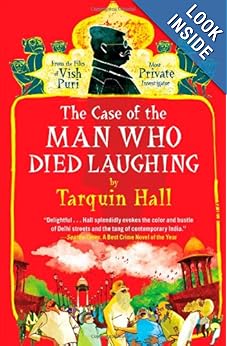
The Case of the Man Who Died Laughing: From the Files of Vish Puri, Most Private Investigator by Tarquin Hall


He’s done it again. 

Targquin Hall has written another clever and entertaining detective novel that, in addition to the inherent pleasures of a well-conceived detective novel, also shines a bright flashlight on the enigma of India. In my review of an earlier book (The Case of the Deadly Butter Chicken), I said a lot about Hall and his project, and I have a hard time adding anything new to those insights, so this review will be short. However, do not take away from the brevity of my review that the book lacks. A book that delves into Delhi, gurus, magic, “kitty parties”, family relations, and the whole tangle that is contemporary India so deftly deserves high praise. Highly recommended for insight and fun.

Cross-posted in Steve's View from Abroad

Friday, June 28, 2013

Better Late Than Never: A Review of A Passage to India by E.M. Forster


Only 38 years after receiving the assignment, I've completed it. I’ve now read A Passage to India

I received the assignment to read the novel for my Modern Fiction course taught by David (“First Blood”) Morrell. The book was near the top of the reading list, and in a semester that began with a mistake (I misread my transcript), I had to read more works than I had time for. In the words of the Panda, I “had to be strategic”. Fortunately, Professor Morrell told us about the echo, the Freytag triangle, and how this novel helped create the transition to modern fiction. Anyway, it was enough to do well in the course. Within the last year, of course, this omission began to haunt me. Shouldn’t I now read this classic? Well, I again procrastinated. I’d seen the movie years ago (and remember virtually nothing about it), but mostly I wanted to focus on reading about other aspects of India, both longer ago (Moguls and rajas) and the recent past and contemporary India. Thus, until recently, I’ve avoided reading about the British Raj. Now, however, perhaps for the mere fact that Indian Summer had been looking at me for so long (my books look at me longingly and pleadingly when I don’t pay attention to them), I decided to read Forster's classic. Then, when I saw a good edition of A Passage to India (Penguin, with an introduction by Pankaj Mishra), I bought it  and moved it toward the top of the pile. 

And so how was it? Outstanding. 

Forster’s novel creates complex and sometimes puzzling characters set in a society and landscape that he evokes with beautiful and insightful prose. The central characters, the Moslem physician Dr. Aziz and the British schoolteacher, Cyril Fielding, struggle and fight for every moment of friendship that can break through barriers of culture and personal insecurities. Indeed, the central incidents occur early in the novel. These events concern a visit to the Marabar caves and whatever happened (or didn’t happen) to Ms. Quested there, the subsequent trial, and its effects. These events take up the first two-thirds of the book, but the story continues beyond that attempting to appreciate the individuals and circumstances from which the problems all arose. 

Forster is hard upon the administrators of the British Raj. If anyone thinks that Forster is a cheerleader for the Raj, that person is sorely mistaken. Forster, who visited India on two different occasions (and who perhaps had an Indian lover) displays the vile racism that had developed among many of the Brits. Fielding is an exception, and yet even he must deal with ambiguities and misunderstandings that could frustrate even the most sympathetic of souls. The characters of Adela Quested, Mrs. Moore, and Professor Godbole each have complex if lesser roles that create a true richness in the story.

Finally, I should remark on how Forster uses the landscape to help set the tone of the story. Writing as I am now from central India and having lived here the last 10 months, I know how heat, dust, random mountains, ravines and (often dry) watercourses mark the landscape and impress themselves on those who, like me, come from such different circumstances. Forster’s language, which creates wonderful conversations, takes a poetic turn when describing some of these landscapes and the attendant weather.  

So now, 38 years after I received the assignment, I can mark it complete. I get no credit for that now—other than the enjoyment and perspective that I received from reading a great novel about this complex land. This is now the credit I most want.

Wednesday, June 19, 2013

A Review of Antifragile: Things That Gain from Disorder by Nassim N. Taleb


Probably every book authored by Nassim Taleb should include a warning label. It should state something like the following: 


Warning: The following book may be hazardous to your health. Exposure to this material may cause irritation, anger, outrage, or other severe emotional disturbances. In addition, it may change your mind.


To those who aren’t acquainted with the Taleb, you should know that he is a native of Lebanon, where he grew up in a prominent and Christian family during the civil war. He came to the US and attended Wharton business school. After completion of his MBA, he went to work in the banking and investment industry. After having made sufficient money (“f--- you” money, as he terms it), he became an independent scholar and writer. He is at once innovative and very cantankerous. While at times I can find I find his style abrasive, as he liberally hands out insults and putdowns, he nevertheless always seems to provide mind (and practice) altering insights. So, if you read this latest of his books, Antifragile, you stand forewarned of this risk.

Taleb started his career as a popular writer talking about probability, and he made a very big splash when he published his book, The Black Swan, which discusses the impact of the highly improbable in markets and in life. Philosophically, he’s dealing with the problem of induction, the kind of thinking that says all we ever see are white swans, therefore, all swans are white. For Europeans, that was true until they went to Australia and discovered black swans. Induction has its flaws. 

In Antifragile, Taleb builds on his previous work and argues that while some things are fragile (e.g., a china cup) and some things are robust (e.g. the Timex watch that “can take a lickin’ and keep on tickin’”), other things are antifragile. Antifragile things actually gain from volatility (shocks or disturbance). The outstanding example that Taleb identifies is evolution, where a certain amount of volatility allows for change. Taleb is quick to point out that things that are antifragile can only withstand a certain degree of volatility. In other words, there can be too much of a good thing. In fact, this is one of the intriguing issues left open by the book: even for systems that could benefit from increased volatility, such as an economy, how do we determine the amount of volatility that we should condone (assuming we can control volatility)? Taleb seems to support (although he does not address the issue directly in the book that I recall), allowing the economy its ups and downs. This hands-off approach makes a certain amount of sense—up to a point. However, in a situation such as we have experienced since 2008, should we really allow market mechanisms to run willy-nilly without any intentional interference on our part? This is something that I don’t think he addresses, yet he suggests, following up laissez-faire economic line of thinking, that this would be correct. He does not directly address the argument of Keynes. Taleb, I think, knows that Keynes had keen insights into issues of probability and uncertainty and humility about our lack of knowledge about the economy. Taleb doesn’t provide or even address the issue of how to provide us with a heuristic or principle by which to judge the amount of volatility we should actively tolerate.

I find his thinking persuasive in the field of medicine, for instance, where a little bit of volatility or exposure to negative influences, such as germs, actually enhances our immune system and makes it stronger. Taleb mentions that he puts it drop of tap water on his tongue when he comes to visit India, which makes a fair amount of sense. Again, the challenge seems to be engaging the right amount of disturbance to tolerate or promote. The same goes for physical training, when we subject ourselves to a stressor, such as weights, and our body reacts by stronger. Our body exhibits antifragility by adapting to the insults of a heavy (beyond normal) weight. Too much weight, however, or an insufficient recovery time, will actually harm the body, causing injury or a failure to thrive. Again, the question is how much is enough or how much is too much.

Taleb also understands the potential ethical problems with his perspective. He is not suggesting that we through the less fortunate over board in order to allow untrammeled volatility in society or the economy (essentially the idea of Social Darwinism). Furthermore, he makes a very persuasive ethical argument that decision-makers should have “skin in the game”. In other words, “banksters” should suffer losses as well as gains when their bets go wrong, as they did so terribly in 2008. Under the existing system, Wall Street was in a “heads we win, tails you lose” mode. The situation was made worse by government bailouts that created moral hazard (although to my mind, the bailouts, while odious, were necessary). Again, I think Taleb skirts some of the bigger issues, but his overall perspective adds an important element of consideration as to how we should run economy and society.
Following are couple of quotes that are worthwhile:

The Italian political and legal philosopher Bruno Leoni has argued in favor of the robustness of judge-based law (owing to its diversity) as compared to explicit and rigid codifications. True, the choice of a court could be a lottery – but it helps prevent large-scale mistakes. (90)
For those readers who wonder about the difference between Buddhism and stoicism, I have a simple answer. A stoic is a Buddhist with attitude, one who says “f*** you” to fate. (153)

As to the first quote about the common law, I think there is a good deal of truth in that. The argument between the English (and American, Indian, etc.) legal systems and those of the Continent have been over the use of codes versus judge-made law. While the U.S. has moved to greater use of codes, we still have a benefit in judge-made law that should improve the flexibility of our legal system. 

As to the second quote, about Buddhism and Stoicism, I’m still looking for a good comparison, because I think that there is a close relationship, in attitude, if not in genealogy. His passing comments fails to say enough, buy it is tantalizing. 

Overall, it’s a very worthwhile and important book. Laugh and snicker when he rails against those whom you also dislike, and ignore him when he offends you, and you’ll gain all the benefits without suffering the warned-against side effects.


Friday, June 14, 2013

Grassley Responds re Gun Control: What a Disappointment, But Not a Suprise

The following is a letter that I received from Sen. Grassley about gun regulations. I find it mind-numbingly bad. Sad, sad, sad. I'm going to write him back and tell him so. Below his letter is my response to it. 

Thank you for taking the time to contact me with your support for stricter gun regulation. I greatly appreciate the opportunity to hear from concerned Iowans.

Recently, the Senate has debated and voted on proposed gun control legislation in response to the tragic events in Newtown. On April 9th, the Senate voted to proceed to consider gun control legislation. There were several amendments proposed from Senators that included stricter gun control legislation.

One amendment that was proposed was a large magazine ban. Limiting magazine capacity does nothing to stop violent crimes. Criminals can simply carry multiple magazines. This restriction would only further restrict law abiding citizens. With a recorded vote of 46-54 the amendment was not agreed to. Senator Feinstein also proposed an amendment that would have included her ban on certain semi-automatic weapons. I have concerns with Senator Feinstein’s ban. The goal of such a ban is to prevent shootings similar to the tragic shooting in Newtown. While I do not doubt her sincerity, I do doubt the effectiveness of such bans. Her amendment also failed by a vote of 40-60.
Congress needs to examine the current laws and background checks to make sure they are properly preventing prohibited persons from obtaining firearms. I have supported legislative efforts to improve and enforce reporting of crimes and mental deficiencies that would improve the National Instant Criminal Background Check System (NICS). Additionally, I have repeatedly voted for legislation that would strengthen the prevention of illegal gun trafficking.

Another amendment offered by Senators Manchin and Toomey proposed expanded background checks. I have concerns with the amendment’s effect on private sales. Movement of firearms from one law-abiding citizen to another would be legal or illegal based on arbitrary distinctions that citizens could not be expected to know. For example, something as innocent as posting an advertisement for a hunting shotgun in a church bulletin that results in a private sale between members without a background check could result in federal penalties. This amendment also failed to reach the 60 vote threshold for an amendment to be accepted with a vote of 54-46.

While I did not vote to support the Manchin/Toomey amendment, I did author a comprehensive amendment that would target the causes of gun crime, address mental health records, and strengthen school security.

The Grassley amendment would have inserted the text of the Protecting Communities and Preserving the Second Amendment Act of 2013 in its place. This legislation, sponsored by 25 senators, would reauthorize and improve the National Instant Criminal Background Check System (NICS), increase resources for prosecutions of gun crime, address mental illness in the criminal justice system, and strengthen criminal law by including straw purchasing and illegal firearm trafficking statutes.

Specifically, the Protecting Communities and Preserving the Second Amendment Act addresses violent crime committed with firearms in a number of ways. First, it fixes problems with the National Instant Background Check System (NICS), with a focus on improving the availability of records to the NICS database, including mental health records from federal and state courts that are currently not reported to the NICS system. These records include those of individuals found to not have the mental capacity to stand trial, or who were found not guilty by reason of mental defect. Further, they would ensure that states provide records to the NICS system by penalizing those who fail to provide records. The non-partisan Government Accountability Office (GAO) recognizes that this failure is a problem with the current NICS system. Additionally, my amendment would also codify the executive order issued by President Obama requiring federal agencies to submit relevant federal records to the database and report to Congress whether they are complying with the law. Together, these changes would strengthen the existing background check system instead of following the Manchin/Toomey model of simply expanding a broken system to cover more transactions without fixing it.

Second, the Act combats gun related violent crime by increasing federal prosecution of violent offenders who commit gun crimes, and by cracking down on straw purchasers and firearms traffickers with new prosecution tools and increased penalties for gun crimes committed by prohibited persons. These provisions provide new criminal laws to federal law enforcement to combat the illegal straw purchasers that buy guns for criminals. It also creates a task force to strengthen Department of Justice efforts to investigate and prosecute cases involving convicted felons and fugitives who illegally attempt to purchase a firearm. The Act would also provide increased federal resources to hire prosecutors and agents to combat gun crimes and those who supply criminals and felons with firearms. Additionally, it would increase criminal penalties for gun crimes, including cases where criminals lie on background check forms in order to obtain firearms illegally. Finally, it directs the National Academy of Sciences and National Institutes of Justice to conduct a study examining the causes of mass shootings and reviewing causes of these violent acts.

Third, the Act seeks to reduce crimes committed by mentally ill offenders by: providing resources to state and local law enforcement to help interact with mentally ill offenders and reduce criminal recidivism by those with mental illness; clarifying to the Veterans Administration’s procedures regarding adjudication process for determining when a veteran is mentally defective for firearms possession; and by adding new purposes to existing federal grants to provide necessary training and support for state and local law enforcement agencies dealing with individuals with mental illness.

Finally, the Act expands the use of grant funds for school safety, including surveillance equipment, and the establishment of hotlines or tip lines for the reporting of potentially dangerous students and situations. The Act also establishes an interagency task force to develop and promulgate a set of advisory school safety guidelines.

My amendment was joined by over 25 cosponsors and gained larger bipartisan support than the Manchin/Toomey amendment. Despite this it failed to achieve the 60 votes necessary for passage under the consent agreement with a vote of 52-48. This common sense alternative legislation is a step forward and a way to ensure that criminals are prosecuted, gun crime is reduced, background checks are strengthened, mental health is addressed, and schools are secured; all while ensuring that law abiding citizens’ Second Amendment rights are not infringed. I am disappointed it failed to pass, but believe it offers a sensible way to address these difficult issues responsibly.

Since the tragic events that took place in Newtown there has been an emotionally charged debate over gun control legislation from both sides of the issue. I have met with families from Newtown to discuss the legislation that has been debated. It has been emotional and difficult for all of us. It is important however, that we do not rush to pass legislation that does not address, and would not have prevented recent shooting tragedies by infringing on the rights of law abiding citizens. I look forward to continuing the debate on how to keep criminals from obtaining firearms while insuring the safety of innocent Americans.
Again, I want to thank you for sharing your thoughts on this debate. Hearing from concerned Iowans gives me an opportunity to serve Iowans better.

Sincerely,
Chuck

Dear Senator Grassley:
I received your email letter to me about recent gun regulation votes. I found it profoundly disappointing and terribly flawed in its reasoning. You really should investigate this issue rather than simply following the party line. In addition, I want to mention how the U.S. Senate has deteriorated as an institution, especially in regard to the use of the filibuster as an anti-democratic practice that has no support in the Constitution or law. You should move to abolish it immediately.

Thank your for your attention to this,
Steve Greenleaf