Thursday, January 7, 2021

My Favorite Books of 2020

My Favorite Books of 2020

The following is a review of the favorite books that I completed last year. Some  started the year before, or even earlier, but they go in for this year if I completed them this year. And, of course, I started some books in 2020 that I've yet to finish. I include most of the books that I read last year. There are two reasons for this. One, I read even more news articles and essays than usual to keep up with current events (and my goodness it was a busy year on that account). And, two, I'm a very selective reader. I usually won't start a book unless I'm confident that I'll be getting something worthwhile out of taking the time and effort to read it. Most of the books I will cite I've reviewed, although a couple of late reads haven't been reviewed yet and I don't tend to review well-known fiction. 

So, on to the list. 


Just Mercy: A Story of Justice and Redemption

This was an outstanding book, at once uplifting and horrifying. Uplifting as we read about Stevenson and his colleagues and clients struggling for justice. Horrifying as I read about the South (mostly) in the 1990s maintaining a legal system that seems little different than of Jim Crow days. One would have thought that the world of To Kill a Mockingbird would be long past, but not with many of Stevenson's cases. 


The Principles of History and Other Writings in Philosophy of History

Wednesday, January 6, 2021

Reflections on 6 January 2021 Through the Lens of 4 May 2016

A posting from my Facebook page today.

I posted this blog entry on 4 May 2016, long before Trump became president or even the Republican nominee.

Why do I post this again here and now? To say "I told you so?" Frankly, yes, in part.
But I also want to rub some noses in this in order to drive home a hard lesson. If you act like a child and play with fire, you'll get burnt. While all of these past four years have been shocking they've not been surprising. The utter capitulation of the Republican Party has shocked (and saddened) me. I thought there were more patriots among them. And now, today. I remain hopeful that these events today represent the death throes of a dying regime. But even when Trump is out of the White House, we know that far too many Americans aren't committed to democracy and the rule of law. That is truly frightening. Folks committed to democracy and the rule of law--including former Republicans and anti-Trump Republicans--have gained the upper hand for now. An electoral battle has been won. But we're in a long struggle to win back our American heritage. To bring back our fellow Americans to the value of democracy and the rule of law.
My concluding words from my blog of May 2016:
"I join him [Andrew Sullivan] in urging everyone concerned with the well-being of our Republic to take heed of his warning. This is no longer an issue of party victory or a time to gloat over the collapse of any semblance of respectability in the GOP. It's more serious than that. Much more serious."
These words apply today and for times to come.
Andrew Sullivan Takes on Trump the Demagogue
SNGTHOUGHTS.BLOGSPOT.COM
Andrew Sullivan Takes on Trump the Demagogue
A reader's journal sharing the insights of various authors and my take on a variety of topics, most often philosophy, religion & spirituality, politics, history, economics, and works of literature. Come to think of it, diet and health, too!

Thoughts for the Day: Wednesday 6 January 2021


David Sloan Wilson, biologist & economics thinker

Or, as another Wilson (Edward O.) and I put it in a 2007 article, “Selfishness beats altruism within groups, altruistic groups beat selfish groups. Everything else is commentary.
--David Sloan Wilson

“Oceania is at war with Eurasia. It has always been at war with Eurasia,” Orwell tells us at the start of 1984—although, of course, as in Vladislav Surkov’s “nonlinear war,” here the sides change according to the directives of Big Brother. With [Alexander] Dugin, however, they remain stable, although for Oceania we should read the Atlanticists; the maritime character is the same. Eurasia has always been at war with the Atlanticists, and if the way in which Dugin’s meme has gone from simulacrum to reality is any gauge, some of the most exciting stages in this battle are to come.

In Collingwood’s view, historical facts are significant only as answers to questions.

Men, though they are totally conditioned existentially—limited by the time span between birth and death, subject to labor in order to live, motivated to work in order to make themselves at home in the world, and roused to action in order to find their place in the society of their fellow-men—can mentally transcend all these conditions, but only mentally, never in reality or in cognition and knowledge, by virtue of which they are able to explore the world’s realness and their own.

Since the rise of the scientific approach in the humanities, that is, with the development of modern historicism, sociology, and economics, such questions [the traditional questions regarding the nature of this form of government and the principle which sets it in motion] have no longer been considered likely to further understanding; Kant, in fact, was the last to think along these lines of traditional political philosophy. Yet while our standards for scientific accuracy have constantly grown and are higher today than at any previous time, our standards and criteria for true understanding seem to have no less constantly declined.

I share Wittgenstein’s mistrust of deceptively clear models: and, as Waismann said, ‘any psychological explanation is ambiguous, cryptic and open-ended, for we ourselves are many-layered, contradictory and incomplete beings, and this complicated structure, which fades away into indeterminacy, is passed on to all our actions.’

This is what happened: First your society and your culture taught you to believe that you would not be happy without certain persons and certain things. Just take a look around you: Everywhere people have actually built their lives on the unquestioned belief that without certain things—money, power, success, approval, a good reputation, love, friendship, spirituality, God—they cannot be happy. What is your particular combination?

Tuesday, January 5, 2021

Thoughts for the Day: Tuesday 5 January 2021


"Dictators ride to and fro upon tigers which they dare not dismount."

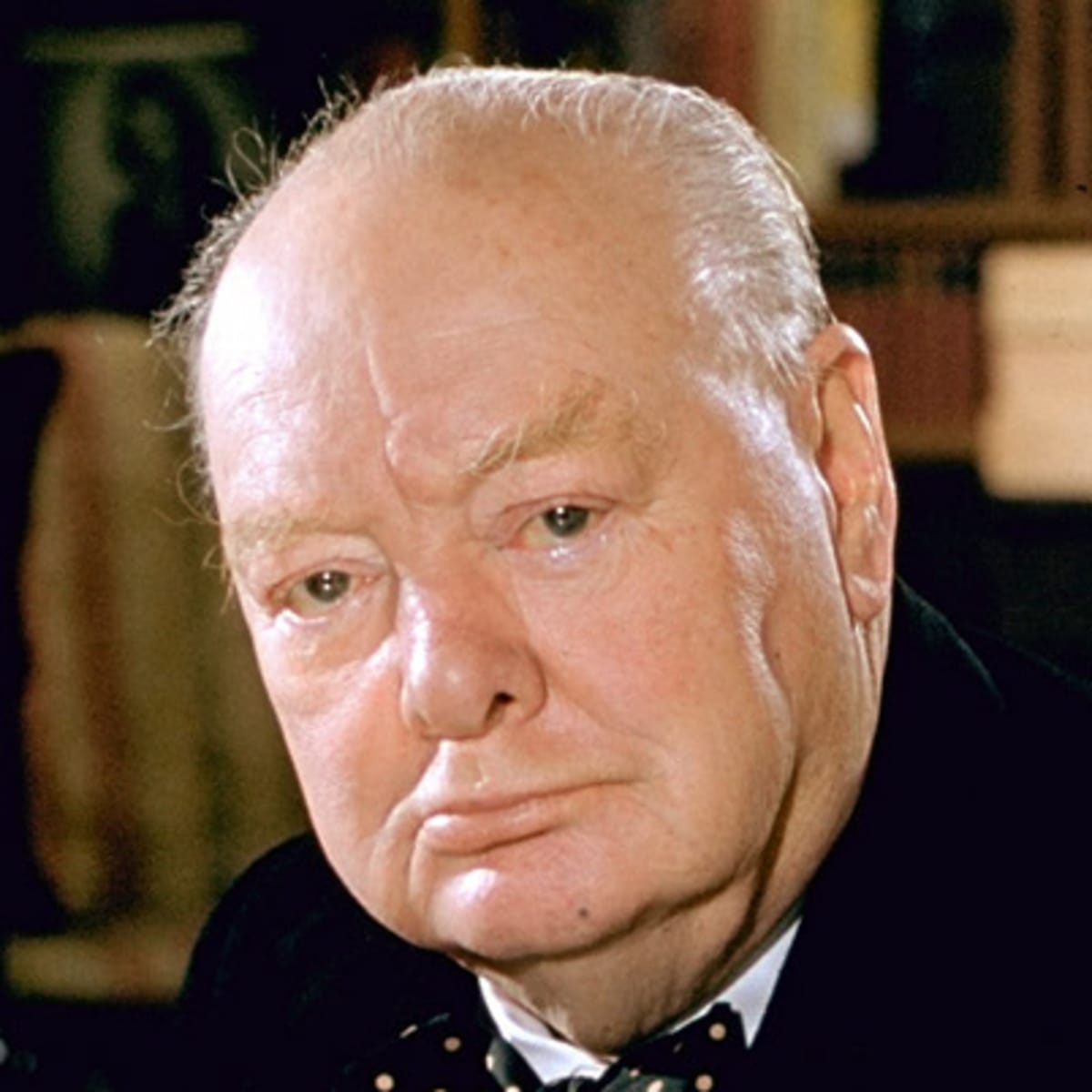
- A Chinese proverb made famous in the West by Winston Churchill.


Here we shall have to concern ourselves, not for the first time, with the concept of history, but we may be able to reflect on the oldest meaning of this word, which, like so many other terms in our political and philosophical language, is Greek in origin and derived from historein, to inquire in order to tell how it was —legein ta eonta in Herodotus. But the origin of this verb is again Homer (Iliad XVIII) where the noun histor (“historian,” as it were) occurs, and that Homeric historian is the judge. If judgment is our faculty for dealing with the past, the historian is the inquiring man who by relating it sits in judgment over it. If that is so, we may reclaim our human dignity, win it back, as it were, from the pseudo-divinity named History of the modern age, without denying history’s importance but denying its right to being the ultimate judge.


Keynes could examine patterns of human behavior and study trends in the way people actually made decisions; that was science, a subject of meaningful inquiry. But he could not investigate rationality itself. Rationality simply was—or was not.

When perceived stress level is very high, the vagus nerve slows heart rate, circulation, and organ functions. This is how our reptilian and mammalian ancestors evolved the ability to “play dead” hundreds of millions of years ago, to conserve energy and deflect aggression when under attack by predators.

Bureaucratisation and capitalism, though not necessarily themselves the best of bedfellows, and at times perhaps in conflict, are each manifestations of the will to power, and each is linked to Protestantism.

And in his celebrated critique of Max Weber’s separation of fact and value, Strauss traces Weber’s thought forward from its benign origins in neo-Kantianism to a dangerously judgment-free social science. “In following this movement toward its end we shall inevitably reach a point beyond which the scene is darkened by the shadow of Hitler.” Weber’s commitment to objectivity, which translated into a refusal to make value judgments, was a direct path, Strauss maintained, to Nazi nihilism.

Stop repeating what never worked in the first place. Stand back and ask for a new solution. Stop struggling at the level of the problem—the answer never lies there. Work on your own stuckness. Don’t worry about the other person. When the old stresses are triggered, walk away. See righteous anger for what it really is—destructive anger dressed up to sound positive. Rebuild the bonds that have become frayed. Take on more of the burden than you think you deserve. Stop attaching so much weight to being right. In the grand scheme of things, being right is insignificant compared with being happy.

So self-betrayal—this act of violating my own sensibilities toward another person—causes me to see that person or persons differently, and not only them but myself and the world also. When I ignore a sense to apologize to my son, for example, I might start telling myself that he’s really the one who needs to apologize, or that he’s a pain in the backside, or that if I apologize, he’ll just take it as license to do what he wants.


Monday, January 4, 2021

Thoughts for the Day: Monday 4 January 2021


But Einstein was only one of many thinkers and artists for whom “time” had become a central concern. The cubist visions of Picasso and Braque presented a perception of “simultaneity,” of “everythingatonce” rather than “one-thing-at-a-time.”

Wars, when they erupted, increasingly were likely to be intrastate rather than interstate. Kissinger, the power politician focused on nation-states and national interest, looked on this future with gloom. He knew he had no answers.

Many factors went into building political power among nations, from the most unchanging, like geography, to the most mutable and evanescent, like public opinion or morale. Population, raw materials, industrial capacity, technology, and leadership all contributed to power, but for Morgenthau no factor was more important than national character.

And yet, with his love of the Western tradition, Strauss insistently denied that the Nazis could be traced back to Europe’s Christian heritage. To believe such a thing was to grant a victory to the Third Reich and its nihilistic destruction of the past. “Only someone completely ignorant would say that anti-Jewish thugs are a matter of Christianity,” he declared. “Of course not.” Hannah Arendt agreed. In 1945 she wrote that Hitler and the Third Reich owed “nothing to any part of the Western tradition, be it German or not, Catholic or Protestant, Christian, Greek or Roman. Whether we like Thomas Aquinas or Machiavelli or Luther or Kant or Hegel or Nietzsche. . . . They have not the least responsibility for what is happening in the extermination camps.”

The myths are, in the first place, a necessary ingredient of social life. A society in which they would be eliminated in favor of exclusively scientific beliefs would have nothing in common with the human societies that have existed and do exist in the real world, and is a merely imaginary fantasy. Here once more our investigation must be concrete. Certain derivations or myths under certain circumstances are socially useful, others detrimental; when the circumstances change, so may the effects of the myths. The doctrine of the divine right of kings is scientifically ridiculous.


Sunday, January 3, 2021

Thoughts for the Day: Sunday 3 January 2021


The processive and synergistic forces at work in way-making render the language of discreteness and closure inappropriate. The road is always under construction, and the hands at work are many. While there is the punctuation of consummatory events that separates the paragraphs of one’s lived experience, still the narrative is coherent and continuous: a never-ending story.Sco


Evolution has gifted humans (and vertebrates in general) two immune systems: the innate immune system and the adaptive one. The innate immune system is the front line of defense and has a standard set of responses—fevers, inflammation, mucus generation, attack cells—to biological threats that are quick and easy to deploy. The innate immune system is a blunt instrument that has a pretty dramatic effect on how you feel. It alters your internal environment to make it hostile to invaders. The adaptive immune system is more selective (this is the Special Forces rather than the regular Army); it identifies the specific threat to the body, learns its weaknesses, then deploys a very targeted response.

[I]t’s important to acknowledge that there’s no clear boundary between human beings and their surrounding natural world— that the natural world is intimately part of us. This means that the boundary of our identity— of our “we”— must expand to encompass nature too. “To regain our full humanity,” writes the systems theorist Fritjof Capra, “we have to regain our experience of connectedness with the entire web of life.”

Sugar makes us fat. It's directly converted to fat by our liver and it destroys our appetite control so we want to eat more of everything. The more sugar we eat, the fatter we'll be.


Saturday, January 2, 2021

Thoughts for the Day: Saturday 2 January 2021


The greatest generals of our political history—Washington, Grant, Lee, Eisenhower—have been notably unwarlike men. (MacArthur, thank God, existed outside our political world, outside any world but that bounded by Autobiography.) These supreme commanders have been less bellicose than our Little Colonel, our artillery gunner, our PT boat commander [JKK], or—now—our naval supply officer [Nixon].

All fear comes from picturing the future. Putting things off increases that fear.

You will never 'find' time for anything, if you want time you must make it. --- Charles Buxton

Terror, the obedient servant of Nature or History and the omnipresent executor of their predestined movement, fabricates the oneness of all men by abolishing the boundaries of law which provide the living space for the freedom of each individual.

If there is to be anything at all which can in any sense be called natural science, the people in whose minds it is to exist must take it absolutely for granted that there is such a thing as ‘nature’, the opposite (contradictory) of ‘art’: that there are things that happen quite irrespectively of anything these people themselves do, however intelligently or fortunately, and irrespectively also of anything any one else may do even with skill and luck greater than their own. They must take it absolutely for granted that somewhere in the world there is a dividing line between things that happen or can be made to happen or can be prevented by art (and art never succeeds without a certain support from luck), and things that happen of themselves, or by nature.

[One] sense of the word may be defined as follows. A cause is an event or state of things which it is in our power to produce or prevent, and by producing or preventing which we can produce or prevent that whose cause it is said to be.


Friday, January 1, 2021

Thoughts for New Year's Day: Friday 1 January 2021 Happy New Year!


Nature is not a machine. Nor does humanity stand apart from nature entitled by evolutionary right to lord it over the earth. In consequence, the modern way of life and politics based on the mechanical worldview is rendered obsolete, both philosophically and practically.

Professional surfers, mixed martial arts fighters, and Navy SEALs use Tummo-style breathing to get into the zone before a competition or black ops mission. It’s also especially useful for middle-aged people who suffer from lower-grade stress, aches and pains, and slowing metabolisms.

In the case of nonrenewable resources, the economic optimists seem to be right, at least going by the evidence of the last one or two centuries. Modern economies appear to adjust easily to scarcities of these resources.

Institutions are grounded in culture, and culture generally changes very slowly. If both institutions and culture must change for a society to adapt to new circumstances, a society may not be able to migrate across its fitness landscape quickly enough to avoid disaster.

Everything that we call specifically human is due to man’s power of thinking hard. Mere increase of effort, intellectual or any other, does little to increase its effectiveness unless the increased effort is well directed. Without such direction the additional effort is always in great part, and sometimes completely, wasted. High-grade thinking, therefore, depends on two things: increase of mental effort, and skill in the direction of that effort.
This could be said of many other endeavors as well, couldn't it? Cf. with the idea of "focused practice" of musical or athletic skill.