Thursday, February 4, 2021

Thoughts for the Day: Thursday 4 February 2021


How vulnerable is the whole texture of facts in which we spend our daily life; it is always in danger of being perforated by single lies or torn to shreds by the organized lying of groups, nations, or classes... 

— Hannah Arendt


Essences cannot be localized. Human thought that gets hold of them leaves the world of the particular and goes out in search of something generally meaningful, though not necessarily universally valid. Thinking always “generalizes,” squeezes out of many particulars—which, thanks to the de-sensing process, it can pack together for swift manipulation—whatever meaning may inhere. Generalization is inherent in every thought, even though that thought is insisting on the universal primacy of the particular. In other words, the “essential” is what is applicable everywhere, and this “everywhere” that bestows on thought its specific weight is spatially speaking a “nowhere.”

Particularly so in light of the seemingly reactionary alternative origin to the age of modern philosophy Benjamin proposes. Ultimately, for him, only God—an event as divine as the phenomenon of speech itself—can supply true salvation. Just as language—as the foundation of all meaningful access to the world—cannot in Benjamin’s view be of human origin, the healing shock of the perception of truth (in “pure language”) cannot be, either. Like Wittgenstein, Benjamin insists time and again that the miracle of language cannot be explained in language. At most, its essence can be shown through particular linguistic modes of representation.

The underlying theme of every essay in Between Past and Future is that the great Western philosophic-political tradition has been ruptured, and so definitively ruptured that its authority can never be restored.

It’s strange that in America we have not learned the lesson that hasty, unplanned development can provoke a backlash. After all, the country has experienced several, most notably the 1930s Dust Bowl, the greatest ecological disaster in North American history. The event is seared in the American imagination, depicted in novels and captured in movies. The bitter tale of desperate Dust Bowl migrants inspired John Steinbeck’s Grapes of Wrath—describing the plight of people who could be called AFarmerica’s first climate refugees. And it is a story of human action causing a natural reaction.
We just read (aloud) Grapes of Wrath this fall: a great book.

First, in human understanding, facts do not come alive until the ideas internal to them are grasped. Second, the appropriate question to ask of human activities is not whether they are true or false, but what they mean.

“The rentier class.” Keynes meant by this the people who made money simply by owning something that others needed, and charging for the use of it: this is rent in its economic meaning. Rent goes to people who are not creators of value, but predators on the creation and exchange of value. So “the euthanasia of the rentier class” was Keynes’s way of trying to describe a revolution without revolution, a reform of capitalism in his time, toward whatever subsequent post-capitalist system might follow.

If, in the selection of members of the élite, there existed a condition of perfectly free competition, so that each individual could, without any obstacle, rise just as high in the social scale as his talents and ambition permitted, the élite could be presumed to include, at every moment and in the right order, just those persons best fitted for membership in it. Under such circumstances—which [Alfredo] Pareto seems to imagine after the analogy of the theoretical free market of classical economics, or the biological arena of the struggle for survival—society would remain dynamic and strong, automatically correcting its own weaknesses. However, a condition of this sort is never found in reality. There are always obstacles, or “ties” as Pareto calls them, that interfere with the free circulation of individuals up and down the social scale.
Cf. Collingwood on "the ruling class" in his "The Three Laws of Politics."

Psychopathy is part of the so-called dark triad of traits. And as it turns out, the other two, narcissism and Machiavellianism, also seem to describe many of the traits we associate with the grifter.


Wednesday, February 3, 2021

Thoughts for the Day: Wednesday 3 February 2021


[A]nti-elitism is a reflection of the feeling of powerlessness that many people experience when navigating the modern world—one in which experts and intellectuals seem to hold the keys to knowledge and power. Reflecting on this reality decades ago, the great American historian Richard Hofstadter wrote, “Once the intellectual was gently ridiculed because he was not needed; now he is fiercely resented because he is needed too much.”

“Over more than two centuries, the United States has stirred a very wide range of feelings in the rest of the world: love and hatred, fear and hope, envy and contempt, awe and anger,” the Irish commentator Fintan O’Toole wrote in April 2020. “But there is one emotion that has never been directed towards the US until now: pity.”
(Location 2209)

The political climate in Washington always pushes policymakers toward being “tough” rather than “soft”—which is a dangerous way to frame international affairs. The real question is, can they be smart rather than stupid?

Tensions between the United States and China are inevitable. Conflict is not. We have a picture in our minds of what international politics looks like that is drawn largely from modern European history. It is of great powers jockeying for influence in a great game of realpolitik and frequently descending into war. This international system is often called “multipolar”—characterized by many great powers—and it is inherently unstable. With many countries of roughly equal strength competing, each eyeing the other suspiciously, miscalculation, aggression, and war become highly likely, which is why Europe became an arena of constant conflict for centuries. (Location 2421) 

Eisenhower spoke in language that few left-wing peaceniks would dare to employ today. “Every gun that is made, every warship launched, every rocket fired signifies, in the final sense, a theft from those who hunger and are not fed, those who are cold and are not clothed,” he said. “This is not a way of life at all, in any true sense. Under the cloud of threatening war, it is humanity hanging from a cross of iron.”

[Hans] Jonas enumerates all the advantages of sight as the guiding metaphor and model for the thinking mind. There is first of all the indisputable fact that no other sense establishes such a safe distance between subject and object; distance is the most basic condition for the functioning of vision.

“THE TRANSITORY, THE FLEETING, THE CONTINGENT,” which Baudelaire had identified as the central properties of the modern age, also fully characterized philosophy. Not all protagonists found it equally easy to welcome this new feeling of existence.


Tuesday, February 2, 2021

Thoughts for the Day: Tuesday 2 February 2021


"When people reflect on what it takes to be mentally fit, the first idea that comes to mind is usually intelligence. The smarter you are, the more complex the problems you can solve— and the faster you can solve them. Intelligence is traditionally viewed as the ability to think and learn. Yet in a turbulent world, there’s another set of cognitive skills that might matter more: the ability to rethink and unlearn.

Mental horsepower doesn’t guarantee mental dexterity. No matter how much brainpower you have, if you lack the motivation to change your mind, you’ll miss many occasions to think again. Research reveals that the higher you score on an IQ test, the more likely you are to fall for ste­reotypes, because you’re faster at recognizing patterns. And recent experiments suggest that the smarter you are, the more you might struggle to update your beliefs.

The curse of knowledge is that it closes your mind to what you don’t know. Good judgment depends on having the skill— and the will— to open your mind. A hallmark of wisdom is knowing when it’s time to abandon some of the most cherished parts of your identity."

— Adam Grant in Think Again


“The dead outnumber the living 14 to 1, and we ignore the accumulated experience of such a huge majority of mankind at our peril.”

--Niall Ferguson


"I am not at all sure that I am right in my hopefulness, but I am convinced that it is as important to present all of the inherent hopes of the present as it is to confront ruthlessly all its intrinsic despairs." — Hannah Arendt


What interests Collingwood is not history consisting of statements which can be tested against scientific criteria, but the idea of history itself.

“In the long run, we are all dead” was more than a clever turn of phrase. It distinguished Keynes from other contemporary monetarists, and those in the years to come who would affiliate themselves with right-wing politics. Like the monetarist Milton Friedman, Keynes looked to price stability as a way to shore up classical economic thinking. For the most part, he believed, laissez-faire economics worked. Supply and demand did bring society to a prosperous equilibrium. They just needed a few pieces of basic economic architecture to work: property rights, the rule of law, and price stability. But unlike Friedman, Keynes had arrived at monetarism as a creative way to expand the power of the state to fight the uncertainties and anxieties of postwar life.

What, as a thinking subject closed in behind the brain’s pane of glass, do any of us know about what is really going on inside anyone else? What storms rage within them? Or perhaps there is nothing at all happening in there—is there really complete and permanent calm?

Conservatives were facing the difficult truth that, as the American scholar Harvey Mansfield put it, they were “no longer the hardy few.” Used to presenting themselves as intellectual outs, conservatives were now the ins. How, though, would conservatives know who they were and what they stood for without an orthodoxy to oppose? Who was the right to argue with?

Using the border situations as his point of departure, he [Karl Jaspers] attempts to develop a new type of philosophizing based on Kierkegaard and Nietzsche. The primary mission of this philosophizing is not to instruct; it consists of a “perpetual agitation, a perpetual appeal [author's italics] to the life force in oneself and in others.” This is Jaspers’s way of participating in that revolt against philosophy with which modern philosophy began. He attempts to transform philosophy into philosophizing and to find ways by which philosophical “results” can be communicated in such a way that they lose their character as results.


Monday, February 1, 2021

Thoughts for the Day: Monday 1 February 2021


Insofar as ideological thinking is independent of existing reality, it looks upon all factuality as fabricated, and therefore no longer knows any reliable criterion for distinguishing truth from falsehood.

Education is the point at which we decide whether we love the world enough to assume responsibility for it and by the same token save it.
--Hannah Arendt
What is most difficult is to love the world as it is, with all the evil and suffering in it.
--Hannah Arendt
(HT to @Samantha RoseHill for sharing the above two quotes.)

Multa stultitia regnat mundus—how much stupidity now hangs over the world.

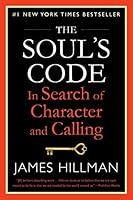
Remember our rule of thumb: The more scared we are of a work or calling, the more sure we can be that we have to do it.

Thus the New York Times expends its editorial might promoting transgender rights, the concern of a tiny minority, while Fox News rants in opposition to them. So climate change and other vital concerns for the society as a whole get pushed to the media margins.

It comes back, then, to the question of the self-image. Miseries, humiliations, embarrassments, accidents, have the effect of creating partial self-images—self-images which, since they present themselves as complete, are bound to be false. Consciousness narrows, and my self-image becomes as false and distorted as if I was seeing myself in a trick mirror at a fairground. But a trick mirror at least shows you your whole self, from head to foot; the partial self-image is a pocket-size distorting mirror.


Sunday, January 31, 2021

Thoughts for the Day: Sunday 31 January 2021


The ideal subject of totalitarian rule is not the convinced Nazi or the convinced Communist, but people for whom the distinction between fact and fiction, true and false, no longer exist.


— Hannah Arendt


Descent takes a while. We grow down, and we need a long life to get on our feet.


Social theorists have a name for smart people motivated solely by greed and fear—“rational agents.” It turns out that a group consisting entirely of rational agents is incapable of cooperation. In particular, such people will never manage to put together a fighting troop.


Socrates, in fact, became the primary saint of the ethics of imperturbability in later Greek philosophy, the model on whom the Cynic and Stoic sophoi, or wise men, are based.

God is not a “being” at all, not even an infinite one. God is Be-ing in the sense that without God, nothing can be. The “being” of God is verbal and transitive‒ the being of God makes everything else be. God says “Be!” and things spring into existence.

Western psychiatric medicine is often hard to distinguish from pharmacology. Most antidepressants aim to suppress moods—to bring them into a narrow range of experience, removing both the highs and lows. We reduce symptoms of an affliction to make it invisible.

The ultimate end of an evolution of consciousness into self-consciousness is total self-consciousness: the movement is from potency to act, from passivity to power.


Saturday, January 30, 2021

Thoughts for the Day: Saturday 30 January 2021


Published 2019


The world is a raft sailing through space with, potentially, plenty of provisions for everybody; the idea that we must all cooperate and see to it that everyone does his fair share of the work and gets his fair share of the provisions seems so blatantly obvious that one would say that no one could possibly fail to accept it unless he had some corrupt motive for clinging to the present system.
--George Orwell, The Road to Wigan Pier
. . . .
We travel together, passengers on a little space ship, dependent on its vulnerable reserves of air and soil; all committed for our safety to its security and peace; preserved from annihilation only by the care, the work, and, I will say, the love we give our fragile craft. We cannot maintain it half fortunate, half miserable, half confident, half despairing, half slave—to the ancient enemies of man—half free in a liberation of resources undreamed of until this day. No craft, no crew can travel safely with such vast contradictions. On their resolution depends the survival of us all.
--Adlai Stevenson, U.S. Ambassador to the U.N. (1965).

Not content with being taught how to think without being taught a doctrine, they changed the non-results of the Socratic thinking examination into negative results: If we cannot define what piety is, let us be impious—which is pretty much the opposite of what Socrates had hoped to achieve by talking about piety.

Where does this leave us in regard to one of our chief problems—the possible interconnectedness of non-thought and evil? We are left with the conclusion that only people inspired by the Socratic eros, the love of wisdom, beauty, and justice, are capable of thought and can be trusted. In other words, we are left with Plato’s “noble natures,” with the few of whom it may be true that none “does evil voluntarily.” Yet the implied and dangerous conclusion, “Everybody wants to do good,” is not true even in their case.

Hitler also had an above-average and keen intelligence and a genuine, if very limited, faculty of judgment, which functioned well within its limits. Hitler’s assessments of international relationships in Europe were almost always correct. His comments on European history were often truly excellent—especially his comments on the mistakes of Napoleon I, who ought never to have exchanged the title first consul for that of emperor, nor mixed family matters with politics. His judgments of people were often perceptive and amusing, but his judgment failed completely where the Anglo-Saxon countries were concerned. There he misunderstood every event and every situation. His views of America were so unrealistic that they caused him to slap his hand on his knee with pleasure when he heard that America had entered the war. He did not even understand the most primitive power relationships. How could he have understood that for Anglo-Saxon peoples treaties are by no means mere scraps of paper?

The mind of Adolf  Hitler was a very powerful instrument To deduce from his awesome defects of the heart that he was wanting insight or intelligence is the commonest mistake most people make about him. Nor was he mad. This is the simplistic interpretation to which Americans are especially prone: It corresponds to the modern American inclination to believe that the presence of evil in men is an abnormal condition . . . . Sad, cold, cruel: But not mad. 

Lukacs, John, The Last European War: September 1939--December 1941 (1976)


Metaphysic, Method and Politics: The Political Philosophy of R.G. Collingwood by James Connelly


Early in this book Professor Connelly (now Emeritus),  makes an important point, remarking that this work doesn't replicate the territory covered by David Boucher's earlier work, The Social and Political Philosophy of R.G. Collingwood. I'd already read Boucher's work less than a year ago, and I found it quite useful. When I purchased Connelly's work, I must admit a bit of trepidation that it would in fact cover the same ground as Boucher's. Mind you, both men are two of the most important contemporary scholars addressing Collingwood, especially Collingwood's politics (Giuseppina D'Oro also deserves a shout-out.) In fact, according to Connelly's website, he and Boucher have collaborated on a new edition of Collingwood's Speculum Mentis (1924), Collingwood's first mature work and one that sets the terms for his future philosophical investigations (and a book that, according to Louis Mink in his Mind, History and Dialectic: The Philosophy of R.G. Collingwood, provides the key to understanding Collinwood's entire project.)* Thus, I hope that you get a sense of both my enthusiasm for the work of these two established scholars yet my not wanting to simply have them both write books on the same points. But in fact, Connelly was correct in his contention, and his work is indeed different from Boucher's; of course, there is some overlap, but Connelly approaches the topic from a different perspective and maintains a different approach throughout the work. 

Connelly begins his work by demolishing the contention by some, including T.M. Knox and Alan Donegan, that there was a sharp break in Collingwood's thought late in his life, sometimes blamed on Collingwood's declining health. Connelly carefully dismantles these arguments by a thorough review of Collingwood's life-long philosophical project. Of course, there were changes in Collingwood's thought and different shadings over time, but nothing approaching a break, just development. Also, Connelly rightly claims Louis Mink arrived at the same conclusion, and I concur. After establishing the "unity of Collingwood's philosophy," Connelly goes on to discuss Collingwood's ideas about philosophical method and metaphysics that Connelly argues are essential to understanding Collingwood's "political philosophy of civilization." He also visits Collingwood's concept of "absolute presuppositions" as the underpinnings of any metaphysics. It is only after addressing these issues, which comprise the whole of Part One of this book before he turns to Collingwood's political and legal thought. 

In Part Two, Connelly turns to topics such as "the theory, practice, and forms of action," "political action," "civilization and barbarism," and "the dimensions of civilization." Of course, in addressing these topics Connelly's work inevitably overlaps with Boucher's early work, but one still notes the differences. Boucher's work is like a guided tour of the museum, the museum, in this case, is limited mostly to Collingwood's New Leviathan, his most explicitly political book and the last one published during his life, along with some references to other published books. Connelly's work, on the other hand, is more like a talk at the museum that expounds upon the most important displays. Also, Connelly, publishing in 2003, has an advantage over Boucher, who published in 1989, because many of Collingwood's papers were made available to scholars by Collingwood's daughter, Teresa Smith after Boucher's publication. For instance, Collingwood's "Man Goes Mad," an exceptional analysis of the political and cultural predicament of the time was available to Connelly, and he used it and other unpublished drafts to good effect. 

Collingwood described himself as a "European liberal," which, so far as I can tell, provides an accurate description of his political outlook throughout his life. But with Collingwood, little is simple or obvious (although he writes delightfully refreshing prose for a philosopher). His "three laws of politics" considers the reality that in any liberal society there will be rulers and the ruled. Today, I might prefer the terms "elites" or "leaders," but under any terms, he sees that politics will have those at the head and those who follow. But he makes a couple of additional points: First, that there should be a continuous, open influx of membership in the leadership (ruling) group. Second, what the leaders (rulers) do will be mimicked in large measure by the followers (ruled). In other words, example counts; one leads by example. In the contemporary U.S., this observation seems especially important and a lesson hard-learned. 

Connelly's book provides a deep but comprehensive view of Collingwood's thought about politics, law, and civilization, and along with Boucher's book, one could not ask for two more capable books on this topic. And yet despite their impressive and admirable efforts, it seems to me that Collingwood's thought about politics, his political theory, remains underappreciated and under-explored. I came to Collingwood's work as a student of history. But I am also someone deeply interested in political thought, and here is where I received my happy surprise. Once I began reading Collingwood, I was hard-pressed to find a topic about which he wrote that I didn't worthwhile (with the archeology of Roman Britain providing the exception, although I'm sure there are nuggets in those writings as well.) Now it seems to me that a new generation of Collingwood scholars can and should explore and expand Collingwood's political thought. Our age is not so different from his, which experienced the rise of authoritarian regimes in the wake of the Great War and the Great Depression. We have now experienced a growing proto-fascism and authoritarianism in liberal democracies. Also, we face an ecological crisis (climate change and much more) that will greatly tax our political, economic, and social institutions in ways that I'd venture to believe Collingwood would not find surprising. For myself, because I've been updating my acquaintance with the work of Hannah Arendt, I've come to see significant similarities between these two philosophers turned political theorists. Although Arent was about a generation younger than Collingwood, she too was deeply affected by the Great War and rise of fascism and communism. (She was a Jewish refugee from Nazi Germany beginning in 1933.) Their  similarities and differences are quite intriguing and have sparked my enthusiasm for more deeply exploring their stances and deploying them in our time of troubles. I hope others (including Boucher and Connelly) will use Collingwood's insights and those of his contemporaries to help us make sense of our current predicament toward the end of more effective political action. 

*Connelly's website (https://jamesconnellly.academia.edu/cv) indicates that Oxford University Press will issue this new edition of Speculum Mentis this year (2021) edited by Connelly and David Boucher. In addition to making the original text widely available, the new addition will include additional shorter works by Collingwood that haven't been previously published, at least if they follow precedents of previous works of Collingwood that they've edited along with other colleagues. Collingwood left behind a treasure trove of unpublished works that have been gradually published over the course of the last thirty years or so that have proven a boon for students of Collingwood's work and that have helped bring his published works into sharper focus. Good news indeed! (And as a further teaser, the same website indicates that Connelly's biography of Collingwood is scheduled for publication in 2022.)