Wednesday, March 10, 2021

Thoughts for the Day: Wednesday 9 March 2021


2011 publicantion


If we are serious about creating wealth, our focus should not be on taking care of the rich so that their money trickles down; it should be on making sure everyone has a fair chance—in education, health, social capital, access to financial capital—to create new information and ideas.


In describing these movements, the term “hard right” is to be preferred to “new right” because the slogans, themes, and appeals are old. They go back through the twentieth and nineteenth centuries to historic splits on the conservative right, back, in fact, to conservatism’s never-resolved ambivalence about capitalist modernity and hence to its original quarrel with political liberalism.


Theory is a moon buggy for exploring terrain that’s difficult or impossible to explore any other way. We need our wits about us to build and to guide the buggy. The real distinction isn’t between formal and informal methods – they both need each other. It’s between the use of those methods that is skilful and fruitful, rather than just clever, and use that is less so – between good analysis (formal and discursive) and not-so-good analysis.

Nicholas Gruen, "What’s the beef with Krugman? Gruen on the disciplinary incentives of economics"
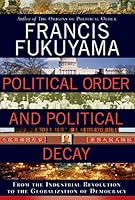

The study of “development”—that is, change in human societies over time—is therefore not just an endless catalog of personalities, events, conflicts, and policies. It necessarily centers around the process by which political institutions emerge, evolve, and eventually decay.

What Socrates discovered was that we can have intercourse with ourselves, as well as with others, and that the two kinds of intercourse are somehow interrelated. Aristotle, speaking about friendship, remarked: “The friend is another self”139—meaning: you can carry on the dialogue of thought with him just as well as with yourself. This is still in the Socratic tradition, except that Socrates would have said: The self, too, is a kind of friend.


All science, said Descartes, rests upon the one indubitable certainty that I think and that therefore I exist. Now the thought and existence of which Descartes spoke were not abstractions—anything thinking anything, or anything somehow getting itself thought about—as those wiseacres believe who offer to emend his formula to cogitatur ergo est, or cogitare ergo esse or the like. Descartes meant what he said, and what he said was that the concrete historical fact, the fact of my actual present awareness, was the root of science.


Tuesday, March 9, 2021

Thoughts for the Day: Tuesday 9 March 2021


How we resolve the tension between risk and reward defines who we are. And fear is a guidepost for how we use the Wedge. It is as much an involuntary response to a prediction of the future as it is a sensation that immobilizes our biology and stops us from taking action. Mastering fear doesn’t mean ignoring danger, but rather finding a reason that makes danger worth it—separating the stimulus from the response.


At present, a postindustrial hollowing out in society, a financial crash, failed wars, and geostrategic fears have shaken voters’ faith in the conservative claim to prudence and superior understanding. With increasing pace during the 2010s, a broadly liberal-minded center-right found itself on the defensive against a confident, disruptive hard right.

Freedom always implies freedom of dissent. No ruler before Stalin and Hitler contested the freedom to say yes—Hitler excluding Jews and gypsies from the right to consent and Stalin having been the only dictator who chopped off the heads of his most enthusiastic supporters, perhaps because he figured that whoever says yes can also say no. No tyrant before them went that far—and that did not pay off either.

Karl Polanyi’s description of modern political economy’s painful birth warns of the difficulty ahead as we try to create an ecological civilization.

In contrast with the simple notions [of power] are the difficult definitions proposed by philosophers, for instance: “Power is the compulsion of composition” (A. N. Whitehead); “[Power is] the production of intended effects” (B. Russell); “[Power is] the difference in probability of an event, given certain actions by A, and the probability of the event given no such actions by A” (R. A. Dahl); “Inherent in power, therefore, as opposed to force, is a certain extension in space and time” (E. Canetti); “By virtue and power I mean the same thing; that is, virtue, insofar as it is referred to man, is a man’s nature or essence” (Spinoza).

Likewise, it is not belief to say God exists and then continue sinning and hoarding your wealth while innocent people die of starvation. When belief does not control your most important decisions, it is not belief in the underlying reality, it is belief in the usefulness of believing."

Monday, March 8, 2021

Thoughts for the Day: Monday 8 March 2021


[E]conomists’ vision of ‘perfect competition’ – in which the social role of virtue in serving the public economic interest is rendered redundant by the incentives competition generates in a market – might work tolerably in the market for vegetables. But it doesn’t in more sophisticated markets like those for knowledge and expertise.
--Nicholas Gruen, economist (@NGruen1)

It is also important to present a powerful image, to conjure a “glamour” of success. “People want to believe that something is the biggest and the greatest and the most spectacular,” and Trump’s job is to tell them it is. They will do the rest. He conveys this message by surrounding himself with symbols of the fantasy life he is selling.


But things are not quite so simple as that. To begin with, people may have a motive for deceiving themselves and each other. Where certain things which may happen in people’s minds are conventionally regarded with disapproval, the lengths to which people in whose minds they actually do happen will go, in order to persuade themselves and others that they do not happen, are most remarkable.

The only way to eat a satiating meal while minimizing insulin secretion is to add fat. It’s the one macronutrient that does not stimulate an insulin response.

The masses can never successfully revolt until they acquire a leadership, which is always made up in part of able and ambitious individuals from their own ranks who cannot gain entrance into the governing élite, and in part of disgruntled members of the existing élite (members of the nobility, for example, in the opening stages of the French Revolution, or dissatisfied intellectuals and middle-class persons in the Russian Revolution). So long, therefore, as the governing élite is both willing and in a position to destroy or to assimilate all such individuals, it has a virtual guarantee against internal revolution.

“The scientists who discovered the forces of electricity,” Barfield contends, “actually made it possible for the human beings who came after them to have a slightly different idea, a slightly fuller  consciousness  of their relationship with one another.”


The Science of Conjecture: Evidence & Probability Before Pascal by James Franklin


                                                                           2015 edition

If the title of this book seems daunting to you, well, then, your instincts are sound. This is not a book for the faint of heart. However, if you're up for an amazing intellectual trek through the high-country (and some low country) of the mind, then you'll find this book a genuinely rewarding experience. I came to the book via a recommendation from Nassim Taleb, and the praise that Taleb expressed for the book proved more than accurate. 

Author James Franklin

Author James Franklin is an Australian mathematician-philosopher, but this description sells him short. The breadth of learning displayed in this volume is truly astonishing. Reading it, you might guess him a linguist, a lawyer, a rhetorician, a medievalist, a scientist, and so on. As the title lets you know, his topics are broad--"evidence" and "probability"--and his account runs from the dawn of Western civ in Egypt and Mesopotamia up to the early modern period of Pascal. (Would that someone write a similar history of Indian and Chinese thought!) Pascal, along with Fermat and Huygens, and a few lesser-known figures, marked a change in thinking about probability when they developed mathematical models and algorithms for calculating the odds (probabilities) involved in stochastic games of chance, such as dice. But as Franklin notes from the beginning of this book, most thinking about probability throughout Western history, including the period after Pascal, addresses probability (and chance) by the use of ordinary language. We see this demonstrated in terms such as "more likely than not," "a preponderance of the evidence," and "beyond reasonable doubt" to give examples of common phrases still used today by lawyers, judges, and juries.

Franklin traces ideas about evidence and probability through the domain of law, which proves the most significant domain for delineating issues of evidence in general and probabilities in particular. But Franklin also addresses developments about these topics in rhetoric, philosophy, theology, moral theology and philosophy (such as the casuistry of the Jesuits), insurance and business law, and natural science. Thinking about issues of evidence and probability has its roots in Greek and Roman thought, but perhaps more noteworthy is the fact that medieval thought and practice analyzed and advanced these concepts greatly. Franklin argues adamantly against many calumnies hurled against medieval thought by modern critics. Many post-classical, pre-Renaissance thinkers receive attention and implicit praise from Franklin for their groundbreaking insights: names like Baldus, Orseme, Duns Scotus, Buridan, Ockham, John of Salisbury, and Nicholas of Autrecourt, and so on. Many of these thinkers and sources were new or only vaguely familiar to me. 

There are times, I must admit, when I found the going a bit slow, although only in the relatively small section on Pascal and his peers did Franklin delve much into math as such. However, I'm quick to forgive Franklin for going a bit deep into the weeds at some points because of the importance of his overall message. Indeed, if you're pressed for time or just want to dip your toe in the get the feel, just read his prefaces (original and 2015), Conclusion, and Epilogue and you will have received a valuable reward for your time. Issues of evidence and the challenge of probabilities are as important and vital to our well-being today as they have been at any time throughout history. Indeed, given the extraordinary human powers that now threaten the entire planet and the continued well-being and survival of humankind as a species, we'd do well to do all we can to educate ourselves about these principles and thereby promote sound decision-making involving issues of evidence and probability. These terms were a part of my everyday concerns as a lawyer who practiced before trial and appellate courts (and administrative tribunals). But issues of evidence and probability have application quite as much (albeit less explicitly so) in our everyday lives. We experience these issues as individuals and as members of groups, for instance, as members of political entities that make decisions that affect our well-being from the level of our neighborhoods to the level of our nation and even now involving our entire world. For instance, we see these issues raised and discussed in great depth and with great concern in our thinking about how to best address climate change,.

Conclusion: The Science of Conjecture is quite an amazing book as a work of scholarship and as a prompt to thought. I would compare in its comprehensiveness and depth to Thomas McEllivey's The Shape of Ancient Thought: Comparative Studies in Greek and Indian Philosophies. High praise indeed! 


Sunday, March 7, 2021

Thoughts for the Day: Sunday 7 March 2021


My favorite book about Romania


I refer to understanding the true character of objectivity. For what is taught in journalism schools is an invaluable craft, whereas properly observing the world is a matter of deliberation and serious reading over decades in the fields of history, philosophy, and political science. Journalism actually is not necessarily, whatever the experts of the profession may claim, a traditional subject in its own right. Rather, it is a means to explore and better communicate subjects that are, in fact, traditional areas of study: history and philosophy as I’ve said, but also government, politics, literature, architecture, art, and so on. I’ve never altogether trusted what journalists say about themselves.

But we don’t expect our presidents to be ideal humans touched by a divine hand, like the biblical Moses. We don’t want our presidents to be perfect—most important, we don’t want them to consider themselves perfect. As we’ve already seen, Americans have strong apprehensions about perfection. We are culturally adolescent, and we expect our president to be adolescent as well. We expect him to be connected to the American soul, and that means rarely doing things right the first time. Instead, we expect him to make mistakes, learn from those mistakes, and be better for it. Clinton’s presidency was riddled with mistakes (from the botched national health plan to Whitewater to the Monica Lewinsky scandal), but, according to an ABC News/Washington Post poll, his approval ratings at the end of his second term were higher than those of any post–World War II president, including Ronald Reagan.

Because of the power and prestige that Oxford and Cambridge had down through the centuries (graduates were given, in effect, two votes in national elections until 1935), a large portion of prominent politicians, scholars, and leaders of society up till recent times had undergone three years of this weekly ritual: writing essays that they had to read aloud and that were evaluated entirely on the basis of hearing. I think this may explain something I’ve noticed till recently about English scholarly and political writing: it seems more accessible, spoken, and free of jargon than the same genres in German and U.S. academic writing.

Collingwood explains it himself, ‘for the philosopher, the fact demanding attention is neither the past by itself, as it is for the historian, nor the historian’s thought about it by itself, as it is for the psychologist, but the two things in their mutual relation’.

No serious writer or speaker ever utters a thought unless he thinks it worth uttering. What makes it worth uttering is not its truth (the fact that something is true is never a sufficient reason for saying it), but the fact of its being the one truth which is important in the present situation.

From the ecological perspective, elevating the individual over the community makes no sense, intellectually or practically. Individuals should have civil rights, but civic duties and responsibilities must have at least equal weight if we wish to preserve the integrity of the system over the long term.


Saturday, March 6, 2021

Thoughts for the Day: Saturday 6 March 2021

1986 publication, still more than relevant
 

Contrary to common belief even among the educated, Huxley and Orwell did not prophesy the same thing. Orwell warns that we will be overcome by an externally imposed oppression. But in Huxley’s vision, no Big Brother is required to deprive people of their autonomy, maturity and history. As he saw it, people will come to love their oppression, to adore the technologies that undo their capacities to think.


On such matters of evidence, the Lombard commentators already show the characteristic medieval tendency to generalize much more than the Roman lawyers and to inquire into abstract principles. How can a law legislate against those who plot against the king’s life, when only God can know anyone’s thought? “[The question] is solved in this way: it is known through indications, for example if someone is discovered in the king’s chambers after hours having a naked sword under his cloak, or with a knife in his sleeve, or if the cupbearer of the king while near him is seen to prepare poison.”
My most recently completed book.

Despite having lost its original theoretical basis, an outmoded mechanical worldview still prevails.

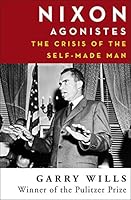
He had this in common with the kids; he wears a Nixon mask.
N.B. The "he" is Nixon.

Unless we treat politics as a zero-sum game in which the whole field is to be won and held by one side, recognition of an enduring left-right divide across the field reflects, in rough terms, an acceptance of politics as unending argument amid diversity. It reflects acceptance, in short, of a core element in liberal democracy: the acknowledgement of unsettleable social conflict, fought over politically by the right and the left.
N.B. This is what U.S. politics has lost, at least for those who have adopted the Trumpist line, which now seems a majority of the (what retains the brand) of the Republican Party.

And this speaking in analogies, in metaphorical language, according to Kant, is the only way through which speculative reason, which we here call thinking, can manifest itself. The metaphor provides the “abstract,” imageless thought with an intuition drawn from the world of appearances whose function it is “to establish the reality of our concepts” and thus undo, as it were, the withdrawal from the world of appearances that is the precondition of mental activities.


Friday, March 5, 2021

Thoughts for the Day: Friday 5 March 2021


If such a human nature were to exist, it would be a natural phenomenon, and to call behavior in accordance with it “human” would assume that human and natural behavior are one and the same. In the eighteenth century the greatest and historically the most effective advocate of this kind of humanity was Rousseau, for whom the human nature common to all men was manifested not in reason but in compassion, in an innate repugnance, as he put it, to see a fellow human being suffering.

Restoration in Europe appears today in the form of three fundamental concepts. First there arose the concept of collective security, which is in reality not a new concept but one taken over from the happy times of the Holy Alliance; it was revived after the last war in the hope that it would serve as a check on nationalistic aspirations and aggression. If this system went to pieces, however, it was not because of such aggression but because of the intervention of ideological factors.

Montesquieu’s moving and guiding principles—virtue, honor, fear—are principles insofar as they rule both the actions of the government and the actions of the governed.

However, not all of past life is historically reclaimable. What cannot be re-enacted cannot be known. And what cannot be known, for Collingwood, includes the immediacy of the past, an immediacy that is essential to sensation and to feelings, and which is to some degree present in thought, too. Historical blunders, failures of various kinds, even accidents and strokes of luck can be rethought so long as they can be related to the agent’s aims and purposes.

Mainstream conservatives organized themselves in parties of the center-right. They were flanked by two kinds of dissent from within the right: conservatives on the party fringes who refused to compromise with the liberal-democratic status quo, and conservative critics, outside party politics and often indifferent to policy, who found ugly or unethical the liberal-modern world that political conservatives were helping to create.

[T]he economic optimists’ view implies that the human species is biologically exceptional and that our modern economies are historically exceptional.

The main reason people have a problem with procrastination is that they don’t see the connection between completing something and having new, fresh energy come out of that.

It is fundamental to every school of Buddhism that there is no ego, no enduring entity which is the constant subject of our changing experiences. For the ego exists in an abstract sense alone, being an abstraction from memory, somewhat like the illusory circle of fire made by a whirling torch.