Tuesday, March 23, 2021

Thoughts for the Day: Tuesday 23 March 2021


At a deeper cultural level, Anna Wierzbicka’s English: Meaning and Culture describes how John Locke’s writings on probability, reasonableness, and moderation became ingrained in the English language. The words “reasonable” and “probably” appear in modern English with a frequency and range of application very much higher than their cognates in other European languages, as do words indicating hedges relating to degrees of evidence such as “presumably,” “apparently,” “clearly.” These phenomena indicate an Anglophone mindset that particularly values attention to the uncertainties of evidence.

For in the end, he [Aldous Huxley] was trying to tell us that what afflicted the people in Brave New World was not that they were laughing instead of thinking, but that they did not know what they were laughing about and why they had stopped thinking.

The hard part is identifying excellence and crafting the rules of the game to elicit it. Of course, it’s immensely harder to govern scientific research than football.--Nicholas Gruen

To be free from convention is not to spurn it but not to be deceived by it. It is to be able to use it as an instrument instead of being used by it.

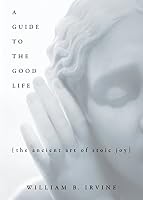
Stoicism and Zen have certain things in common. They both, for example, stress the importance of contemplating the transitory nature of the world around us and the importance of mastering desire, to the extent that it is possible to do so. They also advise us to pursue tranquility and give us advice on how to attain and maintain it. Furthermore, I came to realize that Stoicism was better suited to my analytical nature than Buddhism was. As a result, I found myself, much to my amazement, toying with the idea of becoming, instead of a practicing Zen Buddhist, a practicing Stoic.

Citizens never formed a deliberative whole but remained an unthinking herd. “When a candidate for public office faces the voters, he does not face men of sense; he faces a mob of men whose chief distinguishing mark is the fact that they are quite incapable of weighing ideas.”

Sunday, March 21, 2021

Thoughts for the Day: Sunday 21 March 2021


One of the outstanding books of 2020


As the century unfolds, fear is likely to become humanity’s overriding emotion. Successful worldviews— those that survive and spread through large populations— will exploit this fear to motivate people’s hero stories, for bad…. or just maybe for good.

"Comprehension [means] examining and bearing consciously the burden which our century has placed on us— neither denying its existence nor submitting meekly to its weight." --Hannah Arendt

With these two points of resemblance – imagination and narrative – in mind Collingwood is saying that history and the novel are both constructs.

[I]n scientific history…everything in the world is potential evidence for any subject whatever.--R.G. Collingwood, quoted by David Pierce in his Polytropy blog

[I]ndividual nation-states no longer possess the resources to solve their most pressing problems or to fulfill many of their basic responsibilities, much less provide expected benefits to citizens. As their power and authority wane, they are beginning to decompose into their ethnic, religious, ideological, and class components.

James Sullivan, writing influential essays under the name of “Cassius,” [at the time of the ratification of the Constitution] proclaimed: “Thus we see that no office, however exalted, can protect the miscreant, who dares invade the liberties of his country, or countenance in his crimes the impious villain who sacrilegiously attempts to trample upon the rights of freemen.”15 In my view, this point is central, even defining, because it connects the power of impeachment with the American Revolution itself. On this account, a violation of liberty or rights is an impeachable offense—even if it is not itself a crime.

But when we release copious amounts of adrenaline into our bodies today and just sit and try to think our way out of a problem, that extra energy boost has nowhere to go. Stress needs a physical counterpart.

Confusion is hypnotic because it creates absorption: that's it! If you are confused you are temporarily trying to understand something – this absorbs your attention.


Saturday, March 20, 2021

Thoughts for the Day: Saturday 20 March 2021


Believing is not to be reduced to thinking that such-and-such might be the case. It is not a weaker form of thinking, laced with doubt. Sometimes we speak like this: ‘I believe that the train leaves at 6.13’, where ‘I believe that’ simply means that ‘I think (but am not certain) that’. Since the left hemisphere is concerned with what is certain, with knowledge of the facts, its version of belief is that it is just absence of certainty. If the facts were certain, according to its view, I should be able to say ‘I know that’ instead. This view of belief comes from the left hemisphere's disposition towards the world: interest in what is useful, therefore fixed and certain (the train timetable is no good if one can't rely on it). So belief is just a feeble form of knowing, as far as it is concerned.


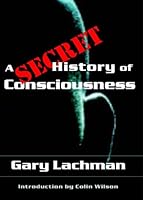
In Frankenstein’s Castle Wilson remarked that although Freud was right that the unconscious is much more powerful than the conscious mind, he was wrong to believe that therefore it was in control. This scenario, of the unconscious lording it over the puppet-like ego, became very popular in the twentieth century, and contributed significantly to the feeling of helplessness and the ‘worm’s eye view’. (Wilson has even taken Jung to task for this; see C. G. Jung: Lord of the Underworld (1984))

Whereas in the archaic and magical structures silence reigns—consciousness remaining in an “autistic” uroboric state before the rise of language—in the mythical structure language emerges as a form of sacred power, creating both a “self” and a “world” outside and other than that self.25 Language then is a medium for polarities.

A conception is fixed and held only when it has been embodied in a symbol. So the study of symbolic forms offers a key to the forms of human conception. The genesis of symbolic forms—verbal, religious, artistic, mathematical, or whatever modes of expression there be—is the odyssey of the mind.


As your waist circumference expands, your risk of heart disease goes up. As your blood pressure elevates, so does your risk for heart disease, and stroke as well. The worse your blood sugar control (glucose intolerance), the more likely you are to be diabetic, and the more plaque deposition you’re likely to have in your arteries.

And it never failed that during the dry years the people forgot about the rich years, and during the wet years they lost all memory of the dry years. It was always that way.

If we drop the “-ology” and just stick with “telos,” we can get back to its first and original meaning (formulated by Aristotle): “that for the sake of which.”

Friday, March 19, 2021

Thoughts for the Day: Friday 19 March 2021


2014 publication from MIT Press


As Whitehead noted, exalting the scientific over the aesthetic was a “disastrous error” that left us caught “between the gross specialized values of the mere practical man, and the thin specialized values of the mere scholar”—that is, between Wall Street and the Ivory Tower—without a solid or realistic basis for making critical decisions.


In terms of politics, nature had taught Hitler only two “laws.” One was the “trampling to death” of alien species “to maintain [one’s own] species.” The other was “not to value the individual life too highly,” that is, it was all right to trample to death individuals of one’s own species. The latter principle he even considered a “divine law,” the only one in which he was inclined to believe. He demonstrated the dispensation of God with the example of—flies.

It has often been said that the British acquired their empire in a fit of absent-mindedness, as consequence of automatic trends, yielding to what seemed possible and what was tempting, rather than as a result of deliberate policy. If this is true, then the road to hell may just as well be paved with no intentions as with the proverbial good ones.

If violence is the midwife of history and violent action therefore the most dignified of all forms of human action, what will happen when, after the conclusion of class struggle and the disappearance of the state, no violence will even be possible? How will men be able to act at all in a meaningful, authentic way? Finally, when philosophy has been both realized and abolished in the future society, what kind of thought will be left?

It is no truism to stress that the hard-right vote is a right-wing vote. The hard right has grown out of a conservative electorate.

The very simple assumption underlying the LCHF/ketogenic diet is that it’s the carbohydrate-rich foods we eat that make us unhealthy: both fat and sick.

“Thomas Jefferson explained the power of language with the help of an analogy: “He who receives an idea from me, receives instruction himself without lessening mine; as he who lights his taper at mine, receives light without darkening me.”30”


Thursday, March 18, 2021

Thoughts for the Day: Thursday 18 March 2021


Published in 1951


In order to establish a totalitarian regime, terror must be presented as an instrument for carrying out a specific ideology; and that ideology must have won the adherence of many, and even a majority, before terror can be stabilized.

The question that imposed itself was: Could the activity of thinking as such, the habit of examining whatever happens to come to pass or to attract attention, regardless of results and specific content, could this activity be among the conditions that make men abstain from evil-doing or even actually “condition” them against it?

"The historian, investigating any event in the past, makes a distinction between what may be called the outside and the inside of an event. By the outside of an event I mean everything belonging to it which can be described in terms of bodies and their movements. … By the inside of an event I mean that in it which can only be described in terms of thought." R.G. Collingwood, The Idea of History, 213.

It is not too much of an exaggeration to say that almost nobody in Britain drank tea at the beginning of the eighteenth century, and nearly everybody did by the end of it.


Language and Myth by Ernst Cassirer, translated by Susanne K. Langer


The original German edition published in 1924; Langer's English translation in 1946

This short (126 pp.) work was originally published by Cassirer in his native Germany. The English translation was undertaken by fellow philosopher--and in some ways his successor in the aspect of his project--Susanne K. Langer. The English-language edition was published in 1953. It's not a quick or easy read, but well worthwhile if the reader has an interest in the roots of myth, language, religion, and thought. 

This is my first book by Cassirer. His titles, An Essay on Man (1943), The Myth of the State (1946), and Language and Myth were found on many book store shelves and The Myth of the State (which I've now started reading) was included on political theory "additional reading" bibliographies. But Cassirer wasn't taught in any class that I took, and I never got around to reading any of his work. But my curiosity was renewed when I read The Time of the Magicians: Wittgenstein, Benjamin, Cassirer, Heidegger, and the Decade That Reinvented Philosophy (2020), in which Cassirer comes across as the most establishment and the most traditional of the four thinkers discussed in that book. However, he also came across as the most sensible and accessible. The climax of the book was a "debate" between Cassirer and Martin Heidegger that was held in Davos (yes, that Davos) in 1929. Some thought Heidegger received the greater approval of those present, but I came away with s  greater appreciation of Cassirer. (N.B. Heidegger remained in Germany in 1933 after the Nazis came to power and accepted a Nazi-approved position; Cassirer, who was Jewish, fled Germany that year for Britain and eventually came to the U.S., where he finished his career.) 

Thus my taking up Language and Myth. 

This is a dense book, not a long read, but neither is it a quick, easy read. In fact, in order to write this review, I went back and read it a second time. But the additional effort was worth the time spent. 

Cassirer wields serious credentials as a scholar and as a thinker. His mastery of the literature of myth and religion from the nineteenth-century up to the time of his original publication in 1924 reveals his bona fides as a scholar. Many of the fellow scholars whose works he cites are unfamiliar to me (and were written in German), but a few, like Frazier, Tylor, and Max Muller, are familiar. Cassirer delves deeply into these sources in his attempt to understand the relationship between language, myth, religion, and later formal modes of thought (such as philosophy and science). That Cassirer relies on so many early explorations of mythology and religion makes me wonder how later developments in the field may alter the validity of his conclusions. In any event, these early European (and American?) scholars delved deeply and enthusiastically into other cultures and their ways, which is certainly one of the positive outcomes of the spread of Westerners around the world and their encounters with different civilizations and cultures. Cassirer seems quite well-acquainted with this pioneering literature. And what does he make of it? 

In short, Cassirer argues that that language and myth share a common linage and that one doesn't pre-date the other. Myth and mythological (and magical) thinking pre-date later developments of what we've come to know as rational, logical thought. He spends the last chapter discussing metaphor as a key function of language. Put in the simplest terms, our logical-deductive, denotative language tends to abstraction and generalization, while our mythical, more metaphorical language tends toward specification. I come away with the feeling that Cassirer doesn't intend to crown one way of language and knowledge over the other, but he sees them as complementary. And don't be fooled by his sympathy for the archaic, the mythological, the metaphorical. This is a man who was a leading "neo-Kantian" and who wrote a book explaining Einstein's (then) new theory of relativity. 

As I remarked above, I've just embarked on The Myth of the State, and I also have my eye on his An Essay on Man, both of which should take deeper into his project of "philosophical anthropology." After those two works, I'm looking forward to some of Susanne Langer's works. And, reading Myth and Language has me thinking about how his work compares to that of his peer, R.G. Collingwood, who served as a reader for an OUP book of essays dedicated to Cassirer, who was then living in the UK. So no doubt Collingwood had some acquaintance with Cassirer's project. Both of these thinkers were concerned with art and appreciated non-Western and archaic cultures and traditions. (And Collingwood made interesting observations about magic as well.) I also wonder how Cassirer compares to Owen Barfield, a younger contemporary concerned with the "evolution of thought" and origins and development of language. Finally, among our contemporaries, Iain McGilchrist cites Cassirer a few times in his masterwork, The Master and His Emissary, and I suspect that there are a good many more shared perspectives and potential influences than one might glean from McGilchrist's passing citations. (Perhaps McGilchrist's forthcoming book will shed some light on this topic.) 

Cassirer is another thinker from the first half of the twentieth century and from Central Europe whose writing about philosophy, history, politics, religion, and art--and about their contemporary world--continues to fascinate me. A century ago they were dealing with the Great Influenza that ravaged the world in 1918-1919 while at the same time dealing with the destructiveness of the First World War and all the changes that it wrought. And it was a time of new mass media (radio and film), economic disruption (post-war and then the Great Depression), cultural change, and political extremism and violence. History doesn't repeat itself, but it does rhyme, and the rhymes I hear make me nervous and therefore eager to take advantage of the insights and wisdom of those who dealt with similar challenges a century ago.

03.18.2021 


Wednesday, March 17, 2021

Thoughts for the Day: Wednesday 17 March 2021--Happy St. Patrick's Day!


It is the specific danger of all forms of government based on equality that the moment the structure of lawfulness—within whose framework the experience of equal power receives its meaning and direction—breaks down or is transformed, the powers among equal men cancel each other out and what is left is the experience of absolute impotence. Out of the conviction of one’s own impotence and the fear of the power of all others comes the will to dominate, which is the will of the tyrant.

Of the two European suspicions—that American anti-Stalinists are simply more sophisticated and less powerful defenders of the status quo, and that they may be only an ideological “superstructure” for their country’s national interests in foreign politics—the one seems to be as well founded as the other is unwarranted. Interminable discussion by anti-Stalinists of the moot question as to whether Soviet Russia is a socialist country has somewhat blurred the fact that anti-Stalinists, along with other Americans, are fundamentally and sincerely opposed to any government that functions with the help of concentration camps and secret police, that aims at the total domination of society and the total humiliation of man.

One can say that to some extent fascism has added a new variation to the old art of lying—the most devilish variation—that of lying the truth.

What interested me far more were the moods of intensity—what G. K. Chesterton had called the sense of ‘absurd good news’. From the beginning, one thing seemed basically clear to me: that in these states of enriched consciousness, these states in which it seems self-evident that life is good, we begin to grasp what life is all about.