Saturday, November 13, 2021

Thouoghts: 13 Nov. 2021


Simply stopping the slide— just keeping things from getting worse— isn’t enough. Reversing it means aggressively addressing our world’s agonizing social and economic injustices; and most importantly, it means rebuilding nature. We must commit to fixing the hideous environmental mess we’ve made— with all the science, technology, economic investment, and intellectual, artistic, and emotional creativity we can muster.

Those values and rules and institutions do for knowledge what the U.S. Constitution does for politics: they create a governing structure, forcing social contestation onto peaceful and productive pathways. And so I call them, collectively, the Constitution of Knowledge.

Remember that nobody accepts randomness in his own success, only his failure.

The internet has been excellent at telling us about the actual, not so much about the contingent, although policymakers necessarily operate in an arena of uncertainty and unpredictability.

“Nothing is more essential than that permanent, inveterate antipathies against particular nations [read, today: Russia?] and passionate attachments for others [read, perhaps: South Vietnam?] should be excluded.” Washington’s text argues that “the nation which indulges toward another an habitual hatred or an habitual fondness is in some degree a slave.”
This was published in 1970, perhaps we'd substitute "China" for "Russia," and perhaps "Saudia Arabia."

This is what happened: First your society and your culture taught you to believe that you would not be happy  without certain persons and certain things. Just take a look around you: Everywhere people have actually built their lives on the unquestioned belief that  without certain things—money, power, success, approval, a good reputation, love, friendship, spirituality, God—they cannot be happy. What is your particular combination?


“Evolution doesn’t have a purpose in the human sense, as far as I know. But because we are human, we can give it a purpose. We are now in the position of being responsible for evolution, for life. It’s no longer just a mindless universe. I mean, it is just a mindless universe, which has generated through complexity a mind that now has to decide where we want to go. So, in that sense, now it has a purpose, it seems to me. It’s our purpose. And we have to decide what that purpose is.”
—“Flow With Soul: An Interview with Mihaly Csikszentmihalyi," What Is Enlightenment? Magazine, Issue 21, Spring/Summer 2002

Friday, November 12, 2021

Thoughts 12 Nov 2021


Weber’s understanding of values was indebted chiefly to Nietzsche and that Donald G. Macrae in his book on Weber (1974) calls him an existentialist; for while he holds that an agent may be more or less rational in acting consistently with his values, the choice of any one particular evaluative stance or commitment can be no more rational than that of any other. All faiths and all evaluations are equally non-rational; all are subjective directions given to sentiment and feeling. Weber is then, in the broader sense in which I have understood the term, an emotivist and his portrait of a bureaucratic authority is an emotivist portrait. The consequence of Weber’s emotivism is that in his thought the contrast between power and authority, although paid lip-service to, is effectively obliterated as a special instance of the disappearance of the contrast between manipulative and non-manipulative social relations.

The defense would argue, citing Descartes, Aristotle, Kant, or Popper, that humans err by not reasoning enough. The prosecution would argue, citing Luther, Hume, Kierkegaard, or Foucault, that they err by reasoning too much.

The purpose of a hypothesis in science is to propose an explanation for what we observe, either in nature or in the laboratory (ideally, a testable hypothesis): Why did this happen and not that? The more observations a hypothesis can explain or the more phenomena it can predict, the better the explanation, the better the hypothesis. This insistence that we get fat because we overeat is not even wrong, as the legendary physicist Wolfgang Pauli, a man with a gift for memorably pithy criticisms, might have put it. It explains nothing.


Entropy is a measure of the deadness of a system. Negentropy or information is a measure of the liveliness of a system.

He ["Phaedrus"] felt that institutions such as schools, churches, governments and political organizations of every sort all tended to direct thought for ends other than truth, for the perpetuation of their own functions, and for the control of individuals in the service of these functions.

The great masterpieces of twentieth-century historical writing rarely mention dates. Think, in particular, of so-called cross-sectional studies, such as Fernand Braudel’s book on the Mediterranean world at the time of Philip II, which does not present us with a development over time but is instead content with describing what that world looked like at one specific temporal cross-section.

[John Ciardi:] In contrast with the turbulent complexity of Hell, Dante’s Purgatory is simple, regular, and serene. On the lower reaches below the gate are kept in exile for varying lengths of time those souls who, for various reasons and in various conditions, sought salvation at the last moment. Above, within Purgatory, we find not the multifarious crimes by which vice or sin manifests itself in Hell (or on Earth), but simply the seven Capital Vices that lead to sinful acts.

Thursday, November 11, 2021

Thoughts: 11 November 2021--Happy Armistice/Veterans Day (really)


There is much to be learned from the past—but it is better learned from the pragmatists than from the ideologues. Washington would have been the least surprised or disoriented to see what the nation looked like after the Jeffersonians had made it.


Any attempt to capture the folkways of our local centers has told a story not of participatory democracy but of closed social corporations, the rules of climbing in them quite rigid, the pinnacle of power monopolized by various social and business combines. That situation has gradually been changing; and—is it accidental?—now we hear a lament for the decline of community, a decline which the new politicians would remedy by further atomizing society, “politicizing” each man, urging him to “do his own thing.” They seem to believe that community is merely the sum of individual “own things.”
Compare this observation with Collingwood's distinction between "community" & "society."

Liberal education, he said, is the effort to establish “an aristocracy within democratic mass society.” Western civilization, as Strauss understood it, was the property of an educated minority. But that didn’t make it unworthy of defense against the nihilistic Nazis. Quite the contrary.
Are liberal educations today acting to protect us from authoritarianism & illiberalism?

I had always thought that we used language to describe the world—now I was seeing that this is not the case. To the contrary, it is through language that we create the world, because it’s nothing until we describe it.

“There is no animal in nature, excepting Man, that sleeps with the mouth open; and with mankind I believe the habit, which is not natural, is generally confined to civilized communities, where he is nurtured and raised amidst enervating luxuries and unnatural warmth where the habit is easily contracted, but carried and practiced with great danger to life in different latitudes and different climates; and in sudden changes of temperature, even in his own house.”
Remember the Spanish proverb: "En un boca cerrado no entran moscas." ["In a closed mouth enter no flies.']

The question is, was anything lost nutritionally in the process of juicing? The answer is an emphatic yes—all of the insoluble fiber is now gone. The soluble fiber alone still has some benefit; orange juice moves the food through the intestine faster (to generate the satiety signal sooner), and the soluble fiber can be converted to short-chain fatty acids. But those benefits pale in comparison to the suppression of the insulin response associated with the combination of the two. Remember, it doesn’t matter where the fructose comes from—fruit, sugar cane, beets—without the fiber, it all has the same metabolic effect on your body.

Wednesday, November 10, 2021

Thoughts: 11 Nov 2021--Happy Armistice Day!


A discussion of the climate crisis—the historical transformation of nature and its implications for our history—written from the safety of an Upper West Side apartment could seem remote. The Anthropocene remained an abstract intellectual proposition. The coronavirus crisis has stripped even the most sheltered of us of that illusion.
The Anthropocene as "polycrisis" (as Tooze describes it elsewhere in his book). Whether as an addendum to the climate crisis or as a manifestation of that crisis, the pandemic revealed how we can't hide from the consequences of our choices (action or inaction).
Even though economists widely agree on the basic principles behind carbon taxes and cap-and-trade policies, for example— and argue forcefully in favor of such policies— and even after decades of academic discussion, countless learned policy briefs, and some half-hearted government moves in Europe, Canada, and China, we’re still not paying anything close to an appropriate price for throwing our carbon junk into our air.
These words were published in 2020. Since then, Europe has moved significantly in this direction (carbon pricing) and Canada & China have made moves. The U.S. has this issue on deck, with perhaps as many as 49 senators and the Biden Admin are getting on board. Time to make this happen!

There are many who share responsibility without any visible proof of guilt. There are many more who have become guilty without being in the least responsible. Among the responsible in a broader sense must be included all those who continued to be sympathetic to Hitler as long as it was possible, who aided his rise to power, and who applauded him in Germany and in other European countries.
Arendt here refers to Hitler, Germany, and Europe, to whom else m and where else might her observation apply?

Arendt began by noting that although the two ideas of “liberation” and “freedom” were often confused and conflated, they were not the same. Liberation consisted of a rebellious breaking of shackles, the dream of political upheavals from the dawn of recorded history, and had always been the focus of historians and other intellectuals because all the drama was contained in the fight against tyranny, or what Arendt called all the good stories.
And so what is "freedom." (Stay tuned!)

As [Jean] Gebser knew, images and symbols operate at the level of the magical structure, bypassing the critical, reflective mind. The perpetual “now” of the ever-present Internet does not allow for the deep, meditative time in which the mind can focus on values and understand why it thinks as it does. A picture may be worth a thousand words, but without the words to tell you, you may not even know what you are looking at—something all good advertisers know.
As Collingwood argued, without language we have no thoughts. "Thought" is created by and comprised of language. Images and symbols alone appeal to the soul, not the mind.

The full and precise articulation of the doctrine of infinitely interpenetrated totality (dharmadha-tu) is one of the notable achievements of Mahayana Buddhist thought. It is also a characteristic theme of Greek thought. In fact, the Greeks seem to have been the first thinkers to formulate the concept of infinity except as an indefinite mass, the first to give it mathematical and logical formulations. The concept of interpenetrated infinities, that is, an infinity of separate entities in which each one contains all the others, was first articulated by Anaxagoras, in his conception of matter. Of infinite entities, each is conceived to have in it tiny parts of every other. Each separate thing contains, in a microcosmic form, everything else. Each apparent unit is in fact infinity squared—which is to say infinity to the infinite power.
The ability of the ancient Greeks and Indians (and some others) to develop such deep insights without the benefit of technological science is astounding.

Since its origins, capitalism has been synonymous with Schumpeter’s “gale of creative destruction.” The gale has now morphed into a hurricane that is genuinely creative but also extremely destructive.
Creativity is a Good (see Whitehead & Charles Hartshorne for details), but so are Conservation & Balance. Contemporary capitalism & its resulting consumerism and their thirst for novelty have become like the mischief of the Sorcerer's Apprentice.

Hayek’s brand of antiauthoritarianism was ambivalent about democracy. “Democracy is a means, a utilitarian device for safeguarding internal peace and individual freedom,” he wrote. “There has often been much more cultural and spiritual freedom under an autocratic rule than under some democracies.” What mattered to Hayek was liberty, and by liberty he meant the rights of an aristocracy against the central government, whatever form that government took.
The Haves always fear democracy and the Have-Nots. And not without some basis in history, but often to excess and therefore working to kill real democracy.

To believe that Trump showed us who we really are is no different from believing that Obama showed us who we really are. Narcissism is expressed in extremes of self-contempt as well as self-adoration. Both are paralyzing. They tell us more about the mind of the person in front of the mirror than the objective facts of the image in the glass.
As individuals, we are complex & often self-contradictory in our beliefs & actions. How much more so as a nation of individual, self-contradictory selves all given to some measure of narcissism.

In this book I argue that all progress, both theoretical and practical, has resulted from a single human activity: the quest for what I call good explanations.
An intriguing thought.

Tuesday, November 9, 2021

Thoughts: 9 November 2021


From mitochondrial function to the functions of Big Food & Big Pharma


First of all, most pundits in the field (of nutrition) aren’t bench scientists or clinicians; they tend to be nutritional epidemiologists, and nutritional epidemiology has significant limitations. Epidemiology means correlation, not causation. Like John Snow’s cholera/Broad Street pump exercise . . . nutritional epidemiology studies are discovery, and discovery can be very important in posing the questions that truly need answering. However, it almost never answers the questions by itself; you need to design a proper study to answer them (see below). Just because A is associated with B, does that mean that A causes B? Or could it be reverse causality (B causes A)? Or could it be intermediate causality (C causes A or B)? Could it be irrelevant (C is associated with B and D, and D causes A)? As an example, ice cream consumption correlates with frequency of drownings. Does that mean eating ice cream causes you to drown?
The above insight is not limited to the subject of nutrition.


In our first book, The True Patriot, we argued that putting self above community and country was morally wrong. In this book, we argue that it is stupid. We aim to show that in theory and in practice, self-seeking is now a counterproductive instinct and that we need a bigger idea of what freedom means in order for our country to remain great.
Weigh this insight in light of the current status of vaccination and mask use.


And our languages are our media. Our media are our metaphors. Our metaphors create the content of our culture.


Laughter as resistance to the mechanization of life has political implications. The stasis that Bergson’s élan vital opposes occurs in the institutions of society, schools, universities, government offices, corporations. Freud considered stasis — like Demeter’s stuckness and Norman Cousins’s immobility — to be a sign of the death drive, the thanatos principle.

Monday, November 8, 2021

Thoughts: 8 November 2021


History shows that just because we want a problem solved doesn’t mean the problem will be solved.

But persuasion is analogous to compromise in that negotiators must ultimately reach accommodations—settle on something—in order to make a new law or establish new knowledge.

ARENDT: I do not believe that there is any thought process possible without personal experience. Every thought is an afterthought, that is, a reflection on some matter or event. Isn’t that so? I live in the modern world, and obviously my experience is in and of the modern world. This, after all, is not controversial. But the matter of merely laboring and consuming is of crucial importance for the reason that a kind of worldlessness defines itself there too.

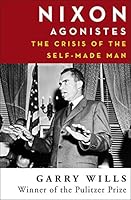
An election cannot establish a unitary National Will. The belief that it does so leads to the belief that the Nation is deciding whatever Richard Nixon decides should be done, with American bombs and American lives, in Vietnam.

“The nature of illusion is that it’s designed to make you feel good. About yourself, about your country, about where you’re going – in that sense it functions like a drug. Those who question that illusion are challenged not so much for the veracity of what they say, but for puncturing those feelings.”

— Journalist/activist Chris Hedges

“It is impossible for a man to learn what he thinks he already knows.” — Epictetus