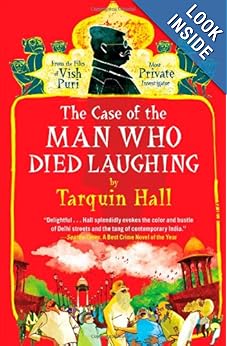
He’s done it again.
Cross-posted in Steve's View from Abroad
 I received the assignment to read the novel for my Modern
Fiction course taught by David (“First Blood”) Morrell. The book was near the
top of the reading list, and in a semester that began with a mistake (I misread
my transcript), I had to read more works than I had time for. In the words of
the Panda, I “had to be strategic”. Fortunately, Professor Morrell told us
about the echo, the Freytag triangle, and how this novel helped create the
transition to modern fiction. Anyway, it was enough to do well in the course. Within
the last year, of course, this omission began to haunt me. Shouldn’t I now read
this classic? Well, I again procrastinated. I’d seen the movie years ago (and
remember virtually nothing about it), but mostly I wanted to focus on reading
about other aspects of India, both longer ago (Moguls and rajas) and the recent
past and contemporary India. Thus, until recently, I’ve avoided reading about
the British Raj. Now, however, perhaps for the mere fact that Indian Summer had been looking at me for
so long (my books look at me longingly and pleadingly when I don’t pay
attention to them), I decided to read Forster's classic. Then, when I saw a good edition of A Passage to India (Penguin, with an
introduction by Pankaj Mishra), I bought it and
moved it toward the top of the pile.
I received the assignment to read the novel for my Modern
Fiction course taught by David (“First Blood”) Morrell. The book was near the
top of the reading list, and in a semester that began with a mistake (I misread
my transcript), I had to read more works than I had time for. In the words of
the Panda, I “had to be strategic”. Fortunately, Professor Morrell told us
about the echo, the Freytag triangle, and how this novel helped create the
transition to modern fiction. Anyway, it was enough to do well in the course. Within
the last year, of course, this omission began to haunt me. Shouldn’t I now read
this classic? Well, I again procrastinated. I’d seen the movie years ago (and
remember virtually nothing about it), but mostly I wanted to focus on reading
about other aspects of India, both longer ago (Moguls and rajas) and the recent
past and contemporary India. Thus, until recently, I’ve avoided reading about
the British Raj. Now, however, perhaps for the mere fact that Indian Summer had been looking at me for
so long (my books look at me longingly and pleadingly when I don’t pay
attention to them), I decided to read Forster's classic. Then, when I saw a good edition of A Passage to India (Penguin, with an
introduction by Pankaj Mishra), I bought it and
moved it toward the top of the pile. Warning: The following book may be hazardous to your health. Exposure to this material may cause irritation, anger, outrage, or other severe emotional disturbances. In addition, it may change your mind.
 To those who aren’t acquainted with the Taleb, you should
know that he is a native of Lebanon, where he grew up in a prominent and Christian
family during the civil war. He came to the US and attended Wharton business
school. After completion of his MBA, he went to work in the banking and
investment industry. After having made sufficient money (“f--- you” money, as
he terms it), he became an independent scholar and writer. He is at once innovative
and very cantankerous. While at times I can find I find his style abrasive, as
he liberally hands out insults and putdowns, he nevertheless always seems to
provide mind (and practice) altering insights. So, if you read this latest of
his books, Antifragile, you stand
forewarned of this risk.
To those who aren’t acquainted with the Taleb, you should
know that he is a native of Lebanon, where he grew up in a prominent and Christian
family during the civil war. He came to the US and attended Wharton business
school. After completion of his MBA, he went to work in the banking and
investment industry. After having made sufficient money (“f--- you” money, as
he terms it), he became an independent scholar and writer. He is at once innovative
and very cantankerous. While at times I can find I find his style abrasive, as
he liberally hands out insults and putdowns, he nevertheless always seems to
provide mind (and practice) altering insights. So, if you read this latest of
his books, Antifragile, you stand
forewarned of this risk.The Italian political and legal philosopher Bruno Leoni has argued in favor of the robustness of judge-based law (owing to its diversity) as compared to explicit and rigid codifications. True, the choice of a court could be a lottery – but it helps prevent large-scale mistakes. (90)
For those readers who wonder about the difference between Buddhism and stoicism, I have a simple answer. A stoic is a Buddhist with attitude, one who says “f*** you” to fate. (153)
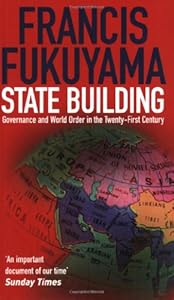 The first issue that I should address comes from the fact
that that I have posted this book review on my “Steve’s View from Abroad”
website. What has this to do with India? While a far cry from the failed states
that are the primary focus of this book, India, nevertheless, is a state (or
states, as it’s a federal system) that fails to function effectively in many
realms. Anytime I speak about India, I almost always mention the lack of basic
government services and the effect that this has daily life. Poor roads, poor
drainage, poor sewers, poor water and air quality—I could go on (and did with
some dinner partners just the other night). I believe that India will gain a
measure sophistication and decent quality of life (which includes and
transcends a mere increase in GDP) when Jaipur no longer has garbage strewn
upon its streets; when the poor living in shanties have found decent housing;
and when the middle class has initiated a “Progressive Era” for India to
clean-up political corruption and to address its failing infrastructure. India
is far from a world-class economy currently, but if it can reach a critical minimum
of an engaged middle-class willing to fight the good political fight, it has a
future. A lot of work—a lot—remains to be accomplished, but it can happen.
The first issue that I should address comes from the fact
that that I have posted this book review on my “Steve’s View from Abroad”
website. What has this to do with India? While a far cry from the failed states
that are the primary focus of this book, India, nevertheless, is a state (or
states, as it’s a federal system) that fails to function effectively in many
realms. Anytime I speak about India, I almost always mention the lack of basic
government services and the effect that this has daily life. Poor roads, poor
drainage, poor sewers, poor water and air quality—I could go on (and did with
some dinner partners just the other night). I believe that India will gain a
measure sophistication and decent quality of life (which includes and
transcends a mere increase in GDP) when Jaipur no longer has garbage strewn
upon its streets; when the poor living in shanties have found decent housing;
and when the middle class has initiated a “Progressive Era” for India to
clean-up political corruption and to address its failing infrastructure. India
is far from a world-class economy currently, but if it can reach a critical minimum
of an engaged middle-class willing to fight the good political fight, it has a
future. A lot of work—a lot—remains to be accomplished, but it can happen. It has been a longstanding dream of the social sciences to turn the study of human behavior into a true science, moving from the mere description to formal models of causation with nontrivial predictive value, based on rigorous empirical observation. This project can be realized more readily in some spheres of human behavior than in others. Markets are susceptible to this kind of analysis, which is why economics emerged as the queen of the social sciences in the late twentieth century. But organizations constitute a complicated case. Individuals in the organizations look out for their narrow self-interests, and to the extent they do, the economist’s methodological individualism provides genuine insight. But to a much greater extent than in markets, norms and social ties affect individual choices in organizations. The effort to be more “scientific” than the underlying subject matter permits carries a real cost in blinding us to the real complexities of public administration as it is practiced in different societies. (123)

