Tuesday, May 25, 2021

Thoughts for the Day: Tuesday 25 May 2021


We always have one choice in the face of life’s obstacles. We can follow reactions that are already hardwired into our body’s physiological responses, or, for better or worse, resist those urges and will ourselves onto a different path. Either way, life’s challenges—the crests and valleys of that turbulent ocean—are the stakes that define what we’re made of. The decisions we make in the face of death are what make us real.


Evil comes from a failure to think. It defies thought for as soon as thought tries to engage itself with evil and examine the premises and principles from which it originates, it is frustrated because it finds nothing there. That is the banality of evil.


In Kierkegaard’s view, philosophy is so caught up in its own systematics that it forgets and loses sight of the actual self of the philosophizing subject: it never touches the “individual” in his concrete “existence.” Hegel indeed trivializes this very individual and his life, which are for Kierkegaard the central concern.

And in other cases in which the evidence to be evaluated is strictly numerical, as in evaluating business prospects given financial information, it appears that human judgment is competitive with the most sophisticated mathematical methods.

The Internet was meant to be the ultimate equalizer, providing small start-ups access to customers everywhere. And there is some truth to this idea. But the larger truth is that far from being a platform that has enabled competition, the Internet by nature encourages the creation of monopolies on a scale rarely seen in history.

Monday, May 24, 2021

Thoughts for the Day: Monday 24 May 2021


Say the order of your time feels unjust and unsustainable and yet massively entrenched, but also falling apart before your eyes. The obvious contradictions in this list might yet still describe the feeling of your time quite accurately, if we are not mistaken. Or put it this way; it feels that way to us. But a little contemplation of history will reveal that this feeling too will not last for long. Unless of course the feeling of things falling apart is itself massively entrenched, to the point of being the eternal or eternally recurrent individual human’s reaction to history. Which may just mean the reinscription of the biological onto the historical, for we are all definitely always falling apart, and not massively entrenched in anything at all.

Wherever there is the possibility of transcendence, there is, by the very same token, the possibility of repression. The higher might not just transcend and include, it might transcend and repress, exclude, alienate, dissociate.

There came upon me by degrees, after this, a sense of being burdened with a task whose nature I could not define except by saying, ‘I must think.’ What I was to think about I did not know; and when, obeying this command, I fell silent and absent-minded in company, or sought solitude in order to think without interruption, I could not have said, and still cannot say, what it was that I actually thought.

The somewhat comprehensive socialization of investment Keynes had described in The General Theory might be described as the commonsense regulation of inflation and employment, rather than the nefarious planning that Hayek excoriated. Glass-Steagall’s government-mandated breakup of the American investment houses was just a responsible antitrust action to restore competitive banking. Social Security and public works spending were inoffensive elements of the basic social guarantee.

As to the certainty or otherwise of their methods, the Empirics, though apparently not admitting the fallibility in principle of induction from what has been seen “very many times,” did admit to making mistakes because their experience was limited. They hastened to add, of course, that the Dogmatists did too, without admitting it. Dogmatism, they said, could at best only reach the level of plausibility and likelihood.

Humanitas is never acquired in solitude and never by giving one’s work to the public. It can be achieved only by one who has thrown his life and his person into the “venture into the public realm”—in the course of which he risks revealing something which is not “subjective” and which for that very reason he can neither recognize nor control. Thus the “venture into the public realm,” in which humanitas is acquired, becomes a gift to mankind.

Sunday, May 23, 2021

Thoughts for the Day: Sunday 23 May 2021


We still threaten ourselves with our own destruction, whether with our armaments or through the world’s remarkable economic productivity coupled with a still-reckless disregard for the natural environment.

A two-hundred and fifty year-old industrial civilization is also entering its terminal phase. It is mostly failing to come to grips with the problems occasioned by its success, and it exhibits all of the major contradictions that have driven past civilizations toward decline and fall—ecological stress, overpopulation, resource exhaustion, excessive complexity, loosened morals, burgeoning indebtedness, social strife, blatant corruption, and political dysfunction.

Basins of attraction are places of local stability or equilibrium where the system in question is more likely to settle and remain, because less energy is needed to keep the system there. In the state-space model, the basins are locations in the state space where large numbers of people don’t have to invest a lot of cognitive energy— they don’t have to think much— to maintain their political ideologies, because (among other reasons) the ideologies at those locations align with their temperaments and moral intuitions. Psychologists can measure people’s investment of cognitive energy by using methods such as the implicit association test, which captures the degree of subconscious association between mental representations in a person’s mind. Generally, the more conscious an association, the more cognitive energy is invested in making the association.

The aesthetic experience, as we look back at it from a point of view where we distinguish theoretical from practical activity, thus presents characteristics of both kinds. It is a knowing of oneself and of one’s world, these two knowns and knowings being not yet distinguished, so that the self is expressed in the world, the world consisting of language whose meaning is that emotional experience which constitutes the self, and the self consisting of emotions which are known only as expressed in the language which is the world.
It has taken me a long time to accept this move entirely seriously. You really have to dig pretty deep, if you are a conceptual rationalist, to get below, or beyond, all those defensive concepts – the constructs of the mind that structure and filter experience and make it safe for human consumption. It is not that concepts must be banished. Only they must not be taken literally ‒ the “things” they posit are not substances.


Saturday, May 22, 2021

Thoughts for the Day: Saturday 22 May 2021


This ability to see into the interior of reality Bergson called “intuition.” This was, he said, a “kind of intellectual sympathy by which one places oneself within an object in order to coincide with what is unique in it and consequently inexpressible.”

I do not consider imagination to be a mental faculty only.
Here, I follow the Romantics, who took the power of imagination right out of the head and into the cosmos. “Jesus, the Imagination,” exclaimed Blake, by which he meant the cosmic creative force of the world soul, or anima mundi, which produces the images that we perceive—and receive. Images come to us, in reverie, in dreams, in sudden clear insights, and during the long struggles of careful thought. They come to us from the world’s imagination, with which ours corresponds and, according even to such skeptics and rationalists as Hume and Kant, on which our understanding of the world depends. “Without Imagination we should have no knowledge whatsoever, but we are scarcely ever conscious [of this],” said Immanuel Kant.


Once again we see Collingwood’s anti-realism hard at work. Facts do not just present themselves to the inquirer; they become evidence only in relation to the questions the inquirer wishes to ask.

Conservatives, by contrast, began with the nation and built from it a citizenry. As a distinct body of people, the nation was imagined ancestrally or culturally; that is, its people could be treated as sharing origins or as sharing beliefs, attachments, and historical memories. Without one or the other, a people could not make a citizenry. The nation, for conservatives, became accordingly a foundational, social idea.

Friday, May 21, 2021

Thoughts for the Day: Friday 21 May 2021


Imagination, the ability to see things as images, is an ability of the heart, according to the influential Islamic philosophy of Ibn Arabi (d. 1240).

In distinction from fantasy, which dreams something, imagination is concerned with the particular darkness of the human heart and the peculiar density which surrounds everything that is real.


And if it can't literally happen now, the warrior sets precise deadlines. Sets them up now. He sets the deadlines NOW, so that they are still in the NOW. Deadlines soon become the warrior’s best friend.

By medieval standards, or even modern ones, the bourse of Antwerp [in early modern times] was remarkably free of regulation, and the atmosphere of speculation was intense. Little distinction was drawn between entrepreneurial activity and purer speculation like trading in grain futures or outright betting on such events as the next journey of Philip II to the Netherlands and the sex of unborn children.

In the philosophy of science, the progressive skepticism about the objective bearing of experimental evidence on theory, from Popper through Kuhn and Lakatos to Feyerabend, undermined the defenses science might have mounted against its irrationalist enemies.

[Sir Michael] Tippett lamented the loss of melody, described by Haydn as ‘that which is most difficult to produce – the invention of a fine melody is a work of genius’, and by Mozart as ‘the essence of music: I should liken one who invents melodies to a noble racehorse, and a mere contrapuntist to a hired post-hack.’

In the world of human affairs as known to the historian . . . [s]tructure is resolvable into function. There is no harm in historians talking about the structure of feudal society or of capitalist industry or of the Greek city state, but the reason why there is no harm in it is because they know that these so-called structures are really complexes of function, kinds of ways in which human beings behave; and that R.t when we say that, for example, the British constitution exists, what we mean is that certain people are behaving in a certain kind of way.


Thursday, May 20, 2021

Thoughts for the Day: Thursday 20 May 2021


Keynes & his legacy are still very much with us today

[Hayek] continued to view unemployment as a basic supply and demand problem, just as Ludwig von Mises and his conservative Austrian disciples did. Keynes merely rejected the view that markets could resolve the problem on their own or that states could speed up the project by curbing the power of labor unions to set unrealistically high wages. Inflation, ultimately, was a roundabout way of cutting everyone’s pay. Rising prices reduced the purchasing power of workers’ paychecks. With pay reduced, employers would then be able to hire more people. A policy of deliberate inflation was not only politically easier than an attack on organized labor, it ensured that particular industries would not be unfairly singled out.

[Collingwood] sometimes puts his point by declaring that nothing can be considered as evidence by a historian until it is seen as answering a question he wants to ask.

[W]e all respond to carbohydrates differently. Enormous variation exists from person to person. That’s one very good reason why, given the same foods to eat, some of us will grow up to be built like fashion models and some of us will be extremely obese. Moreover, different cells and tissues even in the same individual respond differently to insulin. Here, too, there’s enormous variation.

It's not the calories in sugar that do the most damage, it's the way that excess added sugar is metabolized in the liver, which causes chronic disease and distorts brain and hormone signaling, leading people to feel increasingly hungry, even as they eat more and more.


Wednesday, May 19, 2021

Thoughts for the Day: Wednesday 19 May 2021


Published oringally in 1963


Despite all the efforts of the prosecution, everybody could see that this man was not a “monster,” but it was difficult indeed not to suspect that he was a clown.

[N]o elimination of errors or dispelling of illusions can arrive at a region beyond appearance.

Even more tantalizingly suggestive is another fragment: “Bad witnesses are eyes and ears for men if they have barbarian souls” [Plato], that is, if they do not possess logos—for the Greeks not just speech but the gift of reasoned argument that distinguished them from the barbarians. In short, wonder has led to thinking in words; the experience of wonder at the invisible manifest in the appearances has been appropriated by speech, which at the same time is strong enough to dispel the errors and illusions that our organs for the visible, eyes and ears, are subject to unless thinking comes to their help.

And this is why we need the Wedge: because it forces us to focus on the connections between the environment, sensory system and conscious experience. When we consciously form new neural symbols, we aren’t just acting in the present moment; our choices and emotions right now also inform how we feel in the future.

[A.R.] Orage contrasted what he called the “occult arts” with “occult faculties,” arguing that while the former obsess and “devour” people, resulting in “cranks,” “occult faculties” free the mind, allowing it to soar into new dimensions. Intuition, insight, and imagination—the faculties in question—were, Orage said, “winged thought,” “winged judgment,” and “winged sympathy.”

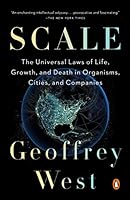
The battle to combat entropy by continually having to supply more energy for growth, innovation, maintenance, and repair, which becomes increasingly more challenging as the system ages, underlies any serious discussion of aging, mortality, resilience, and sustainability, whether for organisms, companies, or societies.

Tuesday, May 18, 2021

Thoughts for the Day: Tuesday 18 May 2021


Much of this book has been a repudiation, mostly implicit but not always, of the relevance, to those of us who are not naturally lean and healthy, of Pollan’s otherwise seemingly sensible mantra—“Eat food. Not too much. Mostly plants.” For us, “not too much” is meaningless. “Mostly plants” is not ideal and may be to our detriment (ideal as it may be for the animals and maybe even the environment, although that, too, is not as simple as it is often portrayed).


[K]ings have made [arguments] for enslaving the people in all ages of the world…. Turn in whatever way you will—whether it come from the mouth of a King, an excuse for enslaving the people of his country, or from the mouth of men of one race as a reason for enslaving the men of another race, it is all the same old serpent..... I should like to know if taking this old Declaration of Independence, which declares that all men are equal upon principle and making exceptions to it… where will it stop?

A. Lincoln (courtesy of Heather Cox Richardson)


You’re either believing your thoughts or questioning them. There’s no other choice.

Will depends on freedom; and freedom is a matter of degree (21. 8). This complicates our simplest possible analysis of the body politic without, however, falsifying it.

History concerns not the past, but the past encased in the present in the form of evidence.

Progress gives an answer to the troublesome question, And what shall we do now? The answer, on the lowest level, says: Let us develop what we have into something better, greater, et cetera. (The, at first glance, irrational faith of liberals in growth, so characteristic of all our present political and economic theories, depends on this notion.)

We do not inhabit the body like some alien Cartesian piece of machine wizardry, but live it – a distinction between the left and right [brain] hemisphere understandings of the body.

Knowledge and information throughout our economy and society are being degraded on an immense scale. That’s because, as with legal procedure, the standards according to which competition takes place are public goods. But they reflect the private interests of those with products to sell, axes to grind and stories to spin, not the public interest we all have in being informed.
--Nicholas Gruen

Goddess worship, feminine values, and women's power depend on the ubiquity of the image. God worship, masculine values, and men's domination of women are bound to the written word. Word and image, like masculine and feminine, are complementary opposites. Whenever a culture elevates the written word at the expense of the image, patriarchy dominates. When the importance of the image supersedes the written word, feminine values and egalitarianism flourish.

Though Christianity did reach an accommodation with Aristotle, the obstacles to doing so were prima facie more serious than for the other religions of the book. The Jewish and Islamic God, “the Desired, the Existent, the Sole, the Supreme,” was already a somewhat remote and almost philosophic figure and tended to create philosophical problems for his followers only in such marginal areas as the creation of the world. The Christian God did much more extraordinary things, such as walking around a Roman province at a not too distant time in history.