Showing posts with label Jeffrey Sachs. Show all posts

Sunday, August 1, 2021

Thoughts for the Day: Sunday 1 August 2021


"Our problems are manmade; therefore, they can be solved by man. And man can be as big as he wants. No problem of human destiny is beyond human beings. Man’s reason and spirit have often solved the seemingly unsolvable, and we believe they can do it again."--John F. Kennedy.

To emphasize from the outset the importance of Napoleon to the Jeffersonian administrations, Adams introduces him in the History's first volume with a Miltonic flourish: "Most picturesque of all figures in modern history, Napoleon Bonaparte, like Milton's Satan on his throne of state, although surrounded by a group of figures little less striking than himself, sat unapproachable on his bad eminence; or, when he moved, the dusky air felt an unusual weight" (227).

History had no use for multiplicity; it needed unity; it could study only motion, direction, attraction, relation. Everything must be made to move together; one must seek new worlds to measure; and so, like Rasselas, Adams set out once more, and found himself on May 12 settled in rooms at the very door of the Trocadero. [From The Education of Henry Adams.]

“In short,” said Rousseau, “it is the best and most natural order for the wisest to govern the multitude, as long as it is certain that they govern for its benefit and not for their own.”

Despite the threat—or rather because of it—we’re focused. The potential for someone getting hurt is the wedge that forces us into coordination.

[O]ur nervous systems can really only issue two commands: tension or release.

“In non-linear systems [and surely a life is a nonlinear system] tiny, seemingly trivial differences in input can lead to huge differences in output.… Chaotic systems are not predictable [and surely unpredictability, too, is a characteristic of life] but they are stable in their irregular patterns.” Chaos theory gives great importance to “sensitive dependence on initial conditions.”

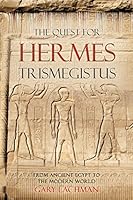
The difference between the Gnostics and the Hermeticists is that Hermetic man doesn't want to escape from the world, but to realize his full potential within it, in order to embrace his obligations, so that, as Hermes tells Asclepius, he can 'raise his sight to heaven while he takes care of the earth'.


Sunday, May 23, 2021

Thoughts for the Day: Sunday 23 May 2021


We still threaten ourselves with our own destruction, whether with our armaments or through the world’s remarkable economic productivity coupled with a still-reckless disregard for the natural environment.

A two-hundred and fifty year-old industrial civilization is also entering its terminal phase. It is mostly failing to come to grips with the problems occasioned by its success, and it exhibits all of the major contradictions that have driven past civilizations toward decline and fall—ecological stress, overpopulation, resource exhaustion, excessive complexity, loosened morals, burgeoning indebtedness, social strife, blatant corruption, and political dysfunction.

Basins of attraction are places of local stability or equilibrium where the system in question is more likely to settle and remain, because less energy is needed to keep the system there. In the state-space model, the basins are locations in the state space where large numbers of people don’t have to invest a lot of cognitive energy— they don’t have to think much— to maintain their political ideologies, because (among other reasons) the ideologies at those locations align with their temperaments and moral intuitions. Psychologists can measure people’s investment of cognitive energy by using methods such as the implicit association test, which captures the degree of subconscious association between mental representations in a person’s mind. Generally, the more conscious an association, the more cognitive energy is invested in making the association.

The aesthetic experience, as we look back at it from a point of view where we distinguish theoretical from practical activity, thus presents characteristics of both kinds. It is a knowing of oneself and of one’s world, these two knowns and knowings being not yet distinguished, so that the self is expressed in the world, the world consisting of language whose meaning is that emotional experience which constitutes the self, and the self consisting of emotions which are known only as expressed in the language which is the world.
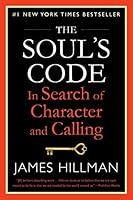
It has taken me a long time to accept this move entirely seriously. You really have to dig pretty deep, if you are a conceptual rationalist, to get below, or beyond, all those defensive concepts – the constructs of the mind that structure and filter experience and make it safe for human consumption. It is not that concepts must be banished. Only they must not be taken literally ‒ the “things” they posit are not substances.


Sunday, November 22, 2020

Thoughts for the Day: Sunday 22 November 2020


Scott Carney, Amelia Boone, and Dave Asprey

Flipping the switch between parasympathetic and sympathetic defines our “state.” Mastering the Wedge puts our thumb on that switch so that we can learn to control the state of our nervous systems, flipping between sympathetic and parasympathetic systems almost at will.


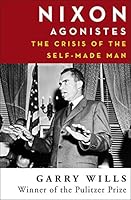
We cannot convincingly proclaim that where we stand is a “vital center.” Our “mainstream” is a sludge. The “consensus” is no longer a matter of compromise but surrender. Our archetypal “self-made man” is not only self-effacing but almost self-obliterating.

I am not referring to the absolute, infinite concept of universal peace and good will of which some fantasies and fanatics dream. I do not deny the value of hopes and dreams but we merely invite discouragement and incredulity by making that our only and immediate goal.
Desire is the motivating power behind all actions – it is a natural law of life. Everything from the atom to the monad; from the monad to the insect; from the insect to man; from man to Nature, acts and does things by reason of the power and force of Desire, the Animating Motive. "
How's this compare with the Buddha?
So if the immune system uses the same chemical hardware that creates feelings in our brains and influences our behavior in the world, then how much of a stretch is it to say that our immune system is conscious? What if instead of assuming that the immune system is just a machine, we give it a chance to have a semblance of cognition? Obviously the immune system can’t have the sort of complex emotions or thoughts that you or I experience, but even a shard of that subjectivity is powerful.

There have always been people who saw that the true ‘unit of thought’ was not the proposition but something more complex in which the proposition served as answer to a question. Not only Bacon and Descartes, but Plato and Kant, come to mind as examples. When Plato described thinking as a ‘dialogue of the soul with itself’, he meant (as we know from his own dialogues) that it was a process of question and answer, and that of these two elements the primacy belongs to the questioning activity, the Socrates within us.


Tuesday, April 14, 2015

Stimulating Thoughts: Sachs v. Krugman

In this corner, Jeff Sachs, Columbia
For someone with a stunning lack of qualifications, I’ve ventured into thinking about a topic of great interest to any modern society: how to manage (or not) an economy that may (or may not) need Keynesian stimulus. As a lightweight, I’ll limit myself to commenting on a fight between two heavyweights. With an audacity not justified by all of 11 credit of hours of economics as an undergraduate, I posted a reply to a tweet by Professor Jeffrey Sachs of Columbia about economic stimulus. 


In this corner, Paul Krugman, Princeton

Sachs has criticized Professor Paul Krugman’s support of stimulus in general and by the Obama Administration in particular. Conversely, Krugman has criticized the Cameron-Osborne austerity policy in Great Britain. Since 2008, according to Krugman, the most of the world has hit a zero-bound limit of interest rates in the latest economic melt-down (2008) that renders monetary policy—the work of the Fed and other central banks—ineffective. Lower interest rates can’t promote growth because the interest rate has effectively hit zero and there remain an insufficient number of takers to boost demand. Krugman argues that when monetary stimulus can no longer work, then it’s time to roll-out the Keynesian fiscal stimulus. To wit, government should spend more, not less (the austerity position).
(And please, I’m interpreting here, so don’t blame Krugman or Sachs for my mistakes.)

Sachs takes a different position. In the dangerously truncated world of Twitter, he wrote:


@SteveGreenleaf Fiscal policy is problematic as counter-cyclical tool in financial panic. Automatic stabilizers good; beyond that, dubious.


In longer (and therefore more trustworthy statements of his thinking), he’s against fiscal stimulus and Krugman’s position on it.  For instance, from this piece in the Huffington Post dated 9 March 2013 that provides a thorough presentation of Sachs’s position, he writes, “the stimulus packages that began in 2009 --which have consisted mainly of temporary tax cuts and transfer payments -- have significantly raised the public debt while doing very little to solve the nation's long-term employment and growth problems.”

I think that the pivotal point in this is Sachs’s reference to “long-term”. Perhaps he chose this instead of “long-run” because it could too easily come up against Keynes’s statement about “the long-run”:


"In the long run we are all dead. Economists set themselves too easy, too useless a task if in tempestuous seasons they can only tell us that when the storm is long past the ocean is flat again."


Herein lays the weakness of the Sachs’s position: Yes, the storm will clear and so we don’t need to take any extraordinary measures (beyond “automatic stabilizers”) to right the economic ship. This position has its merits. By way of analogy, when I have lower GI distress (ahem), do I treat it or do I suffer through it? Having been living abroad and traveling since 2012, I’ve had some (but relatively few) incidents, and when I have, I’ve usually let Nature run its course. No Cipro-bombs and only a little of applying the Imodium brakes. This course of benign neglect is one that I think medical authorities agree with. It allows the body to build and use its own defenses and avoids the side effects of any medication. (Any medication is a poison in the wrong dose or taken at the wrong time.) But if I’d gotten sick enough, I have Cipro in my travel kit. The question is one of judgement about when to treat and when to allow the “automatic stabilizers” to do their work without additional aid (not “stimulus” in this case, thank you). I believe that Dr. Keynes would agree to this treatment protocol. However, I believe that Dr. Sachs might be too parsimonious applying any treatment. For instance, in late 2008 and early 2009, we faced much more—at least potentially—than a “financial panic”. Sometimes—albeit rarely—“do something, do anything” has some merit. Thus, I believe that apply “Dr. Keynes’s Patented Fiscal Stimulus Elixir” an appropriate medicine to treat an economy with depressed “animal spirits” (following a manic phase).  

But the medicine of Keynesian fiscal stimulus does include a measure of potential poison. First, it’s subject to abuse. If a drug, it should be a Schedule 1 controlled substance—highly addictive. Politicians love to use it as an excuse the heat up the economy and thereby curry favor with the electorate It acts like a narcotic: a great rush followed by a crash and the desire for more and more. Politicians in an electoral democracy are always attempting to seduce voters (getting voters drunk on an economic high and then . . . well, you get the idea). Thus, we must be very wary about the use of fiscal stimulus. (For a fun look at this way of looking at Keynesian fiscal stimulus, view this video from Russ Roberts of Econ Talk and his buddies.) 

So should we turn this over the economists, the experts? That, too, has its limits. Economists, taken as whole, suffer from excessive hubris and limited thinking. Some have thought—and this more true of the Keynesian-oriented crowd than the Hayekian-Austrian crowd—that the economy could be managed. But the economy is a complex, dynamical system that is subject to influence, but only in limited, uncertain, and contingent ways. The economy is a like an organism that’s constantly changing in response to its local environment as well as evolving over the long-run. (Isn’t “organism” the best metaphor of an economy?) For instance, the world economy of the 1930s is different from the economy of 2015. We have learned some things (and ignored a great deal as well). Thus, as a general rule, I’d keep “Dr. Keynes’ Fiscal Stimulus Elixir” locked in a cabinet marked “Open Only in Case of Emergency”. 

In the end, I think that Krugman and the Obama Administration were right in promoting the use of fiscal stimulus. I don’t think that it hurt us (in the long-run), and we could have done much worse. And while I’m inclined to believe that Great Britain and Europe would have been better without austerity (although their social safety nets are probably better than those of the U.S.), things are improving (at last in Britain) despite any unnecessary pain. Sooner or later, the storm passes. 

Krugman and Sachs as economists have many greater points of significant agreement than significant differences. Both are important voices of progressivism. And while I think it was time in the wake of 2008 to break out the fiscal stimulus medicine, it’s now time to back off of it as a primary concern and focus instead on a long-term plan along that lines that Sachs has outlined. We in the U.S. need significant work on infrastructure and effective social programs. We need to “live within our means” and keep deficits in check. On the issues of climate change and world poverty Sachs has provided a leading voice in addressing these challenges. These issues, , along with limiting the legalized bribery of campaign finance and reducing the crippling economic inequality that can poison our society and politics, should become the focus of our public policy debate. Both of these heavyweights, whom I admire and from whom I’ve learned a great deal, play an important role in framing and forwarding these concerns. So let the debates continue.

Thursday, October 17, 2013

A Review of To Move the World: JFK's: Quest for Peace by Jeffrey D. Sachs


In this book well-known economist and public intellectual Jeffrey Sachs moves from the world of economic development and environmental concerns to an examination of how John F. Kennedy’s thought and rhetoric changed the dynamic of the Cold War. Sachs apparently came to this project through his friendship with Theodore Sorensen, Kennedy's primary speechwriter. Also, I suspect that Sachs came to the project because of his own quest to alter the dynamics in the world about global poverty, sustainable economic development, and ecological stewardship. In this book Sachs doesn't break any new historical ground. His main concern is to examine how the interplay of experience and rhetoric shaped the course of events both before and after the Kennedy administration.

Sachs notes that Kennedy had some important role models for his rhetoric and perceptions. First and foremost among these role models was Winston Churchill. However, his model was not simply the pugnacious Churchill of 1940 who defied the Nazis, but also the postwar Churchill, who, while warning of the spread of communism, also spoke in favor of peaceful talks. Perhaps in Churchill’s less eloquent but most apt words, more “jaw-jaw” and less “war-war”. This attitude of conciliation was carried forward by Dwight Eisenhower. Sachs notes a couple of Ike's speeches that struck a conciliatory note and that appreciated the dangerous dynamics that were developing between the US and the USSR. The most famous of Ike's speeches was his farewell speech, which Sachs describes is only one of two presidential farewell speeches that bears remembrance (the other was George Washington’s). In Ike's farewell speech, he warned of – indeed I think coin the phrase of – "the military industrial complex". Ike understood that there were strong pressures in the US (and certainly within the USSR as well) that pushed for military confrontation as a part of a profit and power seeking engine driven by defense contractors and the military. Roughly contemporary with Kennedy’s time in office was the papacy of Pope John XXIII, whose encyclical Pacem In Terris (Peace on Earth) provided another eloquent voice speaking out in favor of peace and justice. Kennedy was thus not alone on his perceptions and hopes, and he carried forward a line of predecessors and contemporaries from whom he could gain wisdom and assistance.

Sachs doesn't dodge the fact that Kennedy made the Cold War worse by the fiasco of the Bay of Pigs invasion that occurred shortly after he took office. In another one of history's "what if's", historians of wondered if Ike would've had the good sense to have pulled the plug on the Bay of Pigs invasion, or whether he would have gone whole hog with the invasion. Kennedy chose halfway measures that embarrassed the US, made Castro more belligerent, and that suggested to the USSR that some further intervention on behalf of their Cuban comrades was necessary. Sachs details how Khrushchev developed his harebrained scheme to put offensive missiles in Cuba with the thought of revealing the fateful come play at a party Congress scheduled in late 1962 (shades of Dr. Strangelove here). This scheme led to the Cuban missile crisis, where humankind came within an eyelash of worldwide catastrophe. Credit goes to both Kennedy and Khrushchev for avoiding a nuclear Armageddon by backing away from the demands of hardliners. Kennedy had to deal with Air Force Chief of Staff Curtis LeMay (the model for Stanley Kubrick's general Jack Ripper in Dr. Strangelove). Khrushchev obviously had his own people to deal with as well.

After this harrowing experience, Kennedy chartered a new course to try to ease the tensions of the Cold War. His renewed concerns with this subject  eventually led to his June 1963 speech at American University that has since been dubbed "The Peace Speech". Kennedy laid out the need for renewed efforts to avoid war, efforts that were neither naïve nor impossible to achieve. This included a voluntary suspension of nuclear testing so long as no other nation engaged in tests of their own. Kennedy followed up the next day with a major speech on civil rights where, I believe for the first time, he described the civil rights movement in terms of a moral imperative. These two speeches, perhaps more than his better-known inaugural address, highlight of Kennedys’ rhetorical gifts and moral vision.

Sachs does a good job of carefully examining Kennedy's rhetoric. For instance, Sachs shows how effectively Kennedy used the rhetorical device of antimetabole, the Greek term referring to the repetition of words in transposed order (e.g., “Ask not what your country can do for you—ask what you can do for your country.”) A great deal of credit for Kennedy’s rhetorical success goes to his aid Ted Sorensen, who wrote the first drafts and worked revisions in tandem with Kennedy. As a team, it will come up with signature ways of speaking and arguing that proved eloquent and effective. Kennedy was able to get the Soviet Union to the bargaining table, the parties agreed to a partial nuclear test ban treaty (underground testing was still allowed), and, most notably by the standards of today, he was able to get overwhelming Senate approval for the treaty. This was one of the highlights of Kennedy's congressional efforts. As we know, no civil rights legislation and no economic stimulus bill were enacted until after Lyndon Johnson became president and oversaw those efforts. While Kennedy's rhetorical gifts are undoubted, I still have the sense that without Johnson, the major civil rights legislation and perhaps even the economic stimulus Kennedy sought would have been sidetracked by Congress. As we know from our experience with President Obama, formal rhetoric that artfully and clearly sets forth a vision for possibilities is important, but not sufficient to effect real change. The trench warfare of congressional approval is also necessary to translate positive visions into law. Nevertheless, one can't leave this book without appreciating the skilled vision that Kennedy and Sorensen set forth.

Sachs spends a little bit more time on the post-Kennedy Cold War, and especially noteworthy is the period in the early and mid-1980s when Ronald Reagan and the hard core Republican right wing adapted an extremely confrontational attitude toward the Soviet Union. This attitude was perceived by the Soviet leadership and reciprocated. In hindsight, the Nixon-Ford-Kissinger efforts for détente are much more rational and reasonable. Reagan supporters argue that Reagan's rhetorical and military build-up in confrontation with the Soviet Union led to the downfall of the Eastern block and eventually the Soviet Union. But this argument should be subject to a lot of skepticism and should be rejected without a more persuasive argument made through a careful historical analysis than I’ve yet seen. The fact is, the doomsday clock that measured the threat to human well-being crated by nuclear war (now I think subject to other factors, such as ecological catastrophe) moved up very close to midnight again during a period in the 1980’s. However, once Reagan perceived a change in Soviet attitudes in the person of Gorbachev, Reagan's very effective rhetoric changed into one of conciliation and the need for rational consideration of the parties’ mutual need to avoid nuclear war and threatening confrontations. Neither Kennedy nor later Reagan dropped his strong stance of anti-Communism, but both came around to a much more sensible position. (Kennedy was more constrained by the extreme political right wing than was Reagan, who, like Nixon going to China, had a degree of credibility for a changed attitude toward the USSR that no Democrat could gain in order to achieve the changes the Reagan fostered.)

In my continued reading reflecting back on the presidency of John F. Kennedy, this book was a worthwhile addition. I thought it might be an exercise in hagiography, but instead, I found it a measured consideration of Kennedy and the importance of his and his predecessor’s rhetoric in defining the conflicts of the Cold War and thereby limiting the potential for a nuclear war. Perhaps because of my primal Republican background, I've never been an unabashed Kennedy admirer. His record was mixed, but I have gained a sense that the man grew during the course of his presidency and that the tragedy of his assassination did rob the world of his potential. Would he have avoided the deep entanglement of the Vietnam War? Would he have been able to forward the program of civil rights as effectively as did Lyndon Johnson? Would changes brought about by the initial efforts in diffusing the largest tensions of the Cold War have continued? All these “what if?” questions remain as tantalizing possibilities that will never receive a definitive answer. The only sure thing is the actual past; the future—or alternative futures—are marked by uncertainty. So with Kennedy. We should examine carefully his accomplishments, his failures, and the gifts he left behind, which though all too few, are nonetheless significant. I think Sachs performs an important service in this book in acknowledging that heritage and challenging us today to find similar instances where we can understand and improve our world through our rhetoric and politics.