Tuesday, January 4, 2022

Thoughts 4 Jan. 2022


Truly a magnum opus


[W]e take the success we have in manipulating it as proof that we understand it. But that is a logical error: to exert power over something requires us only to know what happens when we pull the levers, press the button, or utter the spell. The fallacy is memorialised in the myth of the sorcerer’s apprentice. It is hardly surprising, therefore, that while we have succeeded in coercing the world to our will to an extent unimaginable even a few generations ago, we have at the same time wrought havoc on that world . . . .


[A]s the great physicist Erwin Schrödinger put it in Science & Humanism, it seems plain and self-evident, yet it needs to be said: the isolated knowledge obtained by a group of specialists in a narrow field has in itself no value whatsoever, but only in its synthesis with all the rest of knowledge and only inasmuch as it really contributes in this synthesis toward answering the demand, τίνες δὲ ἡμεῖς; ‘Who are we?’


When analytic thought, the knife, is applied to experience, something is always killed in the process.

What would (or does) McGilchrist think of Pirsig's work?


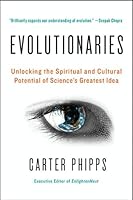
The evolution of this world is the goal of spiritual life. And by “world” I mean the manifest cosmos of time and space, both the interior and exterior realms—consciousness, culture, and cosmos. The action is here—in this time, in this place, in the possibilities that lie in the near and distant future of this culture, this world, this universe. Yes, there still may be spiritual transcendence of the most radical, sublime, and subtle forms, but transcendence is in the service of evolution, not the other way around. And that difference is everything.

Keynes explained his own methods in The General Theory: “The object of our analysis is, not to provide a machine, or method of blind manipulation, which will furnish an infallible answer, but to provide ourselves with an organised and orderly method of thinking out particular problems….Too large a proportion of recent ‘mathematical’ economics are mere concoctions, as imprecise as the initial assumptions they rest on, which allow the author to lose sight of the complexities and interdependencies of the real world in a maze of pretentious and unhelpful symbols.”

The example of gay marriage cited in the previous section shows how a political cause that embodies values from across the spectrum can succeed by virtue of its own inherent rightness. The agreeable quality of the cause of gay marriage was not achieved through political horse trading or by attempts at coalition building, rather, its political power was baked into its very nature by dint of the diversity of values it embodied.

Thinking in its non-cognitive, non-specialized sense as a natural need of human life, the actualization of the difference given in consciousness, is not a prerogative of the few but an ever-present faculty in everybody; by the same token, inability to think is not a failing of the many who lack brain power but an ever-present possibility for everybody—scientists, scholars and other specialists in mental enterprises not excluded. Everybody may come to shun that intercourse with oneself whose feasibility and importance Socrates first discovered. Thinking accompanies life and is itself the de-materialized quintessence of being alive; and since life is a process, its quintessence can only lie in the actual thinking process and not in any solid results or specific thoughts. A life without thinking is quite possible; it then fails to develop its own essence—it is not merely meaningless; it is not fully alive. Unthinking men are like sleepwalkers.

Monday, January 3, 2022

David-Wallace Wells & Daniel Swain on the Return of the "Urban Firestorm:" Some Reflections


30 December 2021: the Marshall fire in Boulder County, Colorado

I've been paying attention to climate change since around 1990, and it's been foremost on my radar for about 20 years. And, as with many, I suppose I have a bit of burnout from seeing the rock move only inches when we need to have moved it miles. But this event really renewed my vigor. It really sobered me up--and I'm already on the wagon. This article by David Wallace-Wells (author of Uninhabitable Earth), like his book, made me realize how vulnerable we all are. The article is more of an interview than a report. Wallace-Wells has an extended conversation with University of Colorado (Boulder) climate scientist Daniel Swain. 

The truly frightening thing about this fire was that it was not a "forest fire"--it originated on the plains, in the grasslands with only limited woodlands in the vicinity--and it quickly became an "urban firestorm."* Most of us have read about great fires that destroyed whole cities: London, Chicago, and San Francisco pop to mind. But that was then. In the twentieth century, these fires were unknown except for the intentional fire-bombings of Tokyo, Dresden, and Hamburg, among others. Since 1945 we haven't seen these intentional fires in urban areas, and our ability to prevent and control fires has prevented fires from devouring whole city blocks and killing hundreds and thousands of people. But as the events in Boulder county show, the urban firestorm may be back--or its suburban off-spring is now emerging. 

So just another climate change-related risk? Not if you live in the American West, or perhaps, if things continue, in other parts of the world, too. And if you live in Colorado Springs, as I do, you read this article and learn that the circumstances in Boulder appear very (very) little different than here in Colorado Springs. In mid-December, Colorado Springs (and all the way into Iowa) suffered a windstorm that downed trees and power lines and blew over semis. That storm and left us without power for about two and one-half days. Wind gusts of up to 100 mph were recorded. We, too, are on prairie with its dry grasses and close to the foothills of the Rockies and the forests that surround Pikes Peak. And we, too, have suffered from the same drought that Swain and Wallace-Wells describe in their interview. When I reflect back on our storm and the inconvenience that we suffered (we stayed a couple of nights with our daughter and son-in-law), it strikes me that we were lucky not to have also experienced out-of-control fires as well. 

Now for the bad news: I don't believe that there's a safe place. The effects of "climate enabled, weather-driven" disasters will only increase: droughts, fires, windstorms and derechos, tornadoes, hurricanes, extremes of heat and cold, and so on. Of course, you may say that we've always had to deal with these events, but we're not talking (at least at this point) about unique events. We're dealing with these familiar events that have grown in frequency and magnitude to the point where we're talking about "urban firestorms" once again; where we're setting meteorological and climate records constantly, and where insurance pay-outs for such disasters hit new highs on a regular basis (for those in who can obtain and afford insurance). 

And what will we do about this? 

*I suppose that given the locale, the authors might have termed the event a "suburban firestorm," which, given the reduced density of suburban homes & businesses (and frequency of great big parking lots) should make the prospect all the more frightening. 

Thoughts 3 Jan. 2022


Published November 2021


This book is an attempt to convey a way of looking at the world quite different from the one that has largely dominated the West for at least three hundred and fifty years – some would say as long as two thousand years.

We have been seriously misled, I believe, because we have depended on that aspect of our brains that is most adept at manipulating the world in order to bend it to our purposes. The brain is, importantly, divided into two hemispheres: you could say, to sum up a vastly complex matter in a phrase, that the brain’s left hemisphere is designed to help us ap-prehend – and thus manipulate – the world; the right hemisphere to com-prehend it – see it all for what it is. The problem is that the very brain mechanisms which succeed in simplifying the world so as to subject it to our control militate against a true understanding of it.


By employing the dialectical insights of polarity theory, the political philosophy I’m arguing for here brings together the polarity of self-interest and greater-than-self-interest with [Charles] Taylor’s polarity of immanence and transcendence. These two polarities are integrated through the following steps of logic: At the micro-level of individual motivation, the pursuit of self-interest, when relatively successful, moves toward forms of self-actualization that can only be found through self-transcendence.


Fiscal policy was even larger and more prompt. Central bank interventions were even more spectacular. If one married the two in one’s mind—fiscal and monetary policy together—it confirmed the essential insights of economic doctrines once advocated by radical Keynesians and made newly fashionable by doctrines like Modern Monetary Theory (MMT). State finances are not limited like those of a household. If a monetary sovereign treats the question of how to organize financing as anything more than a technical matter, that is itself a political choice.

That [appreciating the reality of contingencies; the unexpected], not the application of predetermined formulas, was the mark of a great general. But accepting contingency did not mean forsaking planning or reasoned thinking. It simply meant that rationality was no panacea, that one always stood in the middle of life, not outside it, assessing and reassessing based on immediate circumstances and the best knowledge that was available at any given moment. Improvisation should be employed only when improvisation was required, and then rationally. The quality of independent, unsupported thinking that goes by the hard-to-pin-down name of “intuition” was an important element in victory.

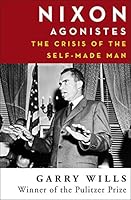
[Arthur] Schlesinger was left with clumsy quantitative tests—it was all right to get involved in Vietnam, but not too far; to bomb, but not too much; to engage in minor warfare but not with major casualties. Yet killing is never minor—there is no minor war, any more than there is minor murder. The question is, Do you kill out of self-defense or not? Is there a real threat to the people’s existence? When that threat becomes actual (not merely possible), we can take the minimum necessary means to preserve ourselves. When the threat ceases, so should our response.


Sunday, January 2, 2022

Thoughts 2 Jan. 2022


What is truth?” Sometimes people ask this question because they wish to do nothing. Generic cynicism makes us feel hip and alternative even as we slip along with our fellow citizens into a morass of indifference. It is your ability to discern facts that makes you an individual, and our collective trust in common knowledge that makes us a society. The individual who investigates is also the citizen who builds. The leader who dislikes the investigators is a potential tyrant.


Change can be unwelcome or challenging even when there is no particular reason to fear its consequences. But if it threatens stability, order, or an established way of life, then fear, anger, and hatred can become epidemic. Aversion to even trivial losses is another well demonstrated trait of the human mind; how much more so if one’s entire way of life is threatened.

Political responsibility is measured against forward-looking projections, forecasts, and warnings of what is to come. The greater the future threat, the greater the responsibility. There are good reasons that states have often passed laws against fortune-tellers and prophets of doom. It is not just that their methods are suspect. Their predictions right or wrong are apt to endanger the public peace of mind. And yet, in the twenty-first century, there are no laws against social scientists and epidemiologists predicting catastrophe. Indeed, those wielding power and money cling to whatever foresight they can offer.

Steady GDP growth is the duct tape holding together this jerry-rigged social order in which low-income Americans have little to no emergency savings, many basic welfare benefits are contingent on employment, and the threadbare safety net is patchy by design. This top-heavy, gold-plated jalopy of a political economy can pass as road safe in fair weather; try to ride it through a once-in-a-century epidemiological storm and it starts to break apart.

Why not try to treat autoimmune illnesses in the same way that we do anxiety—by interrupting external feedback loops and allowing the body to return to its original baseline? Just because autoimmune illness takes place in the body doesn’t mean that’s where the conditions start.

Keynes’s fellow countryman Lord Bryce, one of the keenest observers of the age, declared in 1902 that “for economic purposes all mankind is fast becoming one people.” Later that decade, Norman Angell’s best-selling book The Great Illusion argued that the major European countries had become so interdependent that starting a war would evidently be self-defeating.
And yet the war came.

We become what we are, as Nietzsche put it, so it’s crucial today to adjust what you imagine you are, because it is already determining your perception of tomorrow.

At the same time, bad decisions, or politically objectionable decisions, are not sufficient grounds for impeachment, even if much of the nation is up in arms. The United States, unlike some other democracies, does not allow votes of no confidence.

Historical sequences take this as their model, each action standing non-causally to the other. In the chess example, however, the freedom to move one way or the other is dependent on accepting the authority of the rules of chess. Historical sequences are both rule-governed and expressive of freedom, but the rules change over time, and so, as Collingwood writes, ‘it is the task of the historian to discover what principles guided the actions of the persons he is studying, and not to assume that these have always been the same’ (IH 475).

Let us give the six their right names ["art falsely so-called;" "crafts"]. Where an emotion is aroused for its own sake, as an enjoyable experience, the craft of arousing it is amusement; where for the sake of its practical value, magic (the meaning of that word will be explained in chapter IV). Where intellectual faculties are stimulated for the mere sake of their exercise, the work designed to stimulate them is a puzzle; where for the sake of knowing this or that thing, it is instruction. Where a certain practical activity is stimulated as expedient, that which stimulates it is advertisement or (in the current modern sense, not the old sense) propaganda; where it is stimulated as right, exhortation.

Perhaps we, as therapists and as patients, can live with both eyes open and travel both roads, alternately or even both at once. T. S. Eliot wrote, “Teach us to care and not to care / Teach us to sit still” (Ash Wednesday), which could be translated for us as: “Teach us to grow and not to grow. Teach us simply to look.” Or, as Goethe said, “Thinking is more interesting than knowing, but not as interesting as looking” (Maxims and Reflections).


Saturday, January 1, 2022

Thoughts New Year's Day 2022 Happy New Year!


"The active intellect [Left Hemisphere of the brain] … cannot entertain two images together, it has first one and then the other. [But] … if God prompts you to a good deed … whatever good you can do takes shape and presents itself to you together in a flash [RH=right hemisphere], concentrated in a single point." [Quoting Meister Eckhart.]

To be specific, goodness is the essence of the moral dimension of human experience, truth defines the focus of the rational domain, and beauty can be broadly defined as the capstone quality of the aesthetic dimension of value.

We’ve all seen the map of election results depicted according to this red-blue color scheme. This simplistic bipolar framing is understandable given that our national politics continue to be dominated by a two-party system. But this historically engrained conception of left and right, which is habitually used to characterize our contemporary political condition as a two-way contest taking place along a horizontal continuum, is woefully inadequate to our present situation. America’s political dysfunction is not simply the result of an exacerbated divide between the Democratic and Republican parties. Rather, we are now engaged in a three-way struggle between America’s three major cultural worldviews: the modernist worldview, the traditional worldview, and what can best be described as the “progressive postmodern worldview.”
George Packer adds a fourth group, but the point remains the same.

It was the Green New Deal that had squarely addressed the urgency of huge environmental challenges and linked it to questions of extreme social inequality.
Whatever one may think of any particular program in the Green New Deal, the need to realistically address both climate change & extreme inequality is real, and getting two birds with one stone is a very attractive potential.

No European mind since Newton had impressed himself so profoundly on both the political and intellectual development of the world. When the Times wrote Keynes’ obituary, it declared him “the greatest economist since Adam Smith.” But even praise so high as this sold Keynes short, for Keynes was to Smith as Copernicus was to Ptolemy—a thinker who replaced one paradigm with another. In his economic work he fused psychology, history, political theory, and observed financial experience like no economist before or since.
Let's all keep Keynes in mind for this new year!

Let us begin by asserting what is unquestionable: only human beings are historical beings. All other living beings have their own evolution and their life span. But we are the only living beings who know that we live while we live—who know, and not only instinctively feel, that we were born and that we are going to die.
Despite my assessment that Lukacs misreads Collingwood in some ways, in this quote--that humans are "historical beings" --Lukacs echos a key Collingwood theme.

We can't control outcomes in any sphere of life. All you can do – and therefore the only responsibility you have – is to put in the time and effort: into relationships, parenting, finding happiness, whatever. The actual result, in a profound sense, is none of your business.
Sounds to me very much like Krishna's counsel to Arjuna.

If those who escaped from the totalitarian hell have brought back nothing from their experience but the very truisms, moral or otherwise, from which they escaped twenty or thirty years ago—escaped for the very good reason that they had found them no longer sufficient either to explain the world we live in or to offer a guide for action within it—then we may, morally speaking, indeed be caught between pious banalities which have lost their meaning and in which nobody believes any longer and the vulgar banality of homo homini lupus ["man is wolf to man"], which as a guide for human action is also utterly meaningless even though quite a number of people do believe in it as they have always believed in it.

Doubts have a purpose, and by means of them we step backwards to take a better jump.

The most practical and realistic of the Founders were Franklin and Washington—and of the two, Washington had the more important role, military and civilian, in the new government. He had the most hands-on experience of the possibilities and difficulties of the people he was dealing with—in the day-to-day efforts of the war, in the resistance to greater central authority, in the pitfalls of setting up a new government and keeping it on course, in the problem of freeing slaves in his will and providing for their support long after he died.

Kant reflected the two traditions, one upon the other. Kant was a scientist, but the schools derivative from Kant have had but slight effect on the mentality of the scientific world. It should be the task of the philosophical schools of this century to bring together the two streams into an expression of the world-picture derived from science, and thereby end the divorce of science from the affirmations of our aesthetic and ethical experiences.

“The general idea with most memory techniques is to change whatever boring thing is being inputted into your memory into something that is so colorful, so exciting, and so different from anything you’ve seen before that you can’t possibly forget it,”

Thursday, December 30, 2021

Thoughts 30 Dec. 2021


A money economy takes the disconnection, and therefore the failure, one step further. The higher the level of economic development, the more money tends to become an abstraction rather than a counter for something concrete. Thus the economy can boom as the ecology disintegrates. This is particularly true if the society resorts to currency debasement or loose credit as a way to evade encroaching physical limits and foster an artificial prosperity, for then the economy becomes completely unhinged from concrete ecological reality. Overshoot and collapse is the inevitable result.


Propaganda is a campaign to influence public opinion without regard for truth, often (but not always) conducted by a state actor seeking some political outcome. It can exploit misinformation (false information), disinformation (deliberate falsehoods), and what has recently been called mal-information (information which is true but used misleadingly). Although the means vary widely, the end is this: to organize or manipulate the social and media environment to demoralize, deplatform, isolate, or intimidate an adversary.

As America has become more unequal over the past five decades, its levels of trust have declined sharply. African Americans feel, with great justification, that they live in a separate and unequal world, one that is subject to different laws, standards, and attitudes than the world of White Americans.

The amount of ingenuity we require to achieve a given goal depends critically on two things: first, the intrinsic difficulty of achieving the goal and, second, the kinds and amounts of resources that we have available and that we can manipulate to achieve the goal.

Any food is a dessert if any form of sugar is one of the first three ingredients. Trader Joe’s Beef and Broccoli (32 grams of sugar) is a dessert. Chinese chicken salad is a dessert. We, and especially our kids, are eating and drinking dessert all day long. It captivates our brain’s reward center . . . , similar to drugs, so kids get hooked on sugar early.

The Fed was a competent, high-functioning piece of the U.S. state apparatus. As such, it had unsurprisingly attracted Trump’s ire in the years prior to 2020.

Many ancient authors extolled the virtues of experiment and observation.9 But the Alexandrians, for all their research grants, found it a good deal harder to learn from experience than to praise doing so. The fields in which the careful recording of observational data perhaps went furthest in antiquity were divination and astrology. Cicero reports the Stoic arguments for divination and their replies to the Skeptics. It is an important passage both for its suggestion that in sciences without certainty a reasonable level of mistakes can be tolerated without that making the science worthless, and also for its use of random phenomena similar to dice throwing as a model of uncertainty.