Showing posts with label C.S. Lewis. Show all posts

Sunday, June 27, 2021

Thoughts for the Day: Sunday 27 June 2021


No decision you make will ever make it possible to avoid death. Which, in a strange way, means that the whole idea of risk is something of an illusion. If avoiding death was the goal, then we’ve already lost the game. But what if the point of being alive was instead to experience the entire bounty of human emotion, failure, triumphs, love and loss?

What is a highly adaptive society? It is a nation-state that has acquired and developed a stable set of five key institutions: a representative form of government, a market-oriented economy, a growing scientific and technical enterprise, a universal system of education, and a system of religious practice which becomes progressively more disentangled from government and progressively more tolerant of diverse beliefs.
How are we doing? Oh, dear!

All of history testifies that in complex societies there must be a stable and experienced ruling class of some sort, for the alternative is chaos and anarchy, whether due to a lack of governance or to a takeover of society by ideological fanatics.

If our attention is like a hand, it can only grasp something in one way at a time.

He [Colin Wilson] may, as some critics have said, have never gotten over Shaw—listening to a radio broadcast of Man and Superman was perhaps the single most decisive event of the young Wilson’s life; and his ‘Victorian’ belief in progress and heroism may seem antiquated amidst our own cool scepticism. But, as C. S. Lewis pointed out, it’s not enough that an idea be fashionable, it should also strive for truth.

Ancient thought could not even conceive of the individual’s soul life apart from the soul of the world.

As T.S. Eliot famously wrote, “Human kind cannot bear very much reality.”


Monday, October 19, 2020

Thoughts for the Day: Monday 19 October 2020


R.G. Collingwood circa 1939


His [Collingwood's] second thought is much more radical. The historical reconstruction of the past is itself nothing other than the work of the historical imagination. For the historian there are no data on which to hang imaginative reappraisal. The assumption that historians work from fixed, stable and settled information, as from tablets set in stone, serves only to confine and distort history which leads Collingwood to the view that far from it being the case that it is past fact which controls the imagination it is actually the imagination which controls what is to count as past fact.


Learn to be difficult when it counts. In school as in life, having a reputation for being assertive will help you receive preferential treatment without having to beg or fight for it every time.
We do not “create reality.” There clearly is a reality “outside” us. What we do create is our representation of it, and it is to this we are responsible.
“For this is what it means to be a king: to be first in every desperate attack and last in every desperate retreat, and when there’s hunger in the land (as must be now and then in bad years) to wear finer clothes and laugh louder over a scantier meal than any man in your land.”

Monday, September 28, 2020

Thoughts of the Day: Monday 28 September 2020


Alas, in 2020, one story about our collective future that’s becoming increasingly ubiquitous— and maybe even appealing to those inclined to resignation— starts with the opening line “we’re doomed” (or, in the vernacular, that we’re “fucked” or “screwed”). I hear this kind of declaration from a substantial and rapidly growing proportion of the students I teach. I respond to these young people by saying, as I say to Ben and Kate, that humanity is in fact doomed only if we collectively choose to be doomed.

--Thomas Homer-Dixon

For, in the final analysis, our most basic common link is that we all inhabit this small planet. We all breathe the same air. We all cherish our children’s future. And we are all mortal.

John F. Kennedy

Oddly enough, I notice that since things got really bad, everyone I meet is less dismayed.

--C.S. Lewis (around the time of the Dunkirk evacuation)

To regain our full humanity we have to regain our experience of connectedness with the entire web of life.

--Fritjof Capra


Friday, September 6, 2019

A Secret History of Christianity: Jesus, the Last Inkling, and the Evolution Of Consciousness by Mark Vernon


I came to this book through the back door; that is, it was not the “Secret History of Christianity” that grabbed me (not a unique title), but the subtitle “the Last Inkling and the Evolution of Consciousness.” This phrase no doubt referred to Owen Barfield and his line of thought about the evolution of consciousness. Barfield has been on my radar for years as I’ve sought to become more familiar with his deep insights. While Barfield is a lucid writer, his thought dives deep and sometimes can leave the reader adrift. And unlike his more famous Inkling companions C.S. Lewis and J.R.R. Tolkien, Barfield never reached great numbers with his works (which only included a relatively small amount of fiction and poetry). So, I thought, perhaps this work would reveal more about Barfield’s project to me.

Alas, it did not. After an initial cursory introduction to Barfield’s key notion of “original participation” followed by “withdrawal participation” and “reciprocal participation,” and a nod to French anthropologist Lucien Levy-Bruehl about his idea of “participation mystique,” Vernon plunges directly  into a history of the Hebrew Bible through the lens of the concept of “participation.” From that starting point, he moves on into a review of ancient Greek culture through the same lens. In both traditions, the earlier manifestations of those cultures were marked by “original participation” with the world around them. As Vernon describes it, the phenomena refer “to the felt experience of participating in life. Original participation dominates when there is little distinction between what’s felt to be inside someone and what’s outside because the boundaries of individual self - consciousness, which today we take for granted, are not in place.” (p. 3; loc. 264.) Or as Barfield describes it: “Early man did not observe nature in our detached way . . . . He participated mentally and physically in her inner and outer processes.” (p. 3; loc. 269.) Vernon proceeds to take the reader through a brief history of the Hebrew Bible to illustrate this phenomenon and the eventual shift away from a consciousness marked by original participation to one of “withdrawal participation,” which is marked by a shift away from immersion in the surrounding world into a greater sense of individuality. As Vernon describes it, “An awareness of separation, even isolation, is felt. A person will begin to sense that they have an inner life that is, relatively speaking, their own. (p. 3; loc. 273.)

After completing his brief but illuminating history of the Hebrew Bible, Vernon moves across the street, as it were, and does the same with ancient Greek culture, displaying the same dynamic at work. Like the Hebrew prophets, the emerging Greek philosophers (culminating in Socrates) promote a greater sense of individuality and individual agency. The world of Achilles in the Iliad is significantly different from that of Socrates. As Vernon points out, another way to look at this shift is to discern a growing sense of individuality and the use of introspection by individuals.

With the advent of the Hellenistic Age in the wake of Alexander the Great and his successors, these two lines of thought—Hebrew and Greek—begin to encounter one another and interact. Out of this mixture arises the life of Jesus and the coming of Christianity. It’s at this point that I must quibble about the first part of the title of this book, “the Secret History of Christianity.” What Vernon writes about in this section and the sources he draws upon is not Dan Brown material. Rather, the sources that Vernon draws upon are neither secret nor very unorthodox. (Although he does cite the Gospel of Thomas, which is outside of the sanctioned Scriptures, that’s about as far out of the mainstream that he goes.) Vernon’s portrait of Jesus draws upon the Four Evangelists and Paul to demonstrate that Jesus was taking his followers deeper into the interior life. Vernon demonstrates his argument with quotations from the Gospels and Paul that should prove familiar to any reader. He emphasizes the message of interiority preached by Jesus and the desire of Jesus to prompt a metanoia—a change of mind (or heart-mind, as I’m persuaded may prove a more adept translation). Vernon argues that Jesus didn’t intend to set down new sets of rules to follow, but instead, he intended to change our awareness; to find the root of our conduct on the inside. (I can’t help but recall the scene in Monty Python’s Life of Brian where the supposed messiah (Brian) loses a sandal while attempting to flee the crowd and the crowd takes this as a directive to shed their sandals--or something. Ah, literalism.) In short, Vernon provides a convincing and attractive portrait of Jesus that comports with Barfield’s theory of “participation” and that comports with sound Biblical scholarship. Sorry, no lost gospels or secret societies here.

Vernon continues his tour of Christian culture and belief through the early Church on to Augustine, whose interiority further expands this Christian insight and who develops the idea of the will to better understand an individual’s volition. Vernon follows this path continuing up through the Renaissance, which—contra Burkhardt—Vernon argues does not provide a definitive break with medieval culture and belief. But the Reformation, which follows upon the Renaissance and does alter the course of the evolution of consciousness. The Reformation, in the words and works of Luther and Calvin and their followers, placed a significantly increased emphasis on the individual’s conscience. The Reformation, along with the Scientific Revolution, altered the ways that individuals saw themselves and their world. The advent of the printing press, like the advent of literacy and private reading in earlier times, greatly facilitated (or perhaps more it’s more accurate to say, helped cause) this change in consciousness. Humanity became more aware of how to manipulate the world around it and gained an increased sense of individual agency. But these gains came at the cost of losing much (and in some cases all) of the sense of belonging to the cosmos that had survived through the Renaissance. Christianity, as a result, tended more toward literalism and faith as belief rather than trust. This trend has continued up through the present, but Vernon identifies signs that humanity may be ready to move into a mode of “reciprocal participation.”

Vernon identifies “imagination” as the key to reaching a state of reciprocal participation. In this argument, Vernon echoes many of the themes that Gary Lachman identified in his 2017 publication, Lost Knowledge of the Imagination. As both authors note, imagination is not another word for fantasy; both authors draw upon Samuel Taylor Coleridge for guidance in describing the role and function of imagination and its distinction from what Coleridge labeled as “fantasy.” Also, Vernon discusses the body of poetic and visual works of William Blake as a master of informed imagination.

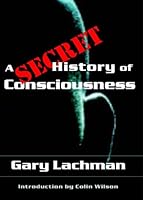
Thus, while I didn’t experience an in-depth dive into Barfield’s thought (although Barfield’s work does resurface prominently toward the end of the book), I did receive a persuasive application of how Barfield’s perspective can apply to the history of Western Christianity. An for those who want a helpful introduction to Barfield’s project, one can turn to Gary Lachman, who refers to Barfield frequently, and at depth in his works ASecret History of Consciousness and Caretakers of the Cosmos. And as to having a not-so-secret history of Christianity added to the piles of books written about the history of Christianity, Vernon’s effort is worthwhile. The fact the sources that Vernon draws upon are not occult doesn’t mean that the project isn’t valuable; it is. While not secret, his understanding of Christianity is not widespread so far as I can discern. The description that he provides is one that could prove useful as we go forward to meet the challenges ahead. He hopes to see Christianity (along with other wisdom traditions) bridge the gap between our alienation from the world around us (and ourselves) and the gifts that individuality and science have brought to us. This is a noble and vital enterprise, and one that deserves our thanks—and our reading time.


Friday, April 1, 2016

Why Study History?

Yesterday, my wife asked me, “Why do we study history?”. Her question arose from a conversation she’d had earlier in the day with her elementary school colleagues. I was both taken aback and intrigued. I was taken aback because from my early elementary school days I’ve been intrigued by history for reasons that I cannot identify at so young an age. I majored in history (and political science) as an undergraduate, and I’ve remained a life-long student of the subject. I was intrigued by the question because it’s so easy to take for granted. Why do we study history?

My wife suggested that we needed history to provide us analogies which we can use to help make current decisions. This is not wrong, but its incomplete. Also, historical analogies, while useful, is also fraught with peril. Historical precedents, like “Pearl Harbor,” “Munich,” “Hitler,” and so on, mislead as well as instruct.

Before we dig deeper directly into an answer to the question of why we study history, let’s engage in a short thought experiment. Imagine that you wake up one day from sleep and you have no memory. Your senses all work just fine—you can see, hear, taste, touch, and smell. But you connect none of your sense experiences with any memories. Even tastes and smells—the most primal senses (just ask Proust)—bring no memories. The faces you see are all new. Of what your life consisted before awakening that morning—either the day before or years before—you have no knowledge. You don’t have a name. (I’ll posit that you recall language, but the words which you use are new to you, you have no memory of having used them before.) Now, do you know who you are? Do you have a self? Do you have a soul? I suggest that you’re more like a zombie than a human being. Without memory, your sense of personal history, you’re unknown to yourself and therefore soulless. As St. Augustine put it centuries ago, “the seat of the mind [anima] is in the memory.”

And so it is with our collective selves, our civilizations, nations, towns, churches, family, bridge club, and every form of human endeavor. Each entity is the sum of its history. To know the history of a person or group is what it means to know that person or group. Of course, such knowledge is always partial and limited, even (or perhaps especially) about ourselves knowing ourselves. (We do like to hide certain things from ourselves, don’t we?). We tend to think of history as the history of nations, politics, and battles, but history applies just as much to art and science as it does to politics or any other human endeavor. Science? Yes, for a while we think of science as discovering timeless laws, in fact, the laws (perhaps better thought of as habits) of science arise in time. For instance, what were the laws of biology or chemistry at the first instant of the Big Bang? Or the laws of physics? Not only does our knowledge of science have a history, but those laws themselves developed over time as a part of the evolutionary history of the universe.

The historian John Lukacs sums up this attitude:

The history of anything amounts to that thing itself. History is not a social science but an unavoidable form of thought. That “we live forward but we can only think backward” is true not only of the present (which is always a fleeting illusion) but of our entire view of the future: for even when we think of the future we do this by remembering.

Lukacs, The End of an Age, 53.

Lukacs draws upon C.S. Lewis to further his theme that all knowledge is a matter of memory—of history in its many different guises:

The past in our minds is memory. Human beings cannot create, or even imagine, anything that is entirely new. (The Greek word for “truth, aletheia, also means “not forgetting.”) “There is not a vestige of real creativity de novo in us,” C.S. Lewis once wrote. "No one can imagine an entirely new color; or an entirely new animal; or even a third sex. At best (or worst) one can imagine a new combination of already existing—that is, known to us—colors, or monsters, or sexes.”
           
           Lukacs, At the End of an Age, 52.

How does this relate to education? In education, we tend to segregate history as a separate course among all of the others. We think of science and math as dependent solely on only the most up-to-date information. But even in the sciences and in math we delude ourselves if we believe that the current practice of a discipline can ignore its own history. We can afford this attitude because we can make the history implicit in teaching these fields by concentrating on current states of knowledge. But experts in a field are conversant with the history of the field, whether concentrated in the near-past (e.g., the latest developments in quantum mechanics) or the distant past (e.g., the world of Newtonian physics). As the Lukacs quote above suggests, all knowledge comes from the past, whether far or near.

For teachers, this means that in addition to the traditional segregation of history into a separate course about government, politics, and wars, history can enlighten the entire curriculum. The great American philosopher, psychologist, and teacher, William James, writes:

You can give humanistic value to almost anything by teaching it historically. Geology, economics, mechanics, are humanities when taught by reference to the successive achievement of the geniuses to whom these sciences owe their being. Not taught thus, literature means grammar, art a catalog, history as a list of dates, and natural science a sheet of formulas and weights and measures.
           
           James, Memories and Studies, 312-313, quoted in Lukacs, At the End of an Age,              53.

(By the way, the late Neil Postman, media ecologist and educator, makes a very similar point in this book, Building a Bridge to the 18th Century: How the Past Can Improve Our Future (1999)).

Of course, I’ve only identified a few key thoughts that have bounced around in my head since my wife raised this topic with me. On careful examination, we’ll find that the question—like most crucial questions—defies a single, definitive answer. Such questions invite a conversation, with many voices, many perspectives, occurring over time. In other words, this is just one more contribution to the history of attempting to answer the question: Why do we study history?


Tuesday, December 9, 2014

Who Is Owen Barfield? (And Connections with Collingwood & Lukacs)


Owen Barfield (1898-1997)

My reading has taken a recent turn into the philosophy of history, an unfortunate phrase in some ways, but suffice it to say it involves thinking about how we understand history. I turned from a short book on the history of rhetoric to some writings of Quentin Skinner about how to understand the history of political thinking. Skinner reports that R. G. Collingwood influenced him. Collingwood again! Last year, after having known for some time that I should tackle Collingwood, I bought one of those magnificently inexpensive South Asian editions of The Idea of History (1946/revised ed. 1994), Collingwood’s posthumously published masterwork on the topic. I shipped it back to America, not knowing that in China my reading and thinking would turn in this direction.  


Of course, readers of this blog will expect that I would turn to John Lukacs in this topic as well, although, since it’s confession time, I’ve never done a complete read-through of Historical Consciousness: The Remembered Past (1968/1985), Lukac’s masterwork (but far from only work) about history as a subject. When reading Lukacs now, the name of Owen Barfield (b. 1898) comes up, a name I know but a body of thought that I’ve never completely gotten a handle upon. Lukacs mentions Barfield as a source of thinking about “participatory knowing”. A number of years ago I read two of Barfield’s most prominent works, Saving the Appearances (1957) and History, Guilt, and Habit (1957). (His Coleridge book sat on my shelf for a long time, and it lies in wait for me like buried treasure.) How do you pigeonhole Barfield? You don’t. Philosopher, anthropologist, literary scholar, or a bit of a kook? Like most intriguing thinkers, he trashes boundaries and goes off seeking answers where he may. I could not get him on one pass. 


Owen Barfield was born in 1898 and lived—remaining active and lucid—to 1997. He graduated from Oxford just after the War. Collingwood graduated just before the War and accepted a faculty position at Oxford shortly after the War, beginning his tenure as a professor of philosophy. (I’ve found no record that the two of them ever had any direct contact.) Barfield was a literary man and took his degree in literature. 


Friend, fellow Inkling, & godfather to Barfield's daughter Lucy, to whom he dedicated a book
Also, while at Oxford, he met C.S. “Jack” Lewis, with whom his name is inevitably linked. They developed a friendship and became intellectual sparring partners: Barfield in the early 1920s found an intellectual beacon in the writings of Rudolph Steiner, an Austrian mystic (for lack of a more precise term) and founder of Anthroposophy. Lewis, of course, later became a Christian. Lewis and Barfield, together with J.R.R. Tolkien and Charles Williams, formed The Inklings, an informal literary group. But while Lewis and Tolkien took up academic positions at Oxford, Barfield was called to his family business in London and began work full time as a solicitor (transaction lawyer). He remained in this position until 1959 when he retired and turned his full attention to writing and speaking. 


Barfield published his first book, History in English Words (1926) about how meanings of words change over time reflecting changes in the way people think about the world. While Barfield’s output was limited during his time working as a solicitor, he did publish Poetic Diction: The Recovery of Meaning (1928) (based on his thesis at Oxford), and he drafted Saving the Appearances, which is perhaps his most well-known work. He moved from a fascination with words and Romantic poetry to the study about how consciousness has evolved and how human self-knowledge has changed over history. Put in the broadest terms, Barfield argues that human consciousness once enjoyed a participatory knowledge of nature and the world around it, but that has been lost and now seeks a new source. Barfield’s project is a wide-scale inquiry into how we know and how that way of knowing has changed during history. Barfield doesn’t believe we can go back, but he ponders how we might move forward. 

R.G. Collingwood (1889-1943), fellow Oxfordian
It appears that Barfield addresses Collingwood’s work directly in later works. Barfield, after retiring as a solicitor in the late 1950s, enjoyed a second career as an academic lecturer and teacher in the U.S., lecturing and teaching at Brandeis University, Drew University, and the University of Missouri, among others. In Speaker’s Meaning (1967), Barfield addresses Collingwood’s work. Collingwood argues that we imaginatively re-enact history when we consider a historical topic. In fact, all history is the history of human thought according to Collingwood. While I don’t have access to these Barfield books, the interplay between Barfield’s work and Collingwood’s intrigues me. 

John Lukacs, active Hungarian-American historian
John Lukacs has cited Barfield in his books, such as Historical Consciousness (available via Google Books) and The Future of History. Lukacs participated in a Barfield Centenary Celebration put on jointly by Columbia University and Drew University (New Jersey). (Alas. I have no record of his remarks.) I can’t now detail all of Lukac’s references to Barfield, nor can I now explore the ties and influences, but as I note below, I hope to do so later. 

T. S. Eliot, W. H. Auden, Howard Nemerov, Saul Bellow, Walker Percy, Harold Bloom, James Hillman, and William Irwin Thompson (not to mention Lukacs) are among those who have praised Barfield's work. (See David Lavery’s “Friends of Owen Barfield” site for a more detailed list.) Yet, like Lukacs, he seems relatively unknown and underappreciated. I hope to bring together something showing how in time, space, and thought Collingwood, Barfield, and Lukacs connect in their thinking about history and human understanding (or knowing) in general. I believe that there are some intriguing possibilities to explore.  

4 March 2020. I've edited this for some updates and typos, but most happily, since writing this I've done some additional reading that now spars me the embarrassment of some of the failings that I had to admit to when I first wrote this in 2014. 

Saturday, October 19, 2013

A Review of Bonds That Make Us Free: Healing Our Relationships, Coming to Ourselves


Several years ago, I was browsing a business section of a bookstore when I came upon an intriguing title: Leadershipand Self-Deception: Getting Out of the Box by the Arbinger Institute. The title intrigued me. Leadership books are a dime a dozen in the business section: business people apparently expect everyone to be a chief and no one to be a brave. So, it was the self-deception in the title that really caught my eye. While my leadership skills could without question use improvement, self-deception was something I actually thought I was probably too good at. Self-deception struck me as a subset of a problem that had intrigued me most of my adult life. The problem? Why do I do things that I know are not in my best interest? Most of us, I think, can recognize this problem, whether it involves eating and drinking too much, exercising too little, procrastination (a personal favorite), and, perhaps worst of all, mistreating those whom we care for most by impulsive and hurtful actions that we often come to regret. This is a long list!

We have pondered the problem of why we don't do what we know we should do from the time of the early Greek philosophers, who dubbed the problem one of akrasia. In modern parlance, it’s often referred to as “weakness of will”. St. Paul put the problem succinctly when he wrote plaintively: “I do not understand my own actions. For I do not do what I want, but I do the very thing I hate.” Romans 7:15 (NRSV). Within the Christian tradition, St. Augustine took up this problem, and he’s credited as the first thinker to identify and wrestle with the problem of the will.

Thus intrigued, I bought the book. I pondered further the subtitle "getting out of the box". What the box was, I did not know, but that mystery was intriguing, along with the fact that the author was not an individual. I bought and read the book, and I was taken. I was taken because I recognized myself in it. Rather than being a recipe book about six steps to better leadership or a 12-step program to avoid self-deception, the book was a collection of vignettes about people and relationships. The vignettes presented problems in personal relations that were easily recognizable. The book suggests that the root of these interpersonal relationship problems come from self-deception, and self-deception puts us “in the box”. In the box, our view of others becomes distorted and leads to mistreatment of them.

That’s the book in a nutshell. This is a business book and therefore there are no footnotes. It's a quick and easy read. In addition, it served to pique my curiosity about where this came from. It seemed quite insightful. I decided to investigate further.

In the age of the Internet, I got online and looked it up the Arbinger Institute. I discovered that they offer information about their analysis and how one can avoid the pitfalls of self-deception. (The book explains this also). I learned that the person behind this intriguing perspective and the unassuming, but very deep thinking behind it, was a man named C. Terry Warner. Checking on his background, I learned that he had a Ph.D. in philosophy from Yale, that he had spent time at Linacre College at Oxford University, and that he taught at BYU. The website also linked to a short paper by Warner that outlined his thoughts in a more analytical way than set forth in Leadership and Self-Deception. While I had little doubt about the quality the insights, I did have a great deal of curiosity about how he came to his insights. The paper I read provides some hint at analytical framework that Warner developed into these insights.

Some extended quotations from the paper:

We human beings have little comprehension of what we are. The difficulty is not that we are ignorant. It's that we are self-deceiving. We systematically keep ourselves from understanding ourselves. We don't do this deliberately. In order to do it deliberately we would, Jean-Paul Sartre once wrote, “We’d have to know the truth very exactly in order to conceal it [from ourselves] more carefully." Instead, we do it by means of sin – by going against our honest feelings of what's right and wrong for us to do.
. . . .
It's impossible to betray oneself without seeking to excuse or justify oneself.
. . . .
Whether childishly rationalizing his moral failures or self-righteously claiming to be morally superior, the self-betrayer is blaming others and excusing or justifying himself. He can consider himself in the clear only if he can successfully find fault in others for what he is thinking or doing. There is no way around this. There’s no way of betraying oneself without living a lie – no possibility of sinning in a straightforward, guileless, and open manner. This can be seen by considering the solution to a version of a puzzle well known to the ancient Greeks. The puzzle is this: immorality – what I'm calling “self-betrayal” and “sin” seems impossible. It seems impossible than anyone could know in his own mind what is morally right for him to do and yet not do it. When we experience a genuine prompting of conscience (there is such a thing as false or distorted conscience, and I'll get to that later), way are in that moment obligated: we are requiring of ourselves the course of action it prescribes. (I'm not saying the prompting cannot originate from a source outside ourselves, but only that whatever its ultimate origin, when we experience it we recognize and accept its validity for us.) There is no room for wondering whether we ought to follow this course. In the very reception of a moral summons, we feel we ought to follow it. But if this is so, what sense can it make to say that we require this course of action of ourselves in the very moment and by the very act of refusing to comply with the requirement? What sort of self-requirement is that? None at all, the tradition has said. Either (1) we don't really understand the requirement, or (2) we aren’t really making it of ourselves, or (3) we lack the power or opportunity to comply with it. But the fourth alternative, that we are acting immorally—requiring moral action of ourselves in and by the very act of violating the requirement—seems to make no sense at all.

Yet we do make a more requirement of ourselves in by this kind of act. We do it by carrying out the refusal in such a way that it seems to us that we are doing the very best we can under the circumstances. We make the moral requirement of ourselves by denying that we doing what we are doing. In short, we do it by hypocrisy. The hypocrisy acknowledges, in a backhanded way, the rightness of what we are not doing. Paul wrote that when we violate the law of God written in our hearts, we “consent unto the law that it is good" (ROM. 7:16). Someone who is straightforwardly doing what seems to him right has no cause to excuse or justify himself; and someone who isn't doing what seems right to him shows that he does have such a cause. In the words of La Rochefoucauld “hypocrisy is vice’s tribute to virtue."
We are deceived by this hypocrisy of ourselves because it and the self-betrayal are the same event. We do not first betray ourselves and then, following a moment in which we recognize that we've got something to hide, act as if it is someone else's fault. If this were what happened, we could perhaps hang on to the momentary, accurate knowledge we had about ourselves and thereby keep ourselves from slipping into the lie, but that's not what happens. The self-betrayal and the lie we live do not come in sequence. They are two sides of the same act, for as we’ve seen the betrayal wouldn't be possible unless it were alive from the first moment. Blaming others and making it seem that were doing our best in spite of them is the way we betray ourselves.
                         . . . .
It is important to understand that emotions are always involved in the self-betrayers lie. It would not be the same if we merely told ourselves a lie. We would not be able to get ourselves to believe it.
. . . . 
This point enables us to understand what's really going on when individuals profess, as they sometimes do, to know full well that there what they're doing find that they're doing wrong and continue to do it anyway. They are “intellectually “or verbally admitting to the truth, but emotionally base are still caught up in the lie. Everyone knows this who has experienced the deep sorrow of repentance: it is an emotion that's worlds apart from the self-betrayer’s anxiety or guilt.
Collusion
Accusing others means making ourselves out to be the victim. We’re not responsible for what's going on because we’re helpless in the face of what we’re doing. We feel unjustly used by them – wronged, threatened, or disadvantaged. Feelings of psychological and emotional victimhood are telltale signs of self-betrayal.
. . . . 
One of our dominant, almost unexamined fictions is that we are not responsible for emotions. They are caused in us, we believe, by events outside of our control. Recently this dogma has been undergoing re-examination, and it is becoming increasingly clear that it is false. Accusing emotions are performances in which we engage. In the history of a particular people, patterns of emotion evolve as do patterns of rhetoric. They arise, flourish, and become extinct. Yet the metaphor dogmatically persists that such emotions are injuries because we invoke it anew whenever we compromise ourselves. (For example, if were angry with someone we cannot fail to believe that that person is making us angry.)


This dogma is the core of every self-betrayer’s self-deception.

As you can see read from the extensive quotations, this is pretty strong stuff. It challenges us. It strikes at our normal assumptions. I don't have to think outside the bounds my own experience to identify innumerable times when I rushed to claim the mantle of victimhood. (In addition, really, when you think about it, who the hell would rationally want to be a victim?) However, we do want to be the victim for the reasons that Warner argues. I saw way too much that was way too familiar in this paper to walk away at this point. But the paper, like the Arbinger Institute books and Warner's book Bonds That Make Us Free (which I'm coming to) spend a limited amount of time and analysis on the background of the theory. In fact, at the end of this paper, he lists some sources that he reports influenced his line of thinking. Warner writes:

When I set out to solve certain conceptual problems that recur in the human sciences and in philosophy, I discovered, gradually, the important things I finally prepared myself to say had been said before—some in Eastern religious texts, some in Western authors such as certain Christian mystics and Shakespeare and Kierkegaard, some in the commonplace wisdom of guileless people in many communities, but all of it better and shown in the Hebrew, Christian, and Latter-Day Saints Scriptures. Without having it as a prior aim, I've come to feel that my work is to convey something of the power of the Scriptures to those who do not know them, and endeavored it that admittedly loses important elements in the translation.
Though I am by no means the first to make these claims, it seems worthwhile to keep repeating them: our ignoble desires are not ultimately derived from an ignoble nature, and our anxieties are not the result of being unable to make ourselves whatever we are striving to be. These desires and anxieties stem from our betrayal of what we really are, from our refusal to love, from an exercise of our agency that ties that agency in knots—in short, from sin. If we are emotionally troubled, it's not because we were created to be that way but because we have betrayed, perverted, denied what we were created to be. The condition of our liberation from unwanted desires and anxieties is our responsiveness, in love, to what others need from us, and to the supreme loving act that makes our love possible.

Having read the paper cited from above and Leadership and Self-Deception, I was certainly hooked as a matter of intellect and, I hope, converted (if you will) to his way of thinking. Whether I reflect it in my actions is hard to say, except to the extent I’ve acted the better for it in any degree, it has been at best imperfectly. Of late, I've had occasion to think about my relationships and those of others, and I took up once again the book that I discovered Warner had written before the Arbinger Institute books came out. I bought a hard copy and read it, and recently (thank goodness for Kindle), I was able to re-read it and contemplate it anew. This re-reading led to this review

Bonds That Make Us Free (a wonderfully ironic title that reflects a deep truth) should first of all be described by what it is not: it is not a philosophy book or self-help book, at least in any usual sense. It is a book primarily about people and their relationships. Much of it comes from first-hand accounts of people with whom Warner has worked. He's obviously worked with a great number of people in applying these insights. In this way, Warner is a philosopher in the deepest sense of the word in that is analytical abilities are turned to building a better way of life. He embodies what Pierre Hadot has called “philosophy as a way of life”. This book is full of stories of people and their relationships, with relatively little analysis and only fleeting reference to well-known figures. Tolstoy, Pascal, C.S. Lewis, T.S. Eliot, and Kierkegaard all get passing mentions or the briefest of quotes, but that’s it. This is not a philosophy book. However, there is one figure who Warner did not mention in the article cited above, but who receives repeated reference in this book (although not in any kind of philosophical explication). That thinker is Martin Buber, a German-Jewish intellectual who in 1923 wrote a book that was translated in English as I and Thou. (The translation I and Thou is controversial and considered by many to be a mistranslation. For Warner's purposes at it should be translated as I and You.) Buber's book argues that there are two ways of relating to others: either is a You or an It. Buber suggests that with others the You relationship is best. One can imagine how well this fits into Warner’s thinking. It is by treating others as an It that we can allow ourselves to sneak into self-betrayal.

The book's many vignettes offer opportunities for Warner to elucidate his insights and to answer questions that most readers will have. Because it is not a comprehensive work of philosophy, but a practical effort to provide insight into our actions, it does not seek to extend or delimit the work as a body of theory. Nevertheless, Warner answers every easy objection to his insights that a person might initially bring forth.

This book is for anyone. Although a Mormon, Warner's religious beliefs don’t intrude upon or limit his theories. Whether one is Mormon, Christian, or nonbeliever, I believe Warner's insights will still prove deeply insightful. (The fact that he can quote Jean-Paul Sartre and benefit from Sartre's insights suggests that Warner's mind is open. Also, although treated only toward the end of the book and briefly, Warner freely acknowledges his religious background and how it ultimately roots his thinking. In the paper, he also understands that some will have a skeptical attitude because of his religious faith.

So, to whom do I recommend this book? Anyone who seeks deeper insights into his or her relationships with others. Given that we are human beings—and perhaps only truly human—when we are in relationships with others, this means everyone. It is not difficult book to read. It’s relatively easy reading. The only hard part is when you see yourself and your loved ones in the tales that others tell of themselves in the many vignettes. Some of this is hard. Hard in the way that we have to look at ourselves in the mirror in the morning. It's not always a pretty sight, but by doing so we see ourselves as we are, and perhaps can make some improvements. I gave this book a five star rating on Amazon because I think it has the potential to change our ways of being in the world, and that's the highest compliment you can give to a book