Showing posts with label Jesus. Show all posts

Wednesday, October 7, 2020

Thoughts of the Day: Wednesday 7 October 2020


At a common sense level, anyone who is irreverent about his or her own well-being cannot be charged with any other responsibility, and certainly not with important matters of state.


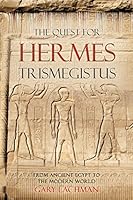
The difference between the Gnostics and the Hermeticists is that Hermetic man doesn't want to escape from the world, but to realize his full potential within it, in order to embrace his obligations, so that, as Hermes tells Asclepius, he can 'raise his sight to heaven while he takes care of the earth'.
To reiterate, the spiritual and political realms are necessarily governed by different moral codes, meaning that absolute standards cannot be applied to politics. Like Jesus, who rendered unto Caesar what was Caesar’s, the Buddha therefore left worldly affairs to the civil authorities. So it may be that the best and noblest political act is to forget politics and to devote ourselves primarily to training our minds in wisdom and our hearts in compassion, even as we continue to live as householders. The above is not a call to apathy or passivity. But the Buddha’s way is to be clearly aware of the world as it actually is—not as we conceive it to be or would like it to be—and then to respond accordingly.

And for the deeper dive, back to Hannah Arendt's Essays in Understanding and in particular, her "On the Nature of Totalitarianism: An Essay in Understanding."
Montesquieu was the last to inquire into the nature of government; that is, to ask what makes it what it is (“sa nature est ce qui le fait ĂȘtre tel,” L’Esprit des Lois, Book III, ch. 1). But Montesquieu added to this a second and entirely original question: What makes a government act as it acts?
....
What is it that makes a state recognizable as a republic, a monarchy, or a tyranny? After giving the traditional answer to the traditional question—affirming that a republic is a constitutional government with the sovereign power in the hands of the people; a monarchy, a lawful government with sovereign power in the hands of one man; and a tyranny, a lawless government where power is exercised by one man according to his arbitrary will—Montesquieu adds that in a republic the principle of action is virtue, which, psychologically, he equates with love of equality; in a monarchy, the principle of action is honor, whose psychological expression is a passion for distinction; and in a tyranny, the principle of action is fear.
Arendt, Hannah. Essays in Understanding, 1930-1954 (p. 330). Knopf Doubleday Publishing Group. Kindle Edition. 

Tuesday, June 16, 2020

The Secret Body: Erotic & Esoteric Currents in the History of Religions by Jeffrey Kriipal

Something's happenin' here, what it is ain't exactly clear

This book continues my reading of Jeffrey Kripal, whose insights and speculations I find intriguing. This is my fourth book by Kripal that I've read, and each one has intrigued me. The Secret Body (2019) is unique because it serves as a summary of his work to date. It consists of a series of diverse essays with commentary about this personal and scholarly journey. As I mentioned in my review of The Flip: Epiphanies of Mind & the Future of Knowledge, Kripal grew-up in a small town in southeast Nebraska, which is the middle nowhere by most people's reckoning. I grew up in southwest Iowa, on the other side of the Missouri River, which is a fraction less of a nowhere than southeast Nebraska. (But, of course, in growing-up, one thinks of one's home turf as the Middle Earth, the Center of the Known Universe.) Anyway, that someone from such a bland background could go on to have such adventures (of the mind) as Kripal has serves as a reminder of what we are capable of in our capacities to grow and experience the larger world. Indeed, another particularly personal source of enjoyment in reading The Secret Body comes from reading about Kripal's Catholic boyhood and upbringing. I'm about nine years older than Kripal, and I grew up (in part) in the pre-Vatican II Church, an even more exotic experience than Kripal's post-Vatican II experience. Vatican II "Protestantized" the Ameican Catholic Church in many ways. (For a spot-on account of the pre-Vatican II American Catholic experience see Garry Wills's Bare-Ruined Choirs (1972).) So although Kripal missed out on what I might label "the full Catholic experience," his faith nevertheless provided a formative experience that set him on his way to his intellectual adventures. Finally, also in a personal vein, Kripal describes his visits to his home town and family in Nebraska as an adult, academic scholar of religions. These visits constitute a trip to an outwardly familiar but also alien world, almost as alien (or exotic) as his experiences with Hindu culture and religion and his investigations of paranormal experience. Kripal recognizes both the goodness of the folks who live there and their stubborn insularity that has allowed politicians--and especially the Great Orange Menace (my term, not Kripal's)--to act to the detriment of those good folks. Again, Kripal's experience resonates with me. One needn't be a wild-eyed radical (I'm certainly not) to see that many of the attitudes held by these folks "are neither [as] pure, nor wise, nor good" as they would believe, and their attitudes and decisions also hurt those of us who share this planet with them. Kripal is justly blunt but loving in his critique. 

Kripal's scholarly journey provides the backbone of his book, and while it may seem an esoteric topic--well, it is. During the time that Kripal spent as a monk, he underwent Freudian psychoanalysis to deal with anorexia (disguised as ascetic holiness), and he came to the realization that the monastery was in some sense a gay institution, although homosexuality was officially condemned by the Church. Kripal describes his transformation after his successful psychoanalysis and his insight into the monastic life: 

By the end of that year, the analyst, the buxom women, and I had cured the anorexia. 
 And I was really hungry. I ate everything in sight. I gained about seventy pounds over the next few months. I was a new man at twenty-two. Suddenly, I was also a sexual being.  
The seminary community was a hotbed of psychosocial exploration, but which I do not mean anything explicitly sexual, much less genital. I mean that those years constituted a four-year initiation in the sexual roots of the spiritual life and the spiritual roots of the sexual life. The basic point is this; I came into my early psychological awakening and intellectual calling as a confused and repressed straight man in what was, more or less (mostly more), a gay religious community.
Kripal goes on to ponder the implications of all this, and he recognizes (among many things) the deep debt he owes to both Jesus and Freud for coming to a greater understanding of his world. Indeed, these insights into sexuality became the basis of Kripal's early scholarly work, which he pursued via a doctorate in comparative religions at the University of Chicago and that he parlayed into a successful academic career (he's been at Rice University of many years now). Each of Kripal's first three books deals with mysticism and sexuality. (I've read The Serpent's Gift: Gnostic Reflections on the Study of Religion (2008) and it's a duzzy--perhaps my excuse for not having reviewed it yet.) As you may imagine, some people don't like to think about the sexuality of Jesus or of the nineteenth-century Hindu mystic Ramakrishna, and Kripal has drawn the wrath of fundamentalists in both the U.S. and India for his explorations and explications. And, of course, it's all fascinating. 

After becoming a persona non grata to Hindu fundamentalists, Kripal turned closer to home to explore what is often described as the "paranormal," and what he  has come to term the "super natural." This takes him into the world of Esalen (the counter-culture capital on the Big Sur), comic books, and UFOs, among other topics. And if you think that these topics are far from religion, then you haven't read enough Jeffrey Kripal. With each new topic, Kripal further explores and refines his thoughts as "the human as two." In fact, he develops twenty theses that he labels "gnomons," which Kripal describes as "a short aphorism and maxim . . . that [are] "gnostic" in nature," along with other enticing associations, including gnomes, those little creatures of the earth whose statues populate our gardens with their pointy hats. These brief statements provide a series of stations or markers that provide some conclusions or working hypotheses that Kripal has arrived at during the course of his investigations. He reveals each gnomon as his account progresses. But to be clear: this is not an intellectual biography as such. While Kripal includes aspects of his personal and scholarly biography along with way, he also includes a number of short scholarly articles he's written on various topics that highlight and explore his scholarly inquires. This interspacing of reminisces with articles written along his scholarly journal works well, each perspective casts further light on the other. 

As I reflect on this work, I'm struck by what a fun and exciting read this book provides. Perhaps Kripal's a little crazy, but perhaps not; perhaps his ideas are too out there; but perhaps not. I'm not sure if Kripal is chasing phantoms, and I suspect he'd be the first to suggest that the line between phantoms and "reality" is a thin, permeable line, which we can only intuit by extraordinary glances. In Kripal's persuasive view, we are "the human as two," with a whole lot going on that we as a species have been trying to understand and appreciate for our entire history. And it seems we're just getting going. 

Friday, September 6, 2019

A Secret History of Christianity: Jesus, the Last Inkling, and the Evolution Of Consciousness by Mark Vernon


I came to this book through the back door; that is, it was not the “Secret History of Christianity” that grabbed me (not a unique title), but the subtitle “the Last Inkling and the Evolution of Consciousness.” This phrase no doubt referred to Owen Barfield and his line of thought about the evolution of consciousness. Barfield has been on my radar for years as I’ve sought to become more familiar with his deep insights. While Barfield is a lucid writer, his thought dives deep and sometimes can leave the reader adrift. And unlike his more famous Inkling companions C.S. Lewis and J.R.R. Tolkien, Barfield never reached great numbers with his works (which only included a relatively small amount of fiction and poetry). So, I thought, perhaps this work would reveal more about Barfield’s project to me.

Alas, it did not. After an initial cursory introduction to Barfield’s key notion of “original participation” followed by “withdrawal participation” and “reciprocal participation,” and a nod to French anthropologist Lucien Levy-Bruehl about his idea of “participation mystique,” Vernon plunges directly  into a history of the Hebrew Bible through the lens of the concept of “participation.” From that starting point, he moves on into a review of ancient Greek culture through the same lens. In both traditions, the earlier manifestations of those cultures were marked by “original participation” with the world around them. As Vernon describes it, the phenomena refer “to the felt experience of participating in life. Original participation dominates when there is little distinction between what’s felt to be inside someone and what’s outside because the boundaries of individual self - consciousness, which today we take for granted, are not in place.” (p. 3; loc. 264.) Or as Barfield describes it: “Early man did not observe nature in our detached way . . . . He participated mentally and physically in her inner and outer processes.” (p. 3; loc. 269.) Vernon proceeds to take the reader through a brief history of the Hebrew Bible to illustrate this phenomenon and the eventual shift away from a consciousness marked by original participation to one of “withdrawal participation,” which is marked by a shift away from immersion in the surrounding world into a greater sense of individuality. As Vernon describes it, “An awareness of separation, even isolation, is felt. A person will begin to sense that they have an inner life that is, relatively speaking, their own. (p. 3; loc. 273.)

After completing his brief but illuminating history of the Hebrew Bible, Vernon moves across the street, as it were, and does the same with ancient Greek culture, displaying the same dynamic at work. Like the Hebrew prophets, the emerging Greek philosophers (culminating in Socrates) promote a greater sense of individuality and individual agency. The world of Achilles in the Iliad is significantly different from that of Socrates. As Vernon points out, another way to look at this shift is to discern a growing sense of individuality and the use of introspection by individuals.

With the advent of the Hellenistic Age in the wake of Alexander the Great and his successors, these two lines of thought—Hebrew and Greek—begin to encounter one another and interact. Out of this mixture arises the life of Jesus and the coming of Christianity. It’s at this point that I must quibble about the first part of the title of this book, “the Secret History of Christianity.” What Vernon writes about in this section and the sources he draws upon is not Dan Brown material. Rather, the sources that Vernon draws upon are neither secret nor very unorthodox. (Although he does cite the Gospel of Thomas, which is outside of the sanctioned Scriptures, that’s about as far out of the mainstream that he goes.) Vernon’s portrait of Jesus draws upon the Four Evangelists and Paul to demonstrate that Jesus was taking his followers deeper into the interior life. Vernon demonstrates his argument with quotations from the Gospels and Paul that should prove familiar to any reader. He emphasizes the message of interiority preached by Jesus and the desire of Jesus to prompt a metanoia—a change of mind (or heart-mind, as I’m persuaded may prove a more adept translation). Vernon argues that Jesus didn’t intend to set down new sets of rules to follow, but instead, he intended to change our awareness; to find the root of our conduct on the inside. (I can’t help but recall the scene in Monty Python’s Life of Brian where the supposed messiah (Brian) loses a sandal while attempting to flee the crowd and the crowd takes this as a directive to shed their sandals--or something. Ah, literalism.) In short, Vernon provides a convincing and attractive portrait of Jesus that comports with Barfield’s theory of “participation” and that comports with sound Biblical scholarship. Sorry, no lost gospels or secret societies here.

Vernon continues his tour of Christian culture and belief through the early Church on to Augustine, whose interiority further expands this Christian insight and who develops the idea of the will to better understand an individual’s volition. Vernon follows this path continuing up through the Renaissance, which—contra Burkhardt—Vernon argues does not provide a definitive break with medieval culture and belief. But the Reformation, which follows upon the Renaissance and does alter the course of the evolution of consciousness. The Reformation, in the words and works of Luther and Calvin and their followers, placed a significantly increased emphasis on the individual’s conscience. The Reformation, along with the Scientific Revolution, altered the ways that individuals saw themselves and their world. The advent of the printing press, like the advent of literacy and private reading in earlier times, greatly facilitated (or perhaps more it’s more accurate to say, helped cause) this change in consciousness. Humanity became more aware of how to manipulate the world around it and gained an increased sense of individual agency. But these gains came at the cost of losing much (and in some cases all) of the sense of belonging to the cosmos that had survived through the Renaissance. Christianity, as a result, tended more toward literalism and faith as belief rather than trust. This trend has continued up through the present, but Vernon identifies signs that humanity may be ready to move into a mode of “reciprocal participation.”

Vernon identifies “imagination” as the key to reaching a state of reciprocal participation. In this argument, Vernon echoes many of the themes that Gary Lachman identified in his 2017 publication, Lost Knowledge of the Imagination. As both authors note, imagination is not another word for fantasy; both authors draw upon Samuel Taylor Coleridge for guidance in describing the role and function of imagination and its distinction from what Coleridge labeled as “fantasy.” Also, Vernon discusses the body of poetic and visual works of William Blake as a master of informed imagination.

Thus, while I didn’t experience an in-depth dive into Barfield’s thought (although Barfield’s work does resurface prominently toward the end of the book), I did receive a persuasive application of how Barfield’s perspective can apply to the history of Western Christianity. An for those who want a helpful introduction to Barfield’s project, one can turn to Gary Lachman, who refers to Barfield frequently, and at depth in his works ASecret History of Consciousness and Caretakers of the Cosmos. And as to having a not-so-secret history of Christianity added to the piles of books written about the history of Christianity, Vernon’s effort is worthwhile. The fact the sources that Vernon draws upon are not occult doesn’t mean that the project isn’t valuable; it is. While not secret, his understanding of Christianity is not widespread so far as I can discern. The description that he provides is one that could prove useful as we go forward to meet the challenges ahead. He hopes to see Christianity (along with other wisdom traditions) bridge the gap between our alienation from the world around us (and ourselves) and the gifts that individuality and science have brought to us. This is a noble and vital enterprise, and one that deserves our thanks—and our reading time.


Friday, June 16, 2017

St Paul: The Misunderstood Apostle by Karen Armstrong

28672094Karen Armstrong is among my favorite writers on the topic of religion, and this book only adds to my admiration. Armstrong is not a Biblical scholar nor an academic student of religion, but she’s someone who’s dived deeply into religious traditions and who brings her findings and observations back to the rest of us through thoughtful, carefully researched, and considered books. This book only adds to my admiration for her work.

Armstrong is no stranger to challenging topics: the monotheistic tradition from its Judaic origins to the present (A History of God), Buddha, Mohammed, the Bible, the Axial Age, and religion and violence. But still, St. Paul can present a unique challenge. As Armstrong reports at the beginning of this book, she’d tackled the subject of St. Paul early in her career as a journalist and student of religion. She began that project, undertaken in the late 1970s, with the assumption that Paul took Christianity in a wrong direction, away from the legacy of Jesus. But as she learned more about this enigmatic and fascinating man (although in some ways we know little about him), she changed her opinion. Thus in 1983, she published The First Christian about Paul, whom she initially thought of as the source of misogyny, authoritarianism, and anti-Judaism in the Christian tradition. She reports that she changed her perception in the course of producing that book (and accompanying television series). This work, published in 2015, updates her quest to come to grips with this “misunderstood apostle.”

No one can doubt Paul’s influence. Indeed, I remember some years ago seeing a poll of scholars about the most influential persons in the Western tradition. In that poll, to my surprise at the time, some of the respondents rated Paul’s influence as greater than that of Jesus. I was shocked, but the explanation provided was that without Paul, the nascent tradition surrounding Jesus would have remained within the existing tent of Judaism. Paul, the Pharisee turned apostle after his vision on the road to Damascus, brought the “Good News” to the Gentiles. Paul's ministry caused chagrin to the Jesus movement in Jerusalem, led by James, the brother of Jesus, who intended to remain within the Judaic tradition, or who at least would have required Gentile converts to adhere to Jewish law and custom.


Another intriguing aspect of Paul’s story is the fact that his letters are the oldest documents to be included in the New Testament canon. (Aand I do mean his letters because some letters were later attributed to him by tradition.) Armstrong undertakes a vital project for her readers, in working to separate out what are certainly authentic Pauline letters and words from those later (inaccurately) attributed to him. Also, his authentic letters, epistles, were scrambled in what came to be the official versions, sometimes mixing letters and dates and subjects. Also, later editors would occasionally interject their own words. The Acts of the Apostles, attributed to Luke, comes after Paul’s letters and provides a different (and not especially accurate) account of Paul’s mission. In fact, some of the most controversial (by contemporary standards) passages in Paul’s letters are later interpolations, such as the injunction for wives to be submissive to their husbands, or (maybe) his injunction to defer to the political authorities. (However, Paul, like Jesus and other earlier followers, believed the end times were imminent, and therefore any injunctions were for a transitory period.) Armstrong notes that Paul’s real value was in his proclamation of the Good News to those outside of the Judaic tradition (although Paul was very much a part of that tradition and was never anti-Jewish). Paul's injunctions about love, justice, and equality became fundamental (if all too often ignored) aspects of the Jesus Movement and then Christianity. 

Even misreadings of Paul, such as those of St. Augustine and Martin Luther, have shaped the course of Christianity. How Christians understand, appreciate, and use the legacy of St. Paul remains as vital as ever to the Christian tradition, and Karen Armstrong provides a trustworthy guide to continuing that quest.  

Thursday, September 18, 2014

Jesus, Buddha & Socrates Need Help--Part 1: Through the Lens of William (Patrick) Ophuls


 Actually, the title is erroneous. Jesus, Buddha, and Plato don’t need help—we do. Whether one follows the way of salvation set for in the Gospels, the path to enlightenment offered by the Buddha, or the way of wisdom explored by Socrates, unless one dives in head-first via a monastic or hermetic life, one must remain in a sinful and imperfect world. This is the world of politics, of deciding who gets what, when, and how. It’s a world of compromise, imperfection, and—quite often—dirty hands. It’s a world marked by corruption and decay, punctuated with periods of growth in wealth, knowledge, and well-being. The worm is always in the flower. How do these avatars of love and wisdom expect us to live in this imperfect world? 

Jesus, in the traditional view, would have us defer to a world to come. Some argue that his vision was of this world, and that a social upheaval would reveal the Kingdom of God is among us. But a New Heaven and a New Earth have not come to pass. The parousia has not occurred. Life has gone on. Politics has gone on, and Jesus left no theory of politics. Only from the scraps, such as “Render unto Caesar what belongs to Caesar, and render unto God what belongs to God”. Any Christian theory of politics arises from scraps of scripture that give us some inkling of how Jesus and his New Testament followers came to think about this world. Only long after the time of Jesus and Paul did Christianity attempt to come to grips with the continuing reality of the world and the need to address the demands of social, political, and economic life. As to politics, the work of St. Augustine and his idea of the City of God and the City of Man, of dividing divine reality from human reality, became the most significant statement of how Christianity would address the demands of this world. Medieval political thinkers developed the theory of the Two Swords—the need for both religious and secular governance—and St. Thomas Aquinas folded Aristotelian thought and its political insights into the Christian worldview. But thoughts of a coherent and compelling union of political insights with Christianity never worked in a fully logical, coherent manner. Finally, NiccolĂČ Machiavelli in Renaissance Florence turned the Christian “Mirror of Princes” literature upside down. Instead of promoting the cultivation of Christian virtues by rulers, Machiavelli called for a divorce of religious ethics from political ethics. Notwithstanding a great deal of resistance and disdain, the divorce occurred. What Machiavelli might have left standing, Thomas Hobbes finished off.

I learned most of what I wrote above by the time I finished college, well versed in both Christianity and the Western political tradition. But what about the Buddhist tradition that has taken hold in the West and that has influenced me? What is the Buddha’s theory of politics? It turns out, like Jesus, he didn’t have a theory of politics. (Plato, creator of “Socrates”, leaves a more ambiguous legacy.)

I had occasion to raise this issue with a man who seemed to be the perfect person to address it: William (Patrick) Ophuls, former Foreign Service officer, Yale-trained political scientist, Northwestern University professor, author of four books on the politics of scarcity and long-term trends in history—and most significantly—a long-time practitioner of Buddhist insight meditation. Ophuls directed me to an essay he’d written entitled “The Politics of Meditation” (contained as an appendix in his book The Buddha Takes No Prisoners). In it, he considers these issues and compels us to think more deeply about them. 

In his essay, Ophuls argues that the Buddha, despite his admonitions against “false speech” and violence, implicitly condones political choices that may—at least to some degree—entail deception or violence. Ophuls recounts Buddha’s encounter with King Pasenadi of Koasala, a warrior-king who made decisions of life and death. But the Buddha did not rebuke him or condemn him; in fact, after the King left, the Buddha remarked to followers “that the monarch’s views were ‘monuments to the Dhamma.’” Ophuls, Patrick (2012-05-29). Buddha Takes No Prisoners: A Meditator's Survival Guide (Kindle Locations 1758-1759). North Atlantic Books. Kindle Edition. Ophuls also points out that Buddha maintained good relations with rulers, which given the significance of his movement (he gained many followers and altered the social fabric) is no small feat. (Contrast these successful dealings with rulers and the Buddha’s long life with the collision course with political authorities, both Roman and Jewish, that Jesus embarked upon from the beginning of his ministry and that led to his execution after only about three years of activity.) Based on Buddha’s remarks and history (and remember that Buddha was the son of a king trained to serve as a king), Ophuls concludes “there indeed exists an implicit politics of dharma— a politics that contradicts many contemporary attitudes and opinions, because the Buddha taught a way of personal liberation, not a political ideology.” Id. 1752-1754. So what does this “implicit” politics of dharma look like? And even if not a “political ideology”, it contradicts “many contemporary attitudes and opinions” (but not all). So how do we practice it? Ophuls does not provide a direct answer, but he goes on to explore the contours of the issue: 

Thus although he was an exponent of nonviolence, the Buddha was not a pacifist as we would understand that term. Nor did he oppose the death penalty.
. . . .
How could this be? How could the Buddha, who made nonharming the foundation of his morality, seemingly condone the king’s violence? The answer is simple, if unpalatable to contemporary sensibilities: men are not angels, so government is a necessary evil; but government rests on coercion; ergo, those who govern must be willing and able to use violent means to keep the peace and defend the realm. The Buddha’s praise of King Pasenadi tacitly acknowledged that those who rule must employ force when necessary.

Id. 1754-1755; 1759-1763

Ophuls also describes the actions of Hadrian upon his appointment as Trajan’s successor: Hadrian directed the assassination of three would-be rivals who would likely have fomented civil war in order to challenge Hadrian’s claim. Many lives and great losses would have resulted from another Roman civil war—three lives to allow two decades of peace and prosperity. A fair trade or an unmitigated evil deed? Along similar lines, Ophuls recounts the tale of the Bhagavad Gita and Arjuna’s lament at the death and destruction that he has asked to rain upon his teachers and kinsman. Krishna rebukes Arjuna and directs him to follow his karma, his destiny. From this line of thought, Ophuls concludes: 

So the Buddha’s penetrating intelligence took in the whole panorama of human existence, seeing it in a dispassionate light and from an ecological perspective. Different personalities at different stages of spiritual development have divers social roles and responsibilities. Only a minority is called to be ordained as a monk or nun— and therefore to a vow of absolute nonharming in this lifetime. And a good thing too, because if the majority tried to devote their lives to full- time spiritual practice, then who would grow the crops, tend the cows, and weave the cloth?

Id. 1774-1778

Ophuls enjoins us to follow our karma. If we are called to serve as monks, we must follow a monk’s ethic; if called to rule, we must follow a ruler’s ethic. The “good” is thus not defined by the act itself, but by its intention—the how and why of an action count more than the physics of the action. Ophuls writes: 

To put it another way, the key to morality is volition; it is intention, not the deed itself, which creates karma. Hence, the karmic fruit of executions motivated by cruelty or vengeance will be quite different from those motivated by a sincere desire to preserve civil society from criminal depredation. This does not mean that there is no karma attached to being a ruler— as King Pasenadi, who had attained some wisdom precisely by fulfilling his royal dharma, himself acknowledged. But it does mean that we cannot apply absolute standards to the relative world. From the absolute standpoint proclaimed by the Buddha, the relative world is just what it is: radically imperfect. To try to perfect it is futile and will only entangle us in suffering.

Id. 1787-1792

Bringing his focus back to the contemporary world, Ophuls notes that the insights of the meditation cushion often seem inapplicable to the world of the marketplace and politics. As he so aptly notes, “the Buddhist perspective on politics is not easily reconciled with the political ideology of Berkeley.” Id. 1800-1801. He goes on: “[I]f you wish, you may continue to vote the straight Democratic ticket and to revile wicked Republicans at every opportunity (or vice versa). You can also oppose war, because violence is always bad, while approving abortion, because sometimes it is not (or vice versa). And so forth. But these are worldly positions, not spiritual truths, and your attachment to them will cause suffering in exact proportion to the degree of your attachment.” Id. 1801-1804. Here we see Buddhism meeting political realism, skepticism, and a dash of American pragmatism. We can only work the edges, the intentions. We come to appreciate that logical consistency is rarely found in politics. Although he does not write it, he might have also noted Emerson’s adage that “a foolish consistency is the hobgoblin of small minds”, thereby revealing how we are truly caught between the Scylla and Charybdis of unworkable logical consistency and self-serving inconsistency. 

Because Buddha and Buddhism eschew any political ideology (certainly a form of mental attachment), we must lighten-up about our political views. Ophuls writes: “[W]e need to let go of all fixed or partisan political views. For a mind stuffed with obstinate opinions and driven by obscure obsessions will not see the world as it truly is: indelibly marked by anatta, anicca, and dukkha. Id. 1804-1806. We have no models for such probity and insight that can serve us as political models, Ophuls concludes. The sangha (community of Buddhist monks) cannot provide a model because of its otherworldly orientation. Ophuls argues, “the dharma is not, nor can it ever be, political in the usual sense—that is, concerned with reconciling contending interests, instead of fostering wisdom and virtue”. Id. 1825-1826. 

Ophuls suggests that the Buddha’s ideal of the political would be like that of Socrates in Plato’s Republic: “[L]et wisdom and virtue reign over humankind. However, like Socrates, the Buddha knew very well that philosophers would not be kings nor kings philosophers, so this ideal state of affairs—hard enough to achieve within the sangha itself—could not be imposed on entire societies.” Id. 1811-1813. What Ophuls does not say (and what I find implicitly troubling in his book title, Plato’s Revenge) is that Plato, at least in the Republic, is profoundly anti-political. Whether Plato intended the Republic as only a thought-experiment or as an actual political blueprint, he, along with Buddha and Jesus, leaves us without a working political theory. We have to continue to construct our political understanding in light of these profound insights but without explicit guidance. For more explicit guidance, we must turn elsewhere. 

Ophuls opines on further on the limits of politics from a Buddhist perspective, writing that: 

A further blow to idealism in politics is the deeply conditioned nature of existence. Because everything arises dependent on the arising of other things, social and political reality is the product of a long chain of causes and conditions. These causes and conditions produce very different realities at different times and places, and these distinct realities place strict limits on what is possible. Thus wisdom and virtue cannot be imposed by fiat on a recalcitrant world. Nor can we specify the one best political system for all people, everywhere, at all times, because what is appropriate at a given time and place depends on circumstances.

1826-1830

As an example of his assessment, he notes that

 “contemporary belief to the contrary notwithstanding, liberal democracy is no panacea. Without the right intellectual, cultural, and social foundation, it will fail. Imposing its trappings in defiance of conditions creates a sham democracy at best; at worst, it produces rampant corruption, ethnic conflict, and a host of other evils.”

Id. 1831-1833

Ophuls moves to a conclusion stating: 

So it may be that the best and noblest political act is to forget politics and to devote ourselves primarily to training our minds in wisdom and our hearts in compassion , even as we continue to live as householders . The above is not a call to apathy or passivity. But the Buddha’s way is to be clearly aware of the world as it actually is— not as we conceive it to be or would like it to be— and then to respond accordingly. For instance, since dukkha is intrinsic, we are never going to get rid of worldly suffering, only mitigate it to some degree . As Jesus said, “The poor ye shall always have with you,” so don’t look to Caesar to end poverty (or any other social evil) anytime soon. There is no political remedy for what ails this world, and if we imprudently try to inflict one, the inevitable result will be more of the inquisitions, gulags, revolutions, reigns of terror, and wars-to-end-all-wars that disfigure human history.

Id. 1835-1842

Add the unreality of annata (non-self), the workings of karma, and the realities of entropy and political decay, and Ophuls seems to be saying “fogetaboutit”. He writes: “Politics is also a vast and utterly impersonal process indelibly marked by dukkha, anicca, and anatta—a process that we poorly understand and can only pretend to manage, except at the margins”. Id. 1850-1852. Ophuls concludes: “Better to devote ourselves to acquiring wisdom and virtue instead of contending for wealth and power, even vicariously. This way, and this way alone, is the real political revolution and the sole remedy for human suffering.” Id. 1853-1855

But while Ophuls denigrates the possibilities for satisfactory action in politics, his actions betray his words. He has written four books about politics and social change. Ask Keynes: ideas, whether for good or ill, deeply affect us, and I doubt Ophuls would have taken the time and effort to write his books about politics if he hadn’t intended to effect political thinking and political action. And as he writes above, we can hope to affect politics “at the margins”. Is marginal control worth it? Yes, it is. Politics is about the future of the nitty-gritty world that we share outside our immediate family and friends, and one that effects our well-being and all of those with whom we share this Earth. So while Ophuls correctly notes that liberal democracy won’t work for all polities, it works for some (and for some better than others). Thus, it is worthwhile to struggle against the corruption of American democracy by the dominance of Big Money. Will we perfect it? No, but we can correct it and thereby create something better for our future. 

The quality of life we live is this world has improved because of politics (and despite it, too). The quality of life has also declined because of political decisions. But with all of the ups and downs, we enjoy a better quality of life than our ancestors. Humanity has progressed. It could fail miserably, and our current civilization certainly will and must undergo some profound changes. Those changes could go completely awry, or, as Ophuls implies in Plato’s Revenge, a changed world could retain a worthwhile quality of life with the right models of politics, ethics, and economics. We don’t know how our decisions will play out, but we will be making decisions that will shape our future, and the most important of those decisions will be made in the political arena. So while Platonists focus on the lure of appearances, Buddhist monks on Mara, and Christian monks on the “Kingdom come”, we have to live our lives in this world. 

Generation after generation, we have attempted to make life better: better by less pain, better by less violence, and better by more opportunities to explore human potential. Social and political change is a very messy process with many instances of backsliding. It’s also a process fraught with ethical dilemmas and traps that can increase our own delusion, hatred, and clinging. That’s why we must constantly seek guidance—wisdom. 

From this work by Ophuls and my other readings about Buddhism, I conclude that Buddhism has no political theory. It has no doctrine of political ethics. Yet it remains relevant to political actors because of its profound insights into human reality. As a master ethic based on the deepest insights into the human mind, the insights of Buddhism have the ability to profoundly effect any decision, whether personal or political. It doesn’t provide rules; it provides insight. While I’d like clear rules and bright lines, I find none. But my more mature self (such as it is—or isn’t) appreciates the importance and reality of the lack of timeless guidelines or fixed rules. Reality and the Buddha impose freedom and choice upon us, and we must embrace it. 

In a future essay, I’ll explore a Christian outlook on these issues. By exploring, we learn.  

Saturday, December 14, 2013

Zealot: The Life and Times of Jesus of Nazareth by Reza Aslan


One of my favorite tracks on The Bells of Dublin album by the Chieftains is “The Rebel Jesus” performed with Jackson Browne, the composer of the song. The song doesn’t celebrate the usual pieties of Christmas: the Prince of Peace, our Savior Sweet and Mild. Instead, it celebrates a different view of Jesus, one that the Gospel accounts hint at but don’t explicate. Jesus was a radical in politics, economics, and religion. I thought of this song as I read Reza Aslan’s Zealot. The song could serve as the theme song for the book. (Too bad only movies get theme songs; it could prove an interesting exercise for books.) 
Aslan’s thesis is straightforward: Jesus was out to overturn the Roman rule of Palestine and to overturn those Jews—primarily those in the cities and the priestly class—who corroborated with the Romans. Aslan begins by providing a detailed description of the political economy of Palestine around the time of Jesus. The picture is not a pretty one. The Romans ruled Palestine (Judea, Galilee, and the surrounding lands) with sword, fire, and crucifixion. They did so through the corroboration of those who controlled the Temple in Jerusalem. The result is one of the oldest and most common stories in history: the wealthy elites in the cities extract wealth from the countryside by force. As the countryside becomes impoverished, increasingly destitute peasants flood into the cities, desperate and poor. Those who lived in a small village like Nazareth in Galilee would have felt the weight of oppression imposed upon them by “the rich”. It was from this milieu that Jesus—and many other would-be messiahs and rebels—emerged. No one succeeded in overthrowing the Romans, and finally the Romans destroyed Jerusalem in 70 C.E., when a Jewish rebellion went too far in Roman eyes.
Aslan’s thesis is not new or especially unique. He’s not a Biblical scholar, but he has done his homework. He especially acknowledges the work of John Meir (Catholic priest and Biblical scholar), whose four-volume work, A Marginal Jew, explores the world of  Jesus and the nature of his mission as best as history can reconstruct it. And this is the problem: the writers of the four canonical Gospels did not write history. They wrote to establish grounds for faith well after Jesus’ death. Those seeking to look behind the curtain, starting back in the nineteenth century, have had to search other sources and speculate (as logically and coherently as possible) about the history (not Good News) of Jesus. Aslan brings this search up to date in a readily accessible work that assumes no Biblical scholarship on the part of the reader.
The book was a pleasant surprise for me. I thought that historical scholarship focused on the idea that Jesus was primarily concerned with the end time, the eschatological vision inherited primarily from the Book of Daniel and reflected in the Gospels and other NT works. Aslan argues instead that Jesus’ mission, as Jesus experienced it, was primarily one of earthly concerns, such as bringing "the Kingdom of God" into the world in which he lived and walked. Terms like “the Kingdom of God” and “the Son of Man” were as enigmatic then as they are now. What did Jesus mean by these terms? That still isn’t clear, but Aslan argues that these terms didn’t address the end of the world in the physical sense, but they intended to signal a restoration of the Jewish people to their political independence and to their dedication to God.
Aslan also enlightened me about the conflict between Paul and the Apostles in Jerusalem, Peter, John, and James, the brother of Jesus (and known as “the Just” for his considerate treatment of the poor). The Roman destruction of Jerusalem destroyed this apostolic contingent as well as the city itself and its inhabitants. That catastrophic event allowed Paul’s view—a very different view of Jesus and his calling from that held by the Peter, James, and John—to dominate the NT corpus and the theology of the nascent Church. Indeed, the destruction of Jerusalem had a profound effect on both the new Christian movement as well as the whole of Judaism.
I really enjoyed Aslan’s book. It gave me fresh insights into the most important and enigmatic person in Western Civilization. I assume that I’m not the only person who’s pondered the conflicting visions of Jesus found in the Gospels and the remainder of the NT. Did Jesus come to bring peace or a sword? Why did he create such a ruckus in the Temple? And what was the Temple all about with its High Priests and such? Was he against the family? Do we have to sell everything and give it to the poor? I could go on and on. I now know that in the NT we have a collection of writings from different times and places with different perspectives, even different perspectives within what we might otherwise think of as a single work (say a Gospel). It’s not neat and tidy; in fact, as the Jesus Movement becomes Christianity, the story only becomes messier. In the end, we’re far, far away from whatever Jesus said, did, and intended some 2000 years ago. But that’s true of any figure: Socrates, Mohammad, Buddha—take your pick. In the end, I believe that it’s what we do with any legacy—how we apply it now—that really counts. Yet better understanding of how these stories came to be—and how they’ve changed—gives us a new depth that should help guide us. Aslan’s book helps greatly in our quest to better understand the figure of Jesus of Nazareth. 

N.B. Aslan goes to all of the right places: UI Writers Workshop, Hamburg Inn, and the Jaipur Lit Festival. He knows how to pick-em! Looking forward to seeing him again in Jaipur.