Showing posts with label Patrick Ophuls. Show all posts

Tuesday, May 11, 2021

Thoughts for the Day: Tuesday 11 May 2021


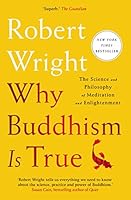
[B]y calming yourself when you are excited by restlessness and energizing yourself when you are dulled by inertia, you exercise and strengthen two of the Seven Factors of Enlightenment—tranquility and energy. You also strengthen your equanimity and metta. Similarly with the other three energies: you exercise all your enlightenment muscles, thereby allowing your buddha nature to manifest more strongly.

“Americans who live in metropolitan areas with more than a million residents are, on average, more than 50% more productive than Americans who live in smaller metropolitan areas. These relationships are the same even when we take into account the education, experience, and industry of workers. They’re even the same if we take individual workers’ IQs into account.” Globally we see the same effect: the world’s 300 biggest metropolitan areas produce half of global GDP and two-thirds of GDP growth.
But beyond their productivity, are these people healthy & happy? Perhaps productivity isn't the single or even most important metric that we should use to judge.

To understand this model of relentless action and reaction, think about the three great crises of the twenty-first century—9/11, the financial crash, and Covid-19—one political, one economic, and one natural. In the first, 9/11, we saw that the supposedly unstoppable march of capitalism, democracy, and American hegemony had produced an angry, violent reaction in parts of the Muslim world.
The divisions "political, economic, and natural" are too neat, especially in looking back at the financial crisis (very political in origin) and the Covid-19 crisis: financial & political & cultural norms were more significant than the virus itself.

[N]atural selection didn’t design your mind to see the world clearly; it designed your mind to have perceptions and beliefs that would help take care of your genes.

In a technocracy, tools play a central role in the thought-world of the culture. Everything must give way, in some degree, to their development. The social and symbolic worlds become increasingly subject to the requirements of that development. Tools are not integrated into the culture; they attack the culture. They bid to become the culture. As a consequence, tradition, social mores, myth, politics, ritual, and religion have to fight for their lives.


Wednesday, October 7, 2020

Thoughts of the Day: Wednesday 7 October 2020


At a common sense level, anyone who is irreverent about his or her own well-being cannot be charged with any other responsibility, and certainly not with important matters of state.


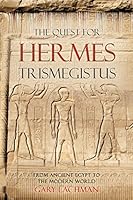
The difference between the Gnostics and the Hermeticists is that Hermetic man doesn't want to escape from the world, but to realize his full potential within it, in order to embrace his obligations, so that, as Hermes tells Asclepius, he can 'raise his sight to heaven while he takes care of the earth'.
To reiterate, the spiritual and political realms are necessarily governed by different moral codes, meaning that absolute standards cannot be applied to politics. Like Jesus, who rendered unto Caesar what was Caesar’s, the Buddha therefore left worldly affairs to the civil authorities. So it may be that the best and noblest political act is to forget politics and to devote ourselves primarily to training our minds in wisdom and our hearts in compassion, even as we continue to live as householders. The above is not a call to apathy or passivity. But the Buddha’s way is to be clearly aware of the world as it actually is—not as we conceive it to be or would like it to be—and then to respond accordingly.

And for the deeper dive, back to Hannah Arendt's Essays in Understanding and in particular, her "On the Nature of Totalitarianism: An Essay in Understanding."
Montesquieu was the last to inquire into the nature of government; that is, to ask what makes it what it is (“sa nature est ce qui le fait ĂȘtre tel,” L’Esprit des Lois, Book III, ch. 1). But Montesquieu added to this a second and entirely original question: What makes a government act as it acts?
....
What is it that makes a state recognizable as a republic, a monarchy, or a tyranny? After giving the traditional answer to the traditional question—affirming that a republic is a constitutional government with the sovereign power in the hands of the people; a monarchy, a lawful government with sovereign power in the hands of one man; and a tyranny, a lawless government where power is exercised by one man according to his arbitrary will—Montesquieu adds that in a republic the principle of action is virtue, which, psychologically, he equates with love of equality; in a monarchy, the principle of action is honor, whose psychological expression is a passion for distinction; and in a tyranny, the principle of action is fear.
Arendt, Hannah. Essays in Understanding, 1930-1954 (p. 330). Knopf Doubleday Publishing Group. Kindle Edition. 

Sunday, October 5, 2014

Tough Love, Buddhist-style. A Review of Buddha Takes No Prisoners: A Meditator’s Survival Manual by Patrick (William) Ophuls


Reading this book, I sometimes wonder, “Is it worth it? All of this time spent on meditation, all of this concern? After all, I’m pretty old, and I’m never going to escape samsara in this lifetime. I’m a householder, and even after years of mediation and having spent 10 days living and meditating like a Buddhist monk, I’m not sure that I’ve made a dent in taming my monkey mind. My prospects are bleak. And if that isn’t bad enough, I live in society that is perhaps the worst of all possible worlds for hoping to achieve nirvana.”

If you pick up this book and read it in the hope of finding words of praise and encouragement, you’ve chosen the wrong book. Buddha takes no prisoners and neither does Ophuls. Whether he’s talking about meditation or the social world, he isn’t sparing in his assessments. Yet for all his bluntness, he encourages by throwing down the gauntlet of an impossible quest. For every time you read something that suggests your situation or your efforts are hopeless, Ophuls seems to acknowledge the quandary and say “do it anyway”. And why not? If we don’t try, we fade off into oblivion without having attempted the noble quest. As a practical matter, life can be bad. And life can be worse. We can’t escape old age, sickness, and death, but we can experience the “The Heart-ache, and the thousand Natural shocks That Flesh is heir to” with greater or lesser equanimity and therefore greater or lesser suffering.

Another reason to continue this book (and the path it recommends) comes from Ophuls’s pithy writing. As Ophuls notes in his beginning remarks:

So Buddha Takes No Prisoners is a different kind of meditation book— one that is quite idiosyncratic, not to say iconoclastic, by traditional standards, because it has no pretensions to orthodoxy . It also tries to inject a note of playful irreverence into what is usually taken to be A VERY SERIOUS MATTER. I want to emphasize the word playful: my aim was to produce something that would be fun to read and, above all, fun to write, while still being instructive. Otherwise, why bother?

Id. “Not another meditation book!”

In fact, Ophuls does provide fresh and engaging ways to consider meditation and the aims of the Buddhist tradition. I came away with some memorable insights, such as this one about the realization of what it’s all about:

[M]any years of intensive spiritual practice had succeeded in clearing [Buddha’s] mind, and one day an early childhood memory bubbled up. Left to himself under a tree by the side of a field in which his father was supervising the ritual plowing, Siddhartha had relaxed into a state of pure presence— a condition of open, amplified awareness in which he saw everything perfectly, just as it was. Feeling with his whole body and mind the clarity, grace, and power of that remembered state, Siddhartha knew he had found the way forward at last.

Id. (p. 8)

We all probably have some like memory of pure presence, of open, unencumbered awareness with which we can identify Buddha’s experience. So this is what it’s all about! This insight alone is worth the price of the book. It gives one a sense of the grace that we seek through meditation, not simply relaxation or some trance state, but an experience of an ineffable relationship with the world.

Another key insight is that meditation is all about purification. We all have a Buddha mind, it’s just covered in dross. Ophuls recounts the ways in which meditators have often described the mind and then he adds an even better metaphor of his own:

[M]editation is like taming a wild beast— traditionally, a spooky horse, a mad monkey, a drunken elephant , or a bewildered ox . But the real beast is, of course, you, so think of it as housebreaking your inner hyena.
  
Id. (p. 14)

Your “inner hyena”? Ophuls later refers to us humans as the “two-legged hyenas” and notes that “[o]ur hyena nature is always scheming, conniving, and chiseling, always maneuvering for advantage. Only the saints refrain—on their better days.” Id. (p. 45). This isn’t your garden variety, soft-soap, self-help book. 

Ophuls emphasizes that meditation is a matter of purification, which is in turn mostly a matter of renunciation. Now how welcome are those words in our culture and in our minds? Nice in theory, but do I really have to give up [cherished pleasures and junk of your choice]? This is where Ophuls pulls no punches (or takes no prisoners). Yup, that’s what it’s about: purging the dross of the mind. It ain’t easy. Meditation may be seem like the ex-lax of purging, but sooner or later, you’re going to have some uncomfortable episodes. For this aspect of meditation, you need endurance and toughness to work through it. Indeed, it’s not just the mind; oh, no, it includes the body as whole, which is the home of the mind. (The mind is not located exclusively in the brain.) Ophuls explains: 

To free your mind, you must dissolve these physical blockages (and, of course, vice versa: to free your body, you must untie your mental knots). The fireworks generated by the collision between healing energy and coagulated defilement will take different forms— and can be more or less intense depending on individual karma—but physical purification and transformation are always an intrinsic and integral part of the meditation process.

Id. (p. 32)

For instance, following a mediation retreat that I attended, a guy that I thought could have been an American pro-football player told me that he balled like a baby during one period of mediation as a damn of physical and emotional pain broke in him. This is not the stuff of wimps. 

Ophuls, like about every other meditation teacher, tells us that we’ll fail in our efforts, especially at the beginning. But he writes: 

Of course, you will fail pitifully when you try to carry out this simple program. Everybody does. But it doesn’t matter. You simply do the best you can, and you keep doing it over and over, not being attached to how well you are doing or to what results you obtain. Even a few brief moments of metta and equanimity are enough to begin the ripening process .

Id. (p. 28)

“I’m a failure.” Big deal. Get over it. “Small, small catch monkey” as they say in Cameroon. 

In what can seem like a stream of discouraging words (which rightly taken are challenging words), Ophuls offers this point of encouragement: 

But meditation is not like art, where a hundred years of practice will not turn a dabbler into Degas. It is more like Edison’s formula for genius: ninety-nine parts perspiration to one part inspiration. So practice is everything . Whatever your talent for meditation, you cannot succeed without practicing ; whatever your lack of talent, you can succeed by practicing. If you produce the perspiration, the inspiration will come— 

Id. (p. 50)

Toward the end of the book, Ophuls includes a chapter “Return to the Marketplace” along with four appendices that deal with these issues more directly in the realm of daily life, including the marketplace and the public square. This is a value-added aspect of Ophuls’s work that I don’t find in other fine works on meditation. How does it fit with the lives we live? (Assuming you’re not a monk or nun.) On one hand, he simplifies the message for us: 

Enlightenment shows us that all the world’s a church, and all of life’s a pilgrimage, so we must live accordingly: with wisdom and compassion. In a nutshell, wisdom is practicing nonclinging, and compassion is practicing kindness.

Id. (p. 131)

But while we’re living the spiritual life, we mustn’t get ourselves lost in our personalized versions of a spiritual trip. He writes: 

The corollary is not to be rule bound— that is, enslaved by some image of holiness that you (and everybody else) have to live up to. Making a big deal out of spirituality or identifying it with political correctness and your personal preferences is delusion, not enlightenment. Spiritual trips are just as obnoxious as worldly trips, if not more so (especially when the two get all jumbled up together). As hard as it might be for some in the spiritual scene to accept, vegetarianism is not obligatory, and a glass of wine with dinner is not anathema. Nor is voting Democratic any more enlightened than voting Republican . And social workers are no holier than sailors.

Id. (pp. 131-132)

For some, this might come like a cold bucket of water in the face. (N.B. Voting Democratic is (nowadays) almost always smarter and wiser than voting Republican, but it’s not a sign of spiritual enlightenment.) Indeed, lest we all go off to live in monasteries, we must deal with the world, and deal with it in worldly-wise ways. Ophuls notes: 

[A]s long as we are living as householders rather than as renunciates, it is entirely appropriate to create and enjoy fortunate circumstances. Fortune fosters joy, and joy fosters generosity and other positive, skillful qualities of mind. So we need to find the middle way between self-abnegation and self-indulgence. We need, in other words, to create a way of living that is simple, beautiful, and life-affirming: a squalid hovel is a blight, and a trophy mansion an extravagance, but a well-designed, well-built, and well-furnished home is a blessing. To mention beauty is to come to the heart of the matter. Beauty is not an option or a luxury, but a necessity. We need beauty in our personal lives, because beauty uplifts the mind and reconnects it to the power and wonder of creation. And we desperately need beauty in our collective life (perhaps even more than we need political, social, and economic reform).

Id. (pp. 132-133)

The “perhaps” in the last sentence is noteworthy; let’s agree that we can use both.

Just as you may think that Buddha and Ophuls are going soft, Ophuls writes that we in the West want to have “healing” and enlightenment; we want the pleasures of life and the benefits of renunciation. No way, he says. Freud sought to compromise with reality, to whittle away the suffering of our neuroses into ordinary unhappiness. Buddha wasn’t willing to take this path. Buddha goes all the way, and team Buddha isn’t going to boost everyone’s self-esteem by letting everyone make the cut and get a letter. No. “You’re going to have to earn it.” (Cue John Houseman’s sneering voice for full effect.)

In the four appendices, Ophuls situates Buddhist thought within contexts of modern science, Western political thought, Western psychology, and contemporary culture. As with the rest of the book, the tone alternates between it’s all FUBAR (for younger readers:  “fouled-up beyond all recourse” or something like that) and “Okay, it’s FUBAR, let’s get to work on it”. (I wrote earlier about the appendix on politics.) 

Ophuls is like a great teacher or coach, at once demanding a level of performance that one can never hope to obtain while providing a pat on the back indicating that you’re getting there. Challenge and encouragement. With this, Ophuls's book goes on my shelf (electronic shelf in this case) as one of the best guides to meditation and what life is really about: living it with wisdom, compassion, and equanimity.   

Wednesday, September 10, 2014

Decline & Fall in the 21st Century: A Review of Immoderate Greatness: Why Civilizations Fail by William Ophuls


Perhaps it started with a place called Manti, located in the countryside outside of my home town of Shenandoah. It had a small pond for fishing and a cemetery. The untended gravestones from the late 19th century lay overwhelmed by the exuberant grasses and weeds. You could walk among those gravestones, looking at the dates of birth and deaths of those long dead residents, and then look around and you see nothing but Nature. A village of the dead. 

I’m not alone in holding a fascination with the sense of ruin. Visits to Anasazi ruins in New Mexico; to Mayan ruins in the Yucatan and Guatemala; to those of the Incas in Peru; to the abandoned Moghul city of Fatehpur Sikri in India; to the Coliseum and Forum in Rome—one never finds oneself alone. Crowds swarm through the grand ruins. We behold and contemplate. The list of ruins is like a school’s honor roll of deceased alumni and serves as a haunting memento mori writ large. For us, for our civilization. 

For those interested in decay, decline, collapse—the terms vary, but the experience remains—the sources are legion. Plato and Aristotle, St. Augustine, Machiavelli, and just about every serious political thinker in the Western canon addresses this issue. Medieval Islam gives us the insights of Ibn Khaldun, while the Enlightenment provides us with Gibbon. In the 20th century, we have Spengler, Toynbee, and Sorokin among a host of others, many of them writing today, such as Peter Turchin. Francis Fukuyama will publish a new volume at the end of this month entitled Political Order and Political Decay: From the Industrial Revolution to the Globalization of Democracy. The parade of reflection on this phenomenon continues. Some—those with the courage to look at our present situation and consider the real binds that we face—have a grim message for us. Such is the case with William (a/k/a Patrick) Ophuls. 

I recently reviewed Plato’s Revenge, which assumes the decline of our contemporary industrial civilization and that provides a guidebook of sorts about how we should model the successor to our civilization. In Immoderate Greatness: Why Civilizations Fail (2013) Ophuls argues that decline is inevitable—discoveries of new fossil fuel reserves or reductions in climate change magnitude notwithstanding. It’s here. It’s happening. It’s happened before. And there are several reasons why. It’s like going to the doctor feeling young, fit, and trim, and she concludes the exam by telling you that you’re going to die. That’s an inarguably true statement. Sooner or later, you’re going to die. The difference with Dr. Ophuls is that he believes that his patient (industrial civilization) has already reached civilizational senility and that we’d best get our affairs  in order to make life better for our heirs. He’s right. 

Dr. Ophuls—and he really is a doctor—of the Ph.D. in political science variety—identifies several disease processes that doom our civilization as they have doomed those before us. Ophuls does not develop any new or unique theories of civilizational decline in his book, but he does an excellent job of identifying and arguing the existing theories. Also, as a sound social scientist or historian, he doesn’t wed himself to a single, grand theory, but he appreciates that multiple causes drive the process of change. He begins his diagnosis, as he began Plato’s Revenge, with the basic science involved. 

Entropy, ecology, and complexity all entail natural, physical limits on human capacities. Each level of analysis—physical, biological, and social—faces tangible constraints. At the most basic level, entropy requires any life form to feed upon outside sources of energy. Whether for our bodies or for our machines, we must continuously tap new sources of energy. But the law of entropy establishes that energy degrades when used (chaos replaces order) and that eventually, traditional energy sources will not yield a sufficient return on the investment needed to gather and use the energy. As Ophuls notes, Joseph Tainter builds his entire theory of civilizational collapse on the increasing marginal cost of a unit of energy, or conversely, on the declining energy return on investment (EROI). Complexity may delay, but cannot avoid, this conundrum. But complexity, too, has its limits: those implicit in the environment and in the human brain. 

As Ophuls notes: 

. . . .  [O]ur minds and language are linear and sequential, but systems happen all at once and overwhelm us intellectually: Systems surprise us because our minds like to think about single causes neatly producing single effects. We like to think about one or at most a few things at a time…. But we live in a world in which many causes routinely come together to produce many effects.
. . . .
In short, limited, fallible human beings are bound to bungle the job of managing complex systems. What they can neither understand nor predict, they cannot expect to control, so failure is inevitable at some point.

Ophuls, William (2012-12-28). Immoderate Greatness: Why Civilizations Fail (p. 37). CreateSpace. Kindle Edition.

In addition to our limited cognitive ability to encompass the complexity of systems, we also have the problem that we’re incarnate human beings with some—shall we say—unfortunate traits that are only overcome—if at all—through a great deal of effort. And effort, the struggle for civilization, for civility, invariably decreases as civilizations grow more prosperous. Add to this the common traits of humans, and we can see our problem. Ophuls quotes Edmund Burke: 

History consists, for the greater part, of the miseries brought upon the world by pride, ambition, avarice, revenge, lust, sedition, hypocrisy, ungoverned zeal, and all the train of disorderly appetite.

Ophuls, William (2012-12-28). Immoderate Greatness: Why Civilizations Fail (p. 54). CreateSpace. Kindle Edition, quoting Burke (citation in notes)

Add to this the fact that humans are “are not innately wise, especially in crowds” (id. 41), to put it mildly, and that democracy, at its worst, crowdsources difficult political problems to a less than qualified and informed electorate. With this situation, you have the making of a cascade of troubles on the horizon. Politicians are driven to the lowest denominator of popular prejudices and provide bread and circuses, entitlements and inflation, to stave off discontent. The ability to say “no” and to reason together all but disappears. Sound familiar? 

Ophuls concludes his reflections about the Ponzi scheme of civilization (“as a process, civilization resembles a long-running economic bubble.” Id. 9.) with the observation that our civilization—industrial civilization—is nearly universal. This near universality (well, really speaking just of Earth) means that nowhere in this world of ours will we find an apparent successor of equal power and glory to replace industrial civilization. No Rome to replace Greece, no Byzantium to preserve Rome. We face a new Dark Ages. Can we avoid this? 

Ophuls notes that Ian Morris, in his Why the West Rules—For Now (the title belies the scope, magnitude, and sophistication of the work) concludes with the idea that we will either gain “The Singularity” of technological and cognitive control of our environment and our history, or we will descend into the collapse of “Nightfall.” But before plunging into Morris, ThomasHomer-Dixon, or Joseph Tainter (if you haven’t already)—or even if you have—I recommend this brief and incisive primer about how we’re in for a rough ride ahead, just like our ancestors.

rev'd 08.14.19