Showing posts with label Jacques Barzun. Show all posts

Saturday, July 31, 2021

Thoughts for the Day: Saturday 31 July 2021


John Horgan’s The End of Science (1996) was subtitled Facing the Limits of Knowledge in the Twilight of the Scientific Age. In Grammars of Creation (2001), George Steiner, one of the last European cultural mandarins, laments that “We have no more beginnings” and concludes that there is “in the climate of spirit at the end of the twentieth century, a core tiredness.” “We are, or feel ourselves to be, latecomers.” And in From Dawn to Decadence (2001), an account of the last five hundred years, the historian Jacques Barzun—who died in 2012 at the age of 104—presents a picture of early twenty-first-century man undergoing what he calls the “Great Undoing,” the West’s self-immolation at the hands of chat shows, gangsta rap, and fashionable deconstructionism.

Authoritarianism, by contrast [to fascism], allows independent economic and social bodies, forms of limited representation, and a degree of freedom for religion. Its enemy is democratic participation. It also stifles opposition by violence and fear but stabilizes itself by relying on passive acquiescence in a trade-off of social quiet for loss of political role. The fascist is a nonconservative who takes anti-liberalism to extremes. The right-wing authoritarian is a conservative who takes fear of democracy to extremes.

In general, a researcher always has a choice of which studies to select and which to reject in working toward a hypothesis. In this process, it’s hard to overcome the essentially human instinct to select only those observations that conveniently support one’s own hypothesis while rejecting those that do not.

In our modern world, ritual is often thought to encourage a slavish conformity, but the Brahmin ritualists [at the beginning of the Axial Age of India] had used their science to liberate themselves from the external rites and the gods, and had created a wholly novel sense of the independent, autonomous self.
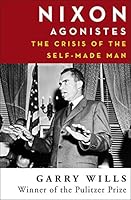
The coherence of Nixon’s own views has not generally been recognized, and for an important reason: this would involve the admission that American liberalism and the emulative ethic cohere—inhere, rather, in each other. All our liberal values track back to a mystique of the earner.

Detecting trustworthiness is a basic life skill in small groups which depend on sharing and reciprocity, and so people have developed good bullshit detectors. The best way around other people’s bullshit detectors is to believe what you say. If your social reputation and group identity depend upon believing something, then you will find a way to believe it. In fact, your brain will help you by readily accepting and recalling congenial information while working to bury and ignore uncongenial information.

“What was most important wasn't knowing the future—it was knowing how to react appropriately to the information available at each point in time.”

Thursday, November 12, 2020

Thoughts of the Day: Thursday 12 November 2020


What is wrong with Scientism is not that it is ‘material’ but that it is too abstract, too much in love with the hunt for the simplest formula, which today takes the form of a ‘theory of everything’. To be effective science must limit the part of reality that it deals with to what is relevant for its purposes. Because of this, as [Jacques] Barzun tells us, ‘the realm of abstraction, useful and far from unreal, is thinner and barer and poorer than the world it is drawn from’.
To abstract means to ‘extract’ or ‘remove’ something, whether it is an ‘abstract’ of a scientific paper you are interested in – that is, a brief description of it – or your idea of ‘tree’ from all the many, different ‘real’ trees you have encountered. One of the great sleights of hand that Scientism has pulled off is to convince the unthinking public that the thin, bare, poor world that it abstracts from – i.e. ‘pulls out of’ – our thick, luxuriant, rich world is the ‘really real’ world, the one that ‘objectively exists’, while the one we encounter and love and struggle with is a kind of subjective illusion, housed within our individual island consciousness. It manages this trick solely because of the practical effectiveness it provides.
My review of Lost Knowledge of the Imagination. Compare what Lachman says here with what Iain McGilchrist writes below:

As things become dulled and inauthentic, they become conceptualised rather than experienced; they are taken out of their living context, a bit like ripping the heart out of a living body. Heidegger called this process that of Gestell, or framing, a term which suggests the detachment of seeing things as if through a window (as in a famous image of Descartes's), or as re-presented in a picture, or, nowadays, framed by the TV or computer screen. Inherent in it is the notion of an arbitrarily abrupted set of potential relationships, with the context – which ultimately means the totality of Being, all that is – neatly severed at the edges of the frame. Because reality is infinitely ramified and interconnected, because its nature is to hide, and to recede from the approach of logical analysis, language is a constantly limiting, potentially misdirecting and distorting medium. Yet it is necessary to Heidegger as a philosopher. In its tendency to linearity it resists the reticulated web of Heidegger's thought, and his writing espouses images and metaphors of paths that are circuitous and indirect . . . suggesting threading one's way through woods and fields. It is interesting that Descartes's philosophy was half-baked while he slept in a Bavarian oven, the metaphor of stasis and self-enclosure revealing, philosophy and the body being one, the nature of the philosophy; whereas Heidegger was, according to Steiner, ‘an indefatigable walker in unlit places’: solvitur ambulando. Truth is process, not object.

Understanding, as distinguished from having correct information and scientific knowledge, is a complicated process which never produces unequivocal results. It is an unending activity by which, in constant change and variation, we come to terms with and reconcile ourselves to reality, that is, try to be at home in the world.
I'm writing a piece about Arendt's ideas concerning understanding, thinking, and how these concepts differ from knowledge, and how her ideas compare in some ways to those of R.G. Collingwood. (But it's not done yet; this is space exploration for the mind!)

“Many of these complex systems are governed by feedbacks, and if stressed too much they can move to radically new equilibria. The feedbacks often allow Earth’s biosphere to operate as a control, as a thermostat if you like, on interactions between the atmosphere, land, and oceans.”
We can't learn and think too much about the environment. This is Mother Nature, Mother Earth we're talking about. Father Sky can stand down for a while. P.S. My review of this book is on deck.


Sunday, August 22, 2010

Three Wise Men: Kennan, Barzun, & Lukacs

I just re-read John Lukacs's George Kennan: A Study in Character. More about this particular work in a later post. In re-reading this book, I reflected on these two men, who were friends and correspondents for over fifty years, and how they both intrigue me. I add to them the person of Jacques Barzun to complete a trio for my pantheon. What do they share and why do I find them so worthy of attention and admiration?

The three men share some surface attributes. Each is (or was) long-lived: Kennan, who died in 2003, lived to 101 years of age; Barzun is now 102, and Lukacs, the kid among the three, is now 86, and still writing. Kennan remained an active writer and traveler up to his 100th year. Barzun published a tome on Western Civ well into his nineties. (I don't know about his current state of health). Lukacs, in the mean time, is still actively publishing; in fact, I just learned that he's published his correspondence with Kennan (Through the History of the Cold War: The Correspondence of George F. Kennan and John Lukacs (2010) (this moved up immediately to the top of my buy list). In addition, each of these individuals is an American; however, Kennan is the only native-born American, having grown up in Wisconsin and having gone to college at Princeton. Barzun and Lukacs, on the other hand, grew-up in France and Hungary, respectively, and emigrated to the U.S. as young men. So while all three are Americans, they are also quite cosmopolitan (and multi-lingual). All three are historians; Barzun and Lukacs as academics, while Kennan became a historian after a distinguished career as a U.S. Foreign Service officer. Each brings a wide-ranging and very literate sensibility to history. Barzun, in addition to writing on cultural history, also published on the topics of mysteries, baseball, musicology, writing style, research, and education, and he worked with Lionel Trilling on literary projects. Lukacs describes himself as a "writer" as much as a historian. His vignettes in A Thread of Years show the eye and ear of a novelist, while his style in almost all of his writings carries a distinctive mastery of his adopted tongue. Kennan, meanwhile, gained his fame as the author of the Long Telegram of 1946 and his Foreign Policy article "The Sources of Soviet Conduct" (1947) signed as "X" (an attempt to shield his identity given his State Department rank). After leaving the Foreign Service, Kennan moved the Institute for Advanced Studies at Princeton where he published histories of diplomacy and foreign relations, as well as commentary on current events. How well did he write? Lukacs praises his writing, which I consider an extremely high compliment.

The final attribute that I would attribute to the three wise men arises from the difficulty one would have attempting to pigeonhole any of them politically. Kennan receives credit for launching the Cold War strategy of containment, but he came to resist the militarization of U.S. foreign policy, over reliance on nuclear weapons, the U.S. war in Viet Nam, among other positions that could alienate partisans in American politics. Lukacs and Barzun, while not writing much on contemporary U.S. politics, certainly provide historical and cultural perspectives that challenge facile distinctions of liberals and conservatives. Lukacs, especially, emphasizes the distinction between patriotism and nationalism.

The more I read by and about these three individuals, the more I appreciate them. Flawless? No, of course not, but in the face of difficult issues and popular sentiments, these men stake out positions that demand our consideration and respect, and quite often, our emulation. Finally, for individuals who are growing older (like me), they represent a model of engaged and engaging thinkers who refused to go gently into that goodnight.