Showing posts with label Ram Dass. Show all posts

Thursday, January 27, 2022

Thoughts 27 Jan. 2022


Ram Dass (1931-2019)

“One of the big traps we have in the West is our intelligence, because we want to know that we know. Freedom allows you to be wise, but you cannot know wisdom, you must be wisdom. When my guru wanted to put me down, he called me ‘clever.’ When he wanted to reward me, he would call me ‘simple.’ The intellect is a beautiful servant, but a terrible master. Intellect is the power tool of our separateness. The intuitive, compassionate heart is the doorway to our unity.”
— Ram Dass

Compare this with what McGilchrist argues in his books. 


In The Master and his Emissary: The Divided Brain and the Making of the Western World, I aimed to dispel the unscientific fiction, popular at the time, that there was no significant difference between the hemispheres. This misconception was just as popular, and just as absurd, as any of the myths about supposed differences that were, and for all I know still are, being peddled in management seminars, and to which it was a knee-jerk reaction. In reality, as anyone who has worked with neurological and psychiatric patients knows, there is a world of difference between the two hemispheres: literally, since they give rise to two different experiential worlds. The question was not whether there was a difference – that was clear, beyond a shadow of a doubt – but why there was, and of what kind it might be.
My argument was, and is, that the nature of the difference between the hemispheres is far from anything hitherto imagined, and that it fulfils an evolutionary purpose of the utmost importance. It is not a separation of reason from emotion, or language from visuo-spatial skills, or any of the other things that used to be said, since, indeed, each hemisphere deals with absolutely everything – just in a reliably different way. The character and sheer extent of that difference, as well as its significance for the future of our civilisation, formed the subject of that book. And that difference could be seen as rooted in a difference in attention . . . .

Science is now used to many fine ends; but, alas, inevitably much of the time in the service of the subjugation and destruction of Nature.

Some journalists, especially younger ones, ridicule the idea of objectivity as a “view from nowhere” and call for replacing it with “moral clarity,” by which they seem to mean their own political values.

His populism brought the cynical cruelty of Jersey Shore to national politics. The goal of his speeches was not to whip up mass hysteria but to get rid of shame. He leveled everyone down together.
N.B. I didn't to back to the book to attempt to ID who the "his" in "His populism" is because we all know, don't we?
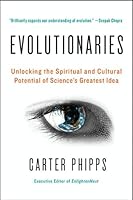
Biologist David Sloan Wilson captures this concern in his Evolution for Everyone, in which he describes how a young graduate attempting to apply the insights of evolutionary theory to other fields ran into a wall of opposition based on many of these negative presumptions when he tried to discuss his newfound interest with his professors and peers: [He] quickly learned that when [he] spoke of human behavior, psychology and culture in evolutionary terms, their minds churned through an instant and unconscious process of translation, and they heard “Hitler”, “Galton,” “Spencer,” “IQ differences,” “holocaust,” “racial phrenology,” “forced sterilization,” “genetic determinism,” “Darwinian fundamentalism,” and “disciplinary imperialism.”


The foundation legends, with their hiatus between liberation and the constitution of freedom, indicate the problem without solving it. They point to the abyss of nothingness that opens up before any deed that cannot be accounted for by a reliable chain of cause and effect and is inexplicable in Aristotelian categories of potentiality and actuality. In the normal time continuum every effect immediately turns into a cause of future developments, but when the causal chain is broken—which occurs after liberation has been achieved, because liberation, though it may be freedom’s conditio sine qua non, is never the conditio per quarn that causes freedom—there is nothing left for the “beginner” to hold on to. The thought of an absolute beginning—creatio ex nihilo—abolishes the sequence of temporality no less than does the thought of an absolute end, now rightly referred to as “thinking the unthinkable.”

The fact that certain people live, for example, on an island has in itself no effect on their history; what has an effect is the way they conceive that insular position; whether for example they regard the sea as a barrier or as a highway to traffic. Had it been otherwise, their insular position, being a constant fact, would have produced a constant effect on their historical life; whereas it will produce one effect if they have not mastered the art of navigation, a different effect if they have mastered it better than their neighbours, a third if they have mastered it worse than their neighbours, and a fourth if every one uses aeroplanes.

Friday, January 21, 2022

Thoughts 21 Jan. 22


An algorithm is what the left hemisphere wants; the recognition that it’s got to be free of any algorithm, yet not at all random, is characteristic of the understanding of the right hemisphere. We can specify what is not jazz, but not what is. Our knowledge of anything unique is similarly apophatic.

Just as ‘and’ is not merely additive, ‘not’ is not merely negative. Both are creative. Indeed resistance – ‘not-ness’ – is an absolute necessity for creation, another apparent paradox that will become clearer as this book unfolds.

This is what is known as the ’âlam al-mithâl, or, as Corbin calls it, the mundus imaginalis, or ‘Imaginal World’. As Corbin writes, this is ‘a very precise order of reality, which corresponds to a precise mode of perception’. This ‘order of reality’ and ‘mode of perception’ is based on a ‘visionary spiritual experience’ that Suhrawardi believed was ‘as fully relevant as the observations of Hipparchus and Ptolemy are considered to be relevant to astronomy’.

As for the power of reason, it is the servant of what today we call confirmation bias, an idea Montaigne impressively anticipated. “Men’s opinions are accepted in the train of ancient beliefs, by authority and on credit, as if they were religion and law. They accept as by rote what is commonly held about it.… On the contrary, everyone competes in plastering up and confirming this accepted belief, with all the power of their reason, which is a supple tool, pliable, and adaptable to any form. Thus the world is filled and soaked with twaddle and lies.”

For sure, self-censorship is part of living together (we call it “courtesy”)—but not when it impedes honest conversation and criticism in university intellectual life, where honest conversation and criticism are the whole point of being there.

“Demoralization,” I tell Theaetetus, “denies your agency. It makes you feel helpless. Don’t let them do that. You are not helpless.”

The error is to think of radicals as political types or of radicalism as a set of ideas. The terms “radical” and “moderate” are not substantive but adverbial. Radicalism and moderation bear on pace, posture, and style, not content. The difference turns on how aims are held and acted on: rigidly or flexibly, zealously or temperately, in attacking thrusts or defensively dug in, bent on annihilating opposition or allowing for compromise, unable to live without conquest or able to survive defeat and failure.

This old standard argument of the opponents of democracy was supported there by an unusually strong tradition of political passivity and by a no less unusually strong tradition of work and pure production. Taken together, these traditions made appear quite plausible a curious equating of purely technical capability with purely human activity, the latter of which has always had to do with questions of right and wrong. Once the moral basis of the knowledge of right and wrong, unarticulated as it was, began to crumble, the next step was to measure social and political actions by technical and work-oriented standards that were inherently alien to these larger spheres of human activity.

Thinking, no doubt, plays an enormous role in every scientific enterprise, but it is the role of a means to an end; the end is determined by a decision about what is worthwhile knowing, and this decision cannot be scientific.

“Early in the journey   you wonder how long the journey will take and whether you will make it in this lifetime. Later you will see that where you are going is HERE and you will arrive NOW...so you stop asking.”

One reason I and others promote the idea that eating saturated fat from animal products is most likely benign is that we’ve been consuming these fats as a species for as long as humans have been a species. The evidence isn’t compelling enough to convince us that this assumption is likely to be wrong. We may or may not have been consuming as much of these saturated fats, but we can presume we are genetically adapted to eating them.

Where Heidegger places his Dasein-redeeming confidence in primal anxiety, Benjamin places it in the rapture of different kinds of artificial paradise; the wild roar of rush-hour traffic replaces the experience of the storm high in the Black Forest; aimless flâneuring replaces the ski slope down to the abyss; absorption in outward things replaces the retreat into the interior; apparently random distraction occupies the space of contemplative concentration; the deracinated, disenfranchised masses of the international proletariat replace those people rooted in their homeland . . . Both Benjamin and Heidegger longed for revolutionary change, in everything that they were and had.


Thursday, April 29, 2021

Thoughts for the Day: Thursday 29 April 2021


Exploring the history of inquiry in the West 


Statistical significance arguments. If on a certain hypothesis a certain result would be unlikely, then the occurrence of that result tells against the hypothesis. Of this kind are arguments ruling out the hypothesis of chance: a sequence of 1,000 heads when tossing a coin is possible but very unlikely if the tossing were random, so if such a result occurs, one rules out the hypothesis of chance and looks for some explanation of the regularity, such as a bias in the coin. Such arguments occurred in Aristotle, Cicero, the Talmud, and occasionally thereafter. There was never any attempt to quantify how unlikely the result was on the hypothesis.

Nyanaponika Thera noted, “cautious and intelligent use … of one’s own introspective observations … though far from infallible, may well lead to important and reliable conclusions.” Whether the Hellenistic philosophers meditated or not, their self-observation was sensitive and accurate, as is showed by the fact that they describe the process virtually identically with the abhidharma [a tradition of Buddhist description of operations of the mind] except for a tendency to see as aspects of a single complex stage what the abhidharma sees more minutely as successive simple stages.

“Early in the journey you wonder how long the journey will take and whether you will make it in this lifetime. Later you will see that where you are going is HERE and you will arrive NOW...so you stop asking.”

When we stop thinking for ourselves we are in a trance. Trance is the default setting of a mind that's not working consciously. Sometimes, when purposeful, this is healthy at other times it's incredibly unhealthy.

"Lots of people," as the poet and artist Austin Kleon puts it, "want to be the noun without doing the verb." To make something great, what's required is need. As in, I need to do this. I have to. I can't not.