Wednesday, August 4, 2021

Thoughts for the Day: Wednesday 4 August 2021


Conventional wisdom conflates self-interest and selfishness. It makes sense to be self-interested in the long run. It does not make sense to be reflexively selfish in every transaction. And that, unfortunately, is what market fundamentalism and libertarian politics promote: a brand of selfishness that is profoundly against our actual interest.

Yaneer Bar-Yam, the American complexity theorist . . . argues that the level of complexity of modern human society has recently overtaken the complexity of any one person belonging to it . . . . But our individual complexity, as we’ve seen above, serves an important function: it helps us adapt to changes in our circumstances, because it gives us a wider repertoire of responses to those changes.

“The first thing people must grasp, . . . is that we must view Earth’s systems as a functioning whole. We must learn what makes them tick as a whole, not merely the mechanisms of their component parts.”

A good traveler has no fixed plans and is not intent upon arriving. A good artist lets his intuition lead him wherever it wants. A good scientist has freed himself of concepts and keeps his mind open to what is. Thus the    Master is available to all people and doesn’t reject anyone. He is ready to use all situations and doesn’t waste anything. This is called embodying the light. What is a good man but a bad man’s teacher? What is a bad man but a good man’s job? If you don’t understand this, you will get lost, however intelligent you are. It is the great secret.

“We used to believe that modern capitalism was capable, not merely of maintaining the existing standards of life, but of leading us gradually into an economic paradise where we should be comparatively free from economic cares. Now we doubt whether the business man is leading us to a destination far better than our present place. Regarded as a means he is tolerable; regarded as an end he is not so satisfactory.”41 Keynes could not stomach the Soviet experiment. But neither could he tolerate the cultural stagnation he found when he returned to Britain. His country was addicted to an era that had ended a dozen years earlier, incapable of embracing the present.

To this new neglect of economic factors on the part of those who make politics must be added the new over-emphasis on power. Mr. Gross takes Russia’s arguments against a possibly non-democratic federation at their face value and solemnly reassures her of the longing of the peoples concerned for truly democratic and peaceful institutions. He completely overlooks what, after all, is obvious, namely, that Russia being a big Power wants nothing so much as to become an even bigger Power.

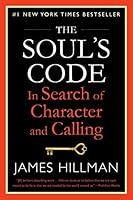
If anything, the depth psychology of soul-making, as I have been formulating it, is a via negativa. No ontology. No metaphysics. No cosmology. A knight errant, always off at a tilt, iconoclastic. Archetypal Psychology’s main claim to positivity has been its paradoxical insistence on allowing the shadows to be lit by their own light — hence the long encounters with pathologizing: the underworld, depression, suicide, senex, and the pathologies of the puer.

Accountability. Being wrong is undesirable, but it is also inevitable. We want people to feel safe making mistakes; otherwise they will not venture new hypotheses.

Chronic disease is mitochondrial dysfunction, and mitochondrial dysfunction is chronic disease. They are one and the same.


In any machine structure is one thing, function another; for a machine has to be constructed before it can be set in motion.

The historical re-enactment of past thought which is essential to history proper depends on inferences drawn from present evidence.


Tuesday, August 3, 2021

Thoughts for the Day: Tuesday 3 August 2021


This is a history of rational methods of dealing with uncertainty. It treats, therefore, methods devised in law, science, commerce, philosophy, and logic to get at the truth in all cases in which certainty is not attainable.

Chinese law thereafter [Confucious] changed little until the impact of Western forms of thought in the nineteenth century. Confession was regarded as almost always necessary, and torture was ordered when guilt was already certain and clear but the accused refused to confess. Early Portuguese visitors to China found torture routinely used on suspects against whom there was the least evidence and on witnesses who disagreed with one another. There was no space in Chinese law for a legal profession, and hence for any formal science of law, and so for a forum for discussion of legal questions like the strength of evidence.

“Even if someone should happen to be almost right, he could never be sure, for dokos is upon all things.” The Greek word dokos means “seeming” as opposed to really being: The One is; the Many merely seem to be. This doctrine is substantially the same as the Hindu doctrine of ma-ya- [maya], which similarly holds that since only the One is real, the Many must be a kind of seeming. This is the point where Xenophanes has seemed to some Western thinkers to have contradicted himself.

Just as the evidence has inexorably accumulated over the years supporting the observation that LCHF/ketogenic diets make us healthier, the evidence supporting the idea that saturated fat is deadly and that we should all eat low-fat diets has been fading, despite the best efforts of the orthodoxy to prop it up. The more research that’s been done, the less compelling it becomes. This is always a bad sign in science and a persuasive reason to believe that a theory or a belief is simply wrong. Outside mathematics, it’s impossible to prove anything definitively one way or the other. Evidence always exists to support reasonable hypotheses (and even some unreasonable ones), because studies will always be done that get the wrong answer or that are interpreted incorrectly. That’s why I suggest we follow the trends.

The Viennese-born Karl Popper rejected the legitimacy of empirical verification as the right way to establish scientific hypothesis and theory. Instead, despite the Duhem-Quine thesis and other objections, Popper insisted on the criterion of falsifiability, or the necessity for a hypothesis to withstand tests that could decisively disprove it, as a basis for theory choice. Further, Popper argued that falsifiability is the best criterion for demarcating true science from pseudoscience. [From the Forward by Mary Jo Nye.]

Arendt further distinguished totalitarianism from pragmatism. “Totalitarianism is distinguished from pragmatism in that it no longer believes that reality as such can teach anything and, consequently, has lost the earlier Marxist respect for facts. Pragmatism, even in the Leninist version, still assumes with the tradition of occidental thought that reality reveals truth to man, although it asserts that not contemplation, but action is the proper truth-revealing attitude.… Pragmatism always assumes the validity of experience and ‘acts’ accordingly; totalitarianism assumes only the validity of the law of a moving History or Nature. Whoever acts in accordance with this law no longer needs particular experiences.” [From a note by Jerome Kohn.]

For was not American politics liberal at birth and democratic soon after? As we are seeing, that is at best a half-truth. American conservatism was strong from the beginning. It was liberal in some ways, not in others. American conservatives, to schematize, were economically laissez-faire but dubious about the liberal faith in open-ended progress. They did not believe in equality, doubted people’s capacity for self-government, and opposed direct, unfiltered democracy. In religious terms, American conservatism tended to an Augustinian, not a Pelagian, view of humankind as flawed and, in this world, unredeemable.


Sunday, August 1, 2021

Thoughts for the Day: Sunday 1 August 2021


"Our problems are manmade; therefore, they can be solved by man. And man can be as big as he wants. No problem of human destiny is beyond human beings. Man’s reason and spirit have often solved the seemingly unsolvable, and we believe they can do it again."--John F. Kennedy.

To emphasize from the outset the importance of Napoleon to the Jeffersonian administrations, Adams introduces him in the History's first volume with a Miltonic flourish: "Most picturesque of all figures in modern history, Napoleon Bonaparte, like Milton's Satan on his throne of state, although surrounded by a group of figures little less striking than himself, sat unapproachable on his bad eminence; or, when he moved, the dusky air felt an unusual weight" (227).

History had no use for multiplicity; it needed unity; it could study only motion, direction, attraction, relation. Everything must be made to move together; one must seek new worlds to measure; and so, like Rasselas, Adams set out once more, and found himself on May 12 settled in rooms at the very door of the Trocadero. [From The Education of Henry Adams.]

“In short,” said Rousseau, “it is the best and most natural order for the wisest to govern the multitude, as long as it is certain that they govern for its benefit and not for their own.”

Despite the threat—or rather because of it—we’re focused. The potential for someone getting hurt is the wedge that forces us into coordination.

[O]ur nervous systems can really only issue two commands: tension or release.

“In non-linear systems [and surely a life is a nonlinear system] tiny, seemingly trivial differences in input can lead to huge differences in output.… Chaotic systems are not predictable [and surely unpredictability, too, is a characteristic of life] but they are stable in their irregular patterns.” Chaos theory gives great importance to “sensitive dependence on initial conditions.”

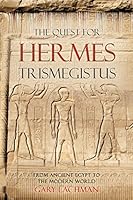
The difference between the Gnostics and the Hermeticists is that Hermetic man doesn't want to escape from the world, but to realize his full potential within it, in order to embrace his obligations, so that, as Hermes tells Asclepius, he can 'raise his sight to heaven while he takes care of the earth'.


Saturday, July 31, 2021

Thoughts for the Day: Saturday 31 July 2021


John Horgan’s The End of Science (1996) was subtitled Facing the Limits of Knowledge in the Twilight of the Scientific Age. In Grammars of Creation (2001), George Steiner, one of the last European cultural mandarins, laments that “We have no more beginnings” and concludes that there is “in the climate of spirit at the end of the twentieth century, a core tiredness.” “We are, or feel ourselves to be, latecomers.” And in From Dawn to Decadence (2001), an account of the last five hundred years, the historian Jacques Barzun—who died in 2012 at the age of 104—presents a picture of early twenty-first-century man undergoing what he calls the “Great Undoing,” the West’s self-immolation at the hands of chat shows, gangsta rap, and fashionable deconstructionism.

Authoritarianism, by contrast [to fascism], allows independent economic and social bodies, forms of limited representation, and a degree of freedom for religion. Its enemy is democratic participation. It also stifles opposition by violence and fear but stabilizes itself by relying on passive acquiescence in a trade-off of social quiet for loss of political role. The fascist is a nonconservative who takes anti-liberalism to extremes. The right-wing authoritarian is a conservative who takes fear of democracy to extremes.

In general, a researcher always has a choice of which studies to select and which to reject in working toward a hypothesis. In this process, it’s hard to overcome the essentially human instinct to select only those observations that conveniently support one’s own hypothesis while rejecting those that do not.

In our modern world, ritual is often thought to encourage a slavish conformity, but the Brahmin ritualists [at the beginning of the Axial Age of India] had used their science to liberate themselves from the external rites and the gods, and had created a wholly novel sense of the independent, autonomous self.

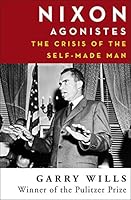
The coherence of Nixon’s own views has not generally been recognized, and for an important reason: this would involve the admission that American liberalism and the emulative ethic cohere—inhere, rather, in each other. All our liberal values track back to a mystique of the earner.

Detecting trustworthiness is a basic life skill in small groups which depend on sharing and reciprocity, and so people have developed good bullshit detectors. The best way around other people’s bullshit detectors is to believe what you say. If your social reputation and group identity depend upon believing something, then you will find a way to believe it. In fact, your brain will help you by readily accepting and recalling congenial information while working to bury and ignore uncongenial information.

“What was most important wasn't knowing the future—it was knowing how to react appropriately to the information available at each point in time.”

Friday, July 30, 2021

Thoughts for the Day: 30 July 2021


History, as I have argued, is (and was, and will be) more than the recorded past; but the remembered past, too, is variable and imperfect, smaller as it is than the entire past.

Americans need what Niebuhr described as “a sense of modesty about the virtue, wisdom and power available to us for the resolution of [history’s] perplexities.”

You can have bipolarity without war. You can even have bipolarity without a cold war. That’s because the original Cold War was triggered by international tensions of a kind difficult to imagine today.

Ann-ping Chin, Trevor Ling, Joseph Needham, and Alan W. Watts—and Lao Tzu—show us the more ecological mode of thought prevalent in the East.

So self-betrayal —this act of violating my own sensibilities toward another person—causes me to see that person or persons differently, and not only them but myself and the world also. When I ignore a sense to apologize to my son, for example, I might start telling myself that he’s really the one who needs to apologize, or that he’s a pain in the backside, or that if I apologize, he’ll just take it as license to do what he wants.

Paul longed for his fellows to be “spiritual people,” to know of their union, to live from the mystery of their “twoness,” as the psychologist of religion, Jeffrey Kripal, calls it: there’s a conscious part of us that is “merely human” in space and time, living an individual life; and part of us of which we can become more conscious that is “spiritual,” outside of space and time, sharing in the mind of God.

While uncertainty can quite reasonably provoke fear— fear of the unknown— it can also give us grounds for hope, because it creates a mental space in which we can imagine positive possibilities.

What the Constitution of Knowledge does not allow is treating criticism, offense, or emotional impact as equivalent to physical violence, or protection from emotionally hurtful expression as a right.

Thursday, July 29, 2021

Thoughts for the Day: Thursday 28 July 2021


You are never dedicated to something you have complete confidence in. No one is fanatically shouting that the sun is going to rise tomorrow. They know it’s going to rise tomorrow. When people are fanatically dedicated to political or religious faiths or any other kinds of dogmas or goals, it’s always because these dogmas or goals are in doubt.

“Every feature that is added and every bug that is fixed,” Edward Tenner points out, “adds the possibility of some new and unexpected interaction between parts of the program.”

We tend to accept that centralized institutions can use their power to simplify complex problems and can hire the finest minds and best technologies to analyze and tame them—technologies like advanced statistical or computer models that will find optimal solutions. But institutional power doesn’t always produce simplification; large, centralized organizations tend to be bureaucratic, cumbersome, and inefficient.

Most opinion leaders in rich countries are drawn from this elite, and their exposure to the difficulties confronting the majority of the world’s population, which lives in poorer societies, is limited and extremely selective. So, not surprisingly, they often underestimate these societies’ requirements for ingenuity, misjudge the kind of ingenuity they need, and overestimate their ability to supply it. The super elite is also a largely self-enclosed and self-referential group—making it vulnerable to internally generated intellectual fads, which it then disseminates to the rest of the world’s population.

Heat. Everywhere there was heat. It surrounded and penetrated me. It defined the world around me. Sweat gushed out of my body, running in rivulets down my chest and the small of my back, gluing my shirt to my skin. Everything was tangibly hot: tables, chairs, and pens were weirdly warm to the touch, because everything outside my body was hotter than my body. The water in my bottle felt like soup on my tongue. Any movement of the air—a draft, a slight breeze—was a relief; while any movement of my body or mind was an effort. Physical action, thought, even consciousness itself seemed to take place in slow motion, weighed down and dulled by the relentless, inescapable heat.
N.B. Homer-Dixon is describing his experience in India, and having lived there for nearly two years, I can relate. But then given current trends, perhaps we're all headed there.

Like imagination and consciousness, language seems to be one of those things that Whitehead said were ‘incapable of analysis in terms of factors more far-reaching than themselves’.

Probability is not a mere computation of odds on the dice or more complicated variants; it is the acceptance of the lack of certainty in our knowledge and the development of methods for dealing with our ignorance.