Friday, June 14, 2013

Grassley Responds re Gun Control: What a Disappointment, But Not a Suprise

The following is a letter that I received from Sen. Grassley about gun regulations. I find it mind-numbingly bad. Sad, sad, sad. I'm going to write him back and tell him so. Below his letter is my response to it. 

Thank you for taking the time to contact me with your support for stricter gun regulation. I greatly appreciate the opportunity to hear from concerned Iowans.

Recently, the Senate has debated and voted on proposed gun control legislation in response to the tragic events in Newtown. On April 9th, the Senate voted to proceed to consider gun control legislation. There were several amendments proposed from Senators that included stricter gun control legislation.

One amendment that was proposed was a large magazine ban. Limiting magazine capacity does nothing to stop violent crimes. Criminals can simply carry multiple magazines. This restriction would only further restrict law abiding citizens. With a recorded vote of 46-54 the amendment was not agreed to. Senator Feinstein also proposed an amendment that would have included her ban on certain semi-automatic weapons. I have concerns with Senator Feinstein’s ban. The goal of such a ban is to prevent shootings similar to the tragic shooting in Newtown. While I do not doubt her sincerity, I do doubt the effectiveness of such bans. Her amendment also failed by a vote of 40-60.
Congress needs to examine the current laws and background checks to make sure they are properly preventing prohibited persons from obtaining firearms. I have supported legislative efforts to improve and enforce reporting of crimes and mental deficiencies that would improve the National Instant Criminal Background Check System (NICS). Additionally, I have repeatedly voted for legislation that would strengthen the prevention of illegal gun trafficking.

Another amendment offered by Senators Manchin and Toomey proposed expanded background checks. I have concerns with the amendment’s effect on private sales. Movement of firearms from one law-abiding citizen to another would be legal or illegal based on arbitrary distinctions that citizens could not be expected to know. For example, something as innocent as posting an advertisement for a hunting shotgun in a church bulletin that results in a private sale between members without a background check could result in federal penalties. This amendment also failed to reach the 60 vote threshold for an amendment to be accepted with a vote of 54-46.

While I did not vote to support the Manchin/Toomey amendment, I did author a comprehensive amendment that would target the causes of gun crime, address mental health records, and strengthen school security.

The Grassley amendment would have inserted the text of the Protecting Communities and Preserving the Second Amendment Act of 2013 in its place. This legislation, sponsored by 25 senators, would reauthorize and improve the National Instant Criminal Background Check System (NICS), increase resources for prosecutions of gun crime, address mental illness in the criminal justice system, and strengthen criminal law by including straw purchasing and illegal firearm trafficking statutes.

Specifically, the Protecting Communities and Preserving the Second Amendment Act addresses violent crime committed with firearms in a number of ways. First, it fixes problems with the National Instant Background Check System (NICS), with a focus on improving the availability of records to the NICS database, including mental health records from federal and state courts that are currently not reported to the NICS system. These records include those of individuals found to not have the mental capacity to stand trial, or who were found not guilty by reason of mental defect. Further, they would ensure that states provide records to the NICS system by penalizing those who fail to provide records. The non-partisan Government Accountability Office (GAO) recognizes that this failure is a problem with the current NICS system. Additionally, my amendment would also codify the executive order issued by President Obama requiring federal agencies to submit relevant federal records to the database and report to Congress whether they are complying with the law. Together, these changes would strengthen the existing background check system instead of following the Manchin/Toomey model of simply expanding a broken system to cover more transactions without fixing it.

Second, the Act combats gun related violent crime by increasing federal prosecution of violent offenders who commit gun crimes, and by cracking down on straw purchasers and firearms traffickers with new prosecution tools and increased penalties for gun crimes committed by prohibited persons. These provisions provide new criminal laws to federal law enforcement to combat the illegal straw purchasers that buy guns for criminals. It also creates a task force to strengthen Department of Justice efforts to investigate and prosecute cases involving convicted felons and fugitives who illegally attempt to purchase a firearm. The Act would also provide increased federal resources to hire prosecutors and agents to combat gun crimes and those who supply criminals and felons with firearms. Additionally, it would increase criminal penalties for gun crimes, including cases where criminals lie on background check forms in order to obtain firearms illegally. Finally, it directs the National Academy of Sciences and National Institutes of Justice to conduct a study examining the causes of mass shootings and reviewing causes of these violent acts.

Third, the Act seeks to reduce crimes committed by mentally ill offenders by: providing resources to state and local law enforcement to help interact with mentally ill offenders and reduce criminal recidivism by those with mental illness; clarifying to the Veterans Administration’s procedures regarding adjudication process for determining when a veteran is mentally defective for firearms possession; and by adding new purposes to existing federal grants to provide necessary training and support for state and local law enforcement agencies dealing with individuals with mental illness.

Finally, the Act expands the use of grant funds for school safety, including surveillance equipment, and the establishment of hotlines or tip lines for the reporting of potentially dangerous students and situations. The Act also establishes an interagency task force to develop and promulgate a set of advisory school safety guidelines.

My amendment was joined by over 25 cosponsors and gained larger bipartisan support than the Manchin/Toomey amendment. Despite this it failed to achieve the 60 votes necessary for passage under the consent agreement with a vote of 52-48. This common sense alternative legislation is a step forward and a way to ensure that criminals are prosecuted, gun crime is reduced, background checks are strengthened, mental health is addressed, and schools are secured; all while ensuring that law abiding citizens’ Second Amendment rights are not infringed. I am disappointed it failed to pass, but believe it offers a sensible way to address these difficult issues responsibly.

Since the tragic events that took place in Newtown there has been an emotionally charged debate over gun control legislation from both sides of the issue. I have met with families from Newtown to discuss the legislation that has been debated. It has been emotional and difficult for all of us. It is important however, that we do not rush to pass legislation that does not address, and would not have prevented recent shooting tragedies by infringing on the rights of law abiding citizens. I look forward to continuing the debate on how to keep criminals from obtaining firearms while insuring the safety of innocent Americans.
Again, I want to thank you for sharing your thoughts on this debate. Hearing from concerned Iowans gives me an opportunity to serve Iowans better.

Sincerely,
Chuck

Dear Senator Grassley:
I received your email letter to me about recent gun regulation votes. I found it profoundly disappointing and terribly flawed in its reasoning. You really should investigate this issue rather than simply following the party line. In addition, I want to mention how the U.S. Senate has deteriorated as an institution, especially in regard to the use of the filibuster as an anti-democratic practice that has no support in the Constitution or law. You should move to abolish it immediately.

Thank your for your attention to this,
Steve Greenleaf

Monday, June 3, 2013

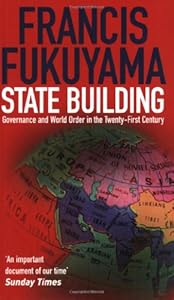
State Building: Governance and the World Order in the Twenty-First Century


The first issue that I should address comes from the fact that that I have posted this book review on my “Steve’s View from Abroad” website. What has this to do with India? While a far cry from the failed states that are the primary focus of this book, India, nevertheless, is a state (or states, as it’s a federal system) that fails to function effectively in many realms. Anytime I speak about India, I almost always mention the lack of basic government services and the effect that this has daily life. Poor roads, poor drainage, poor sewers, poor water and air quality—I could go on (and did with some dinner partners just the other night). I believe that India will gain a measure sophistication and decent quality of life (which includes and transcends a mere increase in GDP) when Jaipur no longer has garbage strewn upon its streets; when the poor living in shanties have found decent housing; and when the middle class has initiated a “Progressive Era” for India to clean-up political corruption and to address its failing infrastructure. India is far from a world-class economy currently, but if it can reach a critical minimum of an engaged middle-class willing to fight the good political fight, it has a future. A lot of work—a lot—remains to be accomplished, but it can happen. 

So issues of governance drew me to this work as one reason, but the other is the reputation of Fukuyama himself. Fukuyama’s The End of History and the Last Man, now much maligned, is a very interesting and instructive book. I read it many years ago to great benefit and delight. The benefit and delight came from understanding a train of political thought that I’d never grasped very well before. Plato, Hegel (via Kojeve), and Nietzsche were brought to life in a manner that I’d never before appreciated. The English tradition, with Locke, Bentham, Mill, etc. emphasizes rational, utilitarian man, homo economus. However, this older tradition, going back to Plato and Thucydides (although Plato wanted to crush all human instinct under reason), emphasizes thymos, our human demand for dignity and respect, the kinds of things that the English tradition, at least in economics, tended to downplay if not outright ignore. Fukuyama raised my understanding Hegel’s dialectic of master and slave, something that in a rush toward Marx, too much political theory ignored. For this education alone, Fukuyama’s book was very worthwhile. 

The other part of The End of History and the Last Man concerns the growing trend toward liberal democracy in the world, and here’s where people have come down hard on Fukuyama, considering him a failed prophet. However, I don’t recall (sorry, my copy not here with me) that Fukuyama emphasized that we would all become happy, bourgeoisie democrats. What I believe that he did—and on which he has not been rebutted—is to establish that no political system is more appropriate for human affairs than liberal democracy. As a practice, liberal democracy has not swept the field, but as an ideal (non-utopian), who stands as a contender? No other system, I submit, and for this reason, Fukuyama deserves more praise than the easy derision he has received. 

The criticism that The End of History and the Last Man has received hasn’t slowed Fukuyama, and he’s gained in prominence. I enjoyed his The Great Disruption and Trust, and well as a number of articles that he’s written. Meanwhile, the Panda (sometimes Hungry, sometimes Inscrutable), during her earlier visit India, was reading his most recent book, The Origins of Political Order (Part 1). She began it with some skepticism but concluded it with approval and assigned it to me to read (my copy awaits me in IC). Thus, when I saw this slender (179 p.) book, I took it up and read it in less than a day. It proved worthwhile, indeed. 

Written in 2004 after the invasion of Iraq and our incursion (if that’s the right term) into Afghanistan, it reflects on these experiences as well as the long list of “failed-states” that grabbed world attention in the years following the collapse of the Communism. Put simply, states (governments) serve crucial functions and when they fail (no longer function effectively), people suffer and often die. Fukuyama initially details the function of states and how these functions can vary. For instance, the state in the U.S. is much more limited than European states in the provision of services and policies. Think healthcare, for instance. While thoughts can vary in this regard, a certain minimum number of functions need attention. In addition, Fukuyama devotes a chapter to public administration, which proves to me, again, not only his mastery of a great empirical body of knowledge, but his ability to draw out some of the fundamental theoretical and practical aspects of a topic like public administration. 

Fukuyama discusses how public administration is an issue around the globe and identifies its unique problems. For instance, the agency problem, the scope of authority problem, and the motivation problem. Fukuyama criticizes the microeconomics approach to public administration and the institutional approach, at least to the extent that those approaches aren’t augmented by a sociological approach. Fukuyama notes that organizations, or more exactly, the individuals within them, are governed by group norms, personal relationships, leadership standards, and other non-economic motivations (without totally ignoring the economic issues). His example of the armed forces serves perfectly: men and women don’t fight and die for the great pay; they fight and die for each other. (By the way, this applies to terrorists as well. See Scott Atran’s work Talking with the Enemy.) Among our economics-envying social sciences, this may come as news. It shouldn’t, but at least in the current policy-making world, it does. (Economics, in the meanwhile, suffers from a perverse physics-envy.) Everyone should consider this from Fukuyama: 


            It has been a longstanding dream of the social sciences to turn the study of human behavior into a true science, moving from the mere description to formal models of causation with nontrivial predictive value, based on rigorous empirical observation. This project can be realized more readily in some spheres of human behavior than in others. Markets are susceptible to this kind of analysis, which is why economics emerged as the queen of the social sciences in the late twentieth century. But organizations constitute a complicated case. Individuals in the organizations look out for their narrow self-interests, and to the extent they do, the economist’s methodological individualism provides genuine insight. But to a much greater extent than in markets, norms and social ties affect individual choices in organizations. The effort to be more “scientific” than the underlying subject matter permits carries a real cost in blinding us to the real complexities of public administration as it is practiced in different societies. (123)


Agreed. Thus, theorists like Herbert Simon, James March, and Chester Barnard receive Fukuyama’s use and praise instead of more recent thinkers. In addition, I must note the fascinating account of Japanese public administration after WWII when American “experts” attempted to “fix it”. Amazing. 

Finally, Fukuyama addresses the issue of sovereignty, one in which the U.S. (especially the Bush Administration) and other countries often parted ways. To his credit, Fukuyama mentions Robert Kagan, whom I believe has been a critic of Fukuyama’s The End of History and the Last Man. He cites Kagan’s appreciation of the differences between the U.S. and Europe on these issues. 

All in all, a short but powerful book. Having now experienced ineffective or marginally effective states (I’ll throw in Cameroon as well), I have a new and greater appreciation of the mundane but crucial work of government.

Sunday, June 2, 2013

Reply from Senator Harkin About Campaign Finance Reform


May 31, 2013


Mr. Stephen Greenleaf
345 Magowan Ave
Iowa City, IA  52246-3515
Dear Stephen:
Thank you for contacting me regarding campaign finance reform. I appreciate hearing from you on this important matter.
As the cost of running for office continues to rise, the integrity of the campaign process continues to wane. This is why I have continually fought for a major overhaul of campaign financing. I believe that placing strict limits on individual, corporate, and PAC contributions would make races fair and more competitive. And, it is also why I co-sponsored the Fair Elections Now Act, which would create a voluntary, publicly financed system to cover Congressional campaigns.
In addition, I strongly disagree with the Court's decision in Citizens United v. Federal Election Commission (FEC) that the government cannot limit independent corporate spending on elections. The Court's holding was based on two faulty premises, that corporations, perhaps even including corporations controlled by foreign nationals, have the same rights as individual citizens under the First Amendment, and that the ability to spend money is the same as freedom of speech. While I have always been a strong advocate of protecting the First Amendment, I do not consider granting corporations unlimited financial influence on elections to be an issue of free speech. If money is considered speech, wealthy Americans suddenly have a stronger voice than anyone else.
The Court's decision is deeply harmful to our democracy. It limits our ability to restrict the influence of special interests and to restrain the ability of corporations to use their vast resources to distort our campaign process.  This decision, which overturned well-established precedent and a law that has served our country well for over 60 years, is also a blatant exercise of judicial activism.
Because I feel so strongly that the court profoundly erred in Citizens United, in the last Congress I cosponsored a constitutional amendment which would overturn the Citizens United decision and give Congress the power to pass meaningful campaign finance reform and limit corporate influence on elections. This constitutional amendment has yet to be re-introduced in the current Congress.  However, if it is re-introduced I expect that I will sponsor it once again. 
While the Supreme Court has prevented Congress from eliminating corporate influence on our elections, at the very least voters should know who is trying to influence our democracy.  That is why I also a cosponsored the Democracy Is Strengthened by Casting Light On Spending in Elections (DISCLOSE) Act, which would limit the harm of the Court's decision, improve the health of our democracy, and restore integrity to our electoral process. So the public will know who is funding political advertisements, the bill will hold corporations accountable by requiring them to publicly disclose the money they spend on influencing elections.  Unfortunately, when this important bill was considered in the Senate last Congress, a minority of Senators blocked the legislation from coming to a final vote.  Similar legislation has not yet been introduced this Congress, but I am hopeful that the Senate will address this important matter in the near future.
We need to have a campaign finance structure which limits the influence of the special interests, restores integrity to the democratic process, and buttresses America's confidence in our democracy. As I have in the past, I will continue to fight for an election system to accomplish all of these things.
Again, thank you for sharing your views with me. Please do not hesitate to let me know how you feel on any issue that concerns you.

Sincerely,


Tom Harkin
United States Senator

SNG: Pretty good. I still, however, would like him & others to take the Rootstrikers pledge that Lawrence Lessig is pressing.

Saturday, June 1, 2013

A Review of India Summer: The Secret History of the End of an Empire by Alex Von Tunzelmann


One of the benefits of reading history is that you don’t have to be an academic historian to succeed in the field. Indeed, from Herodotus and Thucydides to Gibbon, Macaulay, Carlyle, Parkman, and Henry Adams, up through many successful and worthwhile practitioners writing today, we have a wealth of non-academic historians who enlighten and entertain us with graceful prose. (I realize one might argue about Adams, since he taught Medieval History at Harvard for a while, but I don’t believe that his major works were written while in the academy or for the academy.) Our move to India led me to discover William Dalrymple, who writes beautifully about contemporary India and the Middle East, as well as having written very highly regarded histories set in India and Afghanistan. In fact, via a piece that he wrote for the wonderful Five Books site, I discovered Alex Von Tunzelmann’s Indian Summer: The Secret History of the End of an Empire

The title might prove misleading, since the “secret”, as the author notes within her work, was not so much a secret as a little-known or little-discussed (but not completely unnoticed) situation. The “secret” was that the wife of the last British Viceroy, Lord Mountbatten, had a love affair with the first Indian Prime Minister, Jawaharlal Nehru. Of course, this love affair (the details of intimacy remain unknown) unfolded against the huge historic panorama of Independence and Partition. As Dalrymple notes in his remarks about Von Tunzelmann, in focusing on these three actors, she tells the immensely complicated story of Independence and Partition in manner that provides a sense of the immensity of the problems and undertakings without enmeshing us in details that would overwhelm most readers. In addition to focusing on the triangle formed by the Mountbattens and Nehru, she also deals deftly with other significant players such as Gandhi, Jinnah, and Patel in India, and with Churchill, Attlee, and others back in Britain. 

Von Tunzelmann does an excellent job of setting the scene for the momentous events of Independence and Partition by first establishing the biographies of the main players. Lord Mountbatten, for instance, is from a German family that married into the British aristocracy. Mountbatten, known to friends like such as two British kings and Noel Coward, as “Dickie”, appears in some ways the embodiment of an upper-class British twit. His naval career is in some ways a disaster (such as running a ship aground and having one sunk from underneath him), but it nevertheless leads him to the position of Allied Commander for Southeast Asia during WWII. While inept in some ways, and enamored of pomp, circumstance, genealogies, and medals, he’s also quite charming and persuasive. And, lest you think him a poor cuckold, his marriage to Lady Mountbatten, Edwina, is an “open marriage” from near the beginning. Both carried on rather open affairs and had a complex relationship, to say the least. Edwina, especially in her youth, couldn’t help reminding me of Princess Diana: a rather repressed young woman whose marriage to a much more sedate man seems to have released a rather marked free-spiritedness. But like Lady Di (after demotion), Edwina found a serious and very successful calling helping out in London during the Blitz and maintaining a very active, hands-on roll in India and Pakistan dealing with the human misery found here both before and after Partition. The third person of our triumvirate, Nehru, had morphed from a young, Indian-British dandy (Cambridge and all) into a national leader. He underwent an arranged marriage and never seemed very happy about it. His wife, an apparently pious woman in contrast to his militant (if publicly restrained) atheism, died relatively young, so that Nehru was a widower at the time he came to know Edwina in the mid-1940s. 

Von Tunzelmann keeps her narrative moving, weaving the personal lives of the Mountbattens and Nehru together to meet in the momentous years of 1947 and 1948 and then apart again. In addition, she keeps the big picture in focus. Her passing remarks and judgments, such as how Gandhi’s peculiarities, irrelevancies, and standing in world opinion alternately retarded and forwarded the cause of independence and Hindu-Moslem relations, leaves one wanting more, but not at all disatistfied. (Gandhi’s life and role in all of this, of course, fills volumes.) She also remarks on the irony that I noticed immediately upon coming to India: Gandhi’s likeness adorns all denominations of rupee notes. A rather ironic honor for an ascetic who thought all India should follow his austere example. 

Von Tunzelmann writes with a light but perceptive hand. She deftly manages the many facts, or where evidence lacks, caution and restraint marks her prose. She also displays a light sense of irony appropriately deployed. In this description of the Indian Assembly at the turn of midnight that marked Independence, she writes: 


            As the chimes sounded and the unexpected blast from a conch shell startled the delegates in the chamber of the Constituent Assembly, a nation that had struggled for so many years, and sacrificed so much, was freed at last from the shackles of empire.
            Yes, Britain was finally free. 


She’s not being cute or coy here: her narrative has established the draining demands of Empire upon the war-impoverished Brits such that most—except Churchill and a few other die-hards—realized and wanted desperately to unload the burden that India and Empire represented. 

If one enjoys reading a history that interweaves the personal into the grant narratives of empires, nations, and peoples, as many a great novel as done, then you can’t expect to find a more engrossing account of the extraordinary people and events portrayed here. An outstanding work. 

Interesting note: The cover photos on my copy of the book purchased here in India shows the Mountbattens standing together with Gandhi; in the U.S. editions, they are pictured on the cover with Nehru, who's laughing. 

Monday, May 27, 2013

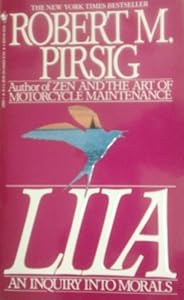
1.5 of 20 Favorite Books: A Review of Lila: An Inquiry into Morals by Robert Pirsig


When I re-read Zen and the Art of Motorcycle Maintenance last December, it became first on my list of Top Twenty Favorite Books (which I see that I haven’t completed posting). Absent from that list is Lila, Pirsig’s second and only other book. Of it, Pirsig writes: 


            Zen and the Art of Motorcycle Maintenance was like a first child. Maybe that will always be the best-loved one. But this second child is the bright one. I think a lot of people will argue with some of the ideas in Lila. There may be controversy. But if people are still reading these two books a hundred years from now, I predict that Lila will be the one they consider the more important. 


After re-reading Lila, published in 1991 (ZAMM was published in 1974), I see his point. ZAMM is a more intensely personal and compelling narrative: a motorcycle trip with a young son across the western United States. It includes a mystery, or rather several. Who is “Phaedrus”? What is Phaedrus? How is Phaedrus related to the narrator and Chris, the son? What is the narrator looking for? And so on. The journey and the mysteries serve to create a compelling narrative. Interspaced within the narrative, we find “Chautauquas”, brief discourses on topics, often philosophical, that the narrator shares with us. 

In Lila, we join in on another trip, but one gets the feeling that the trip, as interesting as we may find the scenery traveling down the Hudson River to NYC and on to Sandy Hook, seems less compelling than the trip in ZAMM. Lila, the title character, joins the journey as a passenger at the same time that the reader joins the story. Lila is a more complex and troubling—and perhaps less sympathetic—figure than the Pirsig’s son Chris. And Lila appears more overtly as a foil for the narrator’s reflections and is perhaps a bit too convenient for the narration. (Pirsig has said that Lila is a fictional creation.) But the narration in many ways only serves to set the scene and to allow us to follow the path of Pirsig’s mind (now comfortably referring to himself as “Phaedrus”), and in this the book he takes us many interesting places. 

Pirsig, early in Lila, reports on his project that continues the initial work of Phaedrus and his reconstruction and resolution of that body of work in ZAMM. When we join him on his boat near Kingston, he’s been at work attempting to formulate a “Metaphysics of Quality”. With this setting introduced, and the introduction of the character Lila, we are again taken back into the earlier life of Phaedrus in Montana. Phaedrus explores American Indian life with a colleague who teaches English but is seeking a doctorate in anthropology. For both the friend and Phaedrus, there’s something fundementally wrong with most anthropology: the subject-object split. Phaedrus takes us to Indian reservations and a peyote session, a reflection on classical anthropology (Boas, Benedict, Mead, etc.), and into the effect of American Indian traits on the European settlers. In the course of this, we learn that another ostracized genius, William James Sidis, whom the press mocked and scorned for his failure to turn his outsized intellect to an accepted body of work, has visited this issue as well. Phaedrus notes that Sidis reached similar conclusions about how American Indians affected the settlers well before Phaedrus began to consider the issue. 

The reflections set forth above, plus all of the issues involving Lila, a woman with a past, we might say, take us well into the journey. This gives us a sense of how Pirsig weaves narrative, memoir, and philosophical reflection into one book. By the time we reach New York City, Phaedrus shares his reflections on the “the Giant”, celebrity (after meeting with Robert Redford about the film rights for ZAMM), and the relationship between four levels of being: inorganic, organic, social, and intellectual, as considered though an evolutionary perspective. (In this regard, Pirsig is thinking along lines that Ken Wilber developed and popularized, and one that I think quite fertile.) 

After leaving NYC abruptly (Lila’s doing), Phaedrus, while considering her plight, once again reflects upon American Indians, William James and his affinity to James (including his shared disdain for what James branded “philosology”), and the nature of mental illness. As someone who suffered from mental illness, including involuntary commitment and electro-convulsive therapy (shock treatment), he knows mental illness first-hand. He sees mental illness as a “culture of one”, and this insight ties back to his initial considerations about anthropology. His understanding of mental illness, including his acknowledgement of the physical components, displays great sophistication and presents worthwhile conjectures. I don’t think many philosophers or psychiatrists have ever given his ideas serious consideration. (Although in one of the reading synchronicities that I love to experience, I think he fits neatly with the Liah Greenfeld perspective that I discussed in this blog entry.) He explicitly distinguishes his understanding from the more radical theories of R.D. Laing or Thomas Szaz, which I think that he appropriately dismisses. As we approach the end of the book, he reflects on another interesting comparison: religious mysticism and mental illness. How are these two manifestations of extreme human conduct related, if at all? Pirsig suggests that they are related and that some forms of mysticism in other cultures that are valued (key word) would be simple madness in other  cultures. He doesn’t name cultures where attributes of religious mysticism would clearly be labeled madness, but he’s referring, I believe, the Western countries where the natural science serves as the dominant paradigm and that includes the subject-object split.

One topic that I find intriguing, as I mentioned above, is his hierarchy of levels of development: inorganic-organic-social-intellectual. On the whole, I agree with this typology and think it very useful. Also, I agree of the application of this perspective can help us to understand ethics. The perspective posits that a lower order should not limit or trump a high order. As a part of his critique of subject-object metaphysics and as a part of coming to his understanding of a hierarchy of being, he suggests that the whole of evolution has been an effort for higher orders to overcome lower orders. For instance, gravity serves as one example of a higher level of development to overcome a lower one. First jumping, then flying, now humans traveling to the moon: the war on gravity (to paraphrase an awful original) serves as an example of a higher order value overcoming a lower order value. I find this way of thinking insightful and intriguing. 

But this leads us to the limits of this book. As in ZAMM, Pirsig is like a trail guide who leads you on a main trail through his narration, but he stops and explores side paths for a ways, and then says, in effect, “I think that you’ll find such-and-such up there if you follow it to the end.” Of course, that’s one of the challenges of this book—to follow his leads to where they take us. For instance, while his hierarchy provides a sound basis for an ethical perspective, he doesn’t explore the limits. Under his scheme, the intellectual (which certainly includes culture as a whole) trumps lower levels, but given the rather poor performance—if not outright disastrous consequences—of most ideas, this seems too generous. For instance, of the great “isms” of the 20th century, which ones do we to anoint as definitive? Nationalism? Communism? Socialism? National socialism? Racialism? Liberalism? (My favorite, within bounds.) Too many millions were slaughtered in the name of ideas (and perhaps with the basest of motivations), so I think that this attitude would require the utmost caution. We see the same thing in in personal morality, too. When we look at ascetics who attempt to overcome the body through extreme austerities, I, for one, think that Buddha got it right with the “middle way”. Train the body, don’t destroy it. 

The issue of intellect uber alles is just one path that I’ve explored a bit further on my own. Pirsig pointed it out, and my benefit was to explore it. In the end, I suppose that the highest compliment that I can pay to any book, which certainly includes this one, is “it got me thinking”. Oh, and by the way, in the list of Top 20 Favorite Books, we now have a new designation after ZAMM. Favorite 1.5: Lila.