Monday, January 4, 2021

Thoughts for the Day: Monday 4 January 2021


But Einstein was only one of many thinkers and artists for whom “time” had become a central concern. The cubist visions of Picasso and Braque presented a perception of “simultaneity,” of “everythingatonce” rather than “one-thing-at-a-time.”

Wars, when they erupted, increasingly were likely to be intrastate rather than interstate. Kissinger, the power politician focused on nation-states and national interest, looked on this future with gloom. He knew he had no answers.

Many factors went into building political power among nations, from the most unchanging, like geography, to the most mutable and evanescent, like public opinion or morale. Population, raw materials, industrial capacity, technology, and leadership all contributed to power, but for Morgenthau no factor was more important than national character.

And yet, with his love of the Western tradition, Strauss insistently denied that the Nazis could be traced back to Europe’s Christian heritage. To believe such a thing was to grant a victory to the Third Reich and its nihilistic destruction of the past. “Only someone completely ignorant would say that anti-Jewish thugs are a matter of Christianity,” he declared. “Of course not.” Hannah Arendt agreed. In 1945 she wrote that Hitler and the Third Reich owed “nothing to any part of the Western tradition, be it German or not, Catholic or Protestant, Christian, Greek or Roman. Whether we like Thomas Aquinas or Machiavelli or Luther or Kant or Hegel or Nietzsche. . . . They have not the least responsibility for what is happening in the extermination camps.”

The myths are, in the first place, a necessary ingredient of social life. A society in which they would be eliminated in favor of exclusively scientific beliefs would have nothing in common with the human societies that have existed and do exist in the real world, and is a merely imaginary fantasy. Here once more our investigation must be concrete. Certain derivations or myths under certain circumstances are socially useful, others detrimental; when the circumstances change, so may the effects of the myths. The doctrine of the divine right of kings is scientifically ridiculous.


Sunday, January 3, 2021

Thoughts for the Day: Sunday 3 January 2021


The processive and synergistic forces at work in way-making render the language of discreteness and closure inappropriate. The road is always under construction, and the hands at work are many. While there is the punctuation of consummatory events that separates the paragraphs of one’s lived experience, still the narrative is coherent and continuous: a never-ending story.Sco


Evolution has gifted humans (and vertebrates in general) two immune systems: the innate immune system and the adaptive one. The innate immune system is the front line of defense and has a standard set of responses—fevers, inflammation, mucus generation, attack cells—to biological threats that are quick and easy to deploy. The innate immune system is a blunt instrument that has a pretty dramatic effect on how you feel. It alters your internal environment to make it hostile to invaders. The adaptive immune system is more selective (this is the Special Forces rather than the regular Army); it identifies the specific threat to the body, learns its weaknesses, then deploys a very targeted response.

[I]t’s important to acknowledge that there’s no clear boundary between human beings and their surrounding natural world— that the natural world is intimately part of us. This means that the boundary of our identity— of our “we”— must expand to encompass nature too. “To regain our full humanity,” writes the systems theorist Fritjof Capra, “we have to regain our experience of connectedness with the entire web of life.”

Sugar makes us fat. It's directly converted to fat by our liver and it destroys our appetite control so we want to eat more of everything. The more sugar we eat, the fatter we'll be.


Saturday, January 2, 2021

Thoughts for the Day: Saturday 2 January 2021


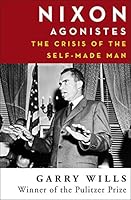
The greatest generals of our political history—Washington, Grant, Lee, Eisenhower—have been notably unwarlike men. (MacArthur, thank God, existed outside our political world, outside any world but that bounded by Autobiography.) These supreme commanders have been less bellicose than our Little Colonel, our artillery gunner, our PT boat commander [JKK], or—now—our naval supply officer [Nixon].

All fear comes from picturing the future. Putting things off increases that fear.

You will never 'find' time for anything, if you want time you must make it. --- Charles Buxton

Terror, the obedient servant of Nature or History and the omnipresent executor of their predestined movement, fabricates the oneness of all men by abolishing the boundaries of law which provide the living space for the freedom of each individual.

If there is to be anything at all which can in any sense be called natural science, the people in whose minds it is to exist must take it absolutely for granted that there is such a thing as ‘nature’, the opposite (contradictory) of ‘art’: that there are things that happen quite irrespectively of anything these people themselves do, however intelligently or fortunately, and irrespectively also of anything any one else may do even with skill and luck greater than their own. They must take it absolutely for granted that somewhere in the world there is a dividing line between things that happen or can be made to happen or can be prevented by art (and art never succeeds without a certain support from luck), and things that happen of themselves, or by nature.

[One] sense of the word may be defined as follows. A cause is an event or state of things which it is in our power to produce or prevent, and by producing or preventing which we can produce or prevent that whose cause it is said to be.


Friday, January 1, 2021

Thoughts for New Year's Day: Friday 1 January 2021 Happy New Year!


Nature is not a machine. Nor does humanity stand apart from nature entitled by evolutionary right to lord it over the earth. In consequence, the modern way of life and politics based on the mechanical worldview is rendered obsolete, both philosophically and practically.

Professional surfers, mixed martial arts fighters, and Navy SEALs use Tummo-style breathing to get into the zone before a competition or black ops mission. It’s also especially useful for middle-aged people who suffer from lower-grade stress, aches and pains, and slowing metabolisms.

In the case of nonrenewable resources, the economic optimists seem to be right, at least going by the evidence of the last one or two centuries. Modern economies appear to adjust easily to scarcities of these resources.

Institutions are grounded in culture, and culture generally changes very slowly. If both institutions and culture must change for a society to adapt to new circumstances, a society may not be able to migrate across its fitness landscape quickly enough to avoid disaster.

Everything that we call specifically human is due to man’s power of thinking hard. Mere increase of effort, intellectual or any other, does little to increase its effectiveness unless the increased effort is well directed. Without such direction the additional effort is always in great part, and sometimes completely, wasted. High-grade thinking, therefore, depends on two things: increase of mental effort, and skill in the direction of that effort.
This could be said of many other endeavors as well, couldn't it? Cf. with the idea of "focused practice" of musical or athletic skill.


Thursday, December 31, 2020

Thoughts for the Day: Thursday 31 December 2020--Happy New Year's Eve!


Wittgenstein also saw the true process of philosophy as a way of transcending or healing the effects of philosophy in the philosophical mind: philosophy is itself a disease, as Karl Kraus said of psychoanalysis, for which it purports to be the cure.

This second implication leads directly to a third: that severe resource scarcity is not a problem of excessive growth of either population or consumption in a world of fixed resources, as neo-Malthusians claim, but of the failure of economic institutions and policies.

As Morgenthau had said, “The statesman has no assurance of success in the immediate task, and not even the expectation of solving the long-range problem.”

Pareto not only shows that non-logical conduct is predominant; his crucial point is that the conduct which has a bearing on social and political structure, on what he calls the “social equilibrium,” is above all the arena of the non-logical. What happens to society, whether it progresses or decays, is free or despotic, happy or miserable, poor or prosperous, is only to the slightest degree influenced by the deliberate, rational purposes held by human beings.

Of the thousands of breathing methods that exist, they all break down between those that ramp you up and those that bring you down. As a general rule, if you take more air in than you let out, you up-regulate your body, giving yourself an energy boost and heightened alertness. If you let out more air than you take in, you down-regulate, meaning you will relax and fall asleep easier.


Wednesday, December 30, 2020

Thoughts of the Day: Wednesday 30 December 2020


One of the facts about man as man is that his vitalities may be elaborated in indeterminate variety. That is the fruit of his freedom. Not all of these elaborations are equally wholesome and creative. But it is very difficult to derive “in a necessary fashion” the final rules of his individual and social existence. It is this indeterminateness and variety which makes analogies between the “laws of nature” in the exact sense of the words and laws of human nature, so great a source of confusion. It is man's nature to transcend nature and to elaborate his own historical existence in indeterminate degree.

When everybody is swept away unthinkingly by what everybody else does and believes in, those who think are drawn out of hiding because their refusal to join in is conspicuous and thereby becomes a kind of action. In such emergencies, it turns out that the purging component of thinking (Socrates’ midwifery, which brings out the implications of unexamined opinions and thereby destroys them—values, doctrines, theories, and even convictions) is political by implication.

Can a story really be so powerful that it overrides experience, scientific evidence, logic, and common sense? Of course it can, as Eric Hoffer showed us long ago in his book The True Believer.--David Sloan Wilson.

Today [2020], the most important politician in the developed world lives by facts supplied via political chat shows on his favoured propaganda network, tweets from unknown origins and his own rampaging id.--Nicholas Gruen, Australian economist.

Comparing these two time scales, [Brian] Arthur estimates that technology evolves at roughly “10 million times the speed of natural evolution.”


Tuesday, December 29, 2020

Thoughts for the Day: Tuesday 29 December 2020


Basins of attraction are places of local stability or equilibrium where the system in question is more likely to settle and remain, because less energy is needed to keep the system there. In the state-space model, the basins are locations in the state space where large numbers of people don’t have to invest a lot of cognitive energy— they don’t have to think much— to maintain their political ideologies, because (among other reasons) the ideologies at those locations align with their temperaments and moral intuitions. Psychologists can measure people’s investment of cognitive energy by using methods such as the implicit association test, which captures the degree of subconscious association between mental representations in a person’s mind. Generally, the more conscious an association, the more cognitive energy is invested in making the association.

Buzz Holling practically despairs on this score. “Because we are only now beginning to understand the changing reality,” he writes, “there is consequently no limit to the ability of good scientists to invent compelling lines of causal explanation that inexorably support their particular beliefs. How can even the best-intentioned politician possibly be expected to deal with that? How can even the most reflective of the public?”

Psychology is not history but science, a science constructed on naturalistic principles.

The ideal of equality in freedom could never be static, frozen in time, because in truth it could never be realized; each generation had to define the concept anew. And so the American Revolution was “an endless process rather than an isolated act,” and the ongoing effort to achieve the ideal constituted “a restless and dynamic search for a state of society that could at best be approximated, never fully attained.” It was a Sisyphean task, but no less real or desirable for that.

One of the more telling examples [of criticism of Hannah Arendt's political ideals] came from the German philosopher Jürgen Habermas, who lamented what he called Arendt’s “curious perspective.” She imagined “a state,” he said, “which is relieved of the administrative processing of social problems; a politics which is cleansed of socioeconomic issues; an institutionalization of public liberty which is independent of the organization of public wealth; a radical democracy which inhibits its liberating efficacy just at the boundaries where political oppression ceases and social repression begins—this path is unimaginable for any modern society.”
Agree.

Monday, December 28, 2020

Thoughts for the Day: Monday 28 December 2020


The first entirely new notion brought in by the new age—the seventeenth-century idea of an unlimited progress, which after a few centuries became the most cherished dogma of all men living in a scientifically oriented world—seems intended to take care of the predicament: though one expects to progress further and further, no one seems ever to have believed in reaching a final absolute goal of truth.

The world appears in the mode of it-seems-to-me, depending on particular perspectives determined by location in the world as well as by particular organs of perception. This mode not only produces error, which I can correct by changing my location, drawing closer to what appears, or by improving my organs of perception with the help of tools and implements, or by using my imagination to take other perspectives into account; it also gives birth to true semblances, that is, to deceptive appearance, which I cannot correct like an error since they are caused by my permanent location on the earth and remain bound up with my own existence as one of the earth’s appearances.

Heidegger, whom Carnap singled out for attack, retorted by stating that philosophy and poetry were indeed closely related; they were not identical but sprang from the same source—which is thinking.

All laws, including the Bolshevist and Nazi laws, become a façade whose purpose is to keep the population constantly aware that the laws, no matter what their nature or origin, do not really matter.

What is this strange need to lead, and the equally strange one to follow? What is this will to power? Why do we pursue it? Must it always corrupt? Charismatic leaders cast a spell over their followers in the same way that a magician casts one over those he wants to enchant. The power of the image, of glamour, of one’s self-confidence, is at work in both—as it is in the confidence trickster. The medium is the imagination, whether in its traditional forms or in its new electronic version.

Weariness and compromise—the workings of the Mixmaster “market”—have puréed all Nixon’s separate virtues to an unoffending mush.

Some people are going to be left behind, and societies with rapidly widening inequalities can’t be politically stable for long.