Tuesday, July 27, 2021

Thoughts for the Day: Tuesday 27 July 2021


A prophetic voice


Absent sophisticated and responsible gatekeepers, public discourse is subject to Gresham’s Law. Bad ideas and information drive out good; saner voices are drowned out by a digital mob of charlatans, schemers, extremists, and trolls disgorging misinformation, disinformation, and venom. Yes, “elite” gatekeepers have biases, blindspots, and axes to grind, but these can usually be kept in check by competing gatekeepers. To expect a good result from throwing the crooked timber of humanity together into one giant arena, instead of allowing the truest timbers to set standards and make rules, is a kind of madness.

If this necessary distance is midwife to the world of Machiavelli, it also delivers the world of Erasmus. The evolution of the frontal lobes prepares us at the same time to be exploiters of the world and of one another, and to be citizens one with another and guardians of the world. If it has made us the most powerful and destructive of animals, it has also turned us, famously, into the ‘social animal’, and into an animal with a spiritual dimension.
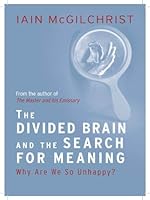
From the left hemisphere came the working out of the fruits of natural observation into useful predictions of behaviour of natural bodies, the codification of laws, the creation of maps, the development of some aspects of mathematics, the introduction of monetary currency, the further evolution of written language (at this point starting for the first time to be written, as now in the West only, from left to right), and in general the systematisation of knowledge.

Whether humanity can move up to a transcultural identity in which science and a new kind of post-religious spirituality can reintroduce the fully individuated consciousness of the individual to a multidimensional cosmos is the question of our time.

Until the invention of antibiotics in 1928, Western medicine couldn’t deliver much better results than indigenous medicine anywhere else in the world. In many cases, going to a shaman or witch doctor offered just about the same likelihood of recovery as seeing a Western doctor.
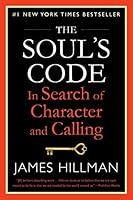
Descent takes a while. We grow down, and we need a long life to get on our feet.


Monday, July 26, 2021

Thoughts for the Day: Monday 26 July 2021


Giannis acting in the moment


“When you focus on the past, that’s your ego. ... When I focus on the future, that's my pride. I try to focus on the present. That's humility.”

— Giannis Antetokounmpo


Desire is the motivating power behind all actions – it is a natural law of life. Everything from the atom to the monad; from the monad to the insect; from the insect to man; from man to Nature, acts and does things by reason of the power and force of Desire, the Animating Motive.

I refer to understanding the true character of objectivity. For what is taught in journalism schools is an invaluable craft, whereas properly observing the world is a matter of deliberation and serious reading over decades in the fields of history, philosophy, and political science. Journalism actually is not necessarily, whatever the experts of the profession may claim, a traditional subject in its own right. Rather, it is a means to explore and better communicate subjects that are, in fact, traditional areas of study: history and philosophy as I’ve said, but also government, politics, literature, architecture, art, and so on. I’ve never altogether trusted what journalists say about themselves.

The ego needs to assume its position as captain of the ship. It is, as Wilson argues, the controller of consciousness, and not, as we have mistakenly believed ever since Freud, a mere puppet of the dark forces within us. As it is now, when we want a change in consciousness we look for some stimulus to trigger it.

We are seeking to understand the source of our troubled, afflicted emotions and attitudes and the way they foul our relationships with others. Here is a clue: those times when we feel most miserable, offended, or angry are invariably the occasions when we’re also most absorbed in ourselves and most anxious or suspicious or fearful, or in some other way concerned about ourselves. Why is this? Why do we get so caught up in ourselves and so ready to take offense at what others do?

The processive and synergistic forces at work in way-making render the language of discreteness and closure inappropriate. The road is always under construction, and the hands at work are many. While there is the punctuation of consummatory events that separates the paragraphs of one’s lived experience, still the narrative is coherent and continuous: a never-ending story.

Sunday, July 25, 2021

The Importance of Semantics: Fees with a Dividend--Not a Tax


Dumping carbon into the atmosphere we all share

We need to appreciate the importance of semantics when we discuss the economics of carbon pricing. For example, we pay for municipal services and amenities such as garbage, water, sewer, and electricity. We recognize that our payments for these products and services are fees, not taxes. We pay fees for the specific goods and services that we receive, whether from the government or from business. Taxes, not the other hand, are compulsory payments to fund the operations of government at all levels. Taxes aren't based on the provision of particular goods and services to individuals and families. Taxes fund the common defense, schools, roads and bridges, research, social security, and other government programs. (Some public goods operate on a mix of user fees and taxes, such as national parks and mass transit.)

A "carbon fee" (or a "price on carbon") combined with a dividend, such as envisioned by the Energy Innovation and Carbon Dividend Act, is not a tax. In fact, it's hard to know what exactly to call it. The fees collected will be returned to the American people by way of regularly scheduled dividend payments. The revenue collected won't be used to fund government operations. There's not currently any government program quite like this that I can think of. 

Thus, a carbon fee functions like a sewer or garbage fee, except that it will be charged directly to producers, such as fossil fuel companies that extract and sell products that produce carbon emissions. At present, after we burn fossil fuels we effectively dump the remaining carbon into the atmosphere, where the excess carbon creates the familiar "greenhouse effect." In short, industrialized economies have treated the atmosphere as a garbage (carbon) dump for a couple of hundred years. But now the dump is full. A carbon fee puts a price on the use of our atmosphere as a carbon dump, and that fee will discourage use. Consumers of fossil-fueled products will see increased costs passed on to us, and we consumers will be able to compare the prices of products and services produced with more or less carbon pollution. Of course, consumers can use the carbon dividend to offset increased costs. But we can expect that most of us who have to watch our budgets will begin to look for less expensive (i.e., less carbon-intensive) alternatives. In fact, the dividends will prove a net gain for low and middle-income families. 

We should be conscious of this distinction when discussing any monetary implications associated with the production and use of carbon. The mention of a carbon tax is not only inaccurate; it also closes doors quickly and distracts many from any understanding of the benefits of a carbon fee. Thus, those who don't want to see a reduction of carbon pollution will refer to any price as a "tax" to try to trigger a reflexive, negative response. So if someone tries to talk to me about a "carbon tax," I readily agree that a carbon tax is a bad idea. But then I quickly pivot to say that a fee for carbon dumping with funds collected returned to Americans as a dividend is a great idea that we should all support and adopt immediately. 

Please join us (Citizens Climate Lobby) in promoting this fair and efficient approach to reducing our carbon dumping. Let's act to clean up our acts. 

Saturday, July 24, 2021

Thoughts for the Day: 24 July 2021


Stalking the wild Wim Hof


Nature gave us the ability to heal ourselves. Conscious breathing and  environmental  conditioning are two tools that everyone can use to control their immune system, better their moods, and increase their energy. I believe that anyone can tap into these unconscious processes and eventually control their autonomic nervous system.

 Without goals (2 words), without some purposeful anticipation, we live, Frankl said, only a 'provisional existence', a kind of marking time which is really a death in life.

[B]ecause an increase in the wealth of societies seems not to guarantee an increase in happiness, Epicurus would have suggested that the needs which expensive goods cater to cannot be those on which our happiness depends.

The truth knocks on the door and you say, “Go away, I’m looking for the truth,” and so it goes away.

Banality is the adopted disguise of a very powerful will to abolish conscience.

A civilization, in contrast to a culture, was the product of its greatest minds, whether Western or Eastern. One of Strauss’s favorite quotations was from Aquinas: “The least knowledge one can have of the highest things is more desirable than the most certain knowledge one has of the lowest things.”

All this shows what from a general knowledge of pre-Socratic physics we should expect: that Greek thinkers in general take it for granted that mind belongs essentially to body and lives with it in the closest union, and that when they are confronted with reasons for thinking this union partial, occasional, or precarious, they are puzzled to know how this can be.

These activities were thus not activities of the ‘mind’, if that word refers to the self-critical activities called thinking. But neither were they activities of the ‘body’. To use a Greek word (for the Greeks had already made important contributions to this science of feeling) they were activities of the ‘psyche’, and no better word could have been devised for the study of them than psychology.

In the work of no other philosopher has the concept of appearance, and hence of semblance (of Erscheinung and Schein), played so decisive and central a role as in Kant.

In reality, democracy was the capstone of an edifice that had as its foundation the rule of law – to be precise, the sanctity of individual freedom and the security of private property rights, ensured by representative, constitutional government.

Sunday, July 11, 2021

Thoughts for the Day: Sunday 11 July 2021


The cliff edge our civilization is moving toward is the end destination of “an increase in technological feasibility inversely proportional to man's sense of responsibility.” [Quoting Jean Gebser.]

A stimulus is nothing else than a suggestion for a mental act (or any other kind of act), and an enriched consciousness contains its own suggestions within itself.

Byzantine art was monotonously sensuous even as it was austere, and with an irresistible splendor that “dumbfounded,” revealing a civilization that encompassed at once stirring liturgies and fierce doctrinal debates over the nature of Christ and the possession of the True Cross.

Broadly speaking, working with the immune system and our inner worlds means paying more attention to the bounty of sensations that are available to us. This includes the five main senses—sight, smell, touch, taste and sound—but also the interoceptive sense that we develop when we quiet the outside world and look inward.

Huizinga: “There is in our historical consciousness an element of great importance that is best defined by the term historical sensation. One might also call it historical contact. … This contact with the past, a contact which it is impossible to determine or analyse completely … is one of the many ways given to man to reach beyond himself, to experience truth. The object of this feeling is not people as individuals. … It is hardly an image which our minds forms. … It if takes on a form at all this remains composite and vague: an Ahnung [sense] of streets, houses, as sounds and colours or people moving or being moved. There is in this manner of contact with the past the absolute conviction of reality. … The historical sensation is not the sensation of living the past again but of understanding the world as one does when listening to music.” (The Task of Cultural History, VII, 71).
Compare and contrast Huizinga's position with Collingwood's injunction for "re-enactment" of the historical past.

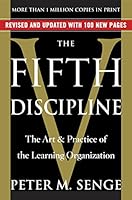
Personal mastery is the discipline of continually clarifying and deepening our personal vision, of focusing our energies, of developing patience, and of seeing reality objectively. As such, it is an essential cornerstone of the learning organization—the learning organization’s spiritual foundation.

Even when he was employed by the Council on Foreign Relations in the 1950s and 1960s, working with some of the finest minds in the foreign policy establishment, Kissinger felt a “European” superiority to the optimistic Americans, who tended to believe that peace was the normal state of affairs in the world, that the United States represented a universal prototype, that every problem had a solution, and that the solution was always the same: democracy, and then more democracy.

To be a nationalist at the end of the eighteenth century meant to believe in a slew of revolutionary liberal ideas: that the peoples of the world are naturally divided into nations, that the most rational means of government is national self-rule, that nations are sovereign, and that nations guarantee the rights of citizens.


Saturday, July 10, 2021

Thoughts for the Day: Saturday 10 July 2021


In Keynes’ thinking, an event could be objectively probable in 1920, even if, looking back from 1922, it never actually came to pass. And it is the objective probability—not the subsequent course of events—that matters for human reason. There is a difference between being rational and being right.

According to objective idealism, there is a world out there, outside the volitional control of ego-consciousness, but it is a world constituted by transpersonal experiences. These transpersonal experiences—objective from the perspective of the ego—impinge on ego-consciousness in two ways, creating autonomous imagery in both cases. Hence, according to Jung’s hardly disguised metaphysical views, all existence can be reduced to—i.e. explained in terms of—phenomenality.

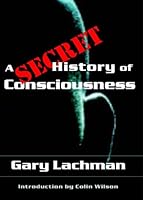
This book is not about “explaining consciousness,” nor is it in any way a “scientific” account of the brain or our interior world. There are many of these, excellent ones written by abler hands than mine. On the contrary, one of my motives in writing this book is to argue that the current monopoly on consciousness by scientists and academic philosophers is unfounded, and that a whole history of thought about consciousness and its possible evolution is left out of their “official” accounts.

With successful legislative and policy achievements, Franklin Roosevelt’s initial term had transformed the politics of upheaval into a politics of hope.

Mankind owes its existence not to the dreams of the humanists nor to the reasoning of the philosophers and not even, at least not primarily, to political events, but almost exclusively to the technical development of the Western world.

One-party dictatorships, of either the fascist or communist type, are not totalitarian. Neither Lenin nor Mussolini was a totalitarian dictator, nor even knew what totalitarianism really meant. Lenin’s was a revolutionary one-party dictatorship whose power lay chiefly in the party bureaucracy, which Tito tries to replicate today. Mussolini was chiefly a nationalist and, in contrast to the Nazis, a true worshiper of the State, with strong imperialist inclinations; if the Italian army had been better, he probably would have ended as an ordinary military dictator, just as Franco, who emerged from the military hierarchy, tries to be in Spain, with the help given and the constraint imposed by the Catholic Church.

The project [assessing the effect of environmental degradation on state failure] was also handicapped by the underlying assumption—inescapable, given its methodology—that the past is a good guide to the future. One of the most frustrating things for researchers in the social sciences, as Alan Greenspan’s remarks suggest, is the tendency for apparently strong associations between factors—like the association between money supply and the inflation rate—to weaken and vanish over time.

Values are meaningless without stories to bring them to life and engage us on a personal level.