Tuesday, January 18, 2022

Thoughts 18 Jan. 2022


Dr. Iain McGilchrist


There is no one absolute truth about the world that results from this process, but there are certainly truths: some things we believe will be truer than others. A maximally open, patient, and attentive response to whatever-it-is is better at disclosing or discerning reality than a response that is peremptory, insensitive, or – above all – shrouded in dogma.

The idea of a Gestalt is central to this book: by it I mean the form of a whole that cannot be reduced to parts without the loss of something essential to its nature. Indeed, what I hope to offer in this book is just such a Gestalt – one that is based on an understanding of the import of the structure of our brains.

The point to be made for the purpose of the present discussion is that a philosophy of nature as organic must start at the opposite end to that requisite for a materialistic philosophy. The materialistic starting point is from independently existing substances, matter and mind. The matter suffers modifications of its external relations of locomotion, and the mind suffers modifications of its contemplated objects. There are, in this materialistic theory, two sorts of independent substances, each qualified by their appropriate passions. The organic starting point is from the analysis of process as the realisation of events disposed in an interlocked community. The event is the unit of things real. The emergent enduring pattern is the stabilisation of the emergent achievement so as to become a fact which retains its identity throughout the process.

We must observe the immediate occasion, and use reason to elicit a general description of its nature. Induction presupposes metaphysics. In other words, it rests upon an antecedent rationalism. You cannot have a rational justification for your appeal to history till your metaphysics has assured you that there is a history to appeal to; and likewise your conjectures as to the future presuppose some basis of knowledge that there is a future already subjected to some determinations. The difficulty is to make sense of either of these ideas. But unless you have done so, you have made nonsense of induction.
N.B. Whitehead is a favorite of McGilchrist.

“Jung came to understand that in this regard, we are all fragmented, and that the work of individuation is to fuse our disparate parts into a new, more competent whole; as he remarked years later “so-called normal people are very fragmentary . . . they are not complete egos.”

When the pioneers of Silicon Valley were thinking through the potential applications of the internet, they often turned to writers such as William Gibson and Neal Stephenson for ideas. Today, no discussion of the implications of artificial intelligence is complete without at least one reference to 2001: A Space Odyssey or the Terminator movies, just as nearly all conversations about robotics include a mention of Philip K. Dick’s Do Androids Dream of Electric Sheep? or the movie it inspired, Blade Runner.

A social psychologist, Jonathan Haidt, did the same and in The Righteous Mind (2012) found the typical conservative to be in better balance with life’s demands than the typical liberal. If so, we might reasonably wonder why conservatives at present can sound so angry. Perhaps the point is that conservatism is a category in politics, not social psychology.

The distinction that’s sometimes made between patriotism and nationalism is the essence of de Gaulle’s politics, as it had been in many ways of Disraeli’s. The patriot loves his place and its monarch and its cheeses and its people and its idiosyncrasies; the nationalist has no particular sense of affection for the actual place he advocates for (he is often an outsider to it) but employs his obsessive sense of encirclement and grievance on behalf of acts of ethnic vengeance.

If defense has a clear advantage over offense, and conquest is therefore difficult, great powers will have little incentive to use force to gain power and will concentrate instead on  protecting  what they have. When defense has the advantage,  protecting  what you have should be a relatively easy task. Alternatively, if offense is easier, states will be sorely tempted to try conquering each other, and there will be a lot of war in the system.

As for the idea that a healthy diet must be mostly plants, that it must include fruits, vegetables, whole grains, pulses, and legumes, we don’t have even the ambiguous 1960s-era studies to support it. We have no meaningful clinical trial evidence to support this idea, as Michael Pollan infers in In Defense of Food, the book that brought us the mantra “Eat food. Not too much. Mostly plants.” What we have instead, he notes, is the idea that people who eat a lot of plant foods tend to be healthier than people who eat the standard American diet (given the appropriate acronym SAD), that is, who eat at fast-food restaurants and buy the packaged, highly processed, sugary foods in the supermarket that Pollan aptly calls “foodlike substances,” food that health-conscious people naturally avoid.


Sunday, January 16, 2022

Thoughts 16 Jan. 2022


A two-hundred and fifty year-old industrial civilization is also entering its terminal phase. It is mostly failing to come to grips with the problems occasioned by its success, and it exhibits all of the major contradictions that have driven past civilizations toward decline and fall—ecological stress, overpopulation, resource exhaustion, excessive complexity, loosened morals, burgeoning indebtedness, social strife, blatant corruption, and political dysfunction.

Human beings are herd animals who find it hard to keep their heads when everyone around them is losing theirs. Indeed, to depart too far from what is “normal” risks being judged “crazy.”
And, as I've said before, the human herd (now worldwide) is spooked. Why? Like all worthwhile questions, there is no simple answer; there is no single cause.

The relationship comes before the relata – the ‘things’ that are supposed to be related. What we mean by the word ‘and’ is not just additive, but creative.

There is no one absolute truth about the world that results from this process, but there are certainly truths: some things we believe will be truer than others. A maximally open, patient, and attentive response to whatever-it-is is better at disclosing or discerning reality than a response that is peremptory, insensitive, or – above all – shrouded in dogma.
(Location 299)

By about 1920 this was my first principle of a philosophy of history: that the past which an historian studies is not a dead past, but a past which in some sense is still living in the present.
Indeed, "the present" is the culmination of "the past," the entirety of the past; the present is a continuous breaker on the neverending wave of the past.


When the mind is mastered by the will, then may new territory be conquered.
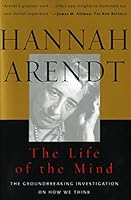
This sounds easy & it isn't. For every will, per St. Augustine, there's a will-not; for Nietzsche will involves a command within the mind that may be ignored or disobeyed. Note WWA's use of the terms "mastery" & "conquered." Isn't will mastering the mind an indication of Nietzsche's will-to-power in its worst possible manifestation? Should we encourage the will to take precedence over thinking and judging? (See Arendt, The Life of the Mind, quoted below.)

What are we “doing” when we do nothing but think? Where are we when we, normally always surrounded by our fellow-men, are together with no one but ourselves?

Pyrrhon, according to Timon, held happiness to be the goal of philosophy, and recommended that a person who would be happy should consider the following three questions: What is the nature of things? What is our position in relation to them? What, under the circumstances, should we do? The answers appear as a formulaic series of negations in the tradition of Democritean athambia and Cynic apatheia. Questions one and two are answered by three negative adjectives: Things are adiaphora, “nondifferent,” or “without distinguishing marks”; astathme-ta, “nonstable,” or “without fixed essence”; and anepikrita, “nonjudgeable,” or “unable to be reached by concepts.” As a result, Timon quotes, “Neither our perceptions nor our opinions are either true or false.”

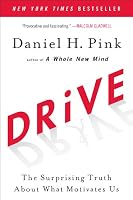
The consulting firm McKinsey & Co. estimates that in the United States, only 30 percent of job growth now comes from algorithmic work, while 70 percent comes from heuristic work. A key reason: Routine work can be outsourced or automated; artistic, empathic, nonroutine work generally cannot. The implications for motivation are vast. Researchers such as Harvard Business School’s Teresa Amabile have found that external rewards and punishments—both carrots and sticks—can work nicely for algorithmic tasks. But they can be devastating for heuristic ones.

But what they didn’t study was what a warrior he was in preparation. To exclude everything that was not the fight from consciousness was where the real fight was won.


Saturday, January 15, 2022

Thoughts 15 Jan. 2022


[T]here are philosophers of the humanities who think that there is no such thing as reality, since it’s all Made Up Miraculously By Ourselves (MUMBO): naïve idealism. Such people, by the way, never behave as though there was no reality. Nor of course, by its own logic, can they claim any truth for their position. 


But just because we participate in reality doesn’t mean we invent it out of nowhere, or solipsistically project it on some inner mental screen; much less does it mean that the very idea of reality is thereby invalidated.


The understanding that experiential states are excitations of the will is very useful for grasping how Schopenhauer integrates Plato’s ‘eternal Ideas’—the archetypes or primary templates of which, according to Plato, everything we perceive in the world is merely a distorted copy—in his metaphysics. Indeed, one of Schopenhauer’s most nuanced metaphysical points is the relationship he draws between the eternal Ideas and the world-in-itself. Both always are but never become and never pass away. No plurality belongs to them; for each by its nature is only one, since it is the archetype itself, of which all the particular, transitory things of the same kind and name are copies or shadows. (W1: 171, original emphasis)

In explaining the level of Mind, or the Ideas, Plotinus employs something like a transformation doctrine with hints of difference/nondifference. Each of the Ideas in Mind is one with the One, yet they are also described as outflows from the One. Plotinus expresses the transformation in much the same ways Vedantin thinkers expressed it. The Brahma- S-tra, for example, compares the One to a source of light and the Many to its rays or illumination (I.1.24, I.3.40, III.2.15 and 25), and Bhaskara, in about 1000 A.D., used the image of the sun and its rays for the One and the Many.

If the essence of power is the effectiveness of command, then there is no greater power than that which grows out of the barrel of a gun, and it would be difficult to say in “which way the order given by a policeman is different from that given by a gunman.”


“The Rights of Man, after all, had been defined as ‘inalienable’ because they were supposed to be independent of all governments; but it turned out that the moment human beings lacked their own government and had to fall back upon their minimum rights, no authority was left to protect them and no institution was willing to guarantee them”


Smart America never adopted the normal anti-Americanism of the post-sixties left. It doesn’t hate America, which has been so good to the meritocrats. Smart Americans believe in institutions, and they support American leadership of military alliances and international organizations. In some cases they’ve endorsed smart wars fought with smart bombs, especially with a humanitarian purpose.


Pareto’s theories, properly understood, do not depend upon any special psychological doctrine. Even if psychology says that men do not have any permanent instincts, it may still be true that there are certain permanent, or at least relatively constant, types of social activity.

Ingenuity includes not only truly new ideas—often called “innovation”—but also ideas that though not fundamentally novel are nonetheless useful.

The modern economic modeling that attempts to forecast unemployment, interest rates, and so on without any commitment to grand economic theories is a continuation of Descartes’ project.More relevant to Descartes’ own time is the problem of the truth of the atomic hypothesis: it could, more or less, explain appearances, but is that a good reason for believing it true, in the absence of any more direct evidence?


Friday, January 14, 2022

Thoughts 15 Jan. 2022


Some scientists, whether they put it this way or not when they are asked to reflect, still carry on as if there just exists a Reality Out There (ROT), the nature of which is independent of any consciousness of it: naïve realism. These are usually biologists; you won’t find many physicists who would think that.

(Location 278)


We desperately need what science can tell us, and postmodern attempts to undermine it should be vigorously resisted. Two important truths, then: science cannot tell us everything; but what science can tell us is pure gold. Any attempt to suppress science (I distinguish science sharply from technology), for whatever reason, is dangerous and wrong.

(Location 282)


“Many historians still tend to assume that the spread of an idea or an ideology is a function of its inherent content in relation to some vaguely specified context. We must now acknowledge, however, that some ideas go viral because of structural features of the network through which they spread. They are least likely to do so in a hierarchical, top-down network, where horizontal peer-to-peer links are prohibited.”


According to this conventional account—from the Enlightenment through Comte and Mill to Hempel—the aim of the social sciences is to explain specifically social phenomena by supplying law-like generalizations which do not differ in their logical form from those applicable to natural phenomena in general, precisely the kind of law-like generalizations to which the managerial expert would have to appeal.

A truly value-free openness toward ideas does not, and cannot, exist in the academy, for several reasons. One of them is theoretical: certain ideas cannot be entertained, at least not seriously, because they would of their nature “close the market.” Totalist systems, therefore—revealed religions, philosophies that proclaim an absolute truth, political systems (whether fascist or communist) that proscribe certain kinds of opinion—cannot in theory be advocated at public schools. These are not, notice, excluded because they are false but because they are exclusionary. Their fault is a methodological one, and can be detected and condemned on grounds of procedure, without value-prejudice. The only things that can be excluded are things that would exclude—things that reveal the evil of system. This value-free code of teaching—the concentration on processes for reaching a conclusion, with the taboo against actually reaching conclusions . . . . [F]acts and knowledge of the facts are handed on; the only conclusions allowed are those forced on one by the facts, the teacher having no responsibility for such conclusions. The teacher cannot even teach (only “dissect”), when it is a matter of political, social, or “sectarian” movements (the very term “religion” is too value-laden to pass the committee’s pure lips).

The end of a revolution is a new code of laws—or counter-revolution. The terror finds its end when the opposition is destroyed, when nobody dares lift a finger, or when the revolution has exhausted all reserves of strength.

I have clearly joined the ranks of those who for some time now have been attempting to dismantle metaphysics, and philosophy with all its categories, as we have known them from their beginning in Greece until today. Such dismantling is possible only on the assumption that the thread of tradition is broken and that we shall not be able to renew it. Historically speaking, what actually has broken down is the Roman trinity that for thousands of years united religion, authority, and tradition. The loss of this trinity does not destroy the past, and the dismantling process itself is not destructive; it only draws conclusions from a loss which is a fact and as such no longer a part of the “history of ideas” but of our political history, the history of our world.

In this clash between joint, participating action, without which, after all, the events to be judged would never have come into being, and reflecting, observing judgment, there is no doubt for Kant as to which should have the last word. Assuming that history is nothing but the miserable story of mankind’s eternal ups and downs, the spectacle of sound and fury “may perhaps be moving for a while; but the curtain must eventually descend. For in the long run, it becomes a farce. And even if the actors do not tire of it—for they are fools—the spectator does, for any single act will be enough for him if he can reasonably conclude from it that the never-ending play will be of eternal sameness”


Thursday, January 13, 2022

Thoughts 13 Jan. 2022


At times we see an obsession with denying any pre-eminence to the human person; more zeal is shown in protecting other species than in defending the dignity which all human beings share in equal measure. Certainly, we should be concerned lest other living beings be treated irresponsibly. But we should be particularly indignant at the enormous inequalities in our midst, whereby we continue to tolerate some considering themselves more worthy than others. We fail to see that some are mired in desperate and degrading poverty, with no way out, while others have not the faintest idea of what to do with their possessions, vainly showing off their supposed superiority and leaving behind them so much waste which, if it were the case everywhere, would destroy the planet. In practice, we continue to tolerate that some consider themselves more human than others, as if they had been born with greater rights.
Priority for people, especially the human & poor.

My aim is to show the reader the magnitude of the error [in our over-reliance on "the emissary" (L-brain) and concurrent under-appreciation of "the master" (R-brain], and its consequences. I say ‘show’, because I cannot, any more than anyone else, prove anything finally and irrefutably – the material with which we are dealing makes that impossible; but rather I wish to take my reader by degrees to a new vantage point, one built upon science and philosophy, from which, in all likelihood, the view will appear at the same time unfamiliar, and yet in no way alien – indeed rather the opposite. More like a home-coming. From there the reader must, of course, make up his mind for himself.
(Location 193)
Applies to almost all inquiries, doesn't it, other than simple math and logical tautologies?

On the matter of God, the evolutionary biologist Stephen Jay Gould put it rather clearly: To say it for all my colleagues and for the umpteenth millionth time (from college bull sessions to learned treatises): science simply cannot adjudicate the issue of God’s possible superintendence of nature. We neither affirm nor deny it; we simply can’t comment on it as scientists.

We have vainly and foolishly tried to be civilized in opposition to nature—not only to the natural world that is the matrix of human life but also to our own savage nature within. We must therefore create a civilization that transcends savagery without opposing it.

An even greater obstacle to understanding derives from the fact that we have a powerful non-logical impulse to make our own and other human actions seem logical.

Liberals, to schematize, embraced capitalist modernity. Conservatives responded by opposing the liberal embrace.

Thus it would generally be a decisive refutation of a moral philosophy to show that moral agency on its own account of the matter could never be socially embodied; and it also follows that we have not yet fully understood the claims of any moral philosophy until we have spelled out what its social embodiment would be.