Monday, November 16, 2020

Thoughts for the Day: Sunday 15 November 2020


[Quoting Thomas Jefferson] "I am convinced that those societies (as the Indians) which live without government enjoy in their general mass an infinitely greater degree of happiness than those who live under European governments. Among the former, public opinion is in the place of law, and restrains morals as powerfully as laws ever did any where. Among the latter, under pretence of governing they have divided their nations into two classes, wolves and sheep."


So the question is not whether we will experience turmoil and suffering as the crisis unfolds, only how bad they will be.
Broadly speaking, working with the immune system and our inner worlds means paying more attention to the bounty of sensations that are available to us. This includes the five main senses—sight, smell, touch, taste and sound—but also the interoceptive sense that we develop when we quiet the outside world and look inward.
Only in two periods of its long history—the Greek period from about 600-300 B.C. and the Modern period since the Enlightenment (with its promulgation of democratic constitutions, an autonomous middle class, and the goal of perfection attained through social engineering), the Industrial Revolution (with its suggestion of social perfection aided by technology), and the revolution in physics early in this century (with its promise of unimaginable power for whatever purpose)—can the West claim to be conspicuously progressive. And indeed its “progressiveness” has come very close to destroying the world as it careened on its course. This “progress” may not be something the rest of the world should covet.

Saturday, November 14, 2020

Thoughts of the Day: Saturday 14 November 2020


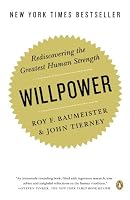
The experiments consistently demonstrated two lessons: 1. You have a finite amount of willpower that becomes depleted as you use it. You use the same stock of willpower for all manner of tasks.

Where the doubting game tests an idea by helping us see its weaknesses and shortcomings, the believing game tests an idea by helping us see the strengths of competing ideas.

Far from having dirtier hands, the officials of the Machiavellian state have hands at least as clean as those of the rest of us and possibly a good deal cleaner. In other words, Machiavelli is not advising a prince to disregard the conventional, Christian and classical virtues when this is necessary to protect the state; he requires this of a prince who has been given responsibility for the protection of the state, because it is sometimes a necessity.

I had always thought that we used language to describe the world—now I was seeing that this is not the case. To the contrary, it is through language that we create the world, because it’s nothing until we describe it.

In my view, curiosity is the great quality that binds writers to readers. Curiosity sends writers on their quests, and curiosity is what makes readers read the story.

All externality is imaginary; for externality—a mutual outsideness in the abstract sense of the denial of a mutual insideness—is as such abstraction, and abstraction is always intuition or imagination.es that result.

The primacy of appearance for all living creatures to whom the world appears in the mode of an it-seems-to-me is of great relevance to the topic we are going to deal with—those mental activities by which we distinguish ourselves from other animal species.

Polar logic is not the same as having logical opposites. These are merely contradictory and only cancel each other out. Polar opposites exist, Barfield says, ‘by virtue of each other, and are generative of new products’. They are opposites as are day and night, but they need each other to exist. They are radically different, but inseparable and are in a dynamic, not static, relationship. It is the tension between them that provides the energy for creative transformation. Polarity, as Barfield says, is ‘the manifestation of one power by opposite forces’.


Friday, November 13, 2020

Thoughts for the Day: Friday 13 November 2020


[Quoting Dr. Donald Stuss is the vice president of research at the Rotman Research Institute, Toronto] “Our studies with the elderly show that the one thing you get with age is wisdom. You’ve got this affective responsiveness, this emotional experience. Somebody once asked me whether there was any benefit to aging, because there seems to be little that’s positive about the body’s physical deterioration. I answered by saying that there is something positive, but it’s more spiritual than physical. If your physical stuff gets peeled away, what do you have left? You have your self, your memories, and your history; and those are your spiritual parts. What is a midlife crisis—it’s preparation for aging. Some people say it’s an assessment of ‘What have I done?’ I would say it’s an assessment of ‘Who am I?’ You are forced, if you can meet the challenge of aging, to develop truly as a human being.”

The above gets personal at my age.


Here's the truth: Unless accompanied by a heavy carb load, fat shouldn't make you fat. Carbs are the perpetrator of our obesity and diabetes epidemics.
I believe that the above statement is likely accurate. Damn!

Science, the form of immediacy perception par excellence, can never answer this question. It can never tell us why a sunset or a string quartet is beautiful. This is no argument against science, merely an acknowledgment of its limits.

Writing biography becomes another “impossible profession,” Janet Malcolm’s characterization of psychoanalysis. Impossible, because the person whom biography purports to be about is not altogether a person, as the case an analyst works with is the invisible psyche, brought in by a person. Biographers are ghost writers, even ghost busters, trying to seize the invisible ghosts in the visibilities of a life. A biography that sticks to the facts as closely as it can finds ever clearer traces of the invisible, those symptoms, serendipities, and intrusive inventions that have led, or pursued, the life the biography recounts.
In order to talk about imagination we must use imagination and in order to talk about language we must use language. We can’t get behind them or stand apart from them, as detached observers, as we can with something in the physical world, but must understand them from ‘inside’. That, in fact, is what Barfield set out to do.


Thursday, November 12, 2020

Thoughts of the Day: Thursday 12 November 2020


What is wrong with Scientism is not that it is ‘material’ but that it is too abstract, too much in love with the hunt for the simplest formula, which today takes the form of a ‘theory of everything’. To be effective science must limit the part of reality that it deals with to what is relevant for its purposes. Because of this, as [Jacques] Barzun tells us, ‘the realm of abstraction, useful and far from unreal, is thinner and barer and poorer than the world it is drawn from’.
To abstract means to ‘extract’ or ‘remove’ something, whether it is an ‘abstract’ of a scientific paper you are interested in – that is, a brief description of it – or your idea of ‘tree’ from all the many, different ‘real’ trees you have encountered. One of the great sleights of hand that Scientism has pulled off is to convince the unthinking public that the thin, bare, poor world that it abstracts from – i.e. ‘pulls out of’ – our thick, luxuriant, rich world is the ‘really real’ world, the one that ‘objectively exists’, while the one we encounter and love and struggle with is a kind of subjective illusion, housed within our individual island consciousness. It manages this trick solely because of the practical effectiveness it provides.
My review of Lost Knowledge of the Imagination. Compare what Lachman says here with what Iain McGilchrist writes below:

As things become dulled and inauthentic, they become conceptualised rather than experienced; they are taken out of their living context, a bit like ripping the heart out of a living body. Heidegger called this process that of Gestell, or framing, a term which suggests the detachment of seeing things as if through a window (as in a famous image of Descartes's), or as re-presented in a picture, or, nowadays, framed by the TV or computer screen. Inherent in it is the notion of an arbitrarily abrupted set of potential relationships, with the context – which ultimately means the totality of Being, all that is – neatly severed at the edges of the frame. Because reality is infinitely ramified and interconnected, because its nature is to hide, and to recede from the approach of logical analysis, language is a constantly limiting, potentially misdirecting and distorting medium. Yet it is necessary to Heidegger as a philosopher. In its tendency to linearity it resists the reticulated web of Heidegger's thought, and his writing espouses images and metaphors of paths that are circuitous and indirect . . . suggesting threading one's way through woods and fields. It is interesting that Descartes's philosophy was half-baked while he slept in a Bavarian oven, the metaphor of stasis and self-enclosure revealing, philosophy and the body being one, the nature of the philosophy; whereas Heidegger was, according to Steiner, ‘an indefatigable walker in unlit places’: solvitur ambulando. Truth is process, not object.

Understanding, as distinguished from having correct information and scientific knowledge, is a complicated process which never produces unequivocal results. It is an unending activity by which, in constant change and variation, we come to terms with and reconcile ourselves to reality, that is, try to be at home in the world.
I'm writing a piece about Arendt's ideas concerning understanding, thinking, and how these concepts differ from knowledge, and how her ideas compare in some ways to those of R.G. Collingwood. (But it's not done yet; this is space exploration for the mind!)

“Many of these complex systems are governed by feedbacks, and if stressed too much they can move to radically new equilibria. The feedbacks often allow Earth’s biosphere to operate as a control, as a thermostat if you like, on interactions between the atmosphere, land, and oceans.”
We can't learn and think too much about the environment. This is Mother Nature, Mother Earth we're talking about. Father Sky can stand down for a while. P.S. My review of this book is on deck.


Wednesday, November 11, 2020

Thoughts for the Day: Wednesday 11 Nov. 2020


Has the gun (see last entry below)


Later on Harlow and various of his students [performed] a brilliant series of experiments which showed that monkeys would work hard and persistently to solve simple puzzles without any external reward; that is, just for whatever satisfactions are inherent in the puzzle-solving itself.’
What implication does the above observation have for neo-classical (or neoliberal) economic theories?
This is the real significance of spoiltness; it is nothing less than the human condition itself—another name for ‘original sin’. Kierkegaard saw that the basic problem is that all men are bored. First Adam was bored to be alone, so Eve was created; then Adam and Eve were bored, so they had Cain and Abel; then all the family were bored, so Cain killed Abel . . . Human history is seen as a flight from boredom, and from the low mental pressures associated with it. But boredom is another expression of spoiltness; it is a refusal to make any mental effort without the reward of an external stimulus. Adler’s analysis of spoiltness comes very close to the borders of a truly evolutionary psychology; but he halted there.

History in which all other branches of the humanities are comprehended presupposes a secure method of “hermeneutics,” the establishment of a science and art of interpretation. At the core of historical science as of history itself lies for him [Dilthey] the problem of understanding. . . . History becomes for Dilthey a series of objectified experiences which we can understand insofar as we can “re-live” (nacherleben, Hodges’ translation) them. Understanding, interpretation, hermeneutics are the art of deciphering signs of expression.
Does anyone else perceive shades of R.G. Collingwood in this quote, or am I seeing things again?
Compare the above with the following from Collingwood re Dilthey:
The Idea of History

R. G. Collingwood


[Dilthey] raises the question how the historian actually performs the work of coming to know the past, starting as he does simply from documents and data which do not by themselves reveal it. These data, he replies, offer him only the occasion for reliving in his own mind the spiritual activity which originally produced them. It is in virtue of his own spiritual life, and in proportion to the intrinsic richness of that life, that he can thus infuse life into the dead materials with which he finds himself confronted. Thus genuine historical knowledge is an inward experience (Erlebnis) of its own object, whereas scientific knowledge is the attempt to understand (begreifen) phenomena presented to him as outward spectacles. This conception of the historian as living in his object, or rather making his object live in him, is a great advance on anything achieved by any of Dilthey’s German contemporaries.


So am I imaging things? 


“For most of history, life has been hierarchical. A few have enjoyed the privileges that come from monopolizing violence. Everyone else has dug.” [The statement "Everyone else has dug" is a riff on Sergio Leone's The Good, the Bad & the Ugly wherein Clint Eastwood, holding the only loaded gun, tells Eli Wallach that "in this world there's two kinds of people . . . Those with loaded guns. And those who dig. You dig."]


Monday, November 9, 2020

Thoughts for the Day: Monday 9 November 2020


What if Thomas Homer-Dixon is correct about his assertion here? 

So by 2068, warming of at least 2 degrees is virtually assured— indeed, we’re likely to pass that threshold by 2050— and we could easily be on course for 3 or 4 degrees Celsius by the end of the century without a radical shift in our sources of energy and ways of life.

Distance produces a something that is neither in the subject nor the object, but in what arises between them, and it is intrinsically melancholic.

Such an escape from reality is also, of course, an escape from responsibility. In this the Germans are not alone; all the peoples of Western Europe have developed the habit of blaming their misfortunes on some force out of their reach: it may be America and the Atlantic Pact today, the legacy of Nazi occupation tomorrow, and history in general every day of the week.
In my opinion, intuition is our most valuable compass in this world. It is the bridge between the unconscious and the conscious mind, and it is hugely important to keep in touch with what makes it tick.

Heather Cox Richardson 11.08.20 re Michael Steele & the Election

Still good to keep up with Heather Cox Richardson for a while. This one is especially important for my Republican friends and family. Here's a sample:

"After the election, former chair of the Republican National Committee and adviser to the never-Trump Lincoln Project Michael Steele appeared on comedian Larry Wilmore’s new show on NBC’s Peacock streaming service.
Steele emphasized that he was still a Republican, but he was an American first, and that the Republican Party needed to get rid of its allegiance to Trump and rebuild. He pointed out that he has been a Republican since 1976, and that most of the people currently in charge are newcomers. Steele expressed disappointment that so many voters supported Trump in the election, but was more scathing of Republican Party leaders who “sycophantically kowtow to a[n]… egomaniacal henchman who has one… view of the world and that’s himself.”"

Biden Wins--So What Now?


I write this on early Sunday morning 1 November (damned switch away from DST!). I write now because on the final day of the election ("Election Day"), as we await the verdict of the American voting public, I'll be too keyed-up to write anything coherent. As a lawyer, I've waited for many a verdict, and it doesn't get any easier even as you've been through it many times. Each case is unique; each time a significant change in the future awaits the outcome. This case, the case of Donald J. Trump, has now reached to point of closing arguments to the American voters (i.e., those who don't shirk their "jury duty"). This election is about whether this "jury" decides to free itself and open its future to better outcomes, or we chose to condemn ourselves to a future marked by fear, anger, and resentment, and the "leadership" of an incompetent, vile, and threatening man. 

If, when you read this, you have sound grounds to believe that Joe Biden has been elected president, then by all means (reasonable and legal) celebrate. However, I suspect most, like me, will more likely simply feel a sense of relief. We have not condemned ourselves. We will sigh and say "Thank goodness!" (For it is a sense of goodness that would allow such an outcome.) We will go to bed or if late enough, on to our daily activities, with a sense of ease, at least in the sense of reduced anxiety. 

So what can we expect with a President-elect Biden? Will we awaken to a scene of rainbows and unicorns and people joining around the campfire to sing Kumbaya together? 

No. 

In electing Biden--and even if he gets a Democratic Congress--we should understand as a nation that we have only broken the fever, that Trump is not the underlying cause of this dis-ease in our body politic. Trump is only an opportunistic secondary infection. Voters have acted as the antibodies to this infection, working to drive this infection away. But the body politic isn't cured once and for all of this dis-ease. Underlying Trump is a chronic dis-ease that allowed our nation to succumb to this secondary infection. Although the American voters have vanquished Trump, Trumpism, the syndrome that he embodies, will remain. American has suffered this infection of right-wing extremism for almost its entire 245 years. Sometimes the infection has been acute (the Civil War as the worst outbreak), but there have been other manifestations, such as the Klu Klux Klan uprisings during Reconstruction and the 1920s;  Joe McCarthy and witch-hunts of the late 1940s and early 1950s; and the Civil Rights movement backlash and the candidacy of George Wallace, to name just a few examples of outbreaks. This politics of fear, anger, and resentment from the "right" has always been far more important than anything coming from the "left." Radicalism and violence have arisen from the left, but these outbreaks tend to be acute although sometimes intense infections that don't continue too long and that don't usually translate into electoral clout. The violence that we've seen in American cities this year has been the result of acute, intense frustration with police killings and brutality and all of the underlying conditions that allow such wrongdoing to continue. But never in my lifetime has the radical left gained any lasting power, but not so the right, especially to the degree manifest by Trump's administration. 

If we're lucky, we'll get something approaching politics as usual, only with a New Deal-like shift. We can hope for a change in policies that will begin some fundamental changes in the American political scene. A "Green New Deal" (of some sort) to address climate change and environmental degradation is a must. Also, we badly need significant reforms of our electoral system to end voter suppression schemes and to allow fair and proportional representation. (The Supreme Court required the states to practice "one person one vote" back in 1962 in Baker v. Carr. We should apply this principle to all elections.) A respect for minority rights is baked into the American Constitution even as they're too often ignored in practice. However, there's no brief for minority rule, which has become increasingly common. Only once have Republicans won the popular vote for president after 1988: Bush in 2004. And yet, in 2000 and 2016 Republicans won the presidency despite having lost the popular vote. 

In short, we live in a time of troubles. We know this even as we don't want to acknowledge it or we can't quite understand it. The human herd is spooked. This is a time when dictators and radical movements ferment and often gain power. And by "radical movements" in this instance I mean those who eschew politics, speech, and persuasion in favor of violence. There can be peaceful radical movements, such as the American Civil Rights movement as led by Dr. King and the Southern Christian Leadership Conference to name but one prominent example; and there have been many less well-known but nevertheless potent peaceful movements. We can expect--and no doubt need--some (peaceful) radical movements. Indeed, the change we need isn't generated or pushed by traditional political discourse, but it swells up into political discourse from below. We need to radically (to the root) re-think our relationships with each other, with others around the world, and with Mother Nature herself. The journey of modernity is over, and we need to move on to something better (and I'm not talking about silly "post-modernism). What that "better" consists of we must hash-out continually as we progress. We have to turn to prophets, but not those who scare us with hellfire and brimstone, but the whose who provide us with a vision, a new way of seeing and understanding ourselves and our world. Only when the prophets do their work, and the people convert can this change be channeled into the political sphere. I think (hope) that we have a start on it. If we don't make some very immediate--and yes, drastic--changes very soon, I fear that we'll be in a hell of a fix. (And I mean that in a literal sense as well.) 

So, yes, celebrate, and then let's get to work. 


Post Script: Monday 9 November 2020

I've decided to post the above. Nothing has changed my mind. The repudiation of Trump was not nearly as overwhelming as I'd hoped, and few Trump enablers--virtually the entire Republican Party--paid an electoral price. But otherwise, the post seems on point. We still have to deal with the problems of Trumpism or perhaps its more lethal (to democracy & our lives) mutations. 


Sunday, November 8, 2020

Thoughts for the Day: Sunday 8 November 2020


These examples suggest that Epictetus is wrong to include our impulses, desires, and aversions in the category of things over which we have complete control. They belong instead in the category of things over which we have some but not complete control, or, in some instances, in the category of things over which we have no control at all. But having said this, I should add that it is possible that something important has been lost in translation—that in speaking of impulses, desires, and aversions, Epictetus had in mind something different than we do.

Today’s conventional growth can end voluntarily, if we deliberately move the global economy onto a new path through economic and social innovation (of which more later); or it can end involuntarily— probably with social catastrophe in its wake. But either way, it will end.

[T]o achieve its simplicity and elegance, the theory [of neo-classical economics] focuses on the behavior of independent individuals operating in a market—individuals who are atomized, rational, similar in preferences, and stripped of any social attributes. But this makes the theory largely asocial and ahistorical: there’s generally no place in it for large-scale historical, cultural, and political forces that sometimes have a huge impact on our economies—forces like the emancipation of women, rising environmental consciousness, or democratization in poor countries.

[Modern Man] feels guilty because he has made his life its own end and has not obeyed the commandment, “Thou shalt love the Lord thy God . . . and thy neighbor as thyself.” While modern secularism speaks naively about the sociological source of conscience, the most effective opponents of tyrannical government are today, as they have been in the past, men who can say, “We must obey God rather than man.” Their resolution is possible because they have a vantage point from which they can discount the pretensions of demonic Caesars and from which they can defy malignant power as embodied in a given government.

By about 1920 this was my first principle of a philosophy of history: that the past which an historian studies is not a dead past, but a past which in some sense is still living in the present.

All externality is imaginary; for externality—a mutual outsideness in the abstract sense of the denial of a mutual insideness—is as such abstraction, and abstraction is always intuition or imagination.

If inference encourages Collingwood’s view of history towards science then imagination moves it towards art.