Steve’s Best Reads and Listens for 2008
Best reads of 2008. Wow, the list seems short. I blame this in part on the internet, where, if you look carefully, you can find a lot of worthwhile reading. For instance, economist turned Evolutionary Fitness guru, Art DeVany. Historian Niall Ferguson and iconoclast Nassim Taleb are also out there, and that way you don’t have to wait for the next book. Also, I started some books but didn’t get to the end (usually because of length and the demands of time.) Sometimes I forget to write them down. Nevertheless, let’s talk books completed. The rules: completed by either reading or listening. The top picks of 2008 (in no particular order):
1. Made to Stick: Why Some Ideas Survive & Others Die by Chip & Dan Heath. Getting people to listen is no easy task. This is a business book, and these two authors (brothers) give the basics. Basic, sensible ideas.
2. In Defense of Food: An Eater's Manifesto by Michael Pollen. We heard him speak about this at the ICPL. Pollan is a strong writer who reflects on the ins and outs of what we eat, with some basic guidelines.
3. The Little Book of Atheist Spirituality by Andre Comte-Sponville. This book isn’t a rant, but a careful consideration of belief and spirituality. Comte-Sponville lost his Roman Catholic faith, but he retains a deep respect for the tradition and the need for spirituality. Despite his loss of traditional faith, he keeps a sense of awe and respect toward that which we cannot apprehend. As an aside, his Small Treatise on the Great Virtues made a previous list, and I still highly recommend it.
4. I Don't Believe in Atheists by Chris Hedges. The perfect book-end to the Comte-Sponville book. As opposed as their titles might suggest, I found them quite similar in outlook. Hedges is unhappy with the angry atheists, the militants Dawkins, Harris, and Hitchens. In a prior book, he took on the American right wing. Where does he stand? With the likes of Reinhold Niebuhr and others, who remind us of the fallibility of humankind. Thoughtful and considered.
5. Moneyball by Michael Lewis. The story of the Oakland A’s and sabermetrics. Interesting? Very, even for me, who’s not a baseball fan. But the story of how statistics and independent thinking led to a team with a tiny budget and a lot of wins. A fun and interesting read.
6. No Simple Victory: The War in Europe 1939-1945 by Norman Davies. What more can be said about WWII? A lot, it turns out. Davies is a British historian, and this careful history taught me a lot. Most of all, WWII really took place in terms of its greatest battles, its greatest carnage, on the Eastern Front, British and American prejudices not withstanding. A great listen for me.
7. Nietzsche: Living with the Immoralist by Robert Solomon. I still mourn the passing of Solomon, whose writing always invited the non-professional philosopher into the conversation. Here he deals with that bag of contradictions, Nietzsche. This is the book that grew out of his Teaching Company lectures on the same topic. Solomon doesn’t just tell us what Nietzsche thought, he considers him, discusses him, in all his wonderful and frightening complexity. In doing so, Solomon makes us think about ourselves. Well done!
8. The Limits of Power: The End of American Exceptionalism by Andrew Bacevich. An IR guy out of the military who lost a son in Iraq. Very sad. But Bacevich is a clear-eyed observer and tells it like it is. Very solid.
9. Your Brain is Almost Perfect: How We Make Decisions by Read Montague. How our brains work is endlessly fascinating, equally so, how they fail us. Montague takes us from the basic biological mechanisms to the practical affairs of life in this careful consideration.
10. Story: Substance, Structure, Style, and the Principles of Screenwriting by Robert McKee. This book came recommended by a speaker at a continuing legal education seminar for trial lawyers, who, after all, are trying to tell a winning story on behalf of their clients. For someone who’s seen a lot of movies, this book was exceptionally interesting and eye-opening. From Aristotle to the latest flicks, this guy talks and shows us what makes for compelling story-telling. Really quite fascinating and instructive.
The two “books of the year” (hey, I’m doing very well to keep it to two):
11. The Dark Side: The Inside Story on How the War on Terror Turned into the War on American Ideals by Jane Mayer. In other words, how the Bush administration turned America into a nation of torture and lawlessness. Genuinely frightening. However, there are good guys. Who are they? Bona fide “conservatives”: lawyers (unlike Bush and Chaney) who placed value in the rule of law above political expediency and the feel-good policies of frightened reaction. Many were forced out of office, but they kept a sense of law and decency. I am still ashamed at what happened and that I didn’t speak out more. But then, we didn’t know the half of it until Mayer told the story.
12. Good Calories, Bad Calories: Challenging Conventional Wisdom on Diet, Weight Control, & Disease by Gary Taubes. Be warned: this is not a diet book! At least in the usual sense of the term in the publishing world. It’s a science book about diet. However, it’s also about the foibles of science, the chance discoveries and lost opportunities. You’ll never think the same about fats and carbs after your read this book, and you’ll never blindly accept what the newest Department of Ag food pyramid says. Quite thorough and well-done.
2009 is already off to a great start: a visit to Greeneland after an absence of many years (Graham Greene’s The End of the Affair), and more into economics: development (after seeing the challenges of Cameroon I’ve already completed Jeffrey Sachs’s Common Wealth), financial (what the hell happened?), and behavioral (economics may yet catch up with the ancient Greeks about how humans really act). Of continuing interest will be Buddhists and Stoics (I think them similar and wise). A frequent topic of vocational, practical, and intellectual interest is how we live with each other (communication and persuasion) and how we think (neuroscience and evolutionary perspectives). Of course, I continue to vow to read more fiction. Snow is high on my list. In the mean time, enjoy a good book!
Tuesday, February 10, 2009


Sunday, February 8, 2009
Jeffrey Sachs Common Wealth
I've completed Jeffrey Sachs's Common Wealth: Economics for a Crowded Planet (2008, 400p). Sachs lays out in great detail the possibilities of a successful program to promote economic growth through out the world, and most importantly, to bring places like sub-Saharan Africa up from dire poverty. Sachs lays all of this arguments with detail and skill. Don't over look his insight based on troubles in Russia after his work there. He seems to have learned and adapted. What more could one ask for? If, like me, you wonder how we can continue to enjoy our standard of living without condemning the less fortunate billions to a live of poverty, this book will give you some hope. Recommended.
A Whole New Mind
I completed A Whole New Mind: Moving from the Information Age to the Conceptual Age by Daniel Pink (238p. 2005). Pink argues that "Abundance, Asia, and Automation" will (and to some extent have) radically changed our economy from the "left-brain" areas that have marked it in the information age to "right-brain" areas today. Tasks that can be performed less expensively will go to Asia or will be automated. Also, persons want meaning and significance in a society marked by abundance. Pink's recommendation: Design, Story, Symphony, Empathy, Play, and Meaning. He provides examples for each area, and he provides useful references. On the whole, I think that he's on to something.
Monday, January 19, 2009
Healing Emotions
Reading Healing Emotions: Conservations with the Dalai Lama on Mindfulness, Emotions, and Health (ed. Daniel Goleman 1997). In reading today, Goleman summarizes a large body of evidence that positive emotions promote health and that negative emotions harm health. Commentators Brown (Daniel) and Varela caution that many of the measurements are rough (such as measurements of T-cells), and much more research is needed to refine an understanding of any possible benefits or detriments. As this book is now about 12 years old, one assumes that Goleman should have a great deal to report now if asked to do so. I suspect that further research will largely verify these findings.
Sunday, January 18, 2009
A Farewell to Alms and Emotional Awareness
I began A Farewell to Alms: A Brief Economic History of the World by Gregory Clark (2007) today. Clark argues against Jared Diamond of Guns, Germs, and Steel fame, as well as those like Pomerantz, who argue that colonies and coal provide the explanation of the Great Divergence (i.e., why Britain and then Western Europe zoomed to a dominant position via the Industrial Revolution). Our visit to Cameroon spurred this interest, as the gap between the Cameroonian standard of living and ours is so great. Why? In reading Clark’s introduction, he sets forth his basic tenants. First, until the 1800’s and the Industrial Revolution, most parts of the world remained nearly equally poor. In fact, humankind may have been worse off on the eve of the Industrial Revolution than it was as hunter-gathers over 8,000 years ago. Until the Industrial Revolution, humans lived in a Malthusian world. However, in Britain, because of culture, the Industrial Revolution took off. Clark argues that coal and colonies did not distinguish Europe from China and Japan. Indeed, Clark suggests that certain attributes, such as delayed gratification and hard work spread into British society before (or more effectively than others), perhaps even through genetic changes. Finally, in his introduction, Clark reminds us of the weird but often-cited fact that we are no happier, and perhaps less happy, than our much poorer ancestors. Indeed, in our recent trip to Cameroon, we found the villagers where we stayed quite warm and welcoming, and on the whole happy. Clark suggests that envy is the problem; perhaps, he says, the envious will inherit the earth.
I’ve been listening to the Dalai Lama (voice-over by Richard Gere) and Paul Ekman in the audiobook of Emotional Awareness (2008). The conversation is fascinating. Ekman the Western scientist has obviously been very impressed with his introduction to Buddhist thinking in the areas of consciousness, awareness, and emotional control. Today he and the DL discussed compassion and how we can cultivate it. Do we need to have suffered? How can we foster universal compassion? Ekman and the DL seem to agree on a lot, and it shows for me the deed empirical wisdom of this aspect of the Buddhist tradition, the Buddhist psychology (and Buddha was perhaps the greatest psychologist-therapist).
I’ve been listening to the Dalai Lama (voice-over by Richard Gere) and Paul Ekman in the audiobook of Emotional Awareness (2008). The conversation is fascinating. Ekman the Western scientist has obviously been very impressed with his introduction to Buddhist thinking in the areas of consciousness, awareness, and emotional control. Today he and the DL discussed compassion and how we can cultivate it. Do we need to have suffered? How can we foster universal compassion? Ekman and the DL seem to agree on a lot, and it shows for me the deed empirical wisdom of this aspect of the Buddhist tradition, the Buddhist psychology (and Buddha was perhaps the greatest psychologist-therapist).
Saturday, January 17, 2009
How Fiction Works & Story
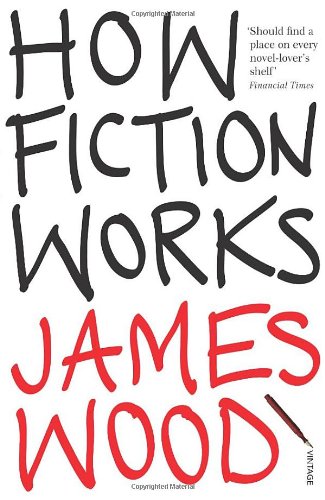
I finished James Woods’s How Fiction Works (2008, 248p) today. Woods talks about the conventions and practices of fiction in the tradition of E.M. Forster. The elements of fiction are enthralling, as they convey life. After having recently finished Robert McKee’s Story: Substance, Structure, Style, and the Principles of Screenwriting (1997, 419p), the two books come up for easy comparison. Woods discusses the conventions of various authors, most well kn0wn, and how details, realism, character, language, metaphor, and other literary devices mix in the history of fiction from as far back as the Bible. I enjoyed the work as a reminder of the aesthetic enjoyment of reading fiction arising from supreme craftsmanship. Very good indeed, although not as enjoyable as Story, which is an amalgam of high culture (lots of Aristotle referenced) with plentiful dishes of “how to” added. For trial lawyers (or those who have followed the example of the likes of Grisham or Stephen H. Greenleaf and moved to full-time writing), the books have a practical import on how to convey our clients’ stories, which is the stuff of trials.
Wednesday, July 2, 2008
More Than You Know! (but you're learning!)
I've also been reading Michael J. Mauboussin's More Than You Know: Finding Financial Wisdom in Unconventional Places (2008). Terribly entertaining essays loosely figured around the subject of finance and investing that pick-up and use insights from all manner of trains of (serious) thought. For instance, Phillip Tetlock on "experts" (i.e., hedgehogs vs. foxes), Robert Sapolsky on stress (and how it leads to short-term investment thinking to the detriment of return), and so on. More later on particulars. Very good, entertaining reading indeed.
Tuesday, July 1, 2008
American History
With the Fourth just ahead on the calendar, I've decided on my American history reading, and I've started it: Garry Wills's Explaining America: The Federalist (1981). This is, of course, a re-read, as I purchased my copy at the time of publication in 1981. But having just completed listening to Thomas Pangle's Teaching Company course on The Great Debate: Advocates and Opponents of the Constitution, it seems a perfect choice. Also, of course, Wills's prose and insight are always a treat. The opening considers how Federalist No. 10 (Madison) was mostly ignored until Charles Beard went after it as a part of his economic vision of the Constitution. Since then, Laski, Dahl, Burns, and others have criticized Madison's formulation. Will states that he aims to consider whether history and historians have treated Madison's work here (and in No. 51) fairly. The opening chapter deals with the Annapolis convention, and delightful physical descriptions of Madison and his partner in forming the nascent government: Alexander Hamilton. As often the case with Wills, his analytic insights into a text are framed by a "you were there" description of the principal players. Madison as an aging gnome, and Hamilton as all energy inside his small frame; while Madison conserved energy, Hamilton radiated it. More fun to come.
rev'd 08.14.19
rev'd 08.14.19
Tuesday, June 24, 2008
Burning & Energy
I'm reading Phillip Moffitt's Dancing with Life (2008), in which he writes about Buddha's "Fire Sermon" and how all of our life involves "burning". While everything and every process involves "burning," the evil of craving (or excessive desire) makes the necessity and unavoidability of burning into suffering.
In a sense, this seems quite right, if "burning" can be seen as energy. Everything is a form of energy in a sense. (Einstein, right?). All transactions, whether physical or mental, are energetic transactions. This leads to the question: how well do we manage these energetic transactions? How do we gain warmth from them and not get burnt, as Buddha seems to ponder in the Fire Sermon? I suspect that these issues go to some very fundamental issues on how we approach life, although, most of us, most of the time, conduct it unknowingly. Perhaps writing and thinking about it will make it more accessible. Indeed, the task should be to see life as a constantly ongoing energy transaction. Energy, after all, is eternal delight (Blake).
rev'd 08.14.19
In a sense, this seems quite right, if "burning" can be seen as energy. Everything is a form of energy in a sense. (Einstein, right?). All transactions, whether physical or mental, are energetic transactions. This leads to the question: how well do we manage these energetic transactions? How do we gain warmth from them and not get burnt, as Buddha seems to ponder in the Fire Sermon? I suspect that these issues go to some very fundamental issues on how we approach life, although, most of us, most of the time, conduct it unknowingly. Perhaps writing and thinking about it will make it more accessible. Indeed, the task should be to see life as a constantly ongoing energy transaction. Energy, after all, is eternal delight (Blake).
rev'd 08.14.19
Subscribe to:
Posts (Atom)