Friday, November 20, 2020

Thoughts for the Day: Friday 20 November 2020


‘Nature’ as we know it, then, has a history. If we want to give a date for its debut, we can say that the nature that we know and love and which we make great efforts to embrace first arrived in 1798 with the publication of the Lyrical Ballads by the poets William Wordsworth and Samuel Taylor Coleridge. Wordsworth and Coleridge’s seminal collection introduced the Romantic sensibility to English speaking readers, and it is no exaggeration to say, as the literary philosopher Owen Barfield (1898–1997) has, that the holiday industry, which offers trips to mountains, forests, deserts, and other uncivilised places, owes a great deal to the shift in human consciousness exemplified in their work.

We already know from the discovery of the existence of mirror neurones that when we imitate something that we can see, it is as if we are experiencing it. But it goes further than this. Mental representation, in the absence of direct visual or other stimulus – in other words, imagining – brings into play some of the same neurones that are involved in direct perception.

The Greeks quite clearly and consciously recognized both that history is, or can be, a science, and that it has to do with human actions. Greek history is not legend, it is research; it is an attempt to get answers to definite questions about matters of which one recognizes oneself as ignorant.

There is indeed only one principle which announces, with the same uncompromising clarity as the principle that “you can’t make an omelette without breaking eggs,” the diametrically opposite maxim for political action. It was expressed almost incidentally in a lonely phrase of one of the loneliest men of the last generation, Georges Clemenceau, when he suddenly exclaimed during his fight in the Dreyfus Affair: “L’Affaire d’un seul est l’affaire de tous” (“The concern of one is the concern of all”).


Thursday, November 19, 2020

Thoughts for the Day: Thursday 19 November 2020


In this book I’ll argue that the complexity, unpredictability, and pace of events in our world, and the severity of global environmental stress, are soaring. If our societies are to manage their affairs and improve their well-being they will need more ingenuity—that is, more ideas for solving their technical and social problems. But societies, whether rich or poor, can’t always supply the ingenuity they need at the right times and places.
The above quote--published in 2020--is even more astute now than when it was first published. We ignore this question at our peril.

This flip-flopping—breathing all-out, then not at all, getting really cold and then hot again—is the key to Tummo’s magic. It forces the body into high stress one minute, a state of extreme relaxation the next. Carbon dioxide levels in the blood crash, then they build back up. Tissues become oxygen deficient and then flooded again. The body becomes more adaptable and flexible and learns that all these physiological responses can come under our control. Conscious heavy breathing, McGee told me, allows us to bend so that we don’t get broken.
A wonderfully interesting and informative book. My review here.

Freud recognized the first circuit as the oral stage, the second as the anal stage and the fourth as the genital stage. He did not notice the third, semantic circuit — perhaps because as an obsessive Rationalist he was so absorbed in verbal and conceptual programs that they were invisible to him, as water may be to fishes.
This book is "out there" and delightful for it.

Montaigne’s most famous saying was, after a lifetime of learning, que sçaisje? The saying that ‘the more you know, the more you know that you don’t know’ is attributed both to the Buddha and to Socrates. St. Paul wrote: ‘And if any man think that he knoweth any thing, he knoweth nothing yet as he ought to know’ (1 Corinthians 8: 2).

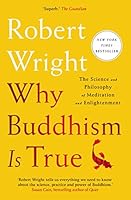
This is a reminder that natural selection didn’t design your mind to see the world clearly; it designed your mind to have perceptions and beliefs that would help take care of your genes.


Wednesday, November 18, 2020

Thoughts for the Day: Wednesday 16 November 2020


According to Plato, nous (reason as opposed to rationality) is characterised by intuition, and according to Aristotle it is nous that grasps the first principles through induction.

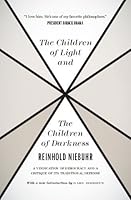
A contest between monopolistic and smaller units of economic power, for instance, is not a “natural” contest. The unequal power of one contestant is the product of the tendency toward centralization of power in the processes of a technical civilization. The power is a social and historical accretion; and the community must decide whether it is in the interest of justice to reduce monopolistic control artificially for the sake of reestablishing the old pattern of “fair competition,” or whether it is wiser to allow the process of centralization of economic power to continue until the monopolistic centers have destroyed all competition. But, if the second alternative is chosen, the community faces the new problem of bringing the centralized economic power under communal control.

Else, to-morrow a stranger will say with masterly good sense precisely what we have thought and felt all the time, and we shall be forced to take with shame our own opinion from another. There is a time in every man's education when he arrives at the conviction that envy is ignorance; that imitation is suicide; that he must take himself for better, for worse, as his portion; that though the wide universe is full of good, no kernel of nourishing corn can come to him but through his toil bestowed on that plot of ground which is given to him to till.

“To be free, above all, was to be free from enslavement to one’s own basest desires, which could never be fulfilled, and the pursuit of which could only foster ceaseless craving and discontent.”


Tuesday, November 17, 2020

Thoughts for the Day: Tuesday 17 November 2020


2020 publication


So the [economic] growth WIT [worldview, institutions, technology] is going to have to change drastically— or it, and possibly we, will vanish. Either way, the results for our societies are going to be wrenching.

But there are powerful reasons why the muddling-through approach will not always work for problems in today’s world. Incrementalism assumes that our circumstances are reasonably stable and change is slow. Because the past isn’t that different from the present, decision-makers can draw on what they have learned from the past—their practical knowledge, habits, and standard operating procedures, for instance—to guide their decisions in the present.
N.B. Homer-Dixon published this work 20 years before Commanding Hope.

Anxiety, the next gumption trap is sort of the opposite of ego. You’re so sure you’ll do everything wrong you’re afraid to do anything at all. Often this, rather than “laziness,” is the real reason you find it hard to get started. This gumption trap of anxiety, which results from overmotivation, can lead to all kinds of errors of excessive fussiness. You fix things that don’t need fixing, and chase after imaginary ailments. You jump to wild conclusions and build all kinds of errors into the machine because of your own nervousness.

The first reaction is one of fear. It’s not that we fear the unknown. You cannot fear something that you do not know. Nobody is afraid of the unknown. What you really fear is the loss of the known. That’s what you fear.

Monday, November 16, 2020

Thoughts for the Day: Sunday 15 November 2020


[Quoting Thomas Jefferson] "I am convinced that those societies (as the Indians) which live without government enjoy in their general mass an infinitely greater degree of happiness than those who live under European governments. Among the former, public opinion is in the place of law, and restrains morals as powerfully as laws ever did any where. Among the latter, under pretence of governing they have divided their nations into two classes, wolves and sheep."


So the question is not whether we will experience turmoil and suffering as the crisis unfolds, only how bad they will be.
Broadly speaking, working with the immune system and our inner worlds means paying more attention to the bounty of sensations that are available to us. This includes the five main senses—sight, smell, touch, taste and sound—but also the interoceptive sense that we develop when we quiet the outside world and look inward.
Only in two periods of its long history—the Greek period from about 600-300 B.C. and the Modern period since the Enlightenment (with its promulgation of democratic constitutions, an autonomous middle class, and the goal of perfection attained through social engineering), the Industrial Revolution (with its suggestion of social perfection aided by technology), and the revolution in physics early in this century (with its promise of unimaginable power for whatever purpose)—can the West claim to be conspicuously progressive. And indeed its “progressiveness” has come very close to destroying the world as it careened on its course. This “progress” may not be something the rest of the world should covet.

Saturday, November 14, 2020

Thoughts of the Day: Saturday 14 November 2020


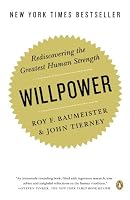
The experiments consistently demonstrated two lessons: 1. You have a finite amount of willpower that becomes depleted as you use it. You use the same stock of willpower for all manner of tasks.

Where the doubting game tests an idea by helping us see its weaknesses and shortcomings, the believing game tests an idea by helping us see the strengths of competing ideas.

Far from having dirtier hands, the officials of the Machiavellian state have hands at least as clean as those of the rest of us and possibly a good deal cleaner. In other words, Machiavelli is not advising a prince to disregard the conventional, Christian and classical virtues when this is necessary to protect the state; he requires this of a prince who has been given responsibility for the protection of the state, because it is sometimes a necessity.

I had always thought that we used language to describe the world—now I was seeing that this is not the case. To the contrary, it is through language that we create the world, because it’s nothing until we describe it.

In my view, curiosity is the great quality that binds writers to readers. Curiosity sends writers on their quests, and curiosity is what makes readers read the story.

All externality is imaginary; for externality—a mutual outsideness in the abstract sense of the denial of a mutual insideness—is as such abstraction, and abstraction is always intuition or imagination.es that result.

The primacy of appearance for all living creatures to whom the world appears in the mode of an it-seems-to-me is of great relevance to the topic we are going to deal with—those mental activities by which we distinguish ourselves from other animal species.

Polar logic is not the same as having logical opposites. These are merely contradictory and only cancel each other out. Polar opposites exist, Barfield says, ‘by virtue of each other, and are generative of new products’. They are opposites as are day and night, but they need each other to exist. They are radically different, but inseparable and are in a dynamic, not static, relationship. It is the tension between them that provides the energy for creative transformation. Polarity, as Barfield says, is ‘the manifestation of one power by opposite forces’.


Friday, November 13, 2020

Thoughts for the Day: Friday 13 November 2020


[Quoting Dr. Donald Stuss is the vice president of research at the Rotman Research Institute, Toronto] “Our studies with the elderly show that the one thing you get with age is wisdom. You’ve got this affective responsiveness, this emotional experience. Somebody once asked me whether there was any benefit to aging, because there seems to be little that’s positive about the body’s physical deterioration. I answered by saying that there is something positive, but it’s more spiritual than physical. If your physical stuff gets peeled away, what do you have left? You have your self, your memories, and your history; and those are your spiritual parts. What is a midlife crisis—it’s preparation for aging. Some people say it’s an assessment of ‘What have I done?’ I would say it’s an assessment of ‘Who am I?’ You are forced, if you can meet the challenge of aging, to develop truly as a human being.”

The above gets personal at my age.


Here's the truth: Unless accompanied by a heavy carb load, fat shouldn't make you fat. Carbs are the perpetrator of our obesity and diabetes epidemics.
I believe that the above statement is likely accurate. Damn!

Science, the form of immediacy perception par excellence, can never answer this question. It can never tell us why a sunset or a string quartet is beautiful. This is no argument against science, merely an acknowledgment of its limits.

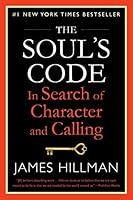
Writing biography becomes another “impossible profession,” Janet Malcolm’s characterization of psychoanalysis. Impossible, because the person whom biography purports to be about is not altogether a person, as the case an analyst works with is the invisible psyche, brought in by a person. Biographers are ghost writers, even ghost busters, trying to seize the invisible ghosts in the visibilities of a life. A biography that sticks to the facts as closely as it can finds ever clearer traces of the invisible, those symptoms, serendipities, and intrusive inventions that have led, or pursued, the life the biography recounts.
In order to talk about imagination we must use imagination and in order to talk about language we must use language. We can’t get behind them or stand apart from them, as detached observers, as we can with something in the physical world, but must understand them from ‘inside’. That, in fact, is what Barfield set out to do.


Thursday, November 12, 2020

Thoughts of the Day: Thursday 12 November 2020


What is wrong with Scientism is not that it is ‘material’ but that it is too abstract, too much in love with the hunt for the simplest formula, which today takes the form of a ‘theory of everything’. To be effective science must limit the part of reality that it deals with to what is relevant for its purposes. Because of this, as [Jacques] Barzun tells us, ‘the realm of abstraction, useful and far from unreal, is thinner and barer and poorer than the world it is drawn from’.
To abstract means to ‘extract’ or ‘remove’ something, whether it is an ‘abstract’ of a scientific paper you are interested in – that is, a brief description of it – or your idea of ‘tree’ from all the many, different ‘real’ trees you have encountered. One of the great sleights of hand that Scientism has pulled off is to convince the unthinking public that the thin, bare, poor world that it abstracts from – i.e. ‘pulls out of’ – our thick, luxuriant, rich world is the ‘really real’ world, the one that ‘objectively exists’, while the one we encounter and love and struggle with is a kind of subjective illusion, housed within our individual island consciousness. It manages this trick solely because of the practical effectiveness it provides.
My review of Lost Knowledge of the Imagination. Compare what Lachman says here with what Iain McGilchrist writes below:

As things become dulled and inauthentic, they become conceptualised rather than experienced; they are taken out of their living context, a bit like ripping the heart out of a living body. Heidegger called this process that of Gestell, or framing, a term which suggests the detachment of seeing things as if through a window (as in a famous image of Descartes's), or as re-presented in a picture, or, nowadays, framed by the TV or computer screen. Inherent in it is the notion of an arbitrarily abrupted set of potential relationships, with the context – which ultimately means the totality of Being, all that is – neatly severed at the edges of the frame. Because reality is infinitely ramified and interconnected, because its nature is to hide, and to recede from the approach of logical analysis, language is a constantly limiting, potentially misdirecting and distorting medium. Yet it is necessary to Heidegger as a philosopher. In its tendency to linearity it resists the reticulated web of Heidegger's thought, and his writing espouses images and metaphors of paths that are circuitous and indirect . . . suggesting threading one's way through woods and fields. It is interesting that Descartes's philosophy was half-baked while he slept in a Bavarian oven, the metaphor of stasis and self-enclosure revealing, philosophy and the body being one, the nature of the philosophy; whereas Heidegger was, according to Steiner, ‘an indefatigable walker in unlit places’: solvitur ambulando. Truth is process, not object.

Understanding, as distinguished from having correct information and scientific knowledge, is a complicated process which never produces unequivocal results. It is an unending activity by which, in constant change and variation, we come to terms with and reconcile ourselves to reality, that is, try to be at home in the world.
I'm writing a piece about Arendt's ideas concerning understanding, thinking, and how these concepts differ from knowledge, and how her ideas compare in some ways to those of R.G. Collingwood. (But it's not done yet; this is space exploration for the mind!)

“Many of these complex systems are governed by feedbacks, and if stressed too much they can move to radically new equilibria. The feedbacks often allow Earth’s biosphere to operate as a control, as a thermostat if you like, on interactions between the atmosphere, land, and oceans.”
We can't learn and think too much about the environment. This is Mother Nature, Mother Earth we're talking about. Father Sky can stand down for a while. P.S. My review of this book is on deck.




Wednesday, November 11, 2020

Thoughts for the Day: Wednesday 11 Nov. 2020


Has the gun (see last entry below)


Later on Harlow and various of his students [performed] a brilliant series of experiments which showed that monkeys would work hard and persistently to solve simple puzzles without any external reward; that is, just for whatever satisfactions are inherent in the puzzle-solving itself.’
What implication does the above observation have for neo-classical (or neoliberal) economic theories?
This is the real significance of spoiltness; it is nothing less than the human condition itself—another name for ‘original sin’. Kierkegaard saw that the basic problem is that all men are bored. First Adam was bored to be alone, so Eve was created; then Adam and Eve were bored, so they had Cain and Abel; then all the family were bored, so Cain killed Abel . . . Human history is seen as a flight from boredom, and from the low mental pressures associated with it. But boredom is another expression of spoiltness; it is a refusal to make any mental effort without the reward of an external stimulus. Adler’s analysis of spoiltness comes very close to the borders of a truly evolutionary psychology; but he halted there.

History in which all other branches of the humanities are comprehended presupposes a secure method of “hermeneutics,” the establishment of a science and art of interpretation. At the core of historical science as of history itself lies for him [Dilthey] the problem of understanding. . . . History becomes for Dilthey a series of objectified experiences which we can understand insofar as we can “re-live” (nacherleben, Hodges’ translation) them. Understanding, interpretation, hermeneutics are the art of deciphering signs of expression.
Does anyone else perceive shades of R.G. Collingwood in this quote, or am I seeing things again?
Compare the above with the following from Collingwood re Dilthey:
The Idea of History

R. G. Collingwood


[Dilthey] raises the question how the historian actually performs the work of coming to know the past, starting as he does simply from documents and data which do not by themselves reveal it. These data, he replies, offer him only the occasion for reliving in his own mind the spiritual activity which originally produced them. It is in virtue of his own spiritual life, and in proportion to the intrinsic richness of that life, that he can thus infuse life into the dead materials with which he finds himself confronted. Thus genuine historical knowledge is an inward experience (Erlebnis) of its own object, whereas scientific knowledge is the attempt to understand (begreifen) phenomena presented to him as outward spectacles. This conception of the historian as living in his object, or rather making his object live in him, is a great advance on anything achieved by any of Dilthey’s German contemporaries.


So am I imaging things? 


“For most of history, life has been hierarchical. A few have enjoyed the privileges that come from monopolizing violence. Everyone else has dug.” [The statement "Everyone else has dug" is a riff on Sergio Leone's The Good, the Bad & the Ugly wherein Clint Eastwood, holding the only loaded gun, tells Eli Wallach that "in this world there's two kinds of people . . . Those with loaded guns. And those who dig. You dig."]