Saturday, July 3, 2021

Thoughts for the Day: Saturday 3 July 2021


But to the president [FDR], who was “unfamiliar” with Keynes’ theoretical academic work, Keynes was an impractical mystic. Though he insisted to Frankfurter that he and Keynes had a “grand talk” together and that he “liked” the British economist “immensely,” the truth was that FDR had been annoyed by the haze of high theory in which Keynes had enshrouded their conversation.


No doubt, “violence pays,” but the trouble is that it pays indiscriminately, for “soul courses” and instruction in Swahili as well as for real re-forms. And since the tactics of violence and disruption make sense only for short-term goals, it is even more likely, as was recently the case in the United States, that the established power will yield to nonsensical and obviously damaging demands—such as admitting students without the necessary qualifications and instructing them in nonexistent subjects—if only such “reforms” can be made with comparative ease, than that violence will be effective with respect to the relatively long-term objective of structural change.


To be illuminated is to not-forget. With this parable [of the cave], Plato introduces us to the essential opening through which we must pass to enter into perennial philosophy. This doorway opens into the recognition, the re-cognition that there is truth, and that we can perceive it for ourselves.

Kissinger made a choice for stoicism, not pessimism, a willingness to endure no matter what obstacles were placed in his path, though with no ultimate ends to aim for, nothing beyond the affirmation of existence itself and the perpetuation of the United States.


Friday, July 2, 2021

Thoughts for the Day: Friday 2 July 2021


Even though they [the subtlest discursive thoughts, mental dialogues, images, memories, desires, and emotions] go undetected, they may strongly influence our minds and behavior. Unconscious mental processes, as Freud discovered centuries after Buddhist contemplatives, can actually exert deep and lasting influences in our mental lives. This practice is a path of self-knowledge, as subconscious influences are gradually identified via increasingly refined qualitative vividness.


History, largely experienced previously as a series of natural disasters, could now be seen as a movement in which everyone could potentially enlist. Intellectuals and artists rose as a class for the first time to lend a hand in the making of history, and locate the meaning of life in politics and art rather than traditional religion. The balance in European culture shifted from the religious to the secular – a momentous process that is still ongoing in many parts of the world.

For whatever the historian calls an end, the end of a period or a tradition or a whole civilization, is a new beginning for those who are alive.

From the beginning, the clear, decisive, directed thinking that we associate with rationality is linked to aggression and force.

The tricky part . . . is how to do two very difficult things: one, to reasonably decide just what are the major differences between the male and female value spheres (à la Gilligan), and then, two, to learn ways to value them more or less equally. Not to make them the same, but to value them equally.


Thursday, July 1, 2021

Thoughts for the Day: Thursday 1 July 2021


Because we’re unaccustomed to it, we don’t usually see that there’s a third possible logical term equal to yes and no which is capable of expanding our understanding in an unrecognized direction. We don’t even have a term for it, so I’ll have to use the Japanese mu. Mu means “no thing.” Like “Quality” it points outside the process of dualistic discrimination. Mu simply says, “No class; not one, not zero, not yes, not no.” It states that the context of the question is such that a yes or no answer is in error and should not be given. “Unask the question” is what it says.

More knowledge, more material goods, and more leisure did not, [Georges Sorel] wrote at the end of Illusions of Progress, reliably make people happier. The mistake of thinking that they did was inherited from enlightened eighteenth -century reformers. It arose from a soft “ethic of consumption.” Happiness, Sorel suggested in a brief passage that echoed Mill’s own bow to immemorial wisdom on the topic, depended heavily on being active and having satisfying work.


[T]he paralysis induced by thinking is twofold: it is inherent in the stop and think, the interruption of all other activities—psychologically, one may indeed define a “problem” as a “situation which for some reason appreciably holds up an organism in its effort to reach a goal”—and it also may have a dazing after-effect, when you come out of it, feeling unsure of what seemed to you beyond doubt while you were unthinkingly engaged in whatever you were doing.

In the totalitarian interpretation, all laws become . . . laws of movement. Nature and History are no longer stabilizing sources of authority for laws governing the actions of mortal men, but are themselves movements. Their laws, therefore, though one might need intelligence to perceive or understand them, have nothing to do with reason or permanence.

Of the hedonic substances found in food, only alcohol, caffeine, and sugar are addictive—and these are food additives, not foods in themselves.

The first principle” of science, as the Nobel laureate physicist Richard Feynman put it so aptly, “is that you must not fool yourself and you’re the easiest person to fool.”)


Wednesday, June 30, 2021

Thoughts for the Day: 30 June 2021


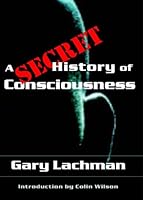
An outstanding & much-needed work: Read it!


All three of the great liberal social systems—economic, political, epistemic—are traceable to breakthroughs in the seventeenth and eighteenth centuries. All were pioneered by men who followed each other’s writings and doings and who sometimes knew each other personally. They and their works were flawed with the inequities and blind spots of their eras (one of which is reflected in the fact that all of them were men).
N.B. This book is a new one on the list--and I haven't even finished it yet. But it's a terrific book and one that really goes to the heart of much of our current economic, political, and epistemic malfunctions. Spoiler alert: three of the leading "men" behind "the great liberal systems" are John Locke, Adam Smith, and James Madison, while Socrates/Plato, Montaigne, Francis Bacon, and Charles Sanders Pierce get well-deserved shout-outs also.

When one has knowledge, one knows how to make sense of information, knows how to relate information to one’s life, and, especially, knows when information is irrelevant.

Mark Twain said, “Education is mainly what we have unlearned.” Yoda implored, “You must unlearn what you have learned.”

While cows and sheep are indeed methane producers, the methane emissions from the animals (5 percent) turns out to be a pittance compared to the rest of agriculture (10 percent), and compared to industrial methane production (35 percent) and the transportation industry (50 percent). And the climate change impact of the animals is completely dwarfed by the nitrous oxide production resulting from synthetic fertilizer sprayed on all those plant-based products throughout the Midwest grain belt.
N.B. I believe that these figures are a bit out of sync with the most recent figures in the U.S. Livestock per the EPA accounts for less than 4% of emissions and that includes a 2% contribution from cattle.

If imagination were sufficiently described . . . as a form of experience which presents the real and the unreal in a kind of undistinguished amalgam or solution from which, later, the work of intellect is to precipitate or crystallize the truth, art as imagination would have a genuine and important function in human life; a function analogous to that whereby a scientist envisages the various possible hypotheses which later experiment and observation will enable him to reject or raise to the level of a theory. The business of art, on this view, would be to construct possible worlds, some of which, later on, thought will find real or action will make real.

Anarchists were not always responsible for this unprecedented carnage across Europe prior to the First World War, even if it was inspired by anarchist techniques. The violence was aimed at different political ends. But it was inspired by the belief – fundamental to much modern terrorism – that assaults on symbols of political and social order, and the self-sacrifice of individuals, had a propaganda value that far exceeded any immediate political ends.

In this ‘monstrous tragi-comic scene’, as Edmund Burke warned, ‘the most opposite passions necessarily succeed, and sometimes mix with each other in the mind; alternate contempt and indignation; alternate laughter and tears; alternate scorn and horror.’

Taoism concerns itself with unconventional knowledge, with the understanding of life directly, instead of in the abstract, linear terms of representational thinking.


Tuesday, June 29, 2021

Thoughts for the Day: Tuesday 29 June 2021


Absolute certainty, utter conviction—these, then, are signs of the demonic.
. . . .
We begin to see how power corrupts as the guiding whisper becomes a demonic voice obliterating all others. The seed comes with sure and uncanny knowledge. But while a god is omniscient, a human becomes a know-it-all, and so Hitler had no use for exchange with others. There was nothing they could teach him.
. . . .
To show this omniscience he [Hitler] memorized masses of facts—locations of regiments and reserves, displacement and armature of ships, kinds of vehicles—all of which he used to overpower his questioners and embarrass his commanders. This information “proved” his transcendence and disguised his lack of thought and reflection and his inability to hold a conversation.The demonic does not engage; rather, it smothers with details and jargon any possibility of depth.

Beyond underlining the critical importance of Eros for the future of civilization, this metaphor (along with the marriage of the Virgin and the Dynamo in the previous chapter) contains an implicit politics. Being a loving spouse implies caring, respect, mutuality, reciprocity, and interdependence.

As a narrative, all history has to do with “some major achievement or failure of men living and working together, in societies or nations or any other lastingly organized groups”

Looking at the shape of international politics in the future, it’s clear—bipolarity is inevitable. A cold war is a choice.

There is a tragic rule of twenty-first-century life, a rule of double amnesia: the right tends to act as though the nineteenth century never happened, while the left tends to act as though the twentieth century never took place.


Monday, June 28, 2021

Thoughts for the Day: Monday 28 June 2021


Attention, however, intrinsically is a way in which, not a thing: it is intrinsically a relationship, not a brute fact. It is a ‘howness’, a something between, an aspect of consciousness itself, not a ‘whatness’, a thing in itself, an object of consciousness. It brings into being a world and, with it, depending on its nature, a set of values.


“Studies have shown that 90% of error in thinking is due to error in perception. If you can change your perception, you can change your emotion and this can lead to new ideas. Logic will never change emotion or perception.”

--Edward DeBono


“People prefer their sources of information to be highly correlated. Then all the messages you get are consistent with each other and you’re comfortable."

— Daniel Kahneman

One way to spot a poor thinker is to see how many of their decisions boomerang back to them. If poor thinkers make poor decisions it stands to reason those decisions will eventually create more problems. More problems consume more time, leaving them even less time to think about new problems.

The time used to correct poor thinking comes from the time that could be used for good thinking.

Good thinkers understand a simple truth: you can’t make good decisions without good thinking and good thinking requires time.

Good thinking is expensive but poor thinking costs a fortune.

--Farnum Street blog


The relevant sense of reasonable, and the phrase reasonable doubt, appeared in the sixteenth-century Scholastic, Suarez, while the reasonable man has an ancestor in the steady man of medieval canon law: If a man and woman are surprised by her father and compelled to marry, the man’s consent is null and the marriage void if the fear inflicted on him is such as would coerce a “steady man.”

History is the knowledge of an infinite whole whose parts, repeating the plan of the whole in their structure, are only known by reference to their context. But since this context is always incomplete, we can never know a single part as it actually is.


Most Westerners who travel in India find rickshaws discomforting. Although I have used them a lot over the years, in part because I sometimes feel safer to have company in strange parts of Indian cities, I have always found the experience morally jarring. Westerners tend to be big and heavy compared to Indians, and rickshaw drivers often have to use almost all their strength to move their machines with one of us on board. It seems reprehensible to sit in relative comfort on the back of a rickshaw while a nearly destitute person pedals one around for a few rupees. On the other hand, those rupees are vitally important for the driver, and it seems just as reprehensible to walk to spare oneself guilt.
N.B. This captures my feeling as well. We rarely used human-powered rickshaws, but when we did, I felt both uncomfortable but gratified to have given this man [sic] something (generous] towards his daily bread.

[Alfred] Adler must be regarded as the fatherfigure of the new generation in psychology: [Victor] Frankl, [Abraham] Maslow, [Medard] Boss. What he called ‘the affirmative unfolding of the organism’ was, in fact, a recognition of the basic evolutionary drive of human beings, that man is an evolutionary animal, and that neurosis is the frustration of this evolutionary drive. In dealing with neurosis, Adler was less concerned to trace its roots in the patient’s childhood than to understand its meaning, what it was driving towards.

Heidegger, like Hemingway, claims that man only knows himself in the face of death or crisis (‘only a bullfighter lives his life all the way up’)—we may recollect, for example, Anna Karenina’s recognition, as she flings herself under a train, that death is the last thing she wants. This is the basis of their negative judgement on human life: that even the most intelligent of us are blinded by triviality until crisis shocks us awake (and by then it is usually too late).

The Chilean people had made a mistake in electing Allende—actually only a plurality of Chileans had been mistaken. Given what he knew, what he expected, and what he feared, Henry Kissinger was not going to let the mere fact of a free election stand in his way of dealing with a potential threat to the United States. “I don’t see why we have to stand by and watch a country go Communist because of the irresponsibility of its own people.” The statement looks a lot different if one has the rise of Adolf Hitler in mind.


Sunday, June 27, 2021

Thoughts for the Day: Sunday 27 June 2021


No decision you make will ever make it possible to avoid death. Which, in a strange way, means that the whole idea of risk is something of an illusion. If avoiding death was the goal, then we’ve already lost the game. But what if the point of being alive was instead to experience the entire bounty of human emotion, failure, triumphs, love and loss?

What is a highly adaptive society? It is a nation-state that has acquired and developed a stable set of five key institutions: a representative form of government, a market-oriented economy, a growing scientific and technical enterprise, a universal system of education, and a system of religious practice which becomes progressively more disentangled from government and progressively more tolerant of diverse beliefs.
How are we doing? Oh, dear!

All of history testifies that in complex societies there must be a stable and experienced ruling class of some sort, for the alternative is chaos and anarchy, whether due to a lack of governance or to a takeover of society by ideological fanatics.

If our attention is like a hand, it can only grasp something in one way at a time.

He [Colin Wilson] may, as some critics have said, have never gotten over Shaw—listening to a radio broadcast of Man and Superman was perhaps the single most decisive event of the young Wilson’s life; and his ‘Victorian’ belief in progress and heroism may seem antiquated amidst our own cool scepticism. But, as C. S. Lewis pointed out, it’s not enough that an idea be fashionable, it should also strive for truth.

Ancient thought could not even conceive of the individual’s soul life apart from the soul of the world.

As T.S. Eliot famously wrote, “Human kind cannot bear very much reality.”