Showing posts with label yoga. Show all posts

Wednesday, December 2, 2020

Thoughts for the Day: Wednesday 2 December 2020


Sir Francis Bacon


Read not to contradict and confute; nor to believe and take for granted; nor to find talk and discourse; but to weigh and consider. Some books are to be tasted, others to be swallowed, and some few to be chewed and digested; that is, some books are to be read only in parts; others to be read, but not curiously; and some few to be read wholly, and with diligence and attention. Some books also may be read by deputy, and extracts made of them by others; but that would be only in the less important arguments, and the meaner sort of books, else distilled books are like common distilled waters, flashy things. Reading maketh a full man; conference a ready man; and writing an exact man. And therefore, if a man write little, he had need have a great memory; if he confer little, he had need have a present wit: and if he read little, he had need have much cunning, to seem to know that he doth not.

--Francis Bacon (in 1597) 


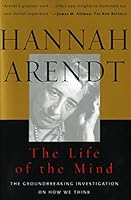
HOW HAD “LUCKY AMERICA” managed to avoid the French disaster? To begin with, it was fortunate in the enemy it faced—not the absolute king who dominated France but a constitutional monarch whose powers were already reined in by legal institutions and tradition. The American colonists had grown up with a legacy of rule by law, whereas the French had known only dictatorship, and thinking in each case reflected past political experience.

The true opposite of factual, as distinguished from rational, truth is not error or illusion but the deliberate lie.

In the Indian yogic tradition, jñ-dna yoga is the yoga of the intellect, the path of philosophy whereby one awakens the embryo of enlightenment and arrives finally at the intellectual intuition of the “hypothesis beyond all hypotheses,” as Plato called it. Plato and the Upanisadic authors analyzed knowledge into similar levels.

America began with a great paradox: the same men who came up with the radical idea of constructing a nation on the principle of equality also owned slaves, thought Indians were savages, and considered women inferior.


Friday, June 19, 2020

Breath: The New Science of a Lost Art by James Nestor


In order to survive, we all need to eat, sleep, exercise, breathe, and maintain friendly relations. Books about exercise abound, and sleep itself has become a popular topic for authors with advice to give. And eating--oh, my goodness!--what a mess! Author after author after author tells us what we should and shouldn't eat, no two authors seeming ever to agree. And will they ever agree? Between human ignorance and fallibility and the profit motive, the idea of any consensus about the human diet seems a distant Shangri-La that exists in legend but that eludes us in practice. And, given the variety of human diets from the beginning of our species, this may not prove so surprising. Humans have existed on a variety of diets to fit the climate in which they live. About diet, about the only definitive conclusion that we can reach about diet is that our current Standard American Diet (SAD) is crap and it's killing us slowly.

At least we don't have to go to the store (yet) and buy whatever air we choose to breathe, thus avoiding the incentives that food producers have to persuade us by deception that their products are healthy and wholesome. And while the quality of the air that we breathe also affects us in subtle, long-term ways, let's set that aside for now as the topic of many other worthy books. Author James Nestor has chosen to focus on just this one topic in his book: how we breathe. Nestor examines how we breathe and how it makes a difference in our health and quality of life. And what makes reading this book an entertaining as well as an educational experience is the fact that humans have been experimenting and cultivating breathing techniques for thousands of years and have gained immense practical knowledge that we are now confirming and better understanding through scientific research. For instance, pranayama, the yoga of breathing, goes back thousands of years, and so do Taoist breathing techniques from China. Different as the cuisines of China and India are, for instance, when one looks at their interest in the breath and breathing techniques, we see distinct similarities (some no doubt indigenous to each culture and shared through cross-cultural exchange). But we in the West, especially in the modern, industrial West, have forgotten much of the lore about breath that developed on this side of the world and--at least until recently--we've ignored much of what we could have learned from traditional Chinese and Indian culture if we'd have had the good sense to do so (and a few did have such good sense, such as the explorer Alexandra David-Neel and Harvard physician Dr. Herbert Benson, to name just two who pop to mind).

But although we in the contemporary world have been dismissive and ignorant about the proper mechanics and potential benefits of breathing, we can make up for lost time quickly with this book. Nestor has combined in-depth scientific research and first-hand reporting about those teaching and exploring breath, and he conjoins his reporting with recounting his experiences about practicing a wide variety of breathing techniques. In an act of journalistic heroism perhaps second only to Morgan Spurlock's one month of eating only at McDonald's (for his documentary Supersize Me!), Nestor and a Sweedish student of breath (or "pulmonaut," as Nestor dubs those who experiment with breath), Anders Olsson, had their nostrils sealed by a physician for ten days, allowing them to breathe only through their mouths. Like Spurlock's experience, the toll on their health and well-being was dramatic and frightening. But also, like Spurlock, the return to normalcy (nose-breathing in Nestor's and Olsson's case) allowed a quick and marked return to health and well-being. All by just breathing through their noses!

Nestor reports on a variety of breathing techniques, such as those of Wim Hof and Buteyko, all of which provide different benefits.  Nestor also attends in detail to the science and to me, the most interesting science in the book (and all of it is interesting), is the change in human anatomy in the last three hundred years--since the advent of industrialism and significant changes in the human diet. During this time, it seems primarily because of softer foods (processing), the size and position of our jaws, facial bones, and nasal passages have shrunk. We didn't use it--our chewing capacity--and we lost bone and breathing capacity because of it. Humans around the globe almost all had straight teeth and enough room in their jaw for all their teeth (wisdom teeth included!). We don't. Also, the loss of bone density in our face, volume in our nasal cavity, and narrowing in our throats have led to snoring and sleep apnea that did occur much less in the past. Sometimes Mother Nature evolves very slowly, but sometimes she seems positively Lamarckian in her speed to drop that which we don't use the way originally intended (metaphorically speaking, of course).

This book is chock-full of information, experiences, and advice, and of value to any potential reader. I highly recommend it. But until you read it, let me leave you with Nestor's list of do's and don'ts about breathing. So simple and yet so important!


  • Shut Your Mouth!
  • Breathe Through Your Nose!
  • Exhale!
  • Chew!
  • Breathe More, On Occasion!
  • Hold Your Breath!

[N.B. I added the exclamation marks for emphasis and to convey a sense of the imperative of following these simple guidelines.]

By the way, the book includes valuable instructions about a wide variety of breathing techniques that Nestor has sampled and recommends as well as thorough notes and links to sites that provide video demonstrations and instructions. 

Sunday, June 10, 2012

William J. Broad: The Science of Yoga

The Science of Yoga provides a thoughtful and measured consideration of hatha yoga. Broad, a science writer for the NYT & yoga practitioner since the 1970's works to separate the factual from the fanciful. Among his points:
  • yoga isn't that effective as an aerobic workout (yoga should, for the most part, slow metabolism over all)
  • we don't get "more oxygen" from pranayama or by doing more vinyasas. We're pretty much saturated with oxygen all of the time anyway. No, it's the level of carbon dioxide in our system that can effect our physiology
  • yoga can help the old (or young) sex life (enough said!)
  •  yoga does help with mood & overall well-being
  • you can suffer serious injury doing yoga
This is just a brief overview, but if you do yoga or are thinking about it, it's a worthwhile read to let you know what may or may not happen to your body as you engage this practice. 

Saturday, January 7, 2012

It Yoga Dangerous?

This blog post by Martha Peterson based on a NYT article she links to raises some interesting points for me. I've had some back & hip issues for a while, and yoga did seem to aggravate them, although I can't blame the problems on yoga. I don't know what brought them on. I've gotten the most relief and improvement from somatic exercises, like the ones that Peterson teaches, which are based on Thomas Hanna and Feldenkrais. These are very gentle movements and not done to a beat. I'm continuing and expanding my experiments in this area, and I will report more at a later point.

I must say that sometimes vinyasa yoga class seems like fancy calisthenics to me. I've now slowed down on my own--so what if I miss a chataranga? I also try to feel what I'm doing. And, yes, when upside down or twisted this way or that, I do see others around me who are twisted into shapes that I then aspire to, almost always unsuccessfully. So, yes, I plead guilty to competitiveness, and I will try to keep in mind that I should not try to compete. Most teachers are good at stating stating that we should "listen to our own body", etc., but it's a hard lesson for most. A number of participants and yoga teachers (at least at our studio) are intense athletes as well.

P.S. I have now read the complete original article. It does provide food for thought, but as 1HP pointed out, almost any physical endeavor, if not performed properly, or if performed indiscriminately, can cause problems. She also noted our tendency as Americans to push to extremes. Points well taken. Again, my new emphasis is on mindfulness of movement.

Tuesday, February 1, 2011

Frank Bruni on Jack LaLanne: A Dour Take

Both Iowa Guru & I thought that this was a dour take on Jack LaLanne's legacy. For me, living in the body brings great delight (for the most part). Exercise is second only to sex for physical delight (although a great meal or fine wine has many sensual delights). In any event, to think that exercise is something that we must do out of a sense of guilt or vanity is a truly sad and unnecessary take on the experience. While sometimes I moan and groan about going to yoga or going to lift, when I've done it, I inevitably feel better about everything. And I love games: basketball was a form of meditation and recreation for me for decades, and now I meet some of that need for the delight of competition by playing volleyball. I do agree that too many forms of exercise appear to be a matter of drudgery. How many runners have I seen that look genuinely pained? And treadmills--well, they do remind me a bit of hamsters. I now prefer a bit of stationary bike with faux countryside to give the ride some interest. Also, thanks to the likes of Art De Vany and Mark Sisson, I keep workouts relatively short & intense. For play on the other hand, I can take as much time as I want (although my body now limits me). Also, Frank Forencich of Exuberant Animal and Erwan Le Corre of MovNat show us how we can use and enjoy our bodies in the most primal and delightful ways. I wish I was young and agile enough to learn parkour or gymnastics like Damien Walters, but the yoga has been a true delight--and think what one might do there. So, Mr. Bruni, get out of your chair and smell the sweat. I like to read and watch more than the next person, but sometimes you got to go shake it, and you'll love it.

Friday, November 12, 2010

Ganga White: Yoga Beyond Belief

This is another book that I finished recently, and very different from the LeCarre. White is a long-time yoga practitioner (check out some of the 60's and 70's hair he used to have!). This book was really quite an excellent general introduction to the practice of the Hatha Yoga tradition. White addresses all manner of issues in a very accessible prose. It covers a wide variety of topics that any practitioner, new or experienced, will likely face. He also goes into some of he history of the discipline. If you're interested in learning more about yoga, this is a good place to begin.

Tuesday, April 14, 2009

2007: Catching Up!

Since I haven't entered in a while, and to put something up that at least I enjoyed reading (a taste of re-reading the originals!), I offer the following "Best of 2007" reading list for your delectation:

Best Books 2007

The following are favorites from 2007, some read, some listened to on CDs or tapes. I cite them pretty much in the order that I completed them:

1. John Robbins, Healthy @ 100. A good way to start a year. This Baskin-Robbins heir saw all that ice cream killing off his kin young. He writes of those cultures that have extraordinarily long-lived and healthy old folks. Fun & enlightening reading.
2. Ken Wilber, Integral Spirituality: A Startling New Role for Religion in the Modern & Postmodern World. This isn’t the book to start Ken Wilber with, but if you want the most comprehensive perspectives on religion, science, and “everything”, this is your guy. Most amazingly, he’s accessible, having graduated from high school in Lincoln, NE, and done his ABD in biochemistry at Nebraska. If you’re interested, his A Theory of Everything is the place to start.
3. Thomas Cahill, The Mysterious Middle Ages: The Rise of Feminism, Science, and Art from the Cults of Catholic Europe. I listened to this one and found it fascinating. The Middle Ages were a wild and wooly time, but he makes excellent sense of it. You might like his other books in this series, including How the Irish Saved Civilization (and they did!).
4. William Irwin Thompson. Coming Into Being: Artifacts and Texts in the Evolution of Consciousness. This former MIT prof left the academy to found the Lindisfarne Association of scholars and thinkers who delve into an understanding of the world that is a true counter-culture to the dominant paradigm. Okay, this guy is far out and fun. He looks at everything from prokaryotes to Finnegan’s Wake to understand the world past and future. His insights come by lightening flashes. So good (and rich) that I’m currently re-reading it.
5. Georg Feuerstein, The Lost Teachings of Yoga. I listened to this one. Having gotten into Hatha Yoga over the last year, I decided to consult this guy, who is certainly one of the foremost experts in the West on the topic. Very solid and informative.
6. Jacob Needleman, Why Can’t We Be Good? Needleman is a favorite of mine, a philosopher who writes for the general public and who values the esoteric and other traditions. The title tells a lot. Needleman doesn’t give pat answers, but he explores and invites the reader to explore with him. And, most importantly, he asks important questions.
7. Stephen Cope, Yoga and Quest for the True Self. I picked this up off the library shelf in my “learn more about yoga” quest. It turned out to be a gem. Cope tells the story of his going to a U.S. yoga center on a retreat from his psychotherapy practice. Thus, he tells a personal story, his own and those of others that he knows, as well as providing insight into yoga, including the fallibilities of yogis. Very entertaining and enlightening.
8. Stephen Cope, The Wisdom of Yoga. More of the same. Insights into yoga and the yoga tradition as told through the lives of Cope and his friends. Recommended.
9. T. Colin Campbell, The China Study. This fits with Robbins (no. 1), who cited it often. In short, China did a study on cancer rates and diet back in the seventies. Guess what? The peasants on a primarily vegetarian diet had the lowest cancer rates! Campbell is a Cornell prof who got involved and had many preconceptions turned around. Very informative.
10. Michael Pollan, The Omnivore’s Dilemna. Pollan writes excellent prose and tells informative stories. His account of Iowa and corn (and beef) are really eye opening. As food becomes more and more of an issue, his writings will serve as an important and informative guide. I hope to hear him speak here in Iowa City tomorrow discussing his new book, An Eater’s Manifesto.
11. Robert Richardson, William James: In the Maelstrom of Modernism. James is a great subject, Richardson a great biographer. I can’t say enough good about this study.
12. Jacques Barzun, A Stroll with William James. This is a re-read prompted by Richardson’s book. If it’s possible, it’s even better than Richardson’s book because it’s Barzun, a master stylist and historian and critic and essayist, and—as of last October—centenarian! A delightful read. A person ought to get a semester of college credit just for reading such informative, delightful, and insightful book. (Professionally, Barzun was for decades a history prof at Columbia.)
13. John Patrick Diggins, The Promise of Pragmatism: Modernism & the Crisis of Knowledge & Authority. Heavy, but Diggins is a great American historian, especially of ideas, and pragmatism and its limitations are crucial to understanding twentieth century American thought. Diggins always proves a worthwhile and provocative read.
14. Nassim Nicholas Taleb, Fooled by Randomness. A very fine writer is born! A native of Lebanon with a French education and American business experience, this guy looks at reality through the eyes of a skeptic who understands probability. Very good, but see the next entry.
15. Nassim Nicholas Tabeb, The Black Swan. Even better than Fooled! I think that his editors and publishers gave him more free rein with this book, so that his wit, learning, and insight shine through even more brightly. Outstanding!
16. John LeCarre. Absolute Friends. A listening project. Not the best of LeCarre, but still, a master.
17. James Surowiski, The Wisdom of Crowds. Not father, but crowds (can) know best. A fascinating consideration of how large and diverse groups can prove very effective in gauging knowledge, and how some groups stink at it. Very good popular social science, a field that provides a growing number of very good books (see Taleb, Gladwell, Goleman, et al.)
18. John Lukacs, George Kennan: A Study in Character. Like Barzun on James, having Lukacs write on his friend Kennan (who died not long ago after having reached the century mark) provides a special treat. Kennan was a great American: diplomat, historian, sage. Lukacs is an extraordinary historian. Like Barzun and Tocqueville, those foreign-born observers and historians of American culture and history often have the keenest insight. Super.
19. Arthur Conan Doyle, The Hound of the Baskervilles. A listening treat. Need more be said?
20. Alan Furst, The Polish Officer. I’m a Furst fan, who writes novels of intrigue set in pre-WWII Europe and the early stages of war (an especially intriguing time for me). Furst’s prose is sparse and unsparing.
21. Ian McEwan, Saturday. McEwan enjoys current notoriety for the film version of his novel Atonement (the best film I’ve seen in a while, I must say). I tried Saturday on its reputation, and I must say that I found it excellent and intriguing. At least based on this book, I’d say that this author enjoys his reputation. (Anne, however, tried something else and really didn’t like it, so take this author with a grain of salt. Still, this book, I heartily recommend.)
22. Alexander McCall Smith, The No. 1 Ladies Detective Agency. Smith is another author whom I tried on reputation, and again I was not disappointed. Listening to this reading (especially good by a South African native) was a delight. Smith’s main character is a delightful character, charming and fallible. I’ll listen to more of them, for sure.
23. Hadot, Pierre, Philosophy as a Way of Life. A re-read, perhaps it’s on a prior list, but it’s worth it. In sum, those Greeks and Romans didn’t do philosophy as mind games, but as serious thinking about life. This tradition withered as the Church took over morals and philosophy became more speculative. However, Hadot brings it all back to light, and it’s beautiful.

24. Kerry Paterson, Joseph Grenny, David Maxfield, Ron McMillan, and Al Switzer, Influencer: The Power to Change Anything. This book proved fun and interesting, full of tales of persons leveraging significant change. It’s a book Abba will have to read because it deals with public health issues (how to increase condom use in Thailand) and how to keep convict out of the joint (an amazingly effective program in San Francisco). A thought-provoking and challenging book.

25. Waitzkin, Josh, The Art of Learning: A Journey in the Pursuit of Excellence. Okay, first, if you haven’t seen the movie Searching for Bobby Fisher, go rent it and watch it. It’s delightful. But what does it have to do with this book? It’s about the author of this book, who was a chess prodigy. He tells his story, how the movie affected him, and how he got into “push hands” Tai Chi. Along the way, this Columbia graduate (okay, I’m very partial to them) reflects on learning and overcoming obstacles, such as beating Russians at chess and Taiwanese at push-hands competitions in Taiwan! Entertaining and enlightening.

26. Ken Wilber, Integral Vision. Another gateway into Wilber, it’s his most recent, brief, but effective in outlining how you can take his intellectual edifice and use it to make yourself and the world better. Lots of pics and diagrams.

27. Malcolm Gladwell, Blink. The author of The Tipping Point does it again! Fascinating stuff—academic research mixed with everyday examples on how our brains works faster than our thoughts. We have, in essence, two brains, one fast and one more considered. Both have great value, and both have weaknesses. Gladwell looks at it all in a very intriguing listening experience.

28. Goleman, Daniel, Social Intelligence. The guy who “invented” emotional intelligence moves into looking at social relationships, effectively moving beyond the mere personal effective of emotions to the wider context of social relationships. Again, academic research morphed into very enjoyable listening (or reading). Fascinating.

29. Robert C. Solomon, Spirituality for the Skeptic: The Thoughtful Love of Life. I re-read this book after I learned that Solomon had died unexpectedly in early 2007, a great loss. Solomon is a best known for his work on emotions, Nietzsche, existentialism, and business ethics, but he this book represents some of his most personal insights. A great loss. I can especially recommend his Teaching Company lectures, and you can find his brief appearance in Waking Life (thank you, Anne) on-line in memorials, and this gives a sense of him.

Okay, I cut down my list! Sorry! Many books started and not finished, so I didn’t count any of them, so look for more in 2008! I’m always interested in your recommendations and comments.
Happy reading and listening!

Steve