Thursday, April 23, 2009
The Mark & the Double Vision
A quick note that I’m also currently reading Maurice Nicoll’s The Mark (1954), his posthumously published follow-up the The New Man. How did I venture into this? Because, in commemoration of the Holy Week & Easter, I read Northrup Frye’s The Double Vision, a wonderful book that I’ve read probably a couple of times before. In any event, Nicoll, without Frye’s literary background, makes much the same argument: we cannot read “literally”, especially the Scriptures. Well, this is just a teaser, so more on both works and the topic in general in a later post.,


Lukacs: Reactionary, Conservative, Romantic?
I think that I appreciate most those thinkers that one cannot easily classify. Words like “conservative” or “liberal” have really lost their currency, and subtlety tends to go out the window. Many want to pigeon hole, but what good are pigeon holes to any but pigeons?
Lukacs serves as an example of my concern. I noted yesterday in linking in Historical Consciousness that a recent edition was published by a “conservative” book club (The Library of Conservative Thought) with a foreword by Russell Kirk added in for good measure. Now I ask you, what does Lukacs have in common with say, George W. Bush or Newt Gingerich? (Russell Kirk, perhaps, yes; but then what contemporary “conservative”—at least politician—knows or cares what Kirk wrote and thought? Although I’ve only a passing acquaintance with Kirk, I get the impression that he is, what I would call, a real “conservative”; you know, thinks highly of Edmund Burke, and all of that.) In any event, I find Lukac’s thinking difficult to pin down, to pigeon hole. He bobs and weaves, and for the most part, addresses concerns and issues that popular conservatives don’t even begin to address. Thus, after completing his short chapter on his thoughts about history in general, and a short chapter by way of an apologia of sorts for this autobiography (of sorts), he begins talking about this adopted country, the United States. (He’s a native of Hungary.) One has not doubt of his love and appreciation for his adopted land, but this does not allow him to gloss over its contradictions and absurdities.
Having discussed this aspect of Lukacs, let me now note that the next to last chapter is about his three wives. The first two lost to death, and the third one with him currently. One comes away from this chapter with an appreciation of the art of recollection, and the sense that Lukacs must be not only charming (although in writing he may come off to some as a curmudgeon), but perhaps a bit of a romantic. The chapter stands out as an interesting reflection on marriage and the relationships we have, something not done much outside perhaps novels or tabloid sensationalism. In any event, this glimpse into his domestic life, his reflection about it, adds something to this intellectual autobiography that helps round out the man and this thought.
Lukacs serves as an example of my concern. I noted yesterday in linking in Historical Consciousness that a recent edition was published by a “conservative” book club (The Library of Conservative Thought) with a foreword by Russell Kirk added in for good measure. Now I ask you, what does Lukacs have in common with say, George W. Bush or Newt Gingerich? (Russell Kirk, perhaps, yes; but then what contemporary “conservative”—at least politician—knows or cares what Kirk wrote and thought? Although I’ve only a passing acquaintance with Kirk, I get the impression that he is, what I would call, a real “conservative”; you know, thinks highly of Edmund Burke, and all of that.) In any event, I find Lukac’s thinking difficult to pin down, to pigeon hole. He bobs and weaves, and for the most part, addresses concerns and issues that popular conservatives don’t even begin to address. Thus, after completing his short chapter on his thoughts about history in general, and a short chapter by way of an apologia of sorts for this autobiography (of sorts), he begins talking about this adopted country, the United States. (He’s a native of Hungary.) One has not doubt of his love and appreciation for his adopted land, but this does not allow him to gloss over its contradictions and absurdities.
Having discussed this aspect of Lukacs, let me now note that the next to last chapter is about his three wives. The first two lost to death, and the third one with him currently. One comes away from this chapter with an appreciation of the art of recollection, and the sense that Lukacs must be not only charming (although in writing he may come off to some as a curmudgeon), but perhaps a bit of a romantic. The chapter stands out as an interesting reflection on marriage and the relationships we have, something not done much outside perhaps novels or tabloid sensationalism. In any event, this glimpse into his domestic life, his reflection about it, adds something to this intellectual autobiography that helps round out the man and this thought.
Wednesday, April 22, 2009
John Lukacs, Historian Extraordinaire
 |
| John Lukacs: 1924-2019 |
I learned of this book because I’d finally started his book Historical Consciousness, or the Remembered Past (1968/1985), Lukacs's major book about history, historians, and historical thinking. I’d put off reading this vital text because Lukacs can prove quite daunting to read, at least when he’s reflecting as opposed to narrating, as, for instance, he does in Five Days in London or The Duel. In any event, I’ve set aside the older book now to dive into the newer, my attention span is sufficient (for the most part), but time is so limited. Like a dog with too many scents, I’m off. However, by addressing you, dear reader, I hope to preserve my trail so that I may find my way back.
Note: I'm linking to Amazon.com for the information on the book, not as an endorsement of Amazon. Nor, by saying this, am I denigrating Amazon. I prefer, whenever possible, to use local book stores (such as Prairie Lights, The Seminary Coop, etc.), but Amazon can prove useful. Best of all, they keep a wealth of information about titles, allow you to keep a list of books you're interested in, etc. So I link for the reader's convenience.
Rev'd 8.27.2019. Orignal 4.23.09
Tuesday, April 14, 2009
2007: Catching Up!
Since I haven't entered in a while, and to put something up that at least I enjoyed reading (a taste of re-reading the originals!), I offer the following "Best of 2007" reading list for your delectation:
Best Books 2007
The following are favorites from 2007, some read, some listened to on CDs or tapes. I cite them pretty much in the order that I completed them:
1. John Robbins, Healthy @ 100. A good way to start a year. This Baskin-Robbins heir saw all that ice cream killing off his kin young. He writes of those cultures that have extraordinarily long-lived and healthy old folks. Fun & enlightening reading.
2. Ken Wilber, Integral Spirituality: A Startling New Role for Religion in the Modern & Postmodern World. This isn’t the book to start Ken Wilber with, but if you want the most comprehensive perspectives on religion, science, and “everything”, this is your guy. Most amazingly, he’s accessible, having graduated from high school in Lincoln, NE, and done his ABD in biochemistry at Nebraska. If you’re interested, his A Theory of Everything is the place to start.
3. Thomas Cahill, The Mysterious Middle Ages: The Rise of Feminism, Science, and Art from the Cults of Catholic Europe. I listened to this one and found it fascinating. The Middle Ages were a wild and wooly time, but he makes excellent sense of it. You might like his other books in this series, including How the Irish Saved Civilization (and they did!).
4. William Irwin Thompson. Coming Into Being: Artifacts and Texts in the Evolution of Consciousness. This former MIT prof left the academy to found the Lindisfarne Association of scholars and thinkers who delve into an understanding of the world that is a true counter-culture to the dominant paradigm. Okay, this guy is far out and fun. He looks at everything from prokaryotes to Finnegan’s Wake to understand the world past and future. His insights come by lightening flashes. So good (and rich) that I’m currently re-reading it.
5. Georg Feuerstein, The Lost Teachings of Yoga. I listened to this one. Having gotten into Hatha Yoga over the last year, I decided to consult this guy, who is certainly one of the foremost experts in the West on the topic. Very solid and informative.
6. Jacob Needleman, Why Can’t We Be Good? Needleman is a favorite of mine, a philosopher who writes for the general public and who values the esoteric and other traditions. The title tells a lot. Needleman doesn’t give pat answers, but he explores and invites the reader to explore with him. And, most importantly, he asks important questions.
7. Stephen Cope, Yoga and Quest for the True Self. I picked this up off the library shelf in my “learn more about yoga” quest. It turned out to be a gem. Cope tells the story of his going to a U.S. yoga center on a retreat from his psychotherapy practice. Thus, he tells a personal story, his own and those of others that he knows, as well as providing insight into yoga, including the fallibilities of yogis. Very entertaining and enlightening.
8. Stephen Cope, The Wisdom of Yoga. More of the same. Insights into yoga and the yoga tradition as told through the lives of Cope and his friends. Recommended.
9. T. Colin Campbell, The China Study. This fits with Robbins (no. 1), who cited it often. In short, China did a study on cancer rates and diet back in the seventies. Guess what? The peasants on a primarily vegetarian diet had the lowest cancer rates! Campbell is a Cornell prof who got involved and had many preconceptions turned around. Very informative.
10. Michael Pollan, The Omnivore’s Dilemna. Pollan writes excellent prose and tells informative stories. His account of Iowa and corn (and beef) are really eye opening. As food becomes more and more of an issue, his writings will serve as an important and informative guide. I hope to hear him speak here in Iowa City tomorrow discussing his new book, An Eater’s Manifesto.
11. Robert Richardson, William James: In the Maelstrom of Modernism. James is a great subject, Richardson a great biographer. I can’t say enough good about this study.
12. Jacques Barzun, A Stroll with William James. This is a re-read prompted by Richardson’s book. If it’s possible, it’s even better than Richardson’s book because it’s Barzun, a master stylist and historian and critic and essayist, and—as of last October—centenarian! A delightful read. A person ought to get a semester of college credit just for reading such informative, delightful, and insightful book. (Professionally, Barzun was for decades a history prof at Columbia.)
13. John Patrick Diggins, The Promise of Pragmatism: Modernism & the Crisis of Knowledge & Authority. Heavy, but Diggins is a great American historian, especially of ideas, and pragmatism and its limitations are crucial to understanding twentieth century American thought. Diggins always proves a worthwhile and provocative read.
14. Nassim Nicholas Taleb, Fooled by Randomness. A very fine writer is born! A native of Lebanon with a French education and American business experience, this guy looks at reality through the eyes of a skeptic who understands probability. Very good, but see the next entry.
15. Nassim Nicholas Tabeb, The Black Swan. Even better than Fooled! I think that his editors and publishers gave him more free rein with this book, so that his wit, learning, and insight shine through even more brightly. Outstanding!
16. John LeCarre. Absolute Friends. A listening project. Not the best of LeCarre, but still, a master.
17. James Surowiski, The Wisdom of Crowds. Not father, but crowds (can) know best. A fascinating consideration of how large and diverse groups can prove very effective in gauging knowledge, and how some groups stink at it. Very good popular social science, a field that provides a growing number of very good books (see Taleb, Gladwell, Goleman, et al.)
18. John Lukacs, George Kennan: A Study in Character. Like Barzun on James, having Lukacs write on his friend Kennan (who died not long ago after having reached the century mark) provides a special treat. Kennan was a great American: diplomat, historian, sage. Lukacs is an extraordinary historian. Like Barzun and Tocqueville, those foreign-born observers and historians of American culture and history often have the keenest insight. Super.
19. Arthur Conan Doyle, The Hound of the Baskervilles. A listening treat. Need more be said?
20. Alan Furst, The Polish Officer. I’m a Furst fan, who writes novels of intrigue set in pre-WWII Europe and the early stages of war (an especially intriguing time for me). Furst’s prose is sparse and unsparing.
21. Ian McEwan, Saturday. McEwan enjoys current notoriety for the film version of his novel Atonement (the best film I’ve seen in a while, I must say). I tried Saturday on its reputation, and I must say that I found it excellent and intriguing. At least based on this book, I’d say that this author enjoys his reputation. (Anne, however, tried something else and really didn’t like it, so take this author with a grain of salt. Still, this book, I heartily recommend.)
22. Alexander McCall Smith, The No. 1 Ladies Detective Agency. Smith is another author whom I tried on reputation, and again I was not disappointed. Listening to this reading (especially good by a South African native) was a delight. Smith’s main character is a delightful character, charming and fallible. I’ll listen to more of them, for sure.
23. Hadot, Pierre, Philosophy as a Way of Life. A re-read, perhaps it’s on a prior list, but it’s worth it. In sum, those Greeks and Romans didn’t do philosophy as mind games, but as serious thinking about life. This tradition withered as the Church took over morals and philosophy became more speculative. However, Hadot brings it all back to light, and it’s beautiful.
24. Kerry Paterson, Joseph Grenny, David Maxfield, Ron McMillan, and Al Switzer, Influencer: The Power to Change Anything. This book proved fun and interesting, full of tales of persons leveraging significant change. It’s a book Abba will have to read because it deals with public health issues (how to increase condom use in Thailand) and how to keep convict out of the joint (an amazingly effective program in San Francisco). A thought-provoking and challenging book.
25. Waitzkin, Josh, The Art of Learning: A Journey in the Pursuit of Excellence. Okay, first, if you haven’t seen the movie Searching for Bobby Fisher, go rent it and watch it. It’s delightful. But what does it have to do with this book? It’s about the author of this book, who was a chess prodigy. He tells his story, how the movie affected him, and how he got into “push hands” Tai Chi. Along the way, this Columbia graduate (okay, I’m very partial to them) reflects on learning and overcoming obstacles, such as beating Russians at chess and Taiwanese at push-hands competitions in Taiwan! Entertaining and enlightening.
26. Ken Wilber, Integral Vision. Another gateway into Wilber, it’s his most recent, brief, but effective in outlining how you can take his intellectual edifice and use it to make yourself and the world better. Lots of pics and diagrams.
27. Malcolm Gladwell, Blink. The author of The Tipping Point does it again! Fascinating stuff—academic research mixed with everyday examples on how our brains works faster than our thoughts. We have, in essence, two brains, one fast and one more considered. Both have great value, and both have weaknesses. Gladwell looks at it all in a very intriguing listening experience.
28. Goleman, Daniel, Social Intelligence. The guy who “invented” emotional intelligence moves into looking at social relationships, effectively moving beyond the mere personal effective of emotions to the wider context of social relationships. Again, academic research morphed into very enjoyable listening (or reading). Fascinating.
29. Robert C. Solomon, Spirituality for the Skeptic: The Thoughtful Love of Life. I re-read this book after I learned that Solomon had died unexpectedly in early 2007, a great loss. Solomon is a best known for his work on emotions, Nietzsche, existentialism, and business ethics, but he this book represents some of his most personal insights. A great loss. I can especially recommend his Teaching Company lectures, and you can find his brief appearance in Waking Life (thank you, Anne) on-line in memorials, and this gives a sense of him.
Okay, I cut down my list! Sorry! Many books started and not finished, so I didn’t count any of them, so look for more in 2008! I’m always interested in your recommendations and comments.
Happy reading and listening!
Steve
Best Books 2007
The following are favorites from 2007, some read, some listened to on CDs or tapes. I cite them pretty much in the order that I completed them:
1. John Robbins, Healthy @ 100. A good way to start a year. This Baskin-Robbins heir saw all that ice cream killing off his kin young. He writes of those cultures that have extraordinarily long-lived and healthy old folks. Fun & enlightening reading.
2. Ken Wilber, Integral Spirituality: A Startling New Role for Religion in the Modern & Postmodern World. This isn’t the book to start Ken Wilber with, but if you want the most comprehensive perspectives on religion, science, and “everything”, this is your guy. Most amazingly, he’s accessible, having graduated from high school in Lincoln, NE, and done his ABD in biochemistry at Nebraska. If you’re interested, his A Theory of Everything is the place to start.
3. Thomas Cahill, The Mysterious Middle Ages: The Rise of Feminism, Science, and Art from the Cults of Catholic Europe. I listened to this one and found it fascinating. The Middle Ages were a wild and wooly time, but he makes excellent sense of it. You might like his other books in this series, including How the Irish Saved Civilization (and they did!).
4. William Irwin Thompson. Coming Into Being: Artifacts and Texts in the Evolution of Consciousness. This former MIT prof left the academy to found the Lindisfarne Association of scholars and thinkers who delve into an understanding of the world that is a true counter-culture to the dominant paradigm. Okay, this guy is far out and fun. He looks at everything from prokaryotes to Finnegan’s Wake to understand the world past and future. His insights come by lightening flashes. So good (and rich) that I’m currently re-reading it.
5. Georg Feuerstein, The Lost Teachings of Yoga. I listened to this one. Having gotten into Hatha Yoga over the last year, I decided to consult this guy, who is certainly one of the foremost experts in the West on the topic. Very solid and informative.
6. Jacob Needleman, Why Can’t We Be Good? Needleman is a favorite of mine, a philosopher who writes for the general public and who values the esoteric and other traditions. The title tells a lot. Needleman doesn’t give pat answers, but he explores and invites the reader to explore with him. And, most importantly, he asks important questions.
7. Stephen Cope, Yoga and Quest for the True Self. I picked this up off the library shelf in my “learn more about yoga” quest. It turned out to be a gem. Cope tells the story of his going to a U.S. yoga center on a retreat from his psychotherapy practice. Thus, he tells a personal story, his own and those of others that he knows, as well as providing insight into yoga, including the fallibilities of yogis. Very entertaining and enlightening.
8. Stephen Cope, The Wisdom of Yoga. More of the same. Insights into yoga and the yoga tradition as told through the lives of Cope and his friends. Recommended.
9. T. Colin Campbell, The China Study. This fits with Robbins (no. 1), who cited it often. In short, China did a study on cancer rates and diet back in the seventies. Guess what? The peasants on a primarily vegetarian diet had the lowest cancer rates! Campbell is a Cornell prof who got involved and had many preconceptions turned around. Very informative.
10. Michael Pollan, The Omnivore’s Dilemna. Pollan writes excellent prose and tells informative stories. His account of Iowa and corn (and beef) are really eye opening. As food becomes more and more of an issue, his writings will serve as an important and informative guide. I hope to hear him speak here in Iowa City tomorrow discussing his new book, An Eater’s Manifesto.
11. Robert Richardson, William James: In the Maelstrom of Modernism. James is a great subject, Richardson a great biographer. I can’t say enough good about this study.
12. Jacques Barzun, A Stroll with William James. This is a re-read prompted by Richardson’s book. If it’s possible, it’s even better than Richardson’s book because it’s Barzun, a master stylist and historian and critic and essayist, and—as of last October—centenarian! A delightful read. A person ought to get a semester of college credit just for reading such informative, delightful, and insightful book. (Professionally, Barzun was for decades a history prof at Columbia.)
13. John Patrick Diggins, The Promise of Pragmatism: Modernism & the Crisis of Knowledge & Authority. Heavy, but Diggins is a great American historian, especially of ideas, and pragmatism and its limitations are crucial to understanding twentieth century American thought. Diggins always proves a worthwhile and provocative read.
14. Nassim Nicholas Taleb, Fooled by Randomness. A very fine writer is born! A native of Lebanon with a French education and American business experience, this guy looks at reality through the eyes of a skeptic who understands probability. Very good, but see the next entry.
15. Nassim Nicholas Tabeb, The Black Swan. Even better than Fooled! I think that his editors and publishers gave him more free rein with this book, so that his wit, learning, and insight shine through even more brightly. Outstanding!
16. John LeCarre. Absolute Friends. A listening project. Not the best of LeCarre, but still, a master.
17. James Surowiski, The Wisdom of Crowds. Not father, but crowds (can) know best. A fascinating consideration of how large and diverse groups can prove very effective in gauging knowledge, and how some groups stink at it. Very good popular social science, a field that provides a growing number of very good books (see Taleb, Gladwell, Goleman, et al.)
18. John Lukacs, George Kennan: A Study in Character. Like Barzun on James, having Lukacs write on his friend Kennan (who died not long ago after having reached the century mark) provides a special treat. Kennan was a great American: diplomat, historian, sage. Lukacs is an extraordinary historian. Like Barzun and Tocqueville, those foreign-born observers and historians of American culture and history often have the keenest insight. Super.
19. Arthur Conan Doyle, The Hound of the Baskervilles. A listening treat. Need more be said?
20. Alan Furst, The Polish Officer. I’m a Furst fan, who writes novels of intrigue set in pre-WWII Europe and the early stages of war (an especially intriguing time for me). Furst’s prose is sparse and unsparing.
21. Ian McEwan, Saturday. McEwan enjoys current notoriety for the film version of his novel Atonement (the best film I’ve seen in a while, I must say). I tried Saturday on its reputation, and I must say that I found it excellent and intriguing. At least based on this book, I’d say that this author enjoys his reputation. (Anne, however, tried something else and really didn’t like it, so take this author with a grain of salt. Still, this book, I heartily recommend.)
22. Alexander McCall Smith, The No. 1 Ladies Detective Agency. Smith is another author whom I tried on reputation, and again I was not disappointed. Listening to this reading (especially good by a South African native) was a delight. Smith’s main character is a delightful character, charming and fallible. I’ll listen to more of them, for sure.
23. Hadot, Pierre, Philosophy as a Way of Life. A re-read, perhaps it’s on a prior list, but it’s worth it. In sum, those Greeks and Romans didn’t do philosophy as mind games, but as serious thinking about life. This tradition withered as the Church took over morals and philosophy became more speculative. However, Hadot brings it all back to light, and it’s beautiful.
24. Kerry Paterson, Joseph Grenny, David Maxfield, Ron McMillan, and Al Switzer, Influencer: The Power to Change Anything. This book proved fun and interesting, full of tales of persons leveraging significant change. It’s a book Abba will have to read because it deals with public health issues (how to increase condom use in Thailand) and how to keep convict out of the joint (an amazingly effective program in San Francisco). A thought-provoking and challenging book.
25. Waitzkin, Josh, The Art of Learning: A Journey in the Pursuit of Excellence. Okay, first, if you haven’t seen the movie Searching for Bobby Fisher, go rent it and watch it. It’s delightful. But what does it have to do with this book? It’s about the author of this book, who was a chess prodigy. He tells his story, how the movie affected him, and how he got into “push hands” Tai Chi. Along the way, this Columbia graduate (okay, I’m very partial to them) reflects on learning and overcoming obstacles, such as beating Russians at chess and Taiwanese at push-hands competitions in Taiwan! Entertaining and enlightening.
26. Ken Wilber, Integral Vision. Another gateway into Wilber, it’s his most recent, brief, but effective in outlining how you can take his intellectual edifice and use it to make yourself and the world better. Lots of pics and diagrams.
27. Malcolm Gladwell, Blink. The author of The Tipping Point does it again! Fascinating stuff—academic research mixed with everyday examples on how our brains works faster than our thoughts. We have, in essence, two brains, one fast and one more considered. Both have great value, and both have weaknesses. Gladwell looks at it all in a very intriguing listening experience.
28. Goleman, Daniel, Social Intelligence. The guy who “invented” emotional intelligence moves into looking at social relationships, effectively moving beyond the mere personal effective of emotions to the wider context of social relationships. Again, academic research morphed into very enjoyable listening (or reading). Fascinating.
29. Robert C. Solomon, Spirituality for the Skeptic: The Thoughtful Love of Life. I re-read this book after I learned that Solomon had died unexpectedly in early 2007, a great loss. Solomon is a best known for his work on emotions, Nietzsche, existentialism, and business ethics, but he this book represents some of his most personal insights. A great loss. I can especially recommend his Teaching Company lectures, and you can find his brief appearance in Waking Life (thank you, Anne) on-line in memorials, and this gives a sense of him.
Okay, I cut down my list! Sorry! Many books started and not finished, so I didn’t count any of them, so look for more in 2008! I’m always interested in your recommendations and comments.
Happy reading and listening!
Steve
Sunday, March 1, 2009
Economics: Mandelbrot & Ferguson
Of course, the topic of the year—and perhaps, in some way, every year—is economics. How did we get in this mess? Two books that I recently read address this issue, one analytical and one historical. The analytical book is Benoit Mandelbrot and Richard L. Hudson’s The (Mis)Behavior of Markets: A Fractal View of Financial Turbulence (352 p. 2004). In this book, Mandelbrot and Hudson discuss Mandelbrot’s mathematical insights brought to markets, his fractal geometry. The math was beyond me (although they avoid technicalities for the most part), but what you do learn (and this is well before the current financial crisis arose) is that markets follow a fractal pattern, one that often mimics natural phenomena. Mandelbrot rejects the contention that markets will follow tame, Gaussian distributions. (No wonder Nassim Taleb speaks so highly of him!) Instead, the authors argue that markets are subject to the vagaries of human behavior. Mandelbrot developed his fractal theories looking at data for cotton prices and Nile river floods, among other vast data sources. He comes to some conclusions that all would do well to heed:
A. Theory says that all economic decisions are rational. In reality, they’re not. Behavioral economics, as actual limited, fallible, human behavior is the norm. These insights recognize the lack of certainty about actions and outcomes.
B. Theory says all investors are alike. In reality, different investors have different time horizons, making for different decision parameters.
C. Theory says that prices change continually and on a continuum. In reality, prices jump; nay, at times they leap.
D. Theory says that prices follow Brownian motion. In fact, they don’t.
After making these points, Mandelbrot and Hudson posit 10 “heresies of finance”:
1. Markets are turbulent.
2. Markets are very, very risky, much more than standard theories imagine.
3. Market “timing” matters greatly, as significant changes have occurred in small periods.
4. Prices often “leap” and do not “glide,” thereby increasing risk.
5. In markets, time is flexible.
6. Markets in all places and ages work alike.
7. Markets are inherently uncertain and bubbles inevitable.
8. Markets are deceptive.
9. Forecasting prices is perilous, but one can estimate odds of future volatility.
10. In financial markets, the idea of “value” has little value.
This book does an excellent job of describing Mandelbrot’s work and how his insights compare to Black-Scoles-Merton, and others like them. Not an easy or a quick book, but insightful and available for even a non-economist, modest-math-skills reader like me.
Right now, if someone asked me to recommend a book to explain our current financial and economic situation, I’d suggest Niall Ferguson’s The Ascent of Money: A Financial History of the World (358p. 2008). Ferguson is a first-rate historian (currently teaching at Harvard) with the knowledge and insight to write on economic and financial topics. He’s previously written a history of the Rothschilds and The Cash Nexus: Economics And Politics From The Age Of Warfare Through The Age Of Welfare, 1700-2000 (2002). In the present work, he provides a history of how money and finance developed over time. Most of the significant developments arise in the Italian Renaissance (those wonderful Medici!) and continue up to the date of writing (May 2008). In fact, a great deal of the book—written in an engaging style—deals with recent developments. From this book, we learn a lesson that we should have learned long ago: the more things change, the more they stay the same. None of the bubbles, scams, debts, or the like is really new. Of course, numbers, names, countries will differ, but the patterns of human behavior remain stubbornly the same. Ferguson does an excellent job of creating just enough historical background about banks, joint-stock companies, insurance, bonds, and other financial issues to highlight and understand contemporary developments. Although Ferguson published too early to be able to discuss the collapse in the fall of 2008, when reading this book, one certainly better understand how and why such events occurred as they did. This is a superb book for anyone interested in the thing that makes the world go ’round: money. (By the way, he also had a special on PBS under the same title; very worthwhile: how the financial world went to hell in 120 minutes or so.)
Rev'd 08.21.19
A. Theory says that all economic decisions are rational. In reality, they’re not. Behavioral economics, as actual limited, fallible, human behavior is the norm. These insights recognize the lack of certainty about actions and outcomes.
B. Theory says all investors are alike. In reality, different investors have different time horizons, making for different decision parameters.
C. Theory says that prices change continually and on a continuum. In reality, prices jump; nay, at times they leap.
D. Theory says that prices follow Brownian motion. In fact, they don’t.
After making these points, Mandelbrot and Hudson posit 10 “heresies of finance”:
1. Markets are turbulent.
2. Markets are very, very risky, much more than standard theories imagine.
3. Market “timing” matters greatly, as significant changes have occurred in small periods.
4. Prices often “leap” and do not “glide,” thereby increasing risk.
5. In markets, time is flexible.
6. Markets in all places and ages work alike.
7. Markets are inherently uncertain and bubbles inevitable.
8. Markets are deceptive.
9. Forecasting prices is perilous, but one can estimate odds of future volatility.
10. In financial markets, the idea of “value” has little value.
This book does an excellent job of describing Mandelbrot’s work and how his insights compare to Black-Scoles-Merton, and others like them. Not an easy or a quick book, but insightful and available for even a non-economist, modest-math-skills reader like me.
Right now, if someone asked me to recommend a book to explain our current financial and economic situation, I’d suggest Niall Ferguson’s The Ascent of Money: A Financial History of the World (358p. 2008). Ferguson is a first-rate historian (currently teaching at Harvard) with the knowledge and insight to write on economic and financial topics. He’s previously written a history of the Rothschilds and The Cash Nexus: Economics And Politics From The Age Of Warfare Through The Age Of Welfare, 1700-2000 (2002). In the present work, he provides a history of how money and finance developed over time. Most of the significant developments arise in the Italian Renaissance (those wonderful Medici!) and continue up to the date of writing (May 2008). In fact, a great deal of the book—written in an engaging style—deals with recent developments. From this book, we learn a lesson that we should have learned long ago: the more things change, the more they stay the same. None of the bubbles, scams, debts, or the like is really new. Of course, numbers, names, countries will differ, but the patterns of human behavior remain stubbornly the same. Ferguson does an excellent job of creating just enough historical background about banks, joint-stock companies, insurance, bonds, and other financial issues to highlight and understand contemporary developments. Although Ferguson published too early to be able to discuss the collapse in the fall of 2008, when reading this book, one certainly better understand how and why such events occurred as they did. This is a superb book for anyone interested in the thing that makes the world go ’round: money. (By the way, he also had a special on PBS under the same title; very worthwhile: how the financial world went to hell in 120 minutes or so.)
Rev'd 08.21.19
Tuesday, February 10, 2009
2008 Best Books Reads & Listens
Steve’s Best Reads and Listens for 2008
Best reads of 2008. Wow, the list seems short. I blame this in part on the internet, where, if you look carefully, you can find a lot of worthwhile reading. For instance, economist turned Evolutionary Fitness guru, Art DeVany. Historian Niall Ferguson and iconoclast Nassim Taleb are also out there, and that way you don’t have to wait for the next book. Also, I started some books but didn’t get to the end (usually because of length and the demands of time.) Sometimes I forget to write them down. Nevertheless, let’s talk books completed. The rules: completed by either reading or listening. The top picks of 2008 (in no particular order):
1. Made to Stick: Why Some Ideas Survive & Others Die by Chip & Dan Heath. Getting people to listen is no easy task. This is a business book, and these two authors (brothers) give the basics. Basic, sensible ideas.
2. In Defense of Food: An Eater's Manifesto by Michael Pollen. We heard him speak about this at the ICPL. Pollan is a strong writer who reflects on the ins and outs of what we eat, with some basic guidelines.
3. The Little Book of Atheist Spirituality by Andre Comte-Sponville. This book isn’t a rant, but a careful consideration of belief and spirituality. Comte-Sponville lost his Roman Catholic faith, but he retains a deep respect for the tradition and the need for spirituality. Despite his loss of traditional faith, he keeps a sense of awe and respect toward that which we cannot apprehend. As an aside, his Small Treatise on the Great Virtues made a previous list, and I still highly recommend it.
4. I Don't Believe in Atheists by Chris Hedges. The perfect book-end to the Comte-Sponville book. As opposed as their titles might suggest, I found them quite similar in outlook. Hedges is unhappy with the angry atheists, the militants Dawkins, Harris, and Hitchens. In a prior book, he took on the American right wing. Where does he stand? With the likes of Reinhold Niebuhr and others, who remind us of the fallibility of humankind. Thoughtful and considered.
5. Moneyball by Michael Lewis. The story of the Oakland A’s and sabermetrics. Interesting? Very, even for me, who’s not a baseball fan. But the story of how statistics and independent thinking led to a team with a tiny budget and a lot of wins. A fun and interesting read.
6. No Simple Victory: The War in Europe 1939-1945 by Norman Davies. What more can be said about WWII? A lot, it turns out. Davies is a British historian, and this careful history taught me a lot. Most of all, WWII really took place in terms of its greatest battles, its greatest carnage, on the Eastern Front, British and American prejudices not withstanding. A great listen for me.
7. Nietzsche: Living with the Immoralist by Robert Solomon. I still mourn the passing of Solomon, whose writing always invited the non-professional philosopher into the conversation. Here he deals with that bag of contradictions, Nietzsche. This is the book that grew out of his Teaching Company lectures on the same topic. Solomon doesn’t just tell us what Nietzsche thought, he considers him, discusses him, in all his wonderful and frightening complexity. In doing so, Solomon makes us think about ourselves. Well done!
8. The Limits of Power: The End of American Exceptionalism by Andrew Bacevich. An IR guy out of the military who lost a son in Iraq. Very sad. But Bacevich is a clear-eyed observer and tells it like it is. Very solid.
9. Your Brain is Almost Perfect: How We Make Decisions by Read Montague. How our brains work is endlessly fascinating, equally so, how they fail us. Montague takes us from the basic biological mechanisms to the practical affairs of life in this careful consideration.
10. Story: Substance, Structure, Style, and the Principles of Screenwriting by Robert McKee. This book came recommended by a speaker at a continuing legal education seminar for trial lawyers, who, after all, are trying to tell a winning story on behalf of their clients. For someone who’s seen a lot of movies, this book was exceptionally interesting and eye-opening. From Aristotle to the latest flicks, this guy talks and shows us what makes for compelling story-telling. Really quite fascinating and instructive.
The two “books of the year” (hey, I’m doing very well to keep it to two):
11. The Dark Side: The Inside Story on How the War on Terror Turned into the War on American Ideals by Jane Mayer. In other words, how the Bush administration turned America into a nation of torture and lawlessness. Genuinely frightening. However, there are good guys. Who are they? Bona fide “conservatives”: lawyers (unlike Bush and Chaney) who placed value in the rule of law above political expediency and the feel-good policies of frightened reaction. Many were forced out of office, but they kept a sense of law and decency. I am still ashamed at what happened and that I didn’t speak out more. But then, we didn’t know the half of it until Mayer told the story.
12. Good Calories, Bad Calories: Challenging Conventional Wisdom on Diet, Weight Control, & Disease by Gary Taubes. Be warned: this is not a diet book! At least in the usual sense of the term in the publishing world. It’s a science book about diet. However, it’s also about the foibles of science, the chance discoveries and lost opportunities. You’ll never think the same about fats and carbs after your read this book, and you’ll never blindly accept what the newest Department of Ag food pyramid says. Quite thorough and well-done.
2009 is already off to a great start: a visit to Greeneland after an absence of many years (Graham Greene’s The End of the Affair), and more into economics: development (after seeing the challenges of Cameroon I’ve already completed Jeffrey Sachs’s Common Wealth), financial (what the hell happened?), and behavioral (economics may yet catch up with the ancient Greeks about how humans really act). Of continuing interest will be Buddhists and Stoics (I think them similar and wise). A frequent topic of vocational, practical, and intellectual interest is how we live with each other (communication and persuasion) and how we think (neuroscience and evolutionary perspectives). Of course, I continue to vow to read more fiction. Snow is high on my list. In the mean time, enjoy a good book!
Best reads of 2008. Wow, the list seems short. I blame this in part on the internet, where, if you look carefully, you can find a lot of worthwhile reading. For instance, economist turned Evolutionary Fitness guru, Art DeVany. Historian Niall Ferguson and iconoclast Nassim Taleb are also out there, and that way you don’t have to wait for the next book. Also, I started some books but didn’t get to the end (usually because of length and the demands of time.) Sometimes I forget to write them down. Nevertheless, let’s talk books completed. The rules: completed by either reading or listening. The top picks of 2008 (in no particular order):
1. Made to Stick: Why Some Ideas Survive & Others Die by Chip & Dan Heath. Getting people to listen is no easy task. This is a business book, and these two authors (brothers) give the basics. Basic, sensible ideas.
2. In Defense of Food: An Eater's Manifesto by Michael Pollen. We heard him speak about this at the ICPL. Pollan is a strong writer who reflects on the ins and outs of what we eat, with some basic guidelines.
3. The Little Book of Atheist Spirituality by Andre Comte-Sponville. This book isn’t a rant, but a careful consideration of belief and spirituality. Comte-Sponville lost his Roman Catholic faith, but he retains a deep respect for the tradition and the need for spirituality. Despite his loss of traditional faith, he keeps a sense of awe and respect toward that which we cannot apprehend. As an aside, his Small Treatise on the Great Virtues made a previous list, and I still highly recommend it.
4. I Don't Believe in Atheists by Chris Hedges. The perfect book-end to the Comte-Sponville book. As opposed as their titles might suggest, I found them quite similar in outlook. Hedges is unhappy with the angry atheists, the militants Dawkins, Harris, and Hitchens. In a prior book, he took on the American right wing. Where does he stand? With the likes of Reinhold Niebuhr and others, who remind us of the fallibility of humankind. Thoughtful and considered.
5. Moneyball by Michael Lewis. The story of the Oakland A’s and sabermetrics. Interesting? Very, even for me, who’s not a baseball fan. But the story of how statistics and independent thinking led to a team with a tiny budget and a lot of wins. A fun and interesting read.
6. No Simple Victory: The War in Europe 1939-1945 by Norman Davies. What more can be said about WWII? A lot, it turns out. Davies is a British historian, and this careful history taught me a lot. Most of all, WWII really took place in terms of its greatest battles, its greatest carnage, on the Eastern Front, British and American prejudices not withstanding. A great listen for me.
7. Nietzsche: Living with the Immoralist by Robert Solomon. I still mourn the passing of Solomon, whose writing always invited the non-professional philosopher into the conversation. Here he deals with that bag of contradictions, Nietzsche. This is the book that grew out of his Teaching Company lectures on the same topic. Solomon doesn’t just tell us what Nietzsche thought, he considers him, discusses him, in all his wonderful and frightening complexity. In doing so, Solomon makes us think about ourselves. Well done!
8. The Limits of Power: The End of American Exceptionalism by Andrew Bacevich. An IR guy out of the military who lost a son in Iraq. Very sad. But Bacevich is a clear-eyed observer and tells it like it is. Very solid.
9. Your Brain is Almost Perfect: How We Make Decisions by Read Montague. How our brains work is endlessly fascinating, equally so, how they fail us. Montague takes us from the basic biological mechanisms to the practical affairs of life in this careful consideration.
10. Story: Substance, Structure, Style, and the Principles of Screenwriting by Robert McKee. This book came recommended by a speaker at a continuing legal education seminar for trial lawyers, who, after all, are trying to tell a winning story on behalf of their clients. For someone who’s seen a lot of movies, this book was exceptionally interesting and eye-opening. From Aristotle to the latest flicks, this guy talks and shows us what makes for compelling story-telling. Really quite fascinating and instructive.
The two “books of the year” (hey, I’m doing very well to keep it to two):
11. The Dark Side: The Inside Story on How the War on Terror Turned into the War on American Ideals by Jane Mayer. In other words, how the Bush administration turned America into a nation of torture and lawlessness. Genuinely frightening. However, there are good guys. Who are they? Bona fide “conservatives”: lawyers (unlike Bush and Chaney) who placed value in the rule of law above political expediency and the feel-good policies of frightened reaction. Many were forced out of office, but they kept a sense of law and decency. I am still ashamed at what happened and that I didn’t speak out more. But then, we didn’t know the half of it until Mayer told the story.
12. Good Calories, Bad Calories: Challenging Conventional Wisdom on Diet, Weight Control, & Disease by Gary Taubes. Be warned: this is not a diet book! At least in the usual sense of the term in the publishing world. It’s a science book about diet. However, it’s also about the foibles of science, the chance discoveries and lost opportunities. You’ll never think the same about fats and carbs after your read this book, and you’ll never blindly accept what the newest Department of Ag food pyramid says. Quite thorough and well-done.
2009 is already off to a great start: a visit to Greeneland after an absence of many years (Graham Greene’s The End of the Affair), and more into economics: development (after seeing the challenges of Cameroon I’ve already completed Jeffrey Sachs’s Common Wealth), financial (what the hell happened?), and behavioral (economics may yet catch up with the ancient Greeks about how humans really act). Of continuing interest will be Buddhists and Stoics (I think them similar and wise). A frequent topic of vocational, practical, and intellectual interest is how we live with each other (communication and persuasion) and how we think (neuroscience and evolutionary perspectives). Of course, I continue to vow to read more fiction. Snow is high on my list. In the mean time, enjoy a good book!
Sunday, February 8, 2009
Jeffrey Sachs Common Wealth
I've completed Jeffrey Sachs's Common Wealth: Economics for a Crowded Planet (2008, 400p). Sachs lays out in great detail the possibilities of a successful program to promote economic growth through out the world, and most importantly, to bring places like sub-Saharan Africa up from dire poverty. Sachs lays all of this arguments with detail and skill. Don't over look his insight based on troubles in Russia after his work there. He seems to have learned and adapted. What more could one ask for? If, like me, you wonder how we can continue to enjoy our standard of living without condemning the less fortunate billions to a live of poverty, this book will give you some hope. Recommended.
A Whole New Mind
I completed A Whole New Mind: Moving from the Information Age to the Conceptual Age by Daniel Pink (238p. 2005). Pink argues that "Abundance, Asia, and Automation" will (and to some extent have) radically changed our economy from the "left-brain" areas that have marked it in the information age to "right-brain" areas today. Tasks that can be performed less expensively will go to Asia or will be automated. Also, persons want meaning and significance in a society marked by abundance. Pink's recommendation: Design, Story, Symphony, Empathy, Play, and Meaning. He provides examples for each area, and he provides useful references. On the whole, I think that he's on to something.
Monday, January 19, 2009
Healing Emotions
Reading Healing Emotions: Conservations with the Dalai Lama on Mindfulness, Emotions, and Health (ed. Daniel Goleman 1997). In reading today, Goleman summarizes a large body of evidence that positive emotions promote health and that negative emotions harm health. Commentators Brown (Daniel) and Varela caution that many of the measurements are rough (such as measurements of T-cells), and much more research is needed to refine an understanding of any possible benefits or detriments. As this book is now about 12 years old, one assumes that Goleman should have a great deal to report now if asked to do so. I suspect that further research will largely verify these findings.
Sunday, January 18, 2009
A Farewell to Alms and Emotional Awareness
I began A Farewell to Alms: A Brief Economic History of the World by Gregory Clark (2007) today. Clark argues against Jared Diamond of Guns, Germs, and Steel fame, as well as those like Pomerantz, who argue that colonies and coal provide the explanation of the Great Divergence (i.e., why Britain and then Western Europe zoomed to a dominant position via the Industrial Revolution). Our visit to Cameroon spurred this interest, as the gap between the Cameroonian standard of living and ours is so great. Why? In reading Clark’s introduction, he sets forth his basic tenants. First, until the 1800’s and the Industrial Revolution, most parts of the world remained nearly equally poor. In fact, humankind may have been worse off on the eve of the Industrial Revolution than it was as hunter-gathers over 8,000 years ago. Until the Industrial Revolution, humans lived in a Malthusian world. However, in Britain, because of culture, the Industrial Revolution took off. Clark argues that coal and colonies did not distinguish Europe from China and Japan. Indeed, Clark suggests that certain attributes, such as delayed gratification and hard work spread into British society before (or more effectively than others), perhaps even through genetic changes. Finally, in his introduction, Clark reminds us of the weird but often-cited fact that we are no happier, and perhaps less happy, than our much poorer ancestors. Indeed, in our recent trip to Cameroon, we found the villagers where we stayed quite warm and welcoming, and on the whole happy. Clark suggests that envy is the problem; perhaps, he says, the envious will inherit the earth.
I’ve been listening to the Dalai Lama (voice-over by Richard Gere) and Paul Ekman in the audiobook of Emotional Awareness (2008). The conversation is fascinating. Ekman the Western scientist has obviously been very impressed with his introduction to Buddhist thinking in the areas of consciousness, awareness, and emotional control. Today he and the DL discussed compassion and how we can cultivate it. Do we need to have suffered? How can we foster universal compassion? Ekman and the DL seem to agree on a lot, and it shows for me the deed empirical wisdom of this aspect of the Buddhist tradition, the Buddhist psychology (and Buddha was perhaps the greatest psychologist-therapist).
I’ve been listening to the Dalai Lama (voice-over by Richard Gere) and Paul Ekman in the audiobook of Emotional Awareness (2008). The conversation is fascinating. Ekman the Western scientist has obviously been very impressed with his introduction to Buddhist thinking in the areas of consciousness, awareness, and emotional control. Today he and the DL discussed compassion and how we can cultivate it. Do we need to have suffered? How can we foster universal compassion? Ekman and the DL seem to agree on a lot, and it shows for me the deed empirical wisdom of this aspect of the Buddhist tradition, the Buddhist psychology (and Buddha was perhaps the greatest psychologist-therapist).
Saturday, January 17, 2009
How Fiction Works & Story
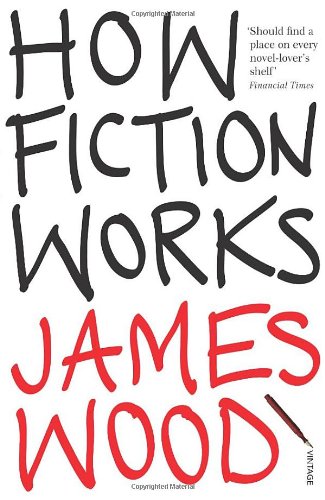
I finished James Woods’s How Fiction Works (2008, 248p) today. Woods talks about the conventions and practices of fiction in the tradition of E.M. Forster. The elements of fiction are enthralling, as they convey life. After having recently finished Robert McKee’s Story: Substance, Structure, Style, and the Principles of Screenwriting (1997, 419p), the two books come up for easy comparison. Woods discusses the conventions of various authors, most well kn0wn, and how details, realism, character, language, metaphor, and other literary devices mix in the history of fiction from as far back as the Bible. I enjoyed the work as a reminder of the aesthetic enjoyment of reading fiction arising from supreme craftsmanship. Very good indeed, although not as enjoyable as Story, which is an amalgam of high culture (lots of Aristotle referenced) with plentiful dishes of “how to” added. For trial lawyers (or those who have followed the example of the likes of Grisham or Stephen H. Greenleaf and moved to full-time writing), the books have a practical import on how to convey our clients’ stories, which is the stuff of trials.
Wednesday, July 2, 2008
More Than You Know! (but you're learning!)
I've also been reading Michael J. Mauboussin's More Than You Know: Finding Financial Wisdom in Unconventional Places (2008). Terribly entertaining essays loosely figured around the subject of finance and investing that pick-up and use insights from all manner of trains of (serious) thought. For instance, Phillip Tetlock on "experts" (i.e., hedgehogs vs. foxes), Robert Sapolsky on stress (and how it leads to short-term investment thinking to the detriment of return), and so on. More later on particulars. Very good, entertaining reading indeed.
Tuesday, July 1, 2008
American History
With the Fourth just ahead on the calendar, I've decided on my American history reading, and I've started it: Garry Wills's Explaining America: The Federalist (1981). This is, of course, a re-read, as I purchased my copy at the time of publication in 1981. But having just completed listening to Thomas Pangle's Teaching Company course on The Great Debate: Advocates and Opponents of the Constitution, it seems a perfect choice. Also, of course, Wills's prose and insight are always a treat. The opening considers how Federalist No. 10 (Madison) was mostly ignored until Charles Beard went after it as a part of his economic vision of the Constitution. Since then, Laski, Dahl, Burns, and others have criticized Madison's formulation. Will states that he aims to consider whether history and historians have treated Madison's work here (and in No. 51) fairly. The opening chapter deals with the Annapolis convention, and delightful physical descriptions of Madison and his partner in forming the nascent government: Alexander Hamilton. As often the case with Wills, his analytic insights into a text are framed by a "you were there" description of the principal players. Madison as an aging gnome, and Hamilton as all energy inside his small frame; while Madison conserved energy, Hamilton radiated it. More fun to come.
rev'd 08.14.19
rev'd 08.14.19
Tuesday, June 24, 2008
Burning & Energy
I'm reading Phillip Moffitt's Dancing with Life (2008), in which he writes about Buddha's "Fire Sermon" and how all of our life involves "burning". While everything and every process involves "burning," the evil of craving (or excessive desire) makes the necessity and unavoidability of burning into suffering.
In a sense, this seems quite right, if "burning" can be seen as energy. Everything is a form of energy in a sense. (Einstein, right?). All transactions, whether physical or mental, are energetic transactions. This leads to the question: how well do we manage these energetic transactions? How do we gain warmth from them and not get burnt, as Buddha seems to ponder in the Fire Sermon? I suspect that these issues go to some very fundamental issues on how we approach life, although, most of us, most of the time, conduct it unknowingly. Perhaps writing and thinking about it will make it more accessible. Indeed, the task should be to see life as a constantly ongoing energy transaction. Energy, after all, is eternal delight (Blake).
rev'd 08.14.19
In a sense, this seems quite right, if "burning" can be seen as energy. Everything is a form of energy in a sense. (Einstein, right?). All transactions, whether physical or mental, are energetic transactions. This leads to the question: how well do we manage these energetic transactions? How do we gain warmth from them and not get burnt, as Buddha seems to ponder in the Fire Sermon? I suspect that these issues go to some very fundamental issues on how we approach life, although, most of us, most of the time, conduct it unknowingly. Perhaps writing and thinking about it will make it more accessible. Indeed, the task should be to see life as a constantly ongoing energy transaction. Energy, after all, is eternal delight (Blake).
rev'd 08.14.19
Subscribe to:
Posts (Atom)