Listening to Jean Smith's FDR and reading Ian Kershaw's Fateful Decisions creates a great synergy. For instance, the road to war between the U.S. and Japan contains a number of crucial misperceptions and missed opportunities. If FDR had met Prime Minister Kenoe, would this have prevented the war? On the other hand, would American public opinion, already turned away from appeasement because of the failure of Munich, in conjunction with the influence of the military in the Japanese government, have made war inevitable? In addition, the Japanese public held a very strongly nationalistic sentiment. Would these factors have doomed any diplomatic initiative? Individuals, no matter how capable, cannot overcome strong social forces, can they? However, if society, national and international, constitutes a complex system, then even small number of agents with limited power can have a crucial effect on the system. No single viewpoint, individual or collective, can take hold of an assured position to control the outcome. These two accounts of the road leading up to Pearl Harbor make me believe that war could have been avoided in late 1941, but I question whether it could have been delayed long enough for the conflict to resolve on its own (as did the Cold War). For an influence on my thinking about this, read Niall Ferguson's essay in the volume Virtual History that he edited.
Thursday, September 24, 2009


Wednesday, September 23, 2009
Quick Updates on Various Reading
Listening to Tyler Cowen's Create Your Own Economy: The Path to Prosperity in a Disordered World (2009), and after hearing about
Autism in a new light, the joys and possibilities of modern communications technologies (primarily via the Internet, but by texting, etc), he's now begun speaking about Buddhism as a counter-weight to the constant mental buzz in which we live. I'm just starting this, so I'm very interested. Updates to come.
I'm continuing to read Susan Neiman's Evil in Modern Thought. Her presentations of Rousseau and Kant have been quite enlightening (pun intended)—especially of Kant, whom as more of a pure philosopher than political thinker, I'm not as well acquainted with (although his reputation precedes him). She shows Kant to be someone who sees a radical, almost tragic disconnect between the world as nature and human reason. I might also note that she attributes to Kant the idea that purpose is the attribute of human reason and not is found in Nature standing alone. I just started into Hegel this morning, but she gives promise of making good sense of him as well (no easy task by most accounts).
I've started A.P.J. Taylor's The Origins of the Second World War (1961). Taylor is an excellent writer with some keen insights. So far, just some general observations of what the Versailles negotiations hoped to accomplish—and what it did or did not contribute to the origins of the Second World War.
Tuesday, September 22, 2009
Garry Wills on the Entangled Giant
Garry Wills just published a piece in the NY Review of Books, "Entangled Giant", on how the Obama Administration continues some of the policies and attitudes of the Bush Administration. How discouraging! How frightening! Wills argues that since the Second World War that we have been in a perpetual state of war that has eroded the Constitution (that quaint old document),that has seen the growing ascendency of the executive branch, and that begins to buy into ideas like the theory of the unitary executive. Wills sees the Obama Administration surrendering to the inertia of past practices, the inertia of a government so big and powerful that no one can completely control it. I fear that Wills may be correct, all of my hopes for Obama notwithstanding. The only way to prevent a further slide will come from those willing to speak up in opposition. I'm not talking about becoming a pacifist or sit down strikes, but making principled arguments to overcome this terrible inertia. For those who may not have a sense of what I'm writing about, read Jane Mayer's The Dark Side about the abuses of the Bush Administration. The book made me both ashamed (of what my country did) and frightened (for what it might do, even to its own citizens). Tyranny can become real, and I'm not a right-wing nut—far from it!
Monday, September 21, 2009
Explanations of Moral Evil
I've started reading Evil in Modern Thought: An Alternative History of Philosophy (2002) by Susan Neiman. She begins her Introduction with a quote from Wittgenstein that I want to share:
The aspects of things that are most important for us are hidden because of their simplicity and familiarity. (One is unable to notice something—because it is always before one's eyes.) The real foundations of his inquiry do not strike a person at all.—And this means: we fail to be struck by what, once seen, is most striking and powerful.
—Wittgenstein, Philosophical Investigations, #129
While you're thinking about the quote (let it sink in), we can discuss Neiman's work. She discerns two strands in philosophical thinking since the Enlightenment: one that runs from Rousseau to Arendt "insists that morality demands that we make evil intelligible. The other, from Voltaire to Jean Amery, insists that morality demands that we don't." (8). Having read her section on Rousseau earlier today, and having been a long-time fan of Arendt, I'm inclined to agree with that line of thought, but I'm not sure of the argument from the other side, so the I will suspend final judgment. This book looks to prove very thoughtful and thought provoking—what fun!
Thursday, September 17, 2009
Consolations of Philosphy
De Botton mixes the originals with his own gentle observations and vignettes, often quotidian events drawn from daily life that exemplify the point in question. Epicurus, Seneca, and Montaigne are personal favorites. Epicurus is perhaps the most misunderstood and maligned of philosophers, but much of what he says seem eminently sensible. When you read his work (of which very little remains), one finds a very measured man, not the glutton of the popular imagination. Seneca proves a model of sobriety, especially about the passions. Montaigne show himself an earthy, relatively plain-spoken observer of humankind. In all, a very pleasant, entertaining, and enlightening book, even after having read about gloomy Schopenhauer (who did have some insights).
Thursday, September 10, 2009
Michael Pollan Nails It
Wednesday, September 9, 2009
Maureen Dowd: Obama Spocky or Rocky
Sunday, September 6, 2009
Number crunching & rational actors in political science
I was very interested to learn that he interviews players and learns as much about them as possible before making any predictions (i.e., feeding data into his proprietary program). Thus, a very human element remains. It appears that a computer can perform calculations of coalitions and run scenarios that no single human mind could manage. So be it. But how does one filter out "the passions"? I can understand that reason and interests sort themselves out over the long run, but the passions can hit like a sudden summer thunderstorm: brief but forceful. Perhaps those are the forecasts that don't work out--or that suffer from the random event. Query: how would his prediction about approval of a health care reform bill be affected by Ted Kennedy's death? (Apparently forecasting Clinton's effort was a miss for him.) So, in the end, I admire the work but I still believe that we can go wrong placing too much emphasis on the predictable based on induction. Too many Black Swans swim around in reality ready to appear out of nowhere.
Krugman on contemporary economists & thier big disagreement
Krugman takes the problem deeper, and posits two shortcomings of classical free market economics: the belief that humans are constantly making rational decisions and its corollary, that economists can create precise mathematical models to predict behavior because things like bubbles just don’t exist. How can someone believe that humans are always rational? It allows that math to work, but beautiful equations do not necessarily square with reality. It comes back to the point that you can start with any faulty premise and use logic (and beautiful math) to arrive at just about any crackpot conclusion. Don’t the economists who believe in perfectly rational humans and perfectly operating markets know about other economists like Herbert Simon (satisficing), Daniel Kahneman, and Vernon Smith, not to mention to spate of younger researchers, who publish in the area of behavior economics (given a shout-out by Krugman) and human decision-making? Also, Eric Beinhocker in The Origin of Wealth (a book I’ve dipped into but need to read in full) describes the economy as a complex system, and he very effectively critiques the shortcomings of neo-classical economics. Of course, there is also Nasim Taleb, a veritable holy warrior against contemporary economics based in part on ancient skepticism.
All this makes my glad that I trained in history and political science and resisted the invitation to become an economics major (okay, the math had a lot to do with it, I admit). But in history and political science, you can crunch number and perform mathematical analysis, but in the end, you are constantly reminded that you’re dealing with irrational human beings: people motivated by reason, passions, and interests—and not necessarily in that order!
Friday, September 4, 2009
Ian Kershaw, Fateful Decisions & Beyond
Thursday, September 3, 2009
McNanmara: Man of Compassion?
Kristoff: Gov't Not So Bad
FDR: Model for Obama?
Monday, August 31, 2009
Krugman On Ideology & Influence: I Wish He Wasn't Correct, But I Think He Is
Tuesday, August 25, 2009
Quick Updates
1. Jon Elster, Alexis De Toqueville: The First Social Scientist (2009). If De Toqueville is the first, Elster is one of the best. De Toqueville, unlike Marx or Durkheim, looks primarily to mechanisms to explain social behavior. Elster, at his analytical best, shows Toqueville's insights and failures. Things like envy and hatred, equality and privilege, are seen through a jeweler's eye--or I should say eyes, as Elster adds his perspective to Toqueville's. I have also dipped into Political Psychology by Elster (1993), an earlier Elster consideration of Toqueville, along with French historian Paul Veyne and Russian Alexander Zinoviev. Again, mechanisms, individual decisions with great social consequences, are the topic of consideration and Elster's primary methodological concern.
2. Jean Edward Smith's FDR (2008). Listening to this in the car, I started with FDR's inaguration. It's all so familiar. President Obama should read it (perhaps any good FDR biography would do). The attacks from right and left; the ability to steer the middle ground. Certainly no president, however great in hindsight, goes without every Dick, Jane, and Sally second-guessing and criticizing him (or her, when the time comes). A familiar story, but still fascinating.
3. Steig Larson's The Girl With the Dragon Tatoo (2008). I'd heard or seen a lot about this mystery, so I popped for it last weekend. 270 pages into it, I'm just getting going. Larson doesn't rush things, and he sets up things very carefully. Without knowing the ending, I know that it's engrossing and well thought out.
Happy reading for now.
Thursday, August 6, 2009
Books on the Founding & Early Repulic
Some Good Reading on the Founding & the Early Republic
After some delay, I’ve finally gotten to recounting some of the good reading I’ve discovered about the founding and the early republic. Of course, this is a work in progress, as I’m currently listening to a very fine work on the various playing in the Revolution and Early Republic: Gordon Wood’s Revolutionary Characters, essays on Washington, Franklin, Jefferson, Hamilton, Adams, Paine, and Burr. You’d think that all of these men are so well known that you wouldn’t learn anything new, but I have found the essays very informative and insightful.
But let’s start near the beginning—in this case, with Garry Wills’s Inventing America: Jefferson’s Declaration of Independence (1976). Wills, after receiving a degree in the classics from Yale and then gaining fame for his 1969 book on Richard Nixon, Nixon Agonistes, published Inventing. He used his writing skills as a magazine writer in combination with his skills as a scholar to bring a new understanding the Jefferson and the Declaration. He showed that Jefferson was more directly influenced by the Scottish Enlightenment than by John Locke. He followed this book with Explaining America: The Federalist (1981), in which he followed the path of Douglas Adair and showed the influence of David Hume on Madison and his cohorts.
Moving a away from Wills for a bit (but only to return), I’ve greatly enjoyed listening to Joseph Ellis’s Founding Brothers, like Woods’s Revolutionary Characters, essays on the Founders. Very telling and informative. Likewise, I enjoyed listening to Ellis’s His Excellency George Washington, a brief biography of GW. GW was an immensely ambitious man, and Ellis gives a very compelling portrait. Also on GW, see Garry Wills’s Cincinnatus: George Washington and the Enlightenment (1984). This is not so much a biography as a study in iconography. Wills does discuss some incidents in GW’s life, but it’s mainly about the images that animated GW.
On Jefferson, in whom I’ve developed some reserve, I have no one good single biography that I’ve read, but he comes up in works such as those of Ellis (who’s written a highly acclaimed biography of TJ: American Sphinx) and Wood. I have read Forrest McDonald’s book on Jefferson’s presidency, and it was indeed informative. Alas, I’ve not read some of McDonald’s highly regarded work on the Founding. However, for John Adams, I’ve read a couple: David McCullough’s popular biography John Adams. Charming and a good overall consideration. However, I most enjoyed John Patrick Diggins’s John Adams in the American Presidents series. Short, but Diggins is always full of insight, and he’s one of my favorite American historians, whether dealing with the Revolution and Early Republic or a contemporary figure like Ronald Reagan. I also recommend his The Lost Soul of American Politics, although only the first few chapters deal with this era.
I listened to an abridged version of Ron Chernow’s recent biography of Alexander Hamilton, a true genius of the era, but a frightening prospect to many of his contemporaries. I’d like to read more about Hamilton, perhaps the most genius of a group of geniuses.
As for the Early Republic, Wills’s Negro President: Jefferson & the Slave Power (2003) argues that Jefferson won the election of 1800 against Adams (and Burr) by virtue of the constitutional provision that slaves counted for 3/5 of a person in the census, thereby giving an electoral advantage to the slave states. Back on Wills, portions of his books Under God: Religion and American Politics (1990), A Necessary Evil: A History of American Distrust of Government (1999), and Certain Trumpets: The Call of Leaders (1994) (includes an essay on Washington), all include chapters on Founding & Early Republic issues.
Wills’s James Madison, for the American Presidents series, is a good overview of Madison & his presidency: how so effective a theorist and legislator was a less effective president. And last year, Wills added Henry Adams and Making of America (2006), part retrospective on Adams and part extended commentary on Adams’s History of the United States During the Administrations of Jefferson & Madison. Will seeks to rehabilitate Adams’s great work, so often misunderstood and too little considered. Wills argues that the late Adams of The Education (voted the outstanding non-fiction book of the 20th century by Modern Library), who was cynical and determinist, is not the Adams who wrote the History. I’m now reading part of the history in conjunction with a re-reading of the Wills book. The interesting things about Adams work—a counterpoint to Gibbons’s—is that he sees America rising into nationhood after an uncertain start. Truly first-rate reading and history.
I have a bunch of books that I can list or share about this era that haven’t read (and that I’m now more motivated to do so), but these are ones that I have gotten to. All in all, a fascinating group of (mostly) men, not angels, who managed quite an amazing feat. Happy reading!
Wednesday, July 22, 2009
Yergin & Stanislaw: The Commanding Heights
Montaigne: Words of Insight
“For my part, I consider some men very far above me, especially among the ancients; and although I clearly recognize my inability to follow them with my steps, I do not fail to follow them with my eyes and judge the powers that raise them so high, of which I perceived in some degree the seeds in me, as I do also of the extreme baseness of some minds, which does not astonish me and which I do not disbelieve either. I well see the method which the great souls use to raise themselves, and I wonder at their greatness. And the flights that I find very beautiful, I embrace; and if my powers to no reach them, at last my judgment applies itself to them very gladly.” (Frame, Every Man Library Edition, p. 665-666.)
How magnificent! More to follow later, as I’ve embarked on “Of husbanding your will”.
Tuesday, July 21, 2009
Chris Hedges: American Prophet
Having read this, I listened to Hedges’s War Is a Force That Gives Us Meaning (202 185p). This book is the most intense, bracing, and forceful book that I’ve read on war. It is not for those too delicate to contemplate the horrors that man can unleash on man. I’ve read books about the horrors of war before, but as Stalin suggested, a single death is a tragedy, a million deaths a statistic. Hedges writes about people: himself—having covered Central America, Africa, Palestine and Israel, and the Balkans—and those he encountered, the quick and the dead. I suppose that anyone covering wars like he has could write gut wrenching tales of hatred and loss, but he does so within a context of an education and upbringing that makes him unwilling to accept this status quo lightly. Even as he describes war’s intoxicating effects, he knows that he’s involved with a dangerous habit and how it can entrap him or anyone. He knows well the Illiad, the Aeniad, Shakespeare, Remarque, and Auden, who have given voice in the past to the fascination of war and violence and its effect on the persons it touches. I can’t think of a better book to place on a required reading list of anyone thinking of supporting or fighting a war. It is a strong and necessary tonic
Wednesday, June 17, 2009
Thomas Homer Dixon
Along with the graphic narrative of the fictional American family, the program Earth 2100 also included interviews with experts on these topics, and among them, I picked up the name Thomas Homer Dixon. Dixon is an MIT-trained Canadian political scientist who writes about global issues. I found his website, and I highly recommend a visit to it. http://www.homerdixon.com/. I looked around, and I discovered that he linked to some interviews as podcasts, and I listened to them. Through them, I found a very articulate writer and thinker who has really put his finger on our current situation. I’m now about half-way through his book, The Upside of Down: Catastrophe, Creativity, and the Renewal of Civilization (2006). I highly recommend it (don’t have to finish to arrive at this conclusion).
Dixon describes energy as the master trope for a society or civilization. A visit to Rome led him to consider the amount of energy required to construct the coliseum. And he pondered about how a failure of energy supplies (food) to reach Rome could be regarded as the key to its downfall. He also describes society as a complex adaptive system. The concept of a "complex adaptive system" seems the most advanced concept that we have for understanding society, as well as ecologies, financial markets, and a myriad of other structures that are more than merely mechanical or complicated. Something mechanical is predictable; complex adaptive systems are only probable. Complex systems can change by leaps and bounds and not smooth gradients. An automobile engine that responds smoothly when you step on the gas is a mechanical system.
I’ll be writing more about this. As I reflect on it, this lack of societal resilience (shades of Nassim Taleb here) that Dixon describes looms truly frightening and intriguing. I fear for our futures as we seem to live in Kubla Khan’s pleasure dome. I fear for the cracks in the foundation, and fear for our ability to repair them before the edifice crumbles around us.
Tuesday, May 26, 2009
Two New Titles: Girard & B. Alan Wallace
This weekend served as the anniversary of our local independent bookstore, Prairie Lights, and they offered 20% off everything, so time for a couple of new titles. It’s fun to browse there, and since my spouse and I, not to mention offspring, are well known there, we get plenty of recommendations. On this trip, I went with two familiar authors with new titles. The first is Rene Girard, with Pierpalo Anotnello and Joao Cezar de Castrol Rocha, Evolution and Conversion: Dialogues on the Origins of Culture (2007). This title was new to me, and it looked good. Like a bloodhound with a new scent, I was off into it (notwithstanding the fact that I have a pile of unfinished books already). The book is an extended interview with Girard after a short summary introduction. The first chapter recounted Girard’s career. He was trained initially as a librarian-archivist, came to the U.S. (from his native France), received a Ph.D. in history from Indiana, then to John Hopkins, while along the way moving his attention to literature. From there, he went on to develop a very unique theory of culture and religion. He completed his career (at least as far as academic appointments go) at Stanford in the Department of French Language, Literature and Civilization. It’s interesting how this inquisitive and original thinker broke academic boundaries.
Girard is a hedgehog (in the Isaiah Berlin sense); only he has two big ideas: mimetic desire and scapegoating. In short, we learn from one another, often to the point where we mimic the desires of another, thereby establishing conflict (most easily recognized as envy). When social cohesion becomes frayed through rivalry, societies resort to scapegoats, a sacrifice to placate the social (or religious) order. Fascinating stuff, as I’ve read some of this stuff earlier. A theory of human culture and relations that is profoundly intriguing. The interviewers believe him to be the “Darwin of the human sciences”. Well, I’m not sure about that, but he is profoundly interesting. BTW, he came across his insight while reading the great 19th and early 20th century novelists, Stendahl, Dostoevsky, and Proust, among others, which he published as Deceit, Desire, and the Novel.
The other new title is B. Alan Wallace’s Mind in the Balance: Mediation in Science, Buddhism, and Christianity (2009). Wallace is a former Buddhist monk, translator for the Dalai Lama and of Tibetan texts, a Ph.D. from Stanford in religious studies, and an undergraduate major in physics. With this combination, he’s an excellent conduit of perspectives between East and West, more specifically, the Tibetan Buddhist tradition and Western science. This book, as he explains in the beginning, has an interesting genesis. He reports that his stepdaughter, a practicing Christian, wanted some guidance on going deeper into her tradition. He wrote this book for her, which includes not only history and theory behind Western and Eastern meditation traditions but also alternating chapters on meditation techniques and practices. I’m not quite halfway through, but the meditation guidance is some of the best that I’ve read (and I’ve read some of his other books). The combined tour of the traditions with the additional insight from Western science makes for a great learning experience, and it certainly serves as an aid to practice.
Monday, May 25, 2009
On a Lighter Note . . . to Shangri-La
One problem he got into was weight loss. Like many of us, he got heavier than he wanted. He began experimenting with small changes. Then he went to Paris, not normally considered the weight loss capital of the world. But he drank a new (to him) sugared drink with a strange new flavor, and despite his culinary enthusiasm, he had a limited appetite and actually lost weight. From this personal episode, combined with the ability to due to scientific research (he’s on the editorial board of Nutrition, for example), he came to the conclusion that flavors not associated with calories (but containing calories) decrease the body’s set point for weight (the body has an internal thermostat of sorts to maintain a set weight). Drinking the strange drink, not earlier associated with calories, lowered his set point, thus reducing his appetite. Later, testing further, he found that sugar water did the same trick, but for some quirk of evolution, sweetness as a taste didn’t count as a flavor, so drinking sugar water a couple of times a day allowed him to continue his weight loss. He later discovered that unflavored oils did the same thing without the extra sugar calories and allowing greater consumption of some healthy, although virtually tasteless oils. He, and many others, continue to lose weight.
Roberts published his findings and theory in The Shangri-La Diet: The No Hunger, Eat Anything Weight-Loss Plan (2006) after getting a boost from the Freakinomics blog site at the NYT. Anyway, it’s a fun read, an interesting guy, now on a kick in favor of cultured food that put bugs (good ones) in the gut, such as yogurt and kim-chee. Anyway, I’ve just started his regiment, and no results yet. But we’ll see, and I think that’s also a good thing by his way of thinking. A fun, quick read with a very easy application if you want to try it out.
Monday, May 18, 2009
Lukacs on Marx
"We must not kick a man when he's down. Marx was an unattractive man but--at least intellectually--he was taking the side of the downtrodden and poor, especially of the industrial workers (but not the peasants). Moreover, most of his critics miss the vital points, the inherent weaknesses of the Marxist body of dogma. The accepted intellectual or politological view is still that Marx was a utopian, that his ideas could hardly be put into practice, and when some leaders tried to do that, the result was an economic and humanitarian disaster. . . . Marx and Marxism failed well before 1989--not in 1956 and not in 1919 but in 1914. For it was then that internationalism and class consciousness melted away in the heat of nationalist emotions and beliefs. . . . The First World War marked the defeat of International Socialism; it led, instead, to the rise of National Socialism." (42-43).
Democracy and Populism: Fear and Hatred (2005)Rev'd 8.22.2019
.
Friday, May 8, 2009
Lukacs on Patriotism & Nationalism
 Today I offer quotes on an insight that John Lukacs has provided many times before. It's not new to me from reading Democracy and Populism: Fear & Hatred (2005), but the distinction he makes bears repeating, especially in light of what so many so-proclaimed "conservative" commentators want people to think. I happily consider myself a patriot, but a nationalist? No. Nationalism, as much or more than any misguided Marxism, was the bane of the 20th century.
When . . . Samuel Johnson uttered his famous (and perhaps forever valid) dictum that Patriotism Is The Last Refuge Of A Scoundrel, he meant nationalism, even thought that word did not yet exist. One of the reasons why there exists no first-rate book about the history of nationalism is that it is not easy to separate it from old-fashioned patriotism. And these two inclinations, patriotism, and nationalism, divergent as they may be, still often overlap in people’s minds. (When, for example, Americans criticize a “superpatriot” what they really mean is an extreme nationalist.) (35-36).. . . .
Patriotism is defensive; nationalism is aggressive. Patriotism is the love of a particular land, with its particular traditions; nationalism is the love of something less tangible, of the myth of a “people”, justifying many things, a political and ideological substitute for religion. Patriotism is old-fashioned (and, at time and in some places, aristocratic); nationalism is modern and populist. In one sense patriotic and national consciousness may be similar; but in anther sense, more and more apparent after 1870, national consciousness began to affect more and more people who, generally, had been immune to that before—as, for example, many people within the multinational empire of Austria-Hungary. It went deeper than class consciousness. Here and there it superseded religious affiliations, too. (36).
Thursday, May 7, 2009
Lukacs on Right & Left & Hitler
“[Hitler’s] example was, and remains, proof that the ancient categories “Right” and “Left” have become, at least in one important sense, outdated.” (21)
“Hitler, for one, was an idealist, not a materialist: an idealist of a dreadfully German and frightfully deterministic variety, and a believer in the power of ideas over matter. These men [Hitler, Mussolini, and Peron, etc.] knew how to appeal to the masses—something that would have filled Maistre with horror. They knew (as did Proudhon and not Marx) that people are moved by (and at times even worship) evidences of power rather than by propositions of social contracts.” (23-24)
Wednesday, May 6, 2009
John Lukacs on Democracy & Populism
“Perspective is an inevitable component of reality; and all perspective is, at least to some extent, historical, just as all knowledge depends on memory.” (7)
“As always, Samuel Johnson is right: ‘Definitions are tricks for pedants.” Still, Right and Left retain some meaning, even now. . . . The “Right”, by and large, feared and rejected the principle of popular sovereignty. The “Left” advocated or supported or at least would propose democracy. It still does. The “Right” for a long time, was not populist. But now often it is—which is perhaps a main argument of this book.” (18)
rev'd 08.14.19
Tuesday, April 28, 2009
Dave Brooks on models of response
Nicoll on Metanoia
Monday, April 27, 2009
E. J. Dionne on Obama & Steven Johnson on the Future of the Book
Steven Johnson wrote in the Wall Street Journal about the future of the book. For all bibliophiles, an interesting and challenging piece. Johnson is generally upbeat; I remain cautious. As much a blogs, and magazines and newspapers offer, nothing matches the extended argument and consideration of a book. Can it withstand all the potential for jumping and hoping? Johnson recognizes the problem, but he glosses over it. Otherwise, the Kindle 2 would certainly be a big temptation. Time will tell.
Thursday, April 23, 2009
The Mark & the Double Vision
Lukacs: Reactionary, Conservative, Romantic?
Lukacs serves as an example of my concern. I noted yesterday in linking in Historical Consciousness that a recent edition was published by a “conservative” book club (The Library of Conservative Thought) with a foreword by Russell Kirk added in for good measure. Now I ask you, what does Lukacs have in common with say, George W. Bush or Newt Gingerich? (Russell Kirk, perhaps, yes; but then what contemporary “conservative”—at least politician—knows or cares what Kirk wrote and thought? Although I’ve only a passing acquaintance with Kirk, I get the impression that he is, what I would call, a real “conservative”; you know, thinks highly of Edmund Burke, and all of that.) In any event, I find Lukac’s thinking difficult to pin down, to pigeon hole. He bobs and weaves, and for the most part, addresses concerns and issues that popular conservatives don’t even begin to address. Thus, after completing his short chapter on his thoughts about history in general, and a short chapter by way of an apologia of sorts for this autobiography (of sorts), he begins talking about this adopted country, the United States. (He’s a native of Hungary.) One has not doubt of his love and appreciation for his adopted land, but this does not allow him to gloss over its contradictions and absurdities.
Having discussed this aspect of Lukacs, let me now note that the next to last chapter is about his three wives. The first two lost to death, and the third one with him currently. One comes away from this chapter with an appreciation of the art of recollection, and the sense that Lukacs must be not only charming (although in writing he may come off to some as a curmudgeon), but perhaps a bit of a romantic. The chapter stands out as an interesting reflection on marriage and the relationships we have, something not done much outside perhaps novels or tabloid sensationalism. In any event, this glimpse into his domestic life, his reflection about it, adds something to this intellectual autobiography that helps round out the man and this thought.
Wednesday, April 22, 2009
John Lukacs, Historian Extraordinaire
 |
| John Lukacs: 1924-2019 |
I learned of this book because I’d finally started his book Historical Consciousness, or the Remembered Past (1968/1985), Lukacs's major book about history, historians, and historical thinking. I’d put off reading this vital text because Lukacs can prove quite daunting to read, at least when he’s reflecting as opposed to narrating, as, for instance, he does in Five Days in London or The Duel. In any event, I’ve set aside the older book now to dive into the newer, my attention span is sufficient (for the most part), but time is so limited. Like a dog with too many scents, I’m off. However, by addressing you, dear reader, I hope to preserve my trail so that I may find my way back.
Note: I'm linking to Amazon.com for the information on the book, not as an endorsement of Amazon. Nor, by saying this, am I denigrating Amazon. I prefer, whenever possible, to use local book stores (such as Prairie Lights, The Seminary Coop, etc.), but Amazon can prove useful. Best of all, they keep a wealth of information about titles, allow you to keep a list of books you're interested in, etc. So I link for the reader's convenience.
Rev'd 8.27.2019. Orignal 4.23.09
Tuesday, April 14, 2009
2007: Catching Up!
Best Books 2007
The following are favorites from 2007, some read, some listened to on CDs or tapes. I cite them pretty much in the order that I completed them:
1. John Robbins, Healthy @ 100. A good way to start a year. This Baskin-Robbins heir saw all that ice cream killing off his kin young. He writes of those cultures that have extraordinarily long-lived and healthy old folks. Fun & enlightening reading.
2. Ken Wilber, Integral Spirituality: A Startling New Role for Religion in the Modern & Postmodern World. This isn’t the book to start Ken Wilber with, but if you want the most comprehensive perspectives on religion, science, and “everything”, this is your guy. Most amazingly, he’s accessible, having graduated from high school in Lincoln, NE, and done his ABD in biochemistry at Nebraska. If you’re interested, his A Theory of Everything is the place to start.
3. Thomas Cahill, The Mysterious Middle Ages: The Rise of Feminism, Science, and Art from the Cults of Catholic Europe. I listened to this one and found it fascinating. The Middle Ages were a wild and wooly time, but he makes excellent sense of it. You might like his other books in this series, including How the Irish Saved Civilization (and they did!).
4. William Irwin Thompson. Coming Into Being: Artifacts and Texts in the Evolution of Consciousness. This former MIT prof left the academy to found the Lindisfarne Association of scholars and thinkers who delve into an understanding of the world that is a true counter-culture to the dominant paradigm. Okay, this guy is far out and fun. He looks at everything from prokaryotes to Finnegan’s Wake to understand the world past and future. His insights come by lightening flashes. So good (and rich) that I’m currently re-reading it.
5. Georg Feuerstein, The Lost Teachings of Yoga. I listened to this one. Having gotten into Hatha Yoga over the last year, I decided to consult this guy, who is certainly one of the foremost experts in the West on the topic. Very solid and informative.
6. Jacob Needleman, Why Can’t We Be Good? Needleman is a favorite of mine, a philosopher who writes for the general public and who values the esoteric and other traditions. The title tells a lot. Needleman doesn’t give pat answers, but he explores and invites the reader to explore with him. And, most importantly, he asks important questions.
7. Stephen Cope, Yoga and Quest for the True Self. I picked this up off the library shelf in my “learn more about yoga” quest. It turned out to be a gem. Cope tells the story of his going to a U.S. yoga center on a retreat from his psychotherapy practice. Thus, he tells a personal story, his own and those of others that he knows, as well as providing insight into yoga, including the fallibilities of yogis. Very entertaining and enlightening.
8. Stephen Cope, The Wisdom of Yoga. More of the same. Insights into yoga and the yoga tradition as told through the lives of Cope and his friends. Recommended.
9. T. Colin Campbell, The China Study. This fits with Robbins (no. 1), who cited it often. In short, China did a study on cancer rates and diet back in the seventies. Guess what? The peasants on a primarily vegetarian diet had the lowest cancer rates! Campbell is a Cornell prof who got involved and had many preconceptions turned around. Very informative.
10. Michael Pollan, The Omnivore’s Dilemna. Pollan writes excellent prose and tells informative stories. His account of Iowa and corn (and beef) are really eye opening. As food becomes more and more of an issue, his writings will serve as an important and informative guide. I hope to hear him speak here in Iowa City tomorrow discussing his new book, An Eater’s Manifesto.
11. Robert Richardson, William James: In the Maelstrom of Modernism. James is a great subject, Richardson a great biographer. I can’t say enough good about this study.
12. Jacques Barzun, A Stroll with William James. This is a re-read prompted by Richardson’s book. If it’s possible, it’s even better than Richardson’s book because it’s Barzun, a master stylist and historian and critic and essayist, and—as of last October—centenarian! A delightful read. A person ought to get a semester of college credit just for reading such informative, delightful, and insightful book. (Professionally, Barzun was for decades a history prof at Columbia.)
13. John Patrick Diggins, The Promise of Pragmatism: Modernism & the Crisis of Knowledge & Authority. Heavy, but Diggins is a great American historian, especially of ideas, and pragmatism and its limitations are crucial to understanding twentieth century American thought. Diggins always proves a worthwhile and provocative read.
14. Nassim Nicholas Taleb, Fooled by Randomness. A very fine writer is born! A native of Lebanon with a French education and American business experience, this guy looks at reality through the eyes of a skeptic who understands probability. Very good, but see the next entry.
15. Nassim Nicholas Tabeb, The Black Swan. Even better than Fooled! I think that his editors and publishers gave him more free rein with this book, so that his wit, learning, and insight shine through even more brightly. Outstanding!
16. John LeCarre. Absolute Friends. A listening project. Not the best of LeCarre, but still, a master.
17. James Surowiski, The Wisdom of Crowds. Not father, but crowds (can) know best. A fascinating consideration of how large and diverse groups can prove very effective in gauging knowledge, and how some groups stink at it. Very good popular social science, a field that provides a growing number of very good books (see Taleb, Gladwell, Goleman, et al.)
18. John Lukacs, George Kennan: A Study in Character. Like Barzun on James, having Lukacs write on his friend Kennan (who died not long ago after having reached the century mark) provides a special treat. Kennan was a great American: diplomat, historian, sage. Lukacs is an extraordinary historian. Like Barzun and Tocqueville, those foreign-born observers and historians of American culture and history often have the keenest insight. Super.
19. Arthur Conan Doyle, The Hound of the Baskervilles. A listening treat. Need more be said?
20. Alan Furst, The Polish Officer. I’m a Furst fan, who writes novels of intrigue set in pre-WWII Europe and the early stages of war (an especially intriguing time for me). Furst’s prose is sparse and unsparing.
21. Ian McEwan, Saturday. McEwan enjoys current notoriety for the film version of his novel Atonement (the best film I’ve seen in a while, I must say). I tried Saturday on its reputation, and I must say that I found it excellent and intriguing. At least based on this book, I’d say that this author enjoys his reputation. (Anne, however, tried something else and really didn’t like it, so take this author with a grain of salt. Still, this book, I heartily recommend.)
22. Alexander McCall Smith, The No. 1 Ladies Detective Agency. Smith is another author whom I tried on reputation, and again I was not disappointed. Listening to this reading (especially good by a South African native) was a delight. Smith’s main character is a delightful character, charming and fallible. I’ll listen to more of them, for sure.
23. Hadot, Pierre, Philosophy as a Way of Life. A re-read, perhaps it’s on a prior list, but it’s worth it. In sum, those Greeks and Romans didn’t do philosophy as mind games, but as serious thinking about life. This tradition withered as the Church took over morals and philosophy became more speculative. However, Hadot brings it all back to light, and it’s beautiful.
24. Kerry Paterson, Joseph Grenny, David Maxfield, Ron McMillan, and Al Switzer, Influencer: The Power to Change Anything. This book proved fun and interesting, full of tales of persons leveraging significant change. It’s a book Abba will have to read because it deals with public health issues (how to increase condom use in Thailand) and how to keep convict out of the joint (an amazingly effective program in San Francisco). A thought-provoking and challenging book.
25. Waitzkin, Josh, The Art of Learning: A Journey in the Pursuit of Excellence. Okay, first, if you haven’t seen the movie Searching for Bobby Fisher, go rent it and watch it. It’s delightful. But what does it have to do with this book? It’s about the author of this book, who was a chess prodigy. He tells his story, how the movie affected him, and how he got into “push hands” Tai Chi. Along the way, this Columbia graduate (okay, I’m very partial to them) reflects on learning and overcoming obstacles, such as beating Russians at chess and Taiwanese at push-hands competitions in Taiwan! Entertaining and enlightening.
26. Ken Wilber, Integral Vision. Another gateway into Wilber, it’s his most recent, brief, but effective in outlining how you can take his intellectual edifice and use it to make yourself and the world better. Lots of pics and diagrams.
27. Malcolm Gladwell, Blink. The author of The Tipping Point does it again! Fascinating stuff—academic research mixed with everyday examples on how our brains works faster than our thoughts. We have, in essence, two brains, one fast and one more considered. Both have great value, and both have weaknesses. Gladwell looks at it all in a very intriguing listening experience.
28. Goleman, Daniel, Social Intelligence. The guy who “invented” emotional intelligence moves into looking at social relationships, effectively moving beyond the mere personal effective of emotions to the wider context of social relationships. Again, academic research morphed into very enjoyable listening (or reading). Fascinating.
29. Robert C. Solomon, Spirituality for the Skeptic: The Thoughtful Love of Life. I re-read this book after I learned that Solomon had died unexpectedly in early 2007, a great loss. Solomon is a best known for his work on emotions, Nietzsche, existentialism, and business ethics, but he this book represents some of his most personal insights. A great loss. I can especially recommend his Teaching Company lectures, and you can find his brief appearance in Waking Life (thank you, Anne) on-line in memorials, and this gives a sense of him.
Okay, I cut down my list! Sorry! Many books started and not finished, so I didn’t count any of them, so look for more in 2008! I’m always interested in your recommendations and comments.
Happy reading and listening!
Steve
Sunday, March 1, 2009
Economics: Mandelbrot & Ferguson
A. Theory says that all economic decisions are rational. In reality, they’re not. Behavioral economics, as actual limited, fallible, human behavior is the norm. These insights recognize the lack of certainty about actions and outcomes.
B. Theory says all investors are alike. In reality, different investors have different time horizons, making for different decision parameters.
C. Theory says that prices change continually and on a continuum. In reality, prices jump; nay, at times they leap.
D. Theory says that prices follow Brownian motion. In fact, they don’t.
After making these points, Mandelbrot and Hudson posit 10 “heresies of finance”:
1. Markets are turbulent.
2. Markets are very, very risky, much more than standard theories imagine.
3. Market “timing” matters greatly, as significant changes have occurred in small periods.
4. Prices often “leap” and do not “glide,” thereby increasing risk.
5. In markets, time is flexible.
6. Markets in all places and ages work alike.
7. Markets are inherently uncertain and bubbles inevitable.
8. Markets are deceptive.
9. Forecasting prices is perilous, but one can estimate odds of future volatility.
10. In financial markets, the idea of “value” has little value.
This book does an excellent job of describing Mandelbrot’s work and how his insights compare to Black-Scoles-Merton, and others like them. Not an easy or a quick book, but insightful and available for even a non-economist, modest-math-skills reader like me.
Right now, if someone asked me to recommend a book to explain our current financial and economic situation, I’d suggest Niall Ferguson’s The Ascent of Money: A Financial History of the World (358p. 2008). Ferguson is a first-rate historian (currently teaching at Harvard) with the knowledge and insight to write on economic and financial topics. He’s previously written a history of the Rothschilds and The Cash Nexus: Economics And Politics From The Age Of Warfare Through The Age Of Welfare, 1700-2000 (2002). In the present work, he provides a history of how money and finance developed over time. Most of the significant developments arise in the Italian Renaissance (those wonderful Medici!) and continue up to the date of writing (May 2008). In fact, a great deal of the book—written in an engaging style—deals with recent developments. From this book, we learn a lesson that we should have learned long ago: the more things change, the more they stay the same. None of the bubbles, scams, debts, or the like is really new. Of course, numbers, names, countries will differ, but the patterns of human behavior remain stubbornly the same. Ferguson does an excellent job of creating just enough historical background about banks, joint-stock companies, insurance, bonds, and other financial issues to highlight and understand contemporary developments. Although Ferguson published too early to be able to discuss the collapse in the fall of 2008, when reading this book, one certainly better understand how and why such events occurred as they did. This is a superb book for anyone interested in the thing that makes the world go ’round: money. (By the way, he also had a special on PBS under the same title; very worthwhile: how the financial world went to hell in 120 minutes or so.)
Rev'd 08.21.19
Tuesday, February 10, 2009
2008 Best Books Reads & Listens
Best reads of 2008. Wow, the list seems short. I blame this in part on the internet, where, if you look carefully, you can find a lot of worthwhile reading. For instance, economist turned Evolutionary Fitness guru, Art DeVany. Historian Niall Ferguson and iconoclast Nassim Taleb are also out there, and that way you don’t have to wait for the next book. Also, I started some books but didn’t get to the end (usually because of length and the demands of time.) Sometimes I forget to write them down. Nevertheless, let’s talk books completed. The rules: completed by either reading or listening. The top picks of 2008 (in no particular order):
1. Made to Stick: Why Some Ideas Survive & Others Die by Chip & Dan Heath. Getting people to listen is no easy task. This is a business book, and these two authors (brothers) give the basics. Basic, sensible ideas.
2. In Defense of Food: An Eater's Manifesto by Michael Pollen. We heard him speak about this at the ICPL. Pollan is a strong writer who reflects on the ins and outs of what we eat, with some basic guidelines.
3. The Little Book of Atheist Spirituality by Andre Comte-Sponville. This book isn’t a rant, but a careful consideration of belief and spirituality. Comte-Sponville lost his Roman Catholic faith, but he retains a deep respect for the tradition and the need for spirituality. Despite his loss of traditional faith, he keeps a sense of awe and respect toward that which we cannot apprehend. As an aside, his Small Treatise on the Great Virtues made a previous list, and I still highly recommend it.
4. I Don't Believe in Atheists by Chris Hedges. The perfect book-end to the Comte-Sponville book. As opposed as their titles might suggest, I found them quite similar in outlook. Hedges is unhappy with the angry atheists, the militants Dawkins, Harris, and Hitchens. In a prior book, he took on the American right wing. Where does he stand? With the likes of Reinhold Niebuhr and others, who remind us of the fallibility of humankind. Thoughtful and considered.
5. Moneyball by Michael Lewis. The story of the Oakland A’s and sabermetrics. Interesting? Very, even for me, who’s not a baseball fan. But the story of how statistics and independent thinking led to a team with a tiny budget and a lot of wins. A fun and interesting read.
6. No Simple Victory: The War in Europe 1939-1945 by Norman Davies. What more can be said about WWII? A lot, it turns out. Davies is a British historian, and this careful history taught me a lot. Most of all, WWII really took place in terms of its greatest battles, its greatest carnage, on the Eastern Front, British and American prejudices not withstanding. A great listen for me.
7. Nietzsche: Living with the Immoralist by Robert Solomon. I still mourn the passing of Solomon, whose writing always invited the non-professional philosopher into the conversation. Here he deals with that bag of contradictions, Nietzsche. This is the book that grew out of his Teaching Company lectures on the same topic. Solomon doesn’t just tell us what Nietzsche thought, he considers him, discusses him, in all his wonderful and frightening complexity. In doing so, Solomon makes us think about ourselves. Well done!
8. The Limits of Power: The End of American Exceptionalism by Andrew Bacevich. An IR guy out of the military who lost a son in Iraq. Very sad. But Bacevich is a clear-eyed observer and tells it like it is. Very solid.
9. Your Brain is Almost Perfect: How We Make Decisions by Read Montague. How our brains work is endlessly fascinating, equally so, how they fail us. Montague takes us from the basic biological mechanisms to the practical affairs of life in this careful consideration.
10. Story: Substance, Structure, Style, and the Principles of Screenwriting by Robert McKee. This book came recommended by a speaker at a continuing legal education seminar for trial lawyers, who, after all, are trying to tell a winning story on behalf of their clients. For someone who’s seen a lot of movies, this book was exceptionally interesting and eye-opening. From Aristotle to the latest flicks, this guy talks and shows us what makes for compelling story-telling. Really quite fascinating and instructive.
The two “books of the year” (hey, I’m doing very well to keep it to two):
11. The Dark Side: The Inside Story on How the War on Terror Turned into the War on American Ideals by Jane Mayer. In other words, how the Bush administration turned America into a nation of torture and lawlessness. Genuinely frightening. However, there are good guys. Who are they? Bona fide “conservatives”: lawyers (unlike Bush and Chaney) who placed value in the rule of law above political expediency and the feel-good policies of frightened reaction. Many were forced out of office, but they kept a sense of law and decency. I am still ashamed at what happened and that I didn’t speak out more. But then, we didn’t know the half of it until Mayer told the story.
12. Good Calories, Bad Calories: Challenging Conventional Wisdom on Diet, Weight Control, & Disease by Gary Taubes. Be warned: this is not a diet book! At least in the usual sense of the term in the publishing world. It’s a science book about diet. However, it’s also about the foibles of science, the chance discoveries and lost opportunities. You’ll never think the same about fats and carbs after your read this book, and you’ll never blindly accept what the newest Department of Ag food pyramid says. Quite thorough and well-done.
2009 is already off to a great start: a visit to Greeneland after an absence of many years (Graham Greene’s The End of the Affair), and more into economics: development (after seeing the challenges of Cameroon I’ve already completed Jeffrey Sachs’s Common Wealth), financial (what the hell happened?), and behavioral (economics may yet catch up with the ancient Greeks about how humans really act). Of continuing interest will be Buddhists and Stoics (I think them similar and wise). A frequent topic of vocational, practical, and intellectual interest is how we live with each other (communication and persuasion) and how we think (neuroscience and evolutionary perspectives). Of course, I continue to vow to read more fiction. Snow is high on my list. In the mean time, enjoy a good book!
Sunday, February 8, 2009
Jeffrey Sachs Common Wealth
A Whole New Mind
Monday, January 19, 2009
Healing Emotions
Sunday, January 18, 2009
A Farewell to Alms and Emotional Awareness
I’ve been listening to the Dalai Lama (voice-over by Richard Gere) and Paul Ekman in the audiobook of Emotional Awareness (2008). The conversation is fascinating. Ekman the Western scientist has obviously been very impressed with his introduction to Buddhist thinking in the areas of consciousness, awareness, and emotional control. Today he and the DL discussed compassion and how we can cultivate it. Do we need to have suffered? How can we foster universal compassion? Ekman and the DL seem to agree on a lot, and it shows for me the deed empirical wisdom of this aspect of the Buddhist tradition, the Buddhist psychology (and Buddha was perhaps the greatest psychologist-therapist).
Saturday, January 17, 2009
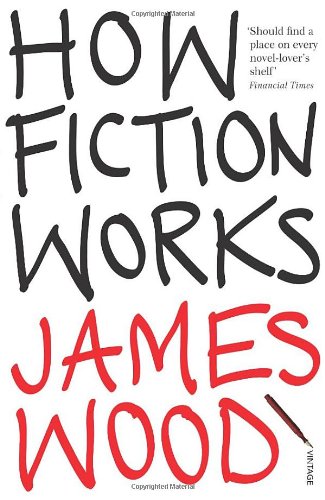
How Fiction Works & Story
Wednesday, July 2, 2008
More Than You Know! (but you're learning!)
Tuesday, July 1, 2008
American History
rev'd 08.14.19