Wednesday, September 14, 2016

The Broken Road: From the Iron Gates to Mount Athos by Patrick Leigh Fermor

The journey concluded
Upon finishing The Broken Road: From the Iron Gates to Mount Athos by Patrick Leigh Fermor, I felt both a sense of accomplishment for having finished a trilogy of books, but also a sense of loss, for having completed this reading journey. I would be losing a delightful traveling companion. The trip was a joy; the parting, wistful.

But all readers of Fermor’s trilogy should be thankful that we have a final volume. For after publishing the second installment, Fermor was unable to write this final volume. Perhaps the Saturnalian drags of aging, such as the death of his spouse, declining energy and memory, and homesickness robbed him of the necessary vitality to complete his task. However, a fortuitous event allowed this project to go forward, with the participation of Fermor before he died in 2011 at age 96. In short, Fermor began writing about his journey in the 1960s, but he set aside this initial account that focused on the final leg of this journey. The discovery of this manuscript, along with the recovery of some of his diaries, allowed this book to be completed. The editors, Artemis Cooper and Colin Thubron, detail how the book came to publication in their Introduction. We are fortunate to have this volume, although the circumstances of its coming into existence distinguish it from its two predecessors, making it different in intriguing ways.

The account of the last leg of Paddy’s journey is different from the first two because this work is not completed by Fermor. The prose in this work isn’t as highly polished as that in the first two installments. But this lack of polish isn’t at all detrimental to the work. The narrative moves more quickly, and one gets a stronger sense of Fermor’s first impressions. For writers and curious readers, the comparison of this work with its two predecessors provides intriguing insights into Fermor’s meticulous writing, which results—when fully polished—into exquisite, almost Baroque prose. Yet this less polished gem has stands well on its own.

Of special interest to me was the fact that a great deal of this volume recounting the final leg of Fermor’s journey involves Romania and Bucharest, in particular. I was delighted to learn of Fermor’s great time in Bucharest because I am finding it a very amiable and beautiful city. Bucharest in the 1930s was lively and prosperous, and Fermor makes the most of it. He befriends both prostitutes and diplomats, deploying his usual charm and displaying his admirable ability to move easily between social classes. Of course, descriptions of Calea Victoriei (a main thoroughfare in the Bucharest), just a block away from our apartment, furthered my enjoyment of his account.

After leaving Bucharest, Paddy once again heads south across the Danube into Bulgaria, where new adventures await him. Here he recounts some of the tough times that he had, unlike most of the account  of his journey. For instance, he describes a scuffle with a friend that seems to rise out of nowhere, and he describes becoming lost and hurt as night falls along the Black Sea coastline. These unexpected dangers remind us that while Fermor enjoyed great fun and adventures along the way, his trip was not without its challenges.

Fermor’s account stops midsentence just a few days from his eventual arrival in Istanbul (or Constantinople as he insisted on calling it). The editors provide some account of his time there by use of his diary, but I feel a bit let down not having the benefit of Fermor’s full account of his initial entry and observations of this great city. But while Istanbul gets shortchanged, the reader is in for one final treat.

The editors include entries from Paddy’s diary of his trip to Mount Athos, the holy land of Greece filled with Orthodox monasteries and where no women are allowed. Fermor went there after about two weeks in Istanbul. The use of Paddy’s diary provides a less mature reflection on his surroundings and even less polish in his prose. But the sense of immediacy compensates for the reduction in reflection and polish. We only get the 20-year-old Paddy in this account, not the mature Fermor. We experience first-draft observations about the monastic traditions, icons, and people that Paddy encounters, as well as his descriptions of the natural beauty of the stony, forested land and the shining Aegean Sea. We experience Paddy’s growing comfortable in the monastic routine. I only wish he had been more forthcoming about what he thought of these cloistered men and the lives that they lead. We also learn that Paddy traveled there after famed British travel writer Robert Byron and Byron’s friend David Talbot Rice had done so in the 1920s.  Paddy notes having received a gift of Byron’s The Stations: Travels to the Holy Mountain, about Byron’s visit, given to Paddy by one of the monks described in the book and who’d received this inscribed copy from Byron. Paddy’s description of his enjoyment of Byron’s book makes me want to read it, as well.


So it ends. We might well have been stranded at the end of Between the Woods and Water, but through some good fortune and the efforts of Cooper and Thubron, we have a satisfying—surprisingly satisfying—conclusion of this marvelous journey. It has been a pleasure.

Friday, September 9, 2016

Every Nation For Itself by Ian Bremmer


Ian Bremmer’s Every Nation for Itself: What Happens When No One Leads the World (2012/2013 new preface) shows why even seasoned observers of international politics and trends might have a hard time in the book publishing business. (I bought my copy at a remainder store). Events outrun the ability of their books to keep up. History, in contrast, deals with the past and allows reality to create the future. But for prognosticators like Bremmer, attempting to discern how current circumstances will affect tomorrow’s headlines is a very iffy business.

But having said this, Bremmer’s primary point, that we have no one single nation currently dominant on the world stage, is undoubtedly true and will remain so for some time in the future. The U.S. remains the single most powerful nation, but its position is no longer as predominant as it was at the end of the Cold War.  Bremmer doesn’t posit this as a matter of absolute decline but as a matter of the realization of limits generated by internal political realities (a sharply polarized electorate and elites) and concerns about spending limits. In recognizing America’s relative decline, he sounds much like Fareed Zakaria in The Post-American World: Release 2.0 (International Edition) (2011), who emphasizes changing circumstances and not an absolute decline of the U.S. But here’s where I think that Bremmer’s analysis shows signs of instant aging. His emphasis on debt—remember he first publishes around 2012—seems much less imperative today. Of course, the U.S. must mind its financial house and avoid mounting indebtedness, but (relatively) strong economic growth has at least taken the edge off of financial limits to American power. What I hope is a more important reason for increasing American hesitation is a sense of the dangers of imperial (or hegemonic, if you prefer) overreach. President Obama’s sense of limits and attempts to avoid unnecessary or entangling engagements are the embodiment of what may be a coming of age of American sensibilities (whatever the merits of any one decision, such as Syria). Of course, part of a growing American forbearance is a general fatigue and reluctance on the part of the voting public to go deeper into foreign engagements, especially military. The negative flip side of this attitude, however, is a growing willingness to walk away from trade agreements and other forms of international cooperation. These factors, much more than debt, seem to me to drive current U.S. reluctance and limits concerning international leadership.

The other factor that Bremmer identifies---and that remains important—is the limited ability of any other nation to step up as a dominant leader. China continues to grow in power and prestige, but the leadership’s concern with internal issues and a lingering Chinese reluctance to venture too far abroad remain substantial impediments to China taking a more aggressive leadership role on the international stage. Russia, on the other hand, seeks a restoration of its past role, but Putin’s aggressive stances are now constrained by weak oil prices and a sagging economy, not to mention a limited popular appeal (Donald Trump, excepted, of course). The Soviet Union was able to gain some traction on the world stage as the embodiment of a utopian ideal, although that patina faded as the truth came out over the drip of time. But Putin’s Russia holds no allure as a model, except for aspiring dictators. The EU, another possible player, remains reeling from its failure to recover from the 2008 economic crash, the influx of Middle Eastern refugees, Islamic terrorism, and now Brexit. The EU was never much of a coherent foreign affairs presence (outside of trade considerations), but now it must focus all of its energy on attempting to retain internal coherence.

Bremmer also notes that some regional powers, like Brazil and Turkey, might step up to prestige and power, but this shows the perils of his endeavor. Since publication, both nations have encountered serious political instability and retain a strong potential for unrest. Brazil has just impeached their president. After having survived a coup attempt, President Erdogan of Turkey has taken the opportunity to consolidate his power, to the long-term detriment of Turkey.

Another area that Bremmer failed to foresee is the uptick in terrorism in Europe, and how that will affect the political balance there. The increasing votes that right-wing parties are garnering reflect anxieties arising from economic stagnation, immigration worries, and terrorism. Of course, some threats, like Nazi Germany or the Soviet Union, bring nations together (e.g., Allied Powers, NATO), but others, such a trade and immigration, can pull them apart. All of these factors are important in the U.S., too. Who wants to make any prediction about the future course of U.S. policy and conduct if (Heaven forbid!) Donald Trump is elected president?


What Bremmer has produced here, as others like him do, is a snapshot of our current state of affairs, and a fairly accurate one, I think. But imagine a snapshot of the world taken in 1909 (and perhaps Norman Angell’s The Grand Illusion might serve as such a snapshot). Then look at the world after the gunshot in Sarajevo fired on 28 June 1914. That one, almost random event, turned the Eurasian landmass (and beyond) into a great battlefield between 1914 and 1945 (with no real resolution until 1989). Of course, some predicted war, in contrast to Angell, but they may have been more lucky than prescient. (If “lucky” is an appropriate about such a macabre topic.) Society—the everyday world in which we live—is a complex system in which seemingly random, Black Swan events, even those of seemingly little consequence, can send the world careening into an abyss of violence. The snapshot is useful, but to make decisions, it’s best to consult the long panorama of history. 

Wednesday, September 7, 2016

Between the Woods and the Water by Patrick Leigh Fermor

Those who’ve read my blog or who’ve been around me, know of my enthusiasm for the writing of Patrick Leigh Fermor, especially his most famous work, A Time of Gifts. After learning about this author and his work at JLF (Jaipur Literature Festival), I read A Time of Gifts. After our second visit to JLF, where I heard his biographer, Artemis Cooper and her husband, Antony Beevor, both speak about Fermor, I bought the remaining two books of this trilogy for my Kindle.

But I didn’t read them. Why not?

          For some time, if you’d have asked me I would have attributed this to my fickle reading habits—so many books, so little time—I’m like a kid in a candy shop. Plus, one enthusiasm gives way to another with changing circumstances and then I’m off down another path. All of this is true, but I don’t think it quite captures the deeper motive for my procrastination. After all, am I not too old to suffer the comparison to a kid in a candy shop? (Well, not really.) But after further reflection, I’ve come to a different conclusion. I was savoring the anticipation of the next installment, Between the Woods and the Water. I needed the right occasion, as one does for the enjoyment of a fine wine kept for years in the cellar. (Or, as our modest circumstances dictate, a pretty good wine for a couple of months in the cupboard.) I needed the right occasion to partake once again of Fermor’s enchanting—and may I say? —intoxicating prose. And this summer the right occasion arrived.

          The occasion arrived because we were moving t0 Bucharest, Romania. Not long after arriving in Bucharest, we traveled to Budapest, Hungary, returning to Bucharest by train through Transylvania, an itinerary that roughly matched that of Fermor (although he doesn’t visit Bucharest until the third and final volume of his account). The perfect occasion presented itself, and I once again could savor the superb vintage of Fermor’s prose. 

Passport photo of the dashing young vagabond
          For those that don’t know the backstory, young Patrick Leigh Fermor—Paddy to his friends—set off at age 18 to walk from the Hook of Holland to Constantinople (as he insisted on calling Istanbul). In 1977 he published the first installment of his account of that adventure, A Time of Gifts, and in 1986 he published this, the second installment, Between the Woods and the Water. (The third and final volume stalled and was published posthumously through the efforts of Artemis Cooper and Colin Thubron.) In each volume he recounts his walk, taking his time along his and the reader’s way to elucidate about the countryside, the history, and the people with whom he inevitably makes an easy but lasting bond. Paddy sleeps in elegant Budapest homes, in gypsy camps, and in old Transylvanian estate houses; in other words, with those at the pinnacle of society and those at the bottom. Paddy’s fabled charm and easygoing manner allow him to bond at every level.

The man of memory & imagination
          For us to have just recently visited the grand environs of Budapest and the dark forests and sunny valleys of Transylvania adds a unique—but not necessary—vividness to his tales. With Fermor’s graceful and vivid prose, transports the reader to his remote and enchanted world via the written word. Between the Woods and the Water is not a diary—although he kept diaries and drew upon what he had available to him so many years later—and so we have the perspective of both the young Fermor and the mature, reflective Fermor in these pages. A double treat, a two-for-the-price-of-one.

          Fermor can describe nature scenes as few others can; for instance, watching an eagle preen itself takes the better part of a page. He also details the history and architecture of the regions, cities, villages, and estates that he visits. And not least among his skills are his descriptions of the gypsies, shepherds, aristocrats, bon vivants, and beautiful women that he befriends, and his adventures with them. His powers of observation, imagination, and memory are astonishing. Perhaps his power of invention is most impressive of the three, as one doubt that anyone’s memory could be so fine as his, but no matter—the beauty of his prose patches all into one seamless cloth of beauty that disarms any quibbling about the veracity of memory.

          Except for riding horseback across the Hungarian plain and motoring around Transylvania as a part of a clandestine threesome, Paddy walked the full journey.

          Fermor also delights in language, picking up bits of Hungarian and some Romanian along his way after having earlier mastered some German. (I believe he came pre-loaded with French and Latin. The Latin, by the way, came in handy in a later adventure.) He delights in the local languages as he does the local architecture and history.


          Fermor’s book is a joy to read, even more so given my recent acquaintance with some of the lands he traverses in this installment. He ends Between the Woods and the Water with “to be concluded” similar to the “to be continued” that ended A Time of Gifts, but as you’ll learn, it almost didn’t come to pass.  

Wednesday, August 31, 2016

Charles Grassley, Charles Grassley

Some time before 40-plus years in Congress
Charles Grassley and I go back a long way. I don't know Senator Grassley personally, but I've known of him for a long time. My acquaintance goes back to the late 60s or early 1970s when I was still an ardent young Republican. Grassley began his career as a politician in 1959 (when I was six years old), serving in the Iowa Legislature from Bremer County and surrounding regions. Grassley quickly became a prominent voice in the Iowa Republican Party, which was divided between moderates, such as Bob Ray and Fred Schwengel, and conservatives like the incumbent Congressman from Grassley's part of the state, H. R. Gross, and Gross’s protégé, Charles Grassley. Gross and others like him (such as ol’ Ben Jensen in my Seventh District), had served in Congress since the New Deal and were still busy trying to repeal it. They were known for their staunch anti-government and anti-Communist agendas. (Well, anti-government unless it involved farm programs.) This split in the Republican Party between moderates and conservatives had festered for a long time, but the split became acute in 1964 when Barry Goldwater wrestled the nomination away from moderate Republicans, which would have included even Richard Nixon, who seems almost a Communist by current Republican standards.

I recall making some disparaging or belittling remark about Grassley in front of our family friend, Bob Tyson, who had served in the 1960s as the executive secretary of the Iowa Republican Party, and who later served in Bob Ray's gubernatorial administration. Bob knew pretty much everyone and everything about the Republican Party in Iowa. He cautioned me against taking Grassley too lightly. Remarking that while Grassley may appear simply as a bumpkin just off the farm, in fact, he had a master’s degree in political science from UNI and had begun work toward a Ph.D. at the University of Iowa (which I was attending at the time as a political science major). Well, I’ll be darned!  Grassley never played that up. As most Iowans know, Grassley has a friendly, awe-shucks demeanor with a voice and delivery that comes awfully close to that of mimicking Huckleberry Hound.

Fast forward now to 1974, when just married, I was living in Cedar Falls and the off year elections were just coming up. Richard Nixon had just resigned as president, and it was not looking to be a good year for Republicans. H.R. Gross decided to hang it up that year, and the Republicans nominated Charles Grassley to replace him. On the Democrat side, they nominated a bright young attorney from Waterloo, Stephen Rapp, who, as I recall, was reported to have shared rides with Grassley down to legislative sessions in Des Moines. By this time, I was starting to wander away, step-by-step and vote-by-vote, from the Republican fold (and not because I had just married a pretty Democrat). So, this election gave me my first opportunity to vote against Charles Grassley, and I did so—to no avail. And not for the last time. Grassley eked out a very narrow victory over Rapp and began his stint in Congress that has now run over 40 years.

Eventually, Grassley moved on to the Senate, where he initially served with a guy named Roger Jepsen, a vain and unimaginative senator, and together they were dubbed “Twiddle Dee and Twiddle Dumber”. However, based on the insight from many years before that I'd received about him, I knew this was an unfair assessment of Grassley, as many have learned since. Charles Grassley is dumb like a fox. Anyone who has survived in politics as long has known how to do things right [sic], at least in the minds of Iowa voters. During his time in the Senate, I heard Grassley speak both in person and in the media, and his low-key demeanor—if not persuasive—is at least not off-putting. Also, I had the opportunity to observe him in casual situations. On trips to visit our daughters living on the east coast, we would see him at the Cedar Rapids airport flying back and forth from Washington DC. He traveled alone, without an entourage, without flourish, and he could have gone totally unnoticed but for the occasional newspaper and television images of him that would have tipped off an observer that a member of the Senate was amongst them. Also, because we had a daughter who played on the club volleyball circuit in high school, we saw Grassley at a large tournament one weekend in Cedar Falls. One of Grassley’s sons is a prominent volleyball coach in the area, and there was Senator Grassley tootling around the gymnasium complex just as if he was another grandpa to watch a granddaughter's matches, quietly shuffling along with the crowd. (Maybe he had a granddaughter playing, I don’t know.) I have to admit that no one could accuse Grassley of putting on airs.

Also in the early 1990s, Grassley surprised a lot of other people and me when he voted against President George H.W. Bush’s resolution to attack Iraq to take back Kuwait from Saddam Hussein. Of course, Grassley was on the losing end of that vote, but it seemed to me a courageous thing to do, bucking the trend that a majority of Republicans and Democrats, along with his Republican president. It suggested to me that Grassley had a genuine streak of independence and judgment about him.


But now we come to recent time. After his election in 2008, President Obama looked to the Senate Finance Committee in an attempt to work out a health care reform proposal that could gain acceptance from at least some on both sides of the aisle. He hoped to work with Grassley. After all, Obama knew that his plan was essentially that of the conservative Heritage Foundation and Mitt Romney, who sponsored a similar program when he was governor of Massachusetts. But when the Obama Administration came knocking on Grassley's door, Grassley refused to answer. Indeed, virtually all Republicans refused to answer, apparently taking their cue from Mitch McConnell, who described their job as one of making sure that Obama would only be a one term president, (That worked well, didn’t it?). I'd never call Charles Grassley enlightened, progressive, or nonpartisan, but I thought he would negotiate to reach some agreement on this important issue. Instead, Grassley went on the hustings and countenanced talk about “death panels”.  My begrudging admiration for Grassley took a plunge equivalent to that of the stock market in 2008. Grassley was now displaying the type of partisanship that has destroyed the public's confidence in Congress, which currently receives a whopping single-digit approval rating. This same extreme partisanship continues to poison the well of political debate. I was disappointed with his intransigence, especially because Grassley had never lost an election and seemed more than safe to keep his seat until he retires or croaks (at age 82 you need to be frank about this possibility). But I underestimated his attachment to keeping a Senate seat and the fear that he developed about the growing Tea Party (or alt-right) wing of the Republican party that was taking down incumbent senators and representatives— some dyed-in-wool conservatives—as too moderate. The extremists were on the move, and they obviously scared Grassley.

During the Obama administration, Grassley has only grown worse. Now as chairman of
The Grinch of the Supreme Court
the Senate Judiciary Committee, he’s shirking his constitutional duty to act upon a presidential nomination to the Supreme Court. Grassley has refused to do his job. His excuses for doing so, including “leaving it to the people" by shunning his duty until after the next election. The argument is weak to the point of being farcical. It is an unalloyed act of partisanship that indicates he wants Donald Trump (more on this guy later) to fill this current Supreme Court vacancy. Despite the unimpeachable credentials of President Obama's nominee Merrick Garland, a moderate and sensible jurist praised by Grassley upon his approval for the US Circuit Court of Appeals, Grassley actively collaborates with the obstructionist leadership of the Republican Party to keep the Court partially vacant rather than approve another Obama appointee.

I thought my estimation of Senator Grassley could not go lower, but I learned that it could. He supports Donald Trump. And he has attempted to excuse Trump's racist remarks about a U.S. District Court Judge (Curiel). Of course, this is only the one instance of a non-stop eruption of offensive and demagogic nonsense that issues from Trump’s mouth (or Twitter account). Grassley, seeking re- election this year, is buying into it, excusing it, and even promoting it.

The term “Vichy Republicans”, which alludes to the French government that collaborated with the Nazis, has become a hashtag on Twitter and represents the attitude of Republicans who know (and admit to knowing) a demagogue when they encounter one. One can argue that this is an overblown metaphor, but it captures the level of capitulation that Republican leaders, which ought to include Grassley, have sunk in accepting the demagoguery of Donald Trump. It’s obvious that more than the welfare of the Republic, Grassley wants reelection. He believes that by joining in the politics of resentment and nativism cultivated by Trump, Grassley can avoid the wrath of the extremist right and win reelection. He’s counting on his good name and reputation—and the lassitude of most voters—to overlook his bargain with the devil. Damn the consequences of a demagogue like Trump to the nation, damn the judgment of some courageous Republicans like Senator Ben Sasse of Nebraska and Max Kirk of Illinois, who have repudiated Trump—to retain his position and power for another six years, Grassley is willing to aid and abet the politics of Trump. Charles Grassley wants reelection at age 83 more than he cares about the integrity of our politics. He’s sold us out.

So again in 2016, I’ll vote against Charles Grassley, as I have on every occasion available to me since my first effort in 1974. Senator. Grassley has always been able to convince a majority of voters that he's the better choice, but now it’s no longer simply a matter of likeability, “common sense”, or sound judgment. Charles Grassley's has destroyed our ability to attribute those virtues to him. He no longer deserves to serve in the U.S. Senate.


Thursday, August 25, 2016

Wherein I Take the @nntaleb IYI Test & Fail

Your image of this writer
Herr Doktor Professor: stern master
I’m going to take the Nassim Nicholas Taleb (NNT) test to determine if I am an IYI (“intellectual yet idiot”). Of course, right off the bat you can see I’m trying to play chess with Washington Square hustlers or a pick-up game with NBA studs—I’m out of my league here. I’m not an intellectual, I’m not an academic, and I don’t write for a living outside of legal briefs and memos. I’m just a practicing lawyer. But I do have an abiding interest in ideas. I’ve always been fascinated by how the world works, how it came to this point, and how we might tinker with it. I've enjoyed and believe that I've benefited from reading NNT's books (Bed of Procrustes excepted). But I must emphasize, unlike NNT, I’m an amateur, not a flâneur.

So with my disqualifications in place, let me go through the NNT test, line-by-line, to obtain my ranking. Taleb’s criteria are in plain type followed by my responses in italics.

What's IYI?

 Intellectual Yet Idiot:  [I just said, I’m not an intellectual. Whether I’m an idiot or not is open to further discussion. I imagine—nay, know—there are compelling arguments in the affirmative for this conclusion]

semi-erudite bureaucrat [I am not now nor have I ever been a member of the bureaucratic party. I’ve been either in a partnership or self-employed for about 30 years]

who thinks he is an erudite [I aspire to erudition, I do not claim it];

pathologizes others for doing things he doesn't understand not realizing it is his understanding that may be limited [Maybe, sometimes. Who hasn’t made this error?];

imparts normative ideas to others [Like NNT?]:

thinks people should act according to their best interests [A question of definition here: narrowly or broadly defined? And note “should”, not “do”]

*and* he knows their interests, particularly if they are uneducated "red necks" or English non-crisp-vowel class. [Well, to some extent, yes. I’ve had people pay me for my advice & opinions for over 30 years. On the other hand, I hope I have some sense of humility. Do you know this word, “humility”?]

More socially: 
subscribes to the New Yorker [Yes, I do. Are you suggesting Paris Match instead? In the New Yorker I skip the ads and focus more than I should on the cartoons; indeed, we have a whole book of New Yorker cartoons—quite fun. Is there a penalty for having a New Yorker book--or two?];

never curses on twitter [Although known on occasion to use profane, scatological, or crude language in person, I abjure it in public discourse. There’s already enough vulgarity out there—plus someone would always out do me.  I do, however, admit to excessive snark on Twitter. Perhaps there’s a New Year’s resolution in there]; 

speaks of "equality of races" and "economic equality" but never went out drinking with a minority cab driver [We’ll I’ve lived and hung with people of different races, and I’m in favor of a greater degree of economic equality than what we currently experience. I grew up middle-class in a small Iowa town where rich kids (by local standards) pretty much had to mingle in school with poorer ones because there was only one school and too few of us to avoid some mingling. As to drinking with a cab driver, no; but with my fellow road construction workers? Oh, yeah. It was, you may say, satisfactory]; 

has considered voting for Tony Blair [N/A. I’m not a Brit! But I did vote for Bill Clinton 2x & will for HRC (see below)];

has attended more than 1 TEDx talks and watched more than 2 TED talks [Never been to a TED Talk, but I’ve watched more than two. I rather like them on the whole. I’ve also watched NNT on YouTube at festivals (presumably not literary and not in the UK). How does that score? BTW, some of my favorite peeps have given a TED Talk]; 

will vote for Hillary Monsanto-Malmaison because she seems electable [Deferred to the finale];

has The Black Swan on his shelves [I have two copies: one hardcover in storage & one on my Kindle. Do I get extra credit?]

but mistakes absence of evidence for evidence of absence [It’s a catchy slogan but I have to bone up to determine if the converse is also true: absence of evidence may be evidence of absence. In which case, how do we distinguish the two instances? I will say this from my humble perch as a practicing attorney: try convincing a judge or a jury that X exists when you have no evidence (an absence of evidence) that X exists—a case not to take on a contingent fee. If I find no evidence of tigers in my yard (sightings, paw prints, scats, animal carcasses, etc.), then it's highly likely—although not certain—that there are no tigers in my yard. Despite appropriate and convincing examples in The Black Swan, NNT tries to skate too far with this slogan];

is member of a club to get traveling privileges [no, just credit card miles; no clubs. I wouldn’t want to belong to any club that would have me as a member!];

if social scientist uses statistics without knowing how they are derived [Not a social scientist. I’m respectful but wary of statistics, suspicious that they may conceal lies and damned lies];

when in the UK goes to literary festivals [I’ve never been to a literary festival in the UK, but when in India I go to the Jaipur Literature Festival. How did you like your sojourn there, NNT?];

drinks red wine with steak (never white) [Usually red, but then I’m from the Midwest and care more about the steak anyway];

used to believe that fat was harmful and has now completely reversed [True--after learning about Art DeVany in NNT’s Fooled By Randomness (read in 2007), and then on to Gary Taubes, Mark Sisson and other others of their ilk];

takes statins because his doctor told him so [No, not necessary. Good cholesterol profile because of good fats; see the previous answer];

fails to understand ergodicity and when explained forgets about it soon later [Got me! I’ll check it on Wikipedia later. Allowed?];

doesn't use Yiddish words [Only a schmuck wouldn’t!];

studies grammar before speaking a language [no, my wife—an ESL teacher—wouldn’t let me be so foolish. Besides I need to eat and use the restroom];

has a cousin who worked with someone who knows the Queen [Really? Come on, are all your readers from the UK? I don’t have a Queen];

has never read Frederic Dard [Who? Okay, you got me. But have you read Hammett, Chandler, McDonald, Elmore, Greenleaf—you know, authors that others read? Okay, the last name was a plug for my cousin],

Michael Oakeshott [no, on my list to read, but you’ve read Collingwood & rate him ahead of Oakeshott, correct?],

 John Gray [short pieces only],

or Joseph De Maistre [read about him in the autumn of 1975 in Shklar’s After Utopia & he didn’t seem worth my time; on review, he still doesn’t. Time better spent on Burke. Yes, I know, but Burke is Anglo-Irish and writes in English]; 

has never gotten drunk with Russians and went breaking glasses [Guilty, but I don’t feel guilty];

doesn't know the difference between Hecate and Hecuba [Not off the top of my head, no]; 

doesn't know that there is no difference between "pseudointellectual" and "intellectual" [I’m not sure, but you’ll tell me]; 

has mentioned quantum mechanics at least twice in the past 5 years [No, I don’t understand it, although from what I know, it is intriguing];

knows at any point in time what his words or actions are doing to his reputation [I follow GW (for non-Americans, George Washington) do attempt to maintain a good reputation. I don’t buy the Trumpian notion that any publicity is good publicity.]

But a much easier marker: doesn't deadlift. [I do, but not as often as I should. Do you get credit for kettlebell swings and standing presses? Pavel would give me credit]

The IYI, Taleb adds, look down at the great unwashed Plebes who haven't read Foucault in college [Mme neither, I’m too old, he wasn’t a big deal then]

and treat them like crap - as if they were inferior forms of life incapable of directing their own affairs. [Nope, I don’t truck with that attitude].

But when you make them feel uncultured, lacking in intellect, and unlearned, like all bureaucrao-journalists, being all tawk, they get very queasy: hit them where it hurts.

They are arrogant down, they will be arrogantified from up.

Speaking of arrogance, back to my deferred answer about “will vote for Hillary Monsanto-Malmaison because she seems electable.” A few words:

NNT is using—what is to his mind—guilt by association. Perhaps it’s my attorney-mind or perhaps my wishful thinking that reason can ultimately trump [irony] innuendo, but I have to call “baloney!” on this. (I concede demerits here for not swearing.) Maybe NNT has a good argument about Monsanto and GMOs. As a matter of personality and pragmatics, I give a lot of credence to the precautionary principle. But a lot of those who’ve given these issues serious thought disagree with NNT about the safety of GMOs. I don’t claim to have a definitive answer. Nor does Hillary Clinton, I suspect. (Neither on her campaign website nor in an issues Wikipedia entry could I find anything about GMOs.)  The meme NNT wants to draw upon is that HRC is an insider and therefore in cahoots with multi-national corporations who want to mess with our food while lining their pockets. (Can I get credit for “cahoots” as exotic, albeit not Yiddish?)  Well, okay, the part about the corporations is probably true, but it assumes a naïve understanding of what a person—even a president—knows or can do about any particular issue, especially one not likely to affect the outcome of an election.

The other point is that I support Hillary Clinton for president. I don’t do so because she’s “electable”, I do so because she is the best choice for my vote, and has been since the beginning of the primary season. An unusually large number of people want to kvetch (award Yiddish use points please) about the candidates this year, and if it makes them feel better, go ahead. As Clay Shirky has so persuasively explained, in the end, one of two persons will be elected the next president. One is an experienced prototypical politician with insider experience and credentials—thank goodness! (Non-swearing demerit acknowledged.)  The other is a demagogue. Each election tests a voter’s political intelligence and savvy in deciding whom to vote for or (if politically active), whom to support. But this year it isn’t just a test of political judgment, it’s a test of character and of fundamental issues of political morality. To suggest otherwise is reprehensible.


And if supporting Hillary Clinton means I fail the test, then screw the test! (Can I get half-credit for this last phrase, Herr Doktor Professor?)

Monday, July 4, 2016

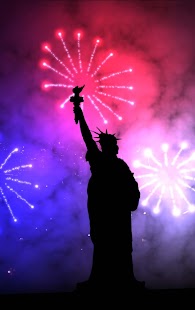
Happy Anniversary, America

Today we mark the 240th anniversary of the signing of the Declaration of Independence. We’ll enjoy picnics and parades, burgers and dogs, and cap the day by watching towering fireworks displays. All well and good. But it should also serve—as no other national holiday does—as a time to take stock and reflect on our nation.

I say “anniversary” rather than “birthday” because while our nation can be said to have been conceived—or perhaps given birth—in 1776, it didn’t achieve nationhood until the adoption of the Constitution and the inauguration of George Washington, the convening of the First Congress, and the seating of the Supreme Court. These institutions of government, which formed the character of our nation as a polity, created these United States of America. (We would the become The United States of America until we passed through the crucible of the Civil War).  Now is a crucial time to reflect on the status of this project.

Today we have a carbuncle on the surface of our body politic. Large, red, and ugly, we hope that it may go away with limited treatment and minimal interference to our politics and life as usual. But this is a Pollyannaish view because the carbuncle—or perhaps “bubo” is a better metaphor—represents an underlying systemic infection that threatens the whole of the body politic. Continued vigilance and treatment are imperative.

But this is a holiday, and my personal habit is to reflect on some work of American history or political thought. To this end, I’ll continue my way through The Federalist, the collective effort of Madison, Hamilton, and Jay.

Some see this document as a mere antiquary of 18th-century political thought, but it remains a vital and penetrating work of political thought and government design. The insights and warnings found in The Federalist remain pertinent today. I’ll leave with one small thought from Federalist No. 1:

[A] dangerous ambition more often lurks behind the specious mask of zeal for the rights of the people than under the forbidden appearance of zeal for the firmness and efficiency of government. History will teach us that the former has been found a much more certain road to the introduction of despotism than the latter, and that those men who have overturned the liberties of republics, the greatest number have begun their career by paying an obsequious court to the people; commencing demagogues and ending tyrants.
(Hamilton)


Spend a little time this holiday pondering these words. 

Wednesday, June 8, 2016

Intelligence, Judgment, Peter Thiel, Rene Girard, and Donald Trump

Image result for images Peter thiel
Peter Thiel
A confluence of reading selections recently brought the name of Peter Thiel to my attention. First, I read an article that Thiel wrote for National Review in 2011 that Patrick Ophuls cites in his book Immoderate Greatness: Why Civilizations Fail. In that article, Thiel argues that science and technological progress are stalling and need government support, among other things. Although I read the article twice, I didn’t find it compelling.

Thiel's name had also been in the news of late because he revealed that he had financed the prosecution of the case against Gawker for an invasion of privacy claim by the former professional wrestler “Hulk Hogan” over a sex tape of Hogan that Gawker had published. The jury awarded a significant, debilitating judgment against Gawker. Some speculate that Thiel financed the case out of revenge because Gawker publicly revealed that Thiel was gay, although Thiel had already come out to friends and acquaintances. None of this is especially noteworthy, given that I have little interest in scandal rags or the sex lives of strangers (or friends or relatives, for that matter). I'm very little sympathy for Gawker, and I haven’t given much thought to the implications of the suit that some claim about it. But the confluence of references made me look into Peter Thiel. It turns out the Peter Thiel was a student of René Girard at Stanford, and he has declared himself very much of a student of Girard's mimetic theory of desire (which I’ll explain more about later in this essay).

I also wondered about Thiel's politics because he published in The National Review, the flagship journal of American conservatism founded by William F. Buckley. I learned that Thiel is a libertarian. He’s been actively funding anti-government Republicans over a number of elections in generous amounts. I also discovered that Peter Thiel is a delegate to the Republican national convention on behalf of Donald Trump.

The final piece of the puzzle that intrigues me about Peter Thiel is the fact that he is, at least by some measures, very intelligent. At an early age, he was a ranked chess master. He did his undergraduate work at Stanford (where he took a class from Rene Girard), and then he went on to Stanford Law school. He worked at a prestigious law firm, and he held a judicial clerkship, with an opportunity to have gone on to a Supreme Court clerkship. Detouring from a legal career, he got into the entrepreneurship business and helped found PayPal, invested very early in Facebook, and he became a billionaire.

So how can a person who—by common standards—is very smart, very successful, very libertarian, and a student of René Girard's mimetic theory, become a Donald Trump supporter?

Now my supposition—I'm not alone in this—is that Donald Trump is a prototypical demagogue. * (N. B. I do not consider him a fascist because I don’t believe he meets all of the criteria for fascism, and quibbling here can be important in trying to understand what he represents.)  Trump is a proponent of nativism, racism, and xenophobia, mixed with a policy potpourri that makes any classification based on a traditional right-left continuum impossible. Also, Trump is the most ill-suited—by temperament, character, and experience—person to be president of almost anyone imaginable. Given this (and you can leave the essay here if you disagree—no sense wasting your time), then how do we understand Peter Thiel and those like him? (Sanders supporters who would shift to Trump, perhaps as high as 20% by some estimates, are another whole crazy group to ponder.)

My questions arising from all of this:

What does it mean to be smart? Can a person be described as “smart” if he designs algorithms, plays at a world-class level of chess, reads complex texts, and supports a blatant demagogue? And in Thiel’s case, even when you are presumably sophisticated concerning political philosophy and the legal system? (I’m giving him the benefit of the doubt based on his educational credentials.) Thiel's case seems a compelling piece of evidence for Howard Gardner's theory of multiple intelligences. Thiel’s case suggests that smarts are domain specific.

In a profile by George Packer published by The NewYorker in November 2011 about Thiel, one gets a sense that Thiel, despite—or because of—his high IQ, is ill at ease with the world outside of Silicon Valley geniuses. Thiel has been immensely successful in many of his ventures. But at the time of the article, he was talking about walking away from politics because it was too complicated and difficult to work with. To someone who'd made billions of dollars in the tech industry working with other techies and hanging out with them, I can understand how politics would be far too messy and frustrating. But some people are very smart (in the abstract thinking sort of way), who also have a grasp of the political process and the complex needs and thoughts of a variety of different groups of people.  These individuals can become successful politicians because they easily relate to others and understand intuitively that humans are inherently “groupish” (as social psychologist Jonathan Haidt terms it). They appreciate that the requirements of human life make morality and politics necessary for human flourishing, and this requires recognition of the needs and perspectives of a wide variety of groups.  In tangent with our political system, we have economic and business systems, but these too depend on human cooperation (even if coerced or bribed). But in democratic politics, individuals start from legal equality, while in the economic realm, we recognize legitimate inequality (masters and servants). Perhaps the distinction between these two realms frustrates Thiel and his cohort.

How does Thiel’s level of intelligence affect his judgment? Packer notes that Thiel and his friends at a dinner party seem alienated from the rest of society and locked in almost childish concerns and enthusiasms. Many persons suffer real problems in navigating the to-and-fro of political maneuvering and negotiations. We must distinguish abstract intelligence from the emotional and social skills that mark maturity of judgment. Someone may be a genius in math, science, or tech but not at all well-suited for intense involvement in human social and political life. Mr. Thiel may be one of those persons. (I’m reminded of LBJ’s comment about the group of whiz-kids that JFK brought into his administration: “I wish that just one of them had run for sheriff sometime.”)

Do Peter Thiel and other Republicans believe that if Donald Trump is elected president, they can control and shape his agenda towards their hyper-free-market, minimalist government, low tax agenda? This agenda is not what drew voters to Trump in the Republican primaries. If anything, Republican primary results showed that the Republican orthodoxy preached by all of those other candidates fell flat with most voters. Tax cuts for the rich, cuts in government services, cuts in transfer payments, and other such staples of the current Republican diet were rejected in favor of aggressive limitations on immigration, trade war, xenophobia and racism, tough talk (even beyond the Republican norm), and a grab bag of economic ideas presented with no defining coherence.

One has to be quite circumspect in the use of historical analogies, remembering they are analogies, not analogs or repetitions. But German conservatives in 1933 thought that they could install Hitler in office and then control him. They couldn't. They didn't. You know what happened next. Now I am not equating Donald Trump with Hitler; the trope is misapplied and unpersuasive. However, people who think that a politician will govern drastically differently from what the candidate says during a campaign to gain power—at least in American political history—is usually going to be surprised. Politicians do things, for the most part, to please the people who helped them gain power.  Any individual or group that believes that they can control Donald Trump will be almost certainly wrong. Ego and vanity alone mitigate against this ever happening. And given that Trump seems to have little sense of how to build political coalitions or how to build a party, not to mention his lack of any coherent policy agenda, the ability to control him will be much more daunting than it would be a typical politician.

Regarding Thiel and Rene Girard, Girard’s theory of mimetic desire holds that humans come to desire the same things. Girard is a native of France, but he came to the U.S. for graduate school and remained here the rest of his life. Girard first developed his theory of mimetic desire through reading 19th-century novels, but he expanded the scope of his search and wrote about Shakespeare, classical Greek and other myths, and the Bible. Indeed, Girard came to the conclusion that Christianity broke with the long human practice of using scapegoating to reduce the social conflict created by mimetic desire. In other words, when individuals desire the same objects, conflicts ensue. Over time, social tensions grow.  At that point, society looks for a scapegoat and uses the scapegoat to discharge the built-up tension of the conflicts. Girard writes that with the sacrifice of Christ, who is an innocent who chose the scapegoat role for himself in order to negate the validity of the scapegoating dynamic. Girard receives serious consideration from many thinkers, including Garry Wills, Princeton philosopher Mark Johnston, and British philosopher Roger Scruton, among others. Girard’s project digs very deeply into the human condition, and his project is intriguing and provocative. But what I want to emphasize here is his theory of scapegoating. As with almost any demagogue, Donald Trump uses scapegoating, or blaming The Other, as a major focus of his appeal. The Mexicans, the immigrants, the Chinese, the Moslems—his grab bag seems to be almost endless—all are blamed by Trump for perceived ills. So, the question arises, what would René Girard think about Trump? Girard died in 2015, so we can’t ask him directly, but I wonder if student Peter Thiel has wrestled with the Donald Trump phenomena in light of his Girard’s work. I have only an elementary knowledge of Girard’s works, but I can't help but believe that Girard would see through the Trump phenomenon to the scapegoating upon which it relies.

I don't know Mr. Thiel. He may be a swell guy. Some of the things I’ve read about him recently lead me to think highly of him, but some other of his attributes—his support of Trump perhaps foremost—make me wonder how his mind functions, or doesn’t, as the case may be. It wouldn't matter so much except that he is a major player in Silicon Valley, a billionaire, and someone who is willing to work very hard to promote—and perhaps even impose—his vision upon society. He has every right to do that. But because he has so much money, he holds immense power, and he therefore merits scrutiny. He seems to lack the check of judgment, made all the more dangerous by his obvious (and perhaps overweening) intelligence.

Finally, related to judgment, is the question of character. The test of character this election cycle applies to everyone on the political right, Republicans, and Libertarians. Will they support Donald Trump despite all that we know about him and his manifest unfitness for office and the threat he presents to our Republic? This issue will separate the sheep from the goats.

A part of any rounded intelligence is sound judgment in human affairs. I mean solid, working judgment about people that is essential to moral and political life. We are political animals, and to the extent that we fail to use—or lack through no fault of our own—sound, reasonable judgment, we suffer the consequences, and those consequences won’t be good.

*On this topic, among conservatives who hold a similar view, check out George Will, Brett Stephens (Wall Street Journal), David Brooks (New York Times), Ross Douthat (New York Times), Robert Kagan, Max Boot—I’ll stop here. I could go on at some length.