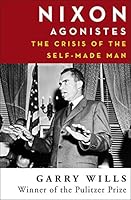
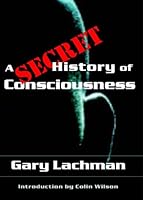
Saturday, September 4, 2021

Thoughts for the Day: Saturday 4 September 2021

2018 publication more important than ever


[78.] Judaeo-Christian thought demythologized nature. While continuing to admire its grandeur and immensity, it no longer saw nature as divine. In doing so, it emphasizes all the more our human responsibility for nature. This rediscovery of nature can never be at the cost of the freedom and responsibility of human beings who, as part of the world, have the duty to cultivate their abilities in order to protect it and develop its potential. If we acknowledge the value and the fragility of nature and, at the same time, our God-given abilities, we can finally leave behind the modern myth of unlimited material progress. A fragile world, entrusted by God to human care, challenges us to devise intelligent ways of directing, developing and limiting our power.

79. In this universe, shaped by open and intercommunicating systems, we can discern countless forms of relationship and participation. This leads us to think of the whole as open to God’s transcendence, within which it develops. Faith allows us to interpret the meaning and the mysterious beauty of what is unfolding. We are free to apply our intelligence towards things evolving positively, or towards adding new ills, new causes of suffering and real setbacks. This is what makes for the excitement and drama of human history, in which freedom, growth, salvation and love can blossom, or lead towards decadence and mutual destruction. The work of the Church seeks not only to remind everyone of the duty to care for nature, but at the same time “she must above all protect mankind from self-destruction.”

Pope Francis. Encyclical on Climate Change and Inequality (pp. 49-50). Melville House. Kindle Edition. 

Now from William Patrick Ophuls Requiem for Modern Politics by William Ophuls

Quotes from Ophuls, Pt. 2

Despotism may govern without faith, liberty cannot. Religion is much more necessary in the republic which they set forth in glowing colors than in the monarchy which they attack; it is more needed in democratic republics than in others. How is it possible that society should escape destruction if the moral ties not strengthened in proportion as the political tie is relaxed? And what can be done with the people who are their own masters if they are not submissive to the deity?
Alexi de Tocqueville, p. 29
As much biblical prophet as political philosopher, brokes decisively with Hobbes and the Enlightenment mainstream by brining religion back into politics. The Marxist sovereign has the duty to . . . end the class domination and social oppression that has marred all previous history. When this overweaning objective is joined to the general enlightenment drive for social perfection, the result is an ideological crusade for an earthly paradise – in effect, a secular religion. By resurrecting the eschatological element that Hobbbes had tried to exclude from politics, Marx unleased a new era of quasireligous warfare, both withing and between states. . . . As a political doctrine, Marxism therefore combines the autoritariansim of Hobbes with the very worst aspect of premodern politics: the religious element that Hobbes tried so hard to get rid of. p. 42

Other voices: 

A state of half-ignorance and half-indifference is a much more pervasive climate sickness than true denial or true fatalism.

Reasonable–that is, human–men will always be capable of compromise, but men who have dehumanized themselves by becoming the blind worshipers of an idea or an ideal are fanatics whose devotion to abstractions makes them the enemies of life.


Our leaders’ apparent failure, though, has less to do with gross character flaws and more to do with the ever greater empowerment of social groups and the generally rising complexity of our world.

Spiro Agnew’s career has about it a somnambulant surefootedness, an inevitability of advance, that reminds one of Mencken’s Coolidge, of the juggernaut of snooze: “There were massive evidences of celestial intervention at every step of Coolidge’s career, and he went through life clothed in immunities that defied and made a mock of all the accepted laws of nature.” . . . . It was said that Nixon regretted his choice [of Agnew], his deal with [Strom] Thurmond. But Agnew was a guided missile, swung into place, aimed, activated, launched with the minute calculation that marks Nixon. Once the missile was fired, the less attention it drew to itself the better—like a torpedo churning quietly toward its goal. Agnew has a neckless, lidded flow to him, with wraparound hair, a tubular perfection to his suits or golf outfits, quiet burbling oratory. Subaquatic. He was almost out of sight by campaign’s end; but a good sonar system could hear him burrowing ahead, on course.

Economics is our contemporary theology, regardless of how we spend Sunday. Economics is the only effective syncretistic cult remaining in the world today, our world’s only ecumenical faith. It provides the daily ritual, uniting Christian, Hindu, Mormon, atheist, Buddhist, Sikh, Adventist, animist, evangelist, Muslim, Jew, fundamentalist and New-Ager in the common temple, admitting all alike, from which the money changers have not been thrown out, the Swiss bank.

Friday, September 3, 2021

Thoughts for the Day: Friday 3 September 2021


Pope Francis. Encyclical on Climate Change and Inequality [Laudato Si] (pp. 37-38). Melville House. Kindle Edition: 

60. Finally, we need to acknowledge that different approaches and lines of thought have emerged regarding this situation and its possible solutions. At one extreme, we find those who doggedly uphold the myth of progress and tell us that ecological problems will solve themselves simply with the application of new technology and without any need for ethical considerations or deep change. At the other extreme are those who view men and women and all their interventions as no more than a threat, jeopardizing the global ecosystem, and consequently the presence of human beings on the planet should be reduced and all forms of intervention prohibited. Viable future scenarios will have to be generated between these extremes, since there is no one path to a solution. This makes a variety of proposals possible, all capable of entering into dialogue with a view to developing comprehensive solutions. (p. 37)


61. On many concrete questions, the Church has no reason to offer a definitive opinion; she knows that honest debate must be encouraged among experts, while respecting divergent views. But we need only take a frank look at the facts to see that our common home is falling into serious disrepair. Hope would have us recognize that there is always a way out, that we can always redirect our steps, that we can always do something to solve our problems. Still, we can see signs that things are now reaching a breaking point, due to the rapid pace of change and degradation; these are evident in large-scale natural disasters as well as social and even financial crises, for the world’s problems cannot be analyzed or explained in isolation. There are regions now at high risk and, aside from all doomsday predictions, the present world system is certainly unsustainable from a number of points of view, for we have stopped thinking about the goals of human activity. “If we scan the regions of our planet, we immediately see that humanity has disappointed God’s expectations.”

And now for some other voices: 

From Requiem for Modern Politics by William Ophuls

The major advances in civilization are processes which all but wrecked the societies in which they occur.

--Alfred North Whitehead (xv)
Of course, all political paradigms contain inherent contradictions and therefore generate problems that must be solved.The job of the statesman, as opposed to the mere politician, is to preserve the paradigm by dealing effectively with these problems. However, if political wisdom and skill are lacking or if the contradictions are very deep, small problems eventually coalesce into a large problemmatique that challenges the old paradigm. At this point, more reform, however well conceived, no longer suffices and may even make matters worse, so pressure builds up for a fundamental change in regime. (26)
The challenge is to find a way of going beyond a moral individualism without losing the individual along the way. (27)


These four slow-process stresses— worsening economic inequality and insecurity, mass migrations, climate change, and normative threat— erode our feeling that our situations are safe and fair; such stresses are also seen by many people, even if only subconsciously, as harbingers of devastating social earthquakes to come.

The notion of our common humanity— that all human beings share the same fundamental moral worth— originated in the Axial Age. It was then, in the millennium before the Common Era, says the philosopher Karl Jaspers, that the idea of “the human being as we still conceive of it today made its appearance.”


“In framing a government which is to be administered by men over men,” Madison wrote (Federalist 51), “the great difficulty lies in this: you must first enable the government to control the governed; and in the next place oblige it to control itself. A dependence on the people is, no doubt, the primary control on the government; but experience has taught mankind the necessity of auxiliary precautions.”

The ills of modernity—secularization, loss of moral compass, social conflict, and national rivalry—were set against the premodern virtues of unity, stability, and faith. Nazism was blamed on a fatal metastasis of modernity’s vices: liberalism, Marxism, Nietzschean individualism, and Darwinism.

But cognition, whether in the form of discovery or of logic, is distinct from thinking (as manifest in literature and philosophy) in that it alone is compelling, that it alone can lead to a necessity and a compelling absolute, and that consequently it alone may give rise to a theory of (political or ethical) action which can hope to ascend, as it were, above the unpredictability and unforeseeability of human action.

Tuesday, August 31, 2021

Thoughts for the Day: Tuesday 31 August 2021


Dr. Lustig's most recent comprehensive critique & guidance about our health & health system


Politics must pay greater attention to foreseeing new conflicts and addressing the causes which can lead to them. But powerful financial interests prove most resistant to this effort, and political planning tends to lack breadth of vision. What would induce anyone, at this stage, to hold on to power only to be remembered for their inability to take action when it was urgent and necessary to do so?

For all our limitations, gestures of generosity, solidarity and care cannot but well up within us, since we were made for love. (p.36)

59. At the same time we can note the rise of a false or superficial ecology which bolsters complacency and a cheerful recklessness. As often occurs in periods of deep crisis which require bold decisions, we are tempted to think that what is happening is not entirely clear. Superficially, apart from a few obvious signs of pollution and deterioration, things do not look that serious, and the planet could continue as it is for some time. Such evasiveness serves as a licence to carrying on with our present lifestyles and models of production and consumption. This is the way human beings contrive to feed their self-destructive vices: trying not to see them, trying not to acknowledge them, delaying the important decisions and pretending that nothing will happen. (pp. 36-37)

After you've carefully considered the above, chew (mentally) on these thoughts: 

[T]he main reason for high triglycerides has nothing to do with LDL-C; rather, it’s the refined carbohydrates and sugars in your diet. Again, the #1 risk factor for heart disease isn’t LDL-C; it’s the insulin resistance of metabolic syndrome, of which triglyceride is a much better biomarker than LDL-C.

People were not being asked to believe something they knew to be false; they were being asked to put their faith in something new. “There is an element in the readjustment of our financial system more important than currency, more important than gold, and that is the confidence of the people. Confidence and courage are the essentials of success in carrying out our plan. You people must have faith; you must not be stampeded by rumors or guesses. Let us unite in banishing fear. We have provided the machinery to restore our financial system; it is up to you to support and make it work. “It is your problem no less than it is mine. Together we cannot fail.”
I'm not sure who Carter is quoting above. My best guess is FDR. Alas, this was a public library read, so I don't have access to go back to check. But in any event, it's the thought that counts, right?


The ravaging of Libya, which suffered the world’s first aerial bombing in 1912, confirmed that the emerging New Man, theorized by Nietzsche and Sorel, and empowered by technology, saw violence as an existential experience – an end in itself, and perpetually renewable.

In courtroom fashion, [James Fitzjames] Stephen bored away at weaknesses in [John Stuart] Mill’s proscription of coercive interference with personal liberty, which Mill himself recognized and had sought to patch. Society had no say over personal conduct, Mill insisted, unless it harmed others. To that “harm principle,” Stephen made familiar objections. The distinction between harm to self and others was unstable. Besides, Mill gave no usable gauge for the wrong of coercion or the worth of liberty. Mill’s arguments for free speech either failed or clashed with his utilitarian principles.

When a person seeks out an altered state, we reflexively think of it as a moral failing. But what happens when feelings and sensations are the goal? In cases where altering the external stress is impossible, our mindsets can get reflexively fixed, and sometimes the only place to insert a wedge is in the sensory pathways themselves.


Monday, August 30, 2021

Thoughts for the Day: Monday 30 August 2021


Pope Francis issued his encyclical Laudato Si in 2015. Are we ready to listen, to discuss? 


Never have we so hurt and mistreated our common home as we have in the last two hundred years.

(Location 620)

People may well have a growing ecological sensitivity but it has not succeeded in changing their harmful habits of consumption which, rather than decreasing, appear to be growing all the more. A simple example is the increasing use and power of air-conditioning. The markets, which immediately benefit from sales, stimulate ever greater demand. An outsider looking at our world would be amazed at such behaviour, which at times appears self-destructive.

(Location 634)

[E]conomic powers continue to justify the current global system where priority tends to be given to speculation and the pursuit of financial gain, which fail to take the context into account, let alone the effects on human dignity and the natural environment. Here we see how environmental deterioration and human and ethical degradation are closely linked.

(Location 638)

“whatever is fragile, like the environment, is defenceless before the interests of a deified market…"

(Location 641)

57. It is foreseeable that, once certain resources have been depleted, the scene will be set for new wars, albeit under the guise of noble claims. War always does grave harm to the environment and to the cultural riches of peoples, risks which are magnified when one considers nuclear and biological weapons.

(Location 643)


And now for some other voices:


“There are some people whose confidence outweighs their knowledge, and they’re happy to say things which are wrong. And then there are other people who probably have all the knowledge but keep quiet because they’re scared of saying things.”

— Helen Jenkins, on the problem of communicating scientific uncertainty. (%Farnum Street) 

As one of the best students of the area [southern California], Joan Didion, says: “California is a place in which a boom mentality and a sense of Chekhovian loss meet in uneasy suspension; in which the mind is troubled by some buried but ineradicable suspicion that things better work here, because here, beneath that immense bleached sky, is where we run out of continent.”

But neither science nor even “scientificality,” neither scholars nor charlatans, supplied the ideas and techniques that operated the death factories. The ideas came from politicians who took power-politics seriously, and the techniques came from modern mob-men who were not afraid of consistency.

Fear about warfare and global violence became a permanent condition. It became an inextricable part of American consciousness, helping to produce an obsession with national security, one that risked political repression.

We went on to religion [from art]. Here again we found that the ostensible object, God, was not the real object. The mythology of religion does not say what it means. It points beyond itself, even more unmistakably than the work of art, to a concealed mystery, a truth which is not stated. The real object of religion is not grasped by religion itself.

Policy involves seeing a problem in all its dimensions, examining the pros and cons of different strategies (something neither Kennedy nor Johnson did), trying to estimate the consequences of any given decision (again a point neglected by Kennedy and Johnson), standing in the immediate present with no illusions or preconceived formulas, and trying to calculate the best path to follow, while taking into account Morgenthau’s admonition that in foreign policy, there are no good choices, only less bad ones.

Like Morgenthau, he reluctantly voted for Nixon—or so he says. In any case, Kissinger’s political double-dealing contributed to his winning the trust of the pathologically untrusting Nixon and landing the position of national security adviser with the new administration. Humphrey later said that if he had won the presidency he too would have appointed Kissinger national security adviser, suggesting two things: first, that Kissinger’s deviousness had paid off; second, that America’s Vietnam policy would not have been very different if Humphrey had been in the White House instead of Nixon.


Sunday, August 29, 2021

Thoughts for the Day: Sunday 29 August 2021


“The legitimate object of government, is to do for a community of people, whatever they need to have done, but can not do, at all, or can not, so well do, for themselves---in their separate, and individual capacities.”--Abraham Lincoln


To blame population growth instead of extreme and selective consumerism on the part of some, is one way of refusing to face the issues. It is an attempt to legitimize the present model of distribution, where a minority believes that it has the right to consume in a way which can never be universalized, since the planet could not even contain the waste products of such consumption. Besides, we know that approximately a third of all food produced is discarded, and “whenever food is thrown out it is as if it were stolen from the table of the poor.”

(Location 587)


Inequity affects not only individuals but entire countries; it compels us to consider an ethics of international relations. A true “ecological debt” exists, particularly between the global north and south, connected to commercial imbalances with effects on the environment, and the disproportionate use of natural resources by certain countries over long periods of time.

(Location 594)


The warming caused by huge consumption on the part of some rich countries has repercussions on the poorest areas of the world, especially Africa, where a rise in temperature, together with drought, has proved devastating for farming.

(Location 600)


We must continue to be aware that, regarding climate change, there are differentiated responsibilities. As the United States bishops have said, greater attention must be given to “the needs of the poor, the weak and the vulnerable, in a debate often dominated by more powerful interests.”31 We need to strengthen the conviction that we are one single human family. There are no frontiers or barriers, political or social, behind which we can hide, still less is there room for the globalization of indifference.

(Location 614)


Hard to follow Ol' Abe and the Pope, but here are some other voices worth considering: 

An important aspect of the neural symbols that make up our cognition is that they not only register emotion and sensation together, but also the volume of those signals. An intense emotion or sensation is more likely to get picked up by the limbic librarian than one that doesn’t stand out. Insofar as the Wedge requires a person to be attentive to their sensations and feelings, learning to play with the volume levels is another tool we can use to subtly alter the way we experience the world. As counterintuitive as it may seem, sometimes diminishing our senses is the key to connecting outward.

No decision you make will ever make it possible to avoid death. Which, in a strange way, means that the whole idea of risk is something of an illusion. If avoiding death was the goal, then we’ve already lost the game. But what if the point of being alive was instead to experience the entire bounty of human emotion, failure, triumphs, love and loss?


Whether humanity can move up to a transcultural identity in which science and a new kind of post-religious spirituality can reintroduce the fully individuated consciousness of the individual to a multidimensional cosmos is the question of our time.

Basically, when we approach life with our habitually passive attitude (James's “inferiority to our true selves”) we are saying to our robot, “Go ahead and take care of this, it isn't important enough for me to attend to,” and the result is that sense of separation from life, of never really touching it, that plagues so many of us in the modern world.

The problem with a purely material and rational society is captured by two well-known Biblical sayings: “Man shall not live by bread alone,” and “Where there is no vision, the people perish.”