Wednesday, February 9, 2022

Thoughts 11 Feb. 2022


We are hurtling toward a day of ecological reckoning. We should have acted many years ago to contain the damage and build a bridge to a different kind of civilization. Now we are faced with an increased population, worse pollution, dwindling resources, progressive biological destruction, much greater complexity, compounding debt, and enormous inertia in the system—a nexus of problems that have no separate solutions, only an aggregate solution requiring a total revolution in our way of life.

As generals have learned, even the best war plans rarely survive first contact with the enemy, but having planned is essential, because it forces you to imagine different scenarios and to prepare for the worst. In other words, planning is an inoculation against stupefaction and panic, so when things do not go according to plan, you are less likely to lose your head and quicker to make the necessary adjustments.

Gibbon: it was “the loss of freedom, of virtue, and of honour,” not the barbarian invasions, that doomed the [Roman] empire of the West.

I frequently emphasise that both hemispheres are involved in absolutely everything we do. It cannot, however, be an argument against hemisphere differences.

[T]here are emergent phenomena from the whole interconnected system at the hemisphere level, and neuroscience increasingly recognises that we should think in terms of complex widespread networks.

[James] Fowler’s work examines religion, in the broadest sense of that complex term, as the way in which we think about and relate to the ultimate nature of existence. Under that definition, even many forms of modern atheism and naturalism are really better classified as modernist forms of religious expression (Stage Four in Fowler’s construction). After all, they often represent strong conclusions about the ultimate nature of being upon which whole systems of cultural rules, norms, and ethics are constructed.

It will be a long time before we know whether the protests of 2020 can come anywhere close to fulfilling their ambitions—not just to change policing and criminal justice in America, but also to bring full equality to Black Americans. Because structures of oppression are much too big for any one of us to budge, in a sense white people are, as usual, off the hook. Systemic criticism produces gestural politics. During the pandemic the San Francisco Board of Education took on the project of changing the names of Abraham Lincoln High School, Franklin D. Roosevelt Middle School, and dozens of other “problematically” named schools, while keeping isolated and demoralized children out of all schools, whatever their names. Mastheads and tables of contents changed, pictures and statues were taken down, glass ceilings shattered, but no one honestly expected to do much about the material conditions of misery.

Before Montesquieu’s discovery, the only principle of change connected with forms of government was change for the worse, the perversion that would transform an aristocracy (the government of the best) into an oligarchy (the government of a clique for the interest of the clique), or overturn a democracy that had degenerated into ochlocracy (mob rule) into tyranny.

The doctrine which I am maintaining is that the whole concept of materialism only applies to very abstract entities, the products of logical discernment. The concrete enduring entities are organisms, so that the plan of the whole influences the very characters of the various subordinate organisms which enter into it.

Four different kinds of violent ruptures have flattened inequality: mass mobilization warfare, transformative revolution, state failure, and lethal pandemics.

Tuesday, February 8, 2022

Thoughts 8 Feb. 2022

Understanding the structure of the brain and how it functions can help us see the constraints on consciousness, much as, to use another metaphor, the banks of a river constrain its flow and are integral to its being a river at all, without themselves being sufficient to cause the river, or being themselves the river, or explaining it away. All experience in this life as we know it (and this applies whether we conceive the brain as the originator, or as a transducer, of consciousness) comes to us through the brain, and is therefore inevitably constrained, and shaped, by it.

It is not the changes in the brain itself that matter, but the way in which we use it. An analogy might be with a radio set: to begin with you try different channels, but after a while you begin to tune into only one. The other channels are still there – it’s just that you are no longer listening to them.

Even if we avoid oblivion, the result would be a dark age whose darkness would be roughly proportional to the extent of the overshoot. To avoid such a fate, humanity must either achieve a total technological mastery over nature via the perfection of artificial intelligence and robotics, an outcome that has been dubbed the Singularity, or make a relatively fast transition to a high-level agrarian civilization, precisely the options posited many years ago by Harrison Brown.

[A] state of total technological mastery is probably not achievable owing to basic physical and biological laws, such as the Entropy Law and the Law of the Minimum. Technology cannot sustain a “machine civilization” or even a “digital civilization” out of thin air.9 In addition, as noted by Brown, the Singularity would be a regimented, collectivized dystopia. (The digital panopticon of today is but the merest harbinger of such a future.)

According to John Rawls, for example, pursuing our own interests may be necessary, but only those acts that are motivated purely for the interests of others can be recognized as intrinsically moral.

Depth beats breadth any day of the week, because it opens a channel for the intangible,  unconscious, creative components of our hidden potential.

This is not a philosophy of not looking where one is going; it is a philosophy of not making where one is going so much more important than where one is that there will be no point in going.

As informed physical trainers will tell their clients, you cannot outrun a bad diet.

Monday, February 7, 2022

Thoughts 7 Feb. 2022


[C]rowds are moved by simple ideas, striking images, and repeated slogans that drive out deeper thought. To make matters worse, the anonymity of crowds induces individuals to behave viscerally, discarding both prudence and morality. In addition, because crowds are moved by images that are not logically connected or rooted in fact, members of crowds have a hard time distinguishing between reality and illusion. Thus, said [Gustave] Le Bon, Crowds are only powerful for destruction. Their rule is always tantamount to a barbarian phase. A civilization involves fixed rules, discipline, a passing from the instinctive to the rational state, forethought for the future, an elevated degree of culture—all of them conditions that crowds, left to themselves, have invariably shown themselves incapable of realizing.

Thomas Hobbes became the author of modern political economy by abandoning virtue as the purpose of politics and making economic development into the end of government.

I do not attempt to ‘explain’ experience at all in the causative sense. Nor do I invoke the brain in order to tell us what experience ‘really is’, which it never could, but to illuminate the constraints on our understanding, which it can.

The point is that we shouldn’t allow the ongoing work of overcoming modernism’s pathologies to alienate us from the real transcendence that modernist values continue to offer.

Here are two criteria [for choosing a path into the future:] any path we choose should take us towards a future that’s likely, as best we can judge, to be enough to genuinely reduce the danger humanity faces; and, second, the path should also be feasible, in the sense that it gives us a good chance of reaching that desirable future, which means surmounting or bypassing likely political, economic, social, or technological roadblocks along the way. These criteria are often at odds, leaving us trapped in what I call the enough vs. feasible dilemma.

The emerging infectious diseases paradigm, proposed by scientists from the 1970s onward, was, like the models of climate change and earth systems ecology that emerged at the same moment, a profound critique of our modern way of life, our economy, and the social system built on it.

Hayek assembled a ferocious, scholarly attack on Keynes and the New Deal, not as an empirical analysis or a work of economic theory but as a political treatise. The book, titled The Road to Serfdom, would in time be recognized as a foundational text of modern conservatism, though Hayek resisted the label all his life. To Hayek the word conservative connoted the “paternalistic, nationalistic, and power-adoring tendencies”4 of British Tories. He preferred to think of himself as a “classical liberal” inspired by Locke, Hume, and Smith—many of the same figures who animated Keynes. Keynes had tried to redefine liberalism for the twentieth century with The End of Laissez-Faire, sketching ideas that came to fruition in the New Deal; Hayek wanted to offer an alternative liberal vision.

While I would never discount the great achievements that Western medicine has given overall to human health, if we spent half as much money and time trying to invent a better placebo—or, maybe more accurately, better ways to train our immune system to protect our bodies—we’d likely discover entirely new ways to treat disease. This is, of course, where it’s beneficial to consider the relationship between the environment and human physiology as a wedge to help control and strengthen the immune system itself.

[Aby] Warburg’s theory of culture, which was based primarily on the medium of the image and pictorial representation, the human urge to give symbolic expression to our deepest and most existential anxieties—to give them a solid form and by doing so to make them amenable to innovation or treatment—is actually the source of all culture and learning. Even in its most sublime and abstract achievements, in art and science, the human mind can never entirely overcome culture’s origins, the feeling of existential anxiety and of being subject to the overwhelming forces of nature that, we suppose, surround us and overpower us.


Friday, February 4, 2022

Thoughts 4 Feb. 2022


I do not suggest that the brain originates anything. I do not know that the brain ‘causes’ consciousness: it might or might not. For example, it might transduce, or otherwise mediate, consciousness. I have my own view on that, which I will come to in a later chapter. But it is a matter of likelihoods: I know of no way of proving the point one way or the other, since the observable facts would look the same whether it gave rise to, or simply mediated, consciousness: just as an alien could not tell merely by looking in the back of the TV set whether it gave rise to, or transmitted, the material it shows.

[I]f you ask me why I robbed an old lady, I could reply: ‘I needed the money’, ‘I had just watched a violent video’, ‘I inherited my dad’s psychopathic tendencies’, ‘I was high on crystal meth’, ‘I heard a voice tell me to do it’, ‘I was brought up in a subculture where it was considered normal to steal’, ‘the government cut my welfare payments’, ‘my serotonin levels were depleted’, and so on. What counts as a possible cause depends on the context of the question.

Sadly, this patent reality [of climate change, environmental degradation, & the limits to industrial civilization] continues to be mostly denied in societies made up largely of the passively uninformed and the passionately misinformed.

Unfortunately, rational behavior is not characteristic of addicts and ignoramuses, so the warning signs of overshoot are denied or rationalized away by a divided, distracted, and deluded populace, and this would not change even if 100 percent of the world’s scientists were to issue a warning to humanity. So far from trying to solve our problems, we persist in the behavior that makes them worse.
But we're not at 100% of qualified experts agreeing on the reality of climate change. According to climate change expert Professor Jerry Schnoor of the University of Iowa, we're only at 99.9%. (#sarcasm)

Once our hope is focused on a story about the future that’s anchored in clear-eyed realism, we need to perform a bit of magic— to turn our hope “water” into hope “wine,” so to speak.

Intense uncertainty, the kind that makes the usual sense of the term status quo virtually irrelevant, became a source of fear. No one quite knew whether the era’s constellation of crises indicated “a state of greater or lesser permanence, as in a longer or shorter transition towards something better or worse or towards something altogether different.”


Thursday, February 3, 2022

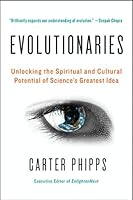
Responding to Carter Phipps About Climate Change: "Don't Look Up" (or Just Looking Up) Isn't Enough


 The essay I wrote below is in response to this review essay written by Carter Phipps for the Post Progressive Post website. The film "Don't Look Up" gave rise to Carter's essay, but he goes on from the film to a wider lens view of the issues of climate change. It's really a terrific consideration of the issues involved, especially regarding the hard political, economic, and ethical choices we must make. Recognizing the danger is just the first step. My essay (below) is in the manner of a concurring opinion. I very much agree with almost everything he contends, but I seek to expand upon his excellent lead. I highly recommend reading his article first, and then my response if you're so inclined.


Carter,


Thanks for your very thoughtful and considered essay about “Don’t Look Up” and your reflections that the film prompted.  You’ve written a terrific essay. It’s prompted some reflections on my part that I share below. It’s in the way of a concurring opinion, not a dissent. 


This film also strikes me as an example of preaching to the choir, which, on first reflection, seems like a waste of time. They are the saved. And yet, even those who seem among the elect suffer from periods of doubt and discouragement. Sometimes their faith, the strongest among the members of the congregation, needs reinforcement and affirmation in the face of discouragement and doubt. “Don’t Look Up” is a film for the choir members, and like you, I doubt it will serve to garner many converts. How to convert those who’ve not yet accepted the word—the reality— we speak of? This is the Cassandra problem, the challenge of the prophets. It is—and has been, in its various manifestations throughout history—a challenge of the greatest urgency in the face of imminent threats. 


I’m quite in agreement that a fundamental challenge lies in dealing with climate change and environmental degradation as a set of political issues. (Climate change is the most obvious and pressing subset of the wider issue of environmental degradation.) Climate change is a political challenge in the immediate sense as a set of concerns about the operation of political institutions. In the wider sense, political issues shade into issues of culture and its manifestations as worldviews, mass psychology and behavior, and political economies. Let me address each in turn. 


In the immediate sense, we’re dealing with a failure of American political institutions. Extreme polarization and a refusal to adapt our democracy to changing circumstances have rendered many of our institutions, especially Congress, virtually moribund. While I agree that public opinion has come around in some measure to acknowledge the reality of climate change, the conversion—to the extent some have been converted—is largely notional at this point. Many may recite the creed, but few live the faith. (And most of the credit for recent conversions must go to Mother Nature, who, with her wildfires, Derechos, droughts, heatwaves, polar vortexes, floods, tornados, and hurricanes—to mention only her loudest outbursts—deserves the credit for most recent conversions.) 


I contend that we must repair American democracy if we are to create a polity that can address the deeper, more fundamental issues raised by climate change. Of course, we must also address long-festering issues as well, such as racial equality, economic inequality, crime, immigration, etc. But if we don’t fix the fundamentals, anything else will become irrelevant.  In particular, we need to end legalized bribery (a/k/a unlimited campaign contributions), gerrymandering, the filibuster, assure ease of voting, and assure a fair and accurate count of votes. And, going further, we need to re-think the public space, which is now more virtual than physical, and consider how voices can be heard. We need to move away from rule by plebiscites and opinion polls to a greater sense of a shared dialogue and decision-making. But these are institutional and procedural changes that we need to make to avoid an authoritarian regime led by an unholy alliance of demagogues and venal elites. But we also need to go further upstream. 


Going further upstream is what the Institute for Cultural Evolution and the Post-Progressive Alliance are about at present. (I hope I have that right!) In short, I’m not sure any improvements to our governing institutions and procedures will be worth a tinker’s dam unless we come to grips with the pair of fraternal twins that haunt humanity: fear and anxiety; anger and ressentiment. These plagues upon our psyches, as collectively and individually, underlie much of the popular discontent we now witness. I suspect that these demonic twins are a part of the background noise of individuals and societies throughout human history, but sometimes they burst into the mind with the screech of a home fire alarm, overwhelming the mind and distorting thought. I believe our world is in the midst of such an outburst. The human herd is spooked by it. 


And why shouldn’t we be spooked? We know the dire predictions we face with climate change, protestations of denial or fantasies of easy-outs notwithstanding. (You’re right, denial ain’t just a river in Egypt.) We’ve seen our financial system collapse (again, for the oldest among us). And while many prosper in our economy, all too many Americans have suffered mightily. Life expectancies within some groups of Americans have declined, their deaths the result of declining communities and the entailing despair these declines generate. And, of course, their despair is spurred (“treated”) by drug pushers in the guise of physicians and drug companies.  We’ve suffered failed forever wars and are now looking at the prospect of war in Europe (again) and perhaps (again) in the Pacific.  We’ve experienced a pandemic disease that we mishandled and by our mishandling we’ve morphed it into an endemic disease—a forever disease to go with forever wars. We’ve suffered terrorist attacks on commercial, political, and military institutions by atavistic martyrs from abroad. But with greater regularity and consequence, we experience terrorist attacks on churches, synagogues, and schools (and elsewhere) by domestic terrorists—fellow Americans—who act alone and at random. We allow these terrorists to arm because we foster a culture of paranoia and a cult of gun worship. Our idolatry about guns (“Second Amendment rights”) worships a Moloch that requires the sacrifice of random human victims. We see the Capitol building sacked by barbarians at the behest of a demagogue and his henchmen (and women). The U.S. has the mightiest military ever, and we were once a beacon of freedom, hope, and security to the rest of the world. Yet on January 6, our republic was laid prostrate before the barbarians (loosely organized by the outgoing administration) as they attacked our Congress as it went through the ritual procedures of establishing the legitimacy of the newly elected government. No living persons had witnessed this kind of attack on our Constitution. And do we continue to live under the threat of nuclear Armageddon? Yes, we simply choose to believe (evidence suggesting the contrary notwithstanding) that no leader will want to trigger a nuclear Götterdämmerung. Finally, while we enjoy unprecedented economic wealth and abundance, we also know that many of us face a future where many human workers will become redundant, unneeded. Our society has increasingly realized the role of the sorcerer’s apprentice, deploying our technologies willy-nilly with little control over their courses and consequences. Fears of automation and increasing human irrelevance have led to cries of alarm for a couple of centuries, but even the boy who cried wolf eventually encountered a wolf. 


Whether we will experience any of these nightmare scenarios (and untold others), we cannot know. The future is never what it used to be. But we do know that climate change is happening now, before our eyes. We are en media res. The only remaining questions are how bad will it get (all our best efforts notwithstanding), and how effectively—peacefully, efficiently—will we make the transition to a new energy regime.  A new energy regime will certainly alter our culture, economy, and politics in significant ways. I, for one, from my comfortable middle-class life, hope that the transition proves smooth and peaceful. But the longer we wait, the more likely that radical, abrupt changes will occur, even if unbidden. Each day that passes increases the risk of greater disruption; greater disruption in our climate, our society, our economics, and our politics. Some of that disruption could pave the way for a better world, but that’s a long-shot wager. Humans don’t make wise decisions when motivated by fear, anxiety, anger, and ressentiment. Current trends in our world are toward the atavistic, the authoritarian. Our advancing technologies, without the wisest guidance, are as likely to enslave us as to liberate us. We can still—I think, I hope—steer our great ship away toward a safe harbor, but time is running out. Our ship, our nation, our world, cannot turn quickly. We cannot put on the brakes—a ship has no brakes, only more or less momentum. Our size and momentum allow only for gradual turns. We cannot zigzag like a speed boat. We must seek safe harbor before we take we suffer irreparable damage. 


So how do we do this? How do we make the changes, the deep changes, that are required of us? How do we persuade people to invest in creating a livable future? How do we disarm the fear, anxiety, anger, and resentment? How do we curb the greed, indolence, and indifference among the elites? 


I don’t know. Like most of life’s great problems and challenges, there is no single answer. Only possible answers, tentative answers, best bets. For me, for all of us, the evidence of the reality of climate change is beyond a reasonable doubt. A failure to act on our part would constitute a criminal act; an act done intentionally, with malice aforethought. We are beyond negligence in this case; ignorance of the risk and its likely consequences isn’t an available defense. We have no justification for inaction. But what then is our remedy? What judgment should we render? Here we can only act, test, and revise. 


At the present, no remedy should be off the table. Quickly taper fossil fuel use, of course. Put a price on carbon with a dividend of the proceeds paid to everyone to prevent an undue burden on low and middle-income families. Pursue nuclear power innovations. Consider geoengineering and carbon sequestration. (I’m skeptical, but pursue them.) Use the market as well as the political sphere. Consider a new ethic for a new era that will likely have less abundant energy than we’ve experienced in our lifetimes. How can we fairly and efficiently distribute what will likely prove a less abundant resource (energy)? Again, we’ll need not only to pursue technological innovations, but also innovations in our culture, our economy and economic thinking, and in our ethics and politics, our practices and institutions. 


It is possible, just possible, that we—humanity—and this Earth, this oasis of life with which we are entrusted, might just come out on the other side of this crisis with a better world. It’s a long shot, but it’s worth the effort. But we need to start now. Right now. 


Thoughts 3 Feb. 2022


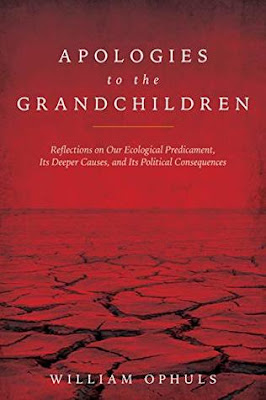
[W]hat allowed the Industrial Revolution to be such a success? The answer is sixfold. First, most obvious, it began with an abundance of high-grade resources. Second, the original bads, such as industrial waste, were relatively small compared to the atmosphere or the rivers into which they were discharged. The harm did not go unnoticed, but the damage seemed minor compared to the benefits. Third, the benefits and costs of industrialization were not distributed equally. The industrialists and their allies profited greatly, the natural world and the poor, disadvantaged, or colonized paid the price. Fourth, due to inertia in the system, a major portion of the costs of industrialization were shoved into the future. As with the climate regime, the effect of current industrial activity does not always become apparent until decades later. Hence grandchildren pay for the ecological sins of grandparents. Fifth, even the slowest rate of growth is exponential. Thus the absolute amount of both goods and bads grows steadily over time, doubling and doubling again until the burden of bads becomes impossible to sustain. Finally, sixth, economic growth involves an inescapable increase in complexity whose management requires ever more time, energy, resources, and money—a burden that, again, grows larger over time, forcing the society to run harder and harder just to stay in the same place.
That industrial civilization is being strangled by a slowly tightening noose of ecological scarcity has been apparent to anyone who cares to examine the evidence without prejudice. Sadly, this patent reality continues to be mostly denied in societies made up largely of the passively uninformed and the passionately misinformed.

Regrettably we would rather speak falsely, if doing so means we do not seem to contradict ourselves: we realise that it is much simpler for our point of view to be dismissed as self-contradictory than untrue.

[W]e are under almost irresistible pressure to adopt a view consistent with one hemisphere’s take or the other: it is too risky to draw, as we should, on both. And second, one of these takes, namely that of the left hemisphere, is very much simpler – indeed it is simplistic; and therefore far easier to articulate. It sees matters as black and white, ‘either/or’. The right hemisphere sees the nuances, as well as that we often must embrace two superficially incompatible truths in a ‘both/and’ – one, moreover, that includes embracing both its own take and that of the left hemisphere: altogether a far harder, and more complex, view to articulate.

This activism [left progressivism] shifted the scene from blighted urban neighborhoods and prisons to human resources departments, anti-bias training sessions, and BIPOC reading lists. It was less interested in social reform than a revolution in consciousness. The pandemic almost disappeared from mind as millions of white people experienced the kind of collective moral awakening that comes over Americans in different periods of our history. These awakenings can take on the contours of religious experience, a particularly American one—sin, denunciation, confession, atonement, redemption, heresy hunting, book burning, and the dream of paradise. Moral awakenings leap backward over the worldly philosophers of the eighteenth century, the secular and rationalist Founding Fathers, to our origins in the Puritan ancestors.

In my opinion, intuition is our most valuable compass in this world. It is the bridge between the unconscious and the conscious mind, and it is hugely important to keep in touch with what makes it tick.

Time and again, the same pattern emerged. Those who spent a higher percentage of their income on others were far happier than those who spent it on themselves.