Showing posts with label Buddhism. Show all posts

Tuesday, September 14, 2021

The World Is Made of Stories by David R. Loy


David R. Loy is a Buddhist scholar-practitioner  who, in addition to more scholarly titles, has also authored books intended for general audiences. This is one of those books, and it's a gem. It's short at only 128 pages, but it's packed with genuinely thought-provoking insights. Loy's text consists of a large number of quotes from a wide variety of sources: contemporary and historical, famous and obscure, scriptural and profane, and a variety of cultural traditions. But this book is not simply a collection of thought-provoking quotes gathered at random from a wide variety of sources. Loy interspaces his quotes with his questions and commentary. Indeed, the quotes serve more to adorn his commentary than vice versa. But the book works so well because of the deft interweaving of Loy's thoughts with those whom he quotes. Loy's text lends itself to brief quotation as well, as I demonstrate below. But taken together, Loy's text provides a compelling argument, a compelling story about stories.

Below I'll share a series of quotes that I've lifted from Loy's text as he lifted from others. As those he's quoted, there's no doubt more said before and after the quotes that round out the thought and may be usefully persued. But brevity provides fertile seed with which one can grow one's own thinking as well. Here's a sample of Loy's text, primarily as it relates to story, although this isn't the sole topic that he touches upon. Enjoy: 


If the world is made of stories, stories are not just stories. They teach us what is real, what is valuable, and what is possible. Without stories there is no way to engage with the world because there is no world, and no one to engage with it because there is no self.


This is not to deny (or assert) that there is a world apart from our stories, only that we cannot understand anything without storying it. To understand is to story.


The limits of my stories are the limits of my world.


Science is not primarily about discovering facts. It is about accounting for the relationships that make them meaningful.


Stories do not have sharp edges. They never begin at the beginning.


A story is a point of view is no perspectiveless perspective. There is no way to escape perspectives except by multiplying them.


We transcend this world by being able to story it differently.


The metaphorical nature of religious language makes its truth claims the most difficult to evaluate, because we cannot agree on what criteria to use. Myth avoids this problem by being meaningful in a different way. Religious doctrines, like other ideologies, entail propositional claims to be accepted. Myths provide stories to interact with.


One of the most dangerous myths is the myth of a life without myth, the story of a realist who is freed himself from all that nonsense.
        Liberation from myth, is that our myth?


Another way to evaluate a story is by its consequences when we live according to it. The most important criterion for Buddhism is whether a story promotes awakening.


My character is constructed by the roles I play.


If one's personality is composed of sub-personalities, each of us is composed of multiple narratives.


The question is not so much “What do I learn from stories?” as quotes "What stories do I want to live?"


Happens when I realize that my story is a story?


One meaning of freedom is the opportunity to act out of the story I identify with. Another freedom is the ability to change stories and my role within them. I move from scripted character to co-author of my own life. A third type of freedom results from understanding how stories construct and constrict my possibilities.


Whether or not karma is an unfathomable moral law built into the cosmos, living a story has consequences.


Without stories there is no self. And letting go of all stories during samadhi meditation I become no-thing. What can be said about nothing? Neti, neti, “not this, not this.” To say anything about it gives it a role in a story, even if only as a place-marker like a zero.


Am I the storyteller, or the storytold . . . or both? If a sense of self is produced by stories, who is telling them?


Descartes accounts for the continuity of awareness, Hume for its transformations. A narrative self—self as story—bridges the two, providing both sameness and difference. Essential to this narrative is intentionality. It is not enough to have a story about what happens. It is necessary to story why I do what I do.


A narrative understanding of the self implies a distinction between two aspects. One’s character composed of dispositions solidified out of roles that have become habitual. This is my identity, from the Latin identidem, which means “over and over.”
        The other aspect of self preserves the possibility of novelty, of doing and become something different. This is my no-thing-ness. Identify is relatively fixed. No-thing-ness is that which cannot be fixed.


Myth as history, history as myth. Premodern people lived in a mythic world, how much of our own history is mythological? Although the past makes us what we are, what we have become determines what we will be able to see in our history.


A profusion of stories is liberating yet uncomfortable, because we want to tuck ourselves securely into the True Story, the one that reveals the way things really are and what’s really important.


The story of history as the history of story.


We are trying to fill up the hole at our core—the sense that something is missing, that I am not real enough—by becoming more wealthy, famous, attractive . . . more powerful. Power—the ability to impose my stories—offers the promise of reality. How could I be unreal, if I'm the one who decides what happens?


The Buddha, like Socrates and Jesus, wrote nothing.


Having learned to find meaning in words, we miss the meaning of everything else.


Our deepest fear is rooted in a compulsion to secure what cannot be secured.


The end of a life organized around fear is to forget your stories about yourself, and thereby your self.


We never achieve a neutral standpoint outside all stories from which to evaluate them objectively.

Those who do not care for such Big Stories [Buddhism, Christianity, etc.] need to consider the alternative. There is no such thing as not storying. Everybody stories. The only choice we get is how to story.


The best stories are paradoxical, one hand offering what the other takes back.


Thursday, April 29, 2021

Thoughts for the Day: Thursday 29 April 2021


Exploring the history of inquiry in the West 


Statistical significance arguments. If on a certain hypothesis a certain result would be unlikely, then the occurrence of that result tells against the hypothesis. Of this kind are arguments ruling out the hypothesis of chance: a sequence of 1,000 heads when tossing a coin is possible but very unlikely if the tossing were random, so if such a result occurs, one rules out the hypothesis of chance and looks for some explanation of the regularity, such as a bias in the coin. Such arguments occurred in Aristotle, Cicero, the Talmud, and occasionally thereafter. There was never any attempt to quantify how unlikely the result was on the hypothesis.

Nyanaponika Thera noted, “cautious and intelligent use … of one’s own introspective observations … though far from infallible, may well lead to important and reliable conclusions.” Whether the Hellenistic philosophers meditated or not, their self-observation was sensitive and accurate, as is showed by the fact that they describe the process virtually identically with the abhidharma [a tradition of Buddhist description of operations of the mind] except for a tendency to see as aspects of a single complex stage what the abhidharma sees more minutely as successive simple stages.

“Early in the journey you wonder how long the journey will take and whether you will make it in this lifetime. Later you will see that where you are going is HERE and you will arrive NOW...so you stop asking.”

When we stop thinking for ourselves we are in a trance. Trance is the default setting of a mind that's not working consciously. Sometimes, when purposeful, this is healthy at other times it's incredibly unhealthy.

"Lots of people," as the poet and artist Austin Kleon puts it, "want to be the noun without doing the verb." To make something great, what's required is need. As in, I need to do this. I have to. I can't not.


Tuesday, March 23, 2021

Thoughts for the Day: Tuesday 23 March 2021


At a deeper cultural level, Anna Wierzbicka’s English: Meaning and Culture describes how John Locke’s writings on probability, reasonableness, and moderation became ingrained in the English language. The words “reasonable” and “probably” appear in modern English with a frequency and range of application very much higher than their cognates in other European languages, as do words indicating hedges relating to degrees of evidence such as “presumably,” “apparently,” “clearly.” These phenomena indicate an Anglophone mindset that particularly values attention to the uncertainties of evidence.

For in the end, he [Aldous Huxley] was trying to tell us that what afflicted the people in Brave New World was not that they were laughing instead of thinking, but that they did not know what they were laughing about and why they had stopped thinking.

The hard part is identifying excellence and crafting the rules of the game to elicit it. Of course, it’s immensely harder to govern scientific research than football.--Nicholas Gruen

To be free from convention is not to spurn it but not to be deceived by it. It is to be able to use it as an instrument instead of being used by it.

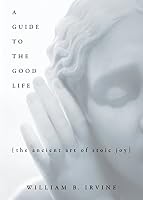
Stoicism and Zen have certain things in common. They both, for example, stress the importance of contemplating the transitory nature of the world around us and the importance of mastering desire, to the extent that it is possible to do so. They also advise us to pursue tranquility and give us advice on how to attain and maintain it. Furthermore, I came to realize that Stoicism was better suited to my analytical nature than Buddhism was. As a result, I found myself, much to my amazement, toying with the idea of becoming, instead of a practicing Zen Buddhist, a practicing Stoic.

Citizens never formed a deliberative whole but remained an unthinking herd. “When a candidate for public office faces the voters, he does not face men of sense; he faces a mob of men whose chief distinguishing mark is the fact that they are quite incapable of weighing ideas.”

Wednesday, September 16, 2020

Thoughts for the Day: Wednesday 16 September 2020


Sextus’s [Sextus Empiricus] passage should be compared also with the Buddhist doctrine of the Four Noble Truths. In both cases the genesis of suffering is identified as the habit of discriminating between good and bad, which locks one into anxiety about avoiding what one dislikes and getting what one likes and, once one has got it, anxiety about holding on to it.
Every time man makes a new experiment he always learns more. He cannot learn less. 
--R. Buckminster Fuller
[Hannah] Arendt cited President John Adams with approval: “a constitution is a standard, a pillar, and a bond when it is understood, approved and beloved. But without this intelligence and attachment, it might as well be a kite or balloon, flying in the air.”
And from Hannah Arendt's "Understanding & Politics," our feature deep quote source, the following:
Words used for the purpose of fighting lose their quality of speech; they become clichés. The extent to which clichés have crept into our everyday language and discussions may well indicate the degree to which we not only have deprived ourselves of the faculty of speech, but are ready to use more effective means of violence than bad books (and only bad books can be good weapons) with which to settle our arguments.
SNG: Shades of Orwell, no?

Sunday, October 5, 2014

Tough Love, Buddhist-style. A Review of Buddha Takes No Prisoners: A Meditator’s Survival Manual by Patrick (William) Ophuls


Reading this book, I sometimes wonder, “Is it worth it? All of this time spent on meditation, all of this concern? After all, I’m pretty old, and I’m never going to escape samsara in this lifetime. I’m a householder, and even after years of mediation and having spent 10 days living and meditating like a Buddhist monk, I’m not sure that I’ve made a dent in taming my monkey mind. My prospects are bleak. And if that isn’t bad enough, I live in society that is perhaps the worst of all possible worlds for hoping to achieve nirvana.”

If you pick up this book and read it in the hope of finding words of praise and encouragement, you’ve chosen the wrong book. Buddha takes no prisoners and neither does Ophuls. Whether he’s talking about meditation or the social world, he isn’t sparing in his assessments. Yet for all his bluntness, he encourages by throwing down the gauntlet of an impossible quest. For every time you read something that suggests your situation or your efforts are hopeless, Ophuls seems to acknowledge the quandary and say “do it anyway”. And why not? If we don’t try, we fade off into oblivion without having attempted the noble quest. As a practical matter, life can be bad. And life can be worse. We can’t escape old age, sickness, and death, but we can experience the “The Heart-ache, and the thousand Natural shocks That Flesh is heir to” with greater or lesser equanimity and therefore greater or lesser suffering.

Another reason to continue this book (and the path it recommends) comes from Ophuls’s pithy writing. As Ophuls notes in his beginning remarks:

So Buddha Takes No Prisoners is a different kind of meditation book— one that is quite idiosyncratic, not to say iconoclastic, by traditional standards, because it has no pretensions to orthodoxy . It also tries to inject a note of playful irreverence into what is usually taken to be A VERY SERIOUS MATTER. I want to emphasize the word playful: my aim was to produce something that would be fun to read and, above all, fun to write, while still being instructive. Otherwise, why bother?

Id. “Not another meditation book!”

In fact, Ophuls does provide fresh and engaging ways to consider meditation and the aims of the Buddhist tradition. I came away with some memorable insights, such as this one about the realization of what it’s all about:

[M]any years of intensive spiritual practice had succeeded in clearing [Buddha’s] mind, and one day an early childhood memory bubbled up. Left to himself under a tree by the side of a field in which his father was supervising the ritual plowing, Siddhartha had relaxed into a state of pure presence— a condition of open, amplified awareness in which he saw everything perfectly, just as it was. Feeling with his whole body and mind the clarity, grace, and power of that remembered state, Siddhartha knew he had found the way forward at last.

Id. (p. 8)

We all probably have some like memory of pure presence, of open, unencumbered awareness with which we can identify Buddha’s experience. So this is what it’s all about! This insight alone is worth the price of the book. It gives one a sense of the grace that we seek through meditation, not simply relaxation or some trance state, but an experience of an ineffable relationship with the world.

Another key insight is that meditation is all about purification. We all have a Buddha mind, it’s just covered in dross. Ophuls recounts the ways in which meditators have often described the mind and then he adds an even better metaphor of his own:

[M]editation is like taming a wild beast— traditionally, a spooky horse, a mad monkey, a drunken elephant , or a bewildered ox . But the real beast is, of course, you, so think of it as housebreaking your inner hyena.
  
Id. (p. 14)

Your “inner hyena”? Ophuls later refers to us humans as the “two-legged hyenas” and notes that “[o]ur hyena nature is always scheming, conniving, and chiseling, always maneuvering for advantage. Only the saints refrain—on their better days.” Id. (p. 45). This isn’t your garden variety, soft-soap, self-help book. 

Ophuls emphasizes that meditation is a matter of purification, which is in turn mostly a matter of renunciation. Now how welcome are those words in our culture and in our minds? Nice in theory, but do I really have to give up [cherished pleasures and junk of your choice]? This is where Ophuls pulls no punches (or takes no prisoners). Yup, that’s what it’s about: purging the dross of the mind. It ain’t easy. Meditation may be seem like the ex-lax of purging, but sooner or later, you’re going to have some uncomfortable episodes. For this aspect of meditation, you need endurance and toughness to work through it. Indeed, it’s not just the mind; oh, no, it includes the body as whole, which is the home of the mind. (The mind is not located exclusively in the brain.) Ophuls explains: 

To free your mind, you must dissolve these physical blockages (and, of course, vice versa: to free your body, you must untie your mental knots). The fireworks generated by the collision between healing energy and coagulated defilement will take different forms— and can be more or less intense depending on individual karma—but physical purification and transformation are always an intrinsic and integral part of the meditation process.

Id. (p. 32)

For instance, following a mediation retreat that I attended, a guy that I thought could have been an American pro-football player told me that he balled like a baby during one period of mediation as a damn of physical and emotional pain broke in him. This is not the stuff of wimps. 

Ophuls, like about every other meditation teacher, tells us that we’ll fail in our efforts, especially at the beginning. But he writes: 

Of course, you will fail pitifully when you try to carry out this simple program. Everybody does. But it doesn’t matter. You simply do the best you can, and you keep doing it over and over, not being attached to how well you are doing or to what results you obtain. Even a few brief moments of metta and equanimity are enough to begin the ripening process .

Id. (p. 28)

“I’m a failure.” Big deal. Get over it. “Small, small catch monkey” as they say in Cameroon. 

In what can seem like a stream of discouraging words (which rightly taken are challenging words), Ophuls offers this point of encouragement: 

But meditation is not like art, where a hundred years of practice will not turn a dabbler into Degas. It is more like Edison’s formula for genius: ninety-nine parts perspiration to one part inspiration. So practice is everything . Whatever your talent for meditation, you cannot succeed without practicing ; whatever your lack of talent, you can succeed by practicing. If you produce the perspiration, the inspiration will come— 

Id. (p. 50)

Toward the end of the book, Ophuls includes a chapter “Return to the Marketplace” along with four appendices that deal with these issues more directly in the realm of daily life, including the marketplace and the public square. This is a value-added aspect of Ophuls’s work that I don’t find in other fine works on meditation. How does it fit with the lives we live? (Assuming you’re not a monk or nun.) On one hand, he simplifies the message for us: 

Enlightenment shows us that all the world’s a church, and all of life’s a pilgrimage, so we must live accordingly: with wisdom and compassion. In a nutshell, wisdom is practicing nonclinging, and compassion is practicing kindness.

Id. (p. 131)

But while we’re living the spiritual life, we mustn’t get ourselves lost in our personalized versions of a spiritual trip. He writes: 

The corollary is not to be rule bound— that is, enslaved by some image of holiness that you (and everybody else) have to live up to. Making a big deal out of spirituality or identifying it with political correctness and your personal preferences is delusion, not enlightenment. Spiritual trips are just as obnoxious as worldly trips, if not more so (especially when the two get all jumbled up together). As hard as it might be for some in the spiritual scene to accept, vegetarianism is not obligatory, and a glass of wine with dinner is not anathema. Nor is voting Democratic any more enlightened than voting Republican . And social workers are no holier than sailors.

Id. (pp. 131-132)

For some, this might come like a cold bucket of water in the face. (N.B. Voting Democratic is (nowadays) almost always smarter and wiser than voting Republican, but it’s not a sign of spiritual enlightenment.) Indeed, lest we all go off to live in monasteries, we must deal with the world, and deal with it in worldly-wise ways. Ophuls notes: 

[A]s long as we are living as householders rather than as renunciates, it is entirely appropriate to create and enjoy fortunate circumstances. Fortune fosters joy, and joy fosters generosity and other positive, skillful qualities of mind. So we need to find the middle way between self-abnegation and self-indulgence. We need, in other words, to create a way of living that is simple, beautiful, and life-affirming: a squalid hovel is a blight, and a trophy mansion an extravagance, but a well-designed, well-built, and well-furnished home is a blessing. To mention beauty is to come to the heart of the matter. Beauty is not an option or a luxury, but a necessity. We need beauty in our personal lives, because beauty uplifts the mind and reconnects it to the power and wonder of creation. And we desperately need beauty in our collective life (perhaps even more than we need political, social, and economic reform).

Id. (pp. 132-133)

The “perhaps” in the last sentence is noteworthy; let’s agree that we can use both.

Just as you may think that Buddha and Ophuls are going soft, Ophuls writes that we in the West want to have “healing” and enlightenment; we want the pleasures of life and the benefits of renunciation. No way, he says. Freud sought to compromise with reality, to whittle away the suffering of our neuroses into ordinary unhappiness. Buddha wasn’t willing to take this path. Buddha goes all the way, and team Buddha isn’t going to boost everyone’s self-esteem by letting everyone make the cut and get a letter. No. “You’re going to have to earn it.” (Cue John Houseman’s sneering voice for full effect.)

In the four appendices, Ophuls situates Buddhist thought within contexts of modern science, Western political thought, Western psychology, and contemporary culture. As with the rest of the book, the tone alternates between it’s all FUBAR (for younger readers:  “fouled-up beyond all recourse” or something like that) and “Okay, it’s FUBAR, let’s get to work on it”. (I wrote earlier about the appendix on politics.) 

Ophuls is like a great teacher or coach, at once demanding a level of performance that one can never hope to obtain while providing a pat on the back indicating that you’re getting there. Challenge and encouragement. With this, Ophuls's book goes on my shelf (electronic shelf in this case) as one of the best guides to meditation and what life is really about: living it with wisdom, compassion, and equanimity.