Now that the real new year has arrived, the Year of the Monkey, here in Vietnam and back in China, it’s time to review the best books I read in 2015 (using the Western calendar for my cut-off date). So here are some favorites in a variety of categories.
 Favorite Re-read Fiction: TheName of the Rose by Umberto Eco (English translation 1983). I’ve read this book several times before, but I thought—and then confirmed—that it would be an excellent introduction to Italy, where we were planning an extensive summer visit. This book is clever and intriguing on so many levels that it’s hard to cite exactly what makes it worth reading. Of course, it’s a murder mystery, the setting is a Benedictine monastery, and the detective is a Franciscan proto-Holmes. But that’s just for starters. What intrigued me most about this reading was the extensive information that Eco provides about the tremendous social upheaval in the late medieval era, the intersection of economic and social change, religious conflict, and personal power. Sound familiar? As always, highly recommended.
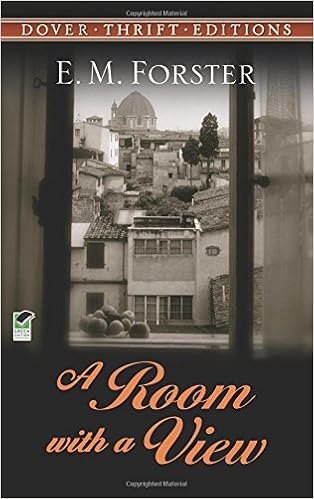 Classic Fiction: A Room with a View by E.M. Forester (1908). Another book read in anticipation of our visit to Florence. Compared to other Forrester works, this is a bit of a frolic, a romance. The setting is not limited to Florence and Italy (the setting moves “home” to England), but that’s where the nub of the story unfolds. In the end, it’s a “who-marries-who” story and a delightful one at that. Good for a visit to Italy or any occasion. (The Merchant-Ivory film production, by the way, does a fine job of translating the book into a film.)


 Nerd Reading. The Idea of History and The Principles of History and Other Writings on History by R.G. Collingwood. I finally read The Idea of History, one of the great works on the topic and according to The Guardian, one the outstanding English non-fiction works published after the Second World War. Collingwood remains a relatively little-known figure compared to others philosophers in the U.K. during his time (the inter-war years), such as Wittgenstein, Russell, Moore, Ayer, and so on, yet he was—and remains—a formidable thinker. His work and training as an archeologist of Roman Britain, along with his thorough grounding in the history of philosophy and the history of history (as a discipline and way of thought) give him the intellectual muscle to complete this momentous task. His assessment of his predecessors and his original perspective creates an amazing work. And The Principles of History, based on manuscripts discovered by Oxford University Press in the 1990s—over 50 years after Collingwood’s premature death—helps round out our sense of Collingwood’s project. It’s deep, nerdy, and amazing.
 General, Overall Fun Favorite: Natural Born Heroes by Christopher McDougall. This book had it all, like a great salad: some greens, some crunch, some sweet meat, all properly dressed. My review pretty much says it all, but I’ll say it again—it was a fun read and listen.
A lot of fine, fun books are ignored on this list, but these are some of the highlights. Happy reading to all in the year of the monkey!


