Showing posts with label FDR. Show all posts

Thursday, February 25, 2021

Thoughts for the Day: Thursday 25 February 2021


A ground-breaking book


Language, a principally left-hemisphere function, tends, as Nietzsche said, to ‘make the uncommon common’: the general currency of vocabulary returns the vibrant multiplicity of experience to the same few, worn coins.

“Trying to determine what is going on in the world by reading newspapers,” as a famously clever screenwriter/director/journalist named Ben Hecht once wrote, “is like trying to tell the time by watching the second hand of a clock.”

With the possible exception of the Scandinavians, no European citizenry has the political maturity of Americans, for whom a certain amount of responsibility, i.e., of moderation in the pursuit of self-interest, is almost a matter of course.
N.B. This was written sometime between the end of the Second World War and 1954, and what may have been true then seems not at all true now. (And I'd be delighted to be proved wrong about this.)

Until the invention of antibiotics in 1928, Western medicine couldn’t deliver much better results than indigenous medicine anywhere else in the world. In many cases, going to a shaman or witch doctor offered just about the same likelihood of recovery as seeing a Western doctor.

But in truth the U.S. government simply had no interest in creating an international order that would diminish American power. The Roosevelt administration was clear-eyed about raw-power realpolitik considerations, but FDR and many of his top diplomats were also influenced by misunderstandings about the causes of the Great Depression and infused with a righteous Wilsonian sense of national destiny.

In a world of appearances, filled with error and semblance, reality is guaranteed by this three-fold commonness: the five senses, utterly different from each other, have the same object in common; members of the same species have the context in common that endows every single object with its particular meaning; and all other sense-endowed beings, though perceiving this object from utterly different perspectives, agree on its identity. Out of this threefold commonness arises the sensation of reality.

The author Parag Khanna notes that economically, America has really turned into a collection of interlinked metro regions that he dubs, “The United City-States of America.” Big, developed cities are beginning to think of themselves as independent actors on the world stage.

Thursday, April 19, 2018

On Fear with Garry Wills

Garry Wills, 83 years-old & still at it. Rejoice!
I've just embarked on reading What the Qur'an Meant: And Why It Matters by Garry Wills (2017).


The first section of the book addresses the awful decision to invade Iraq after the 9/11 attacks, and in particular, he has a chapter entitled "Fearful Ignorance" that resonated with me. I've written before that fear is a wonderful warning system and an awful guidance system. Wills, I think--although much more articulately--says much the same thing. The chapter discusses the fears and attendant decisions of the post 9/11 era and the problems that arose from these fear-based decisions. He also, quite aptly, compares these reactions to the Cold War hysteria about communism. It's not that we needn't have had any fears about Communist subversion during the Cold War or about Islamic terrorism, but that fears become inflated and exploited and become counter-productive. His book (the remainder from this point) explores the Qur'an to learn what it really says and how it is not "the enemy."  

Fear is rarely a good guide. The first impulse when disaster strikes to run around, as the saying goes, like a chicken with its head cut off. Just when the head is most, it is the hardest thing to find. President Roosevelt, struggling for calm during the Great Depression, wisely counseled that " the only thing we have to fear is fear itself." yet even he yielded to fear after Parel Harbor, consigning a hundred thousand loyal Japanese Americans to concentration camps, expropriating their property, and denying them court procedures. (54)

What caused that fear? [Of Islam after 9/11] In a word, war. War, as Clausewitz argued, tends of itself to become total because of a reciprocal "ratcheting-up" (Wechselwirkung) of hostilities. In order to mobilize reaction to war conditions, threats from the foe must be emphasized, stating or overstating the peril-- which prompts any foe, actual or potential, to resond in kind. When hostilities occur, no matter who commits them, they are often attributed to an entire body of adversaries, which may not even have known about them. (58)

Fear, no matter how justified initially, slips easily out of any restraints imposed on it. (58-59)

Our enemy in this war [War on Terror} is far less localizable than it was in World War II or the Cold War. It was hard enough to find and defeat an ism like Communism. Terror is a tool, not a country. Declaring a war on it is less like normal warfare, country versus country. It is more like the War on Poverty or the War on Drugs. These have often seemed wars on phantoms, fought with tools randomly or overly used, getting results hyped as promising or intended to encourage further efforts, with strong lunges in wrong directions justified by consolatory gestures, as cash evanesces into the indiscernible. There is no VE Day or VJ day in such wars. (61)

Living with fear is corrosive. It depletes the patience to sort out threats and to calibrate responses. The less we know about the reality of Islam, the more we will fight shadows and false emanations from our own apprehension. Ignorance is the natural ally of fear. It's time to learn about the real Islam, beginning with its source book, the Qur'an. (61) 


Tuesday, May 10, 2016

Ezra Klein, Robert Reich, and Theda Skocpol

Ezra Klein
Ezra Klein, founder of Vox.com & now podcaster
Ezra Klein of vox.com has launched a podcast featuring interviews a variety of guests, and I've listened to two interviews so far, Robert Reich and Theda Skocpol. I recommend both, and based on these samples, others will likely prove worth listening to. And since these two interviews proved informative and provocative, they merit some comments.

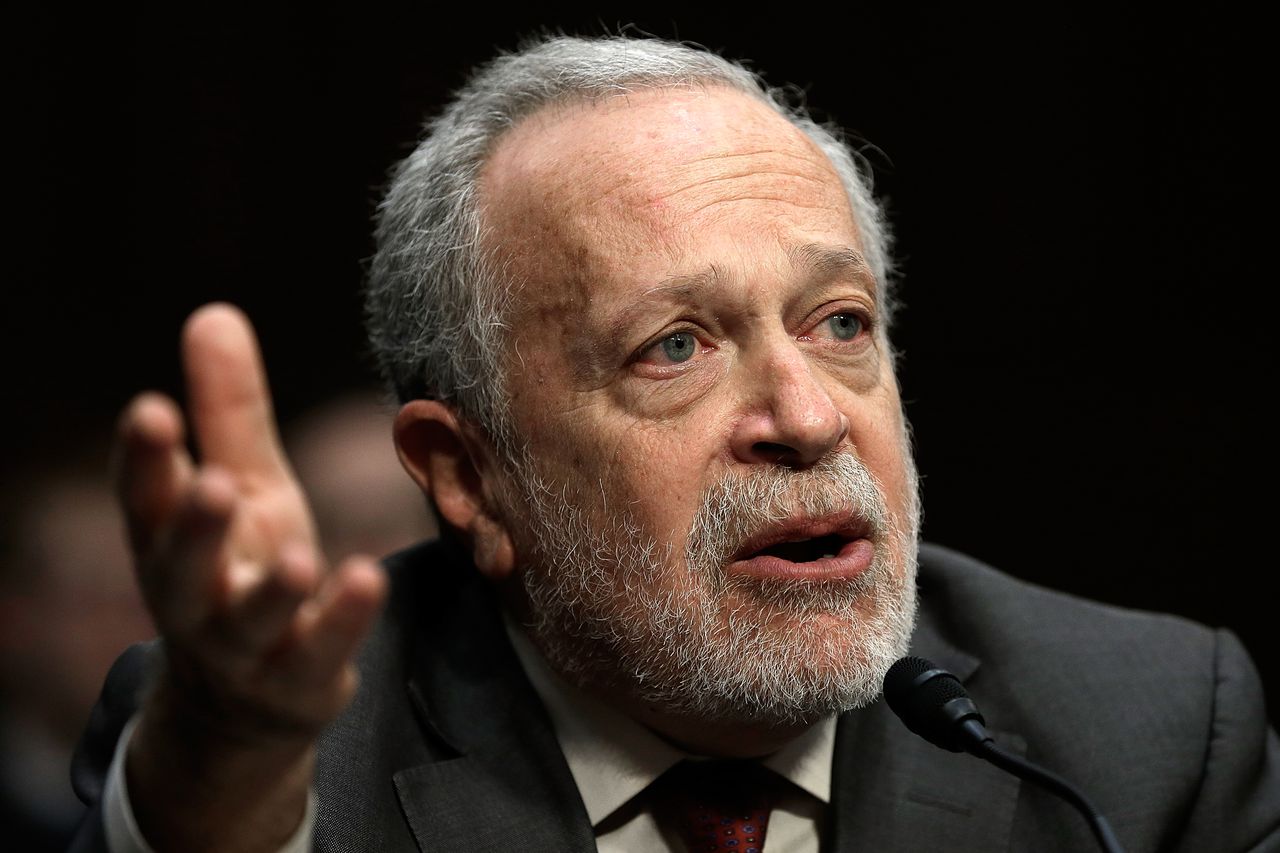
Robert Reich: progressive, Sanders supporter, Clinton knower
Robert Reich served as Secretary of Labor during Bill Clinton's first administration. For this, he is perhaps best known. During the podcast, I learned that he went on a date with Hillary Clinton (she at Wellesley, him at Dartmouth), he worked for Robert Bork (Yale Law connection), and he was friends with John Kenneth Galbraith. Each point merits some further consideration. As for Galbraith, he was very tall, while Reich is very short. (I can personally attest to this as he campaigned in Iowa City for Bill Bradley in 2000, speaking at fellow lawyer Jim Larew's office. When Reich arrived, I could only tell by the slight commotion. He was hard to see. But, what he lacks in physical stature, he makes up in intelligence and general panache.) As to Bork, he liked Bork personally, but he disagreed with him about politics and antitrust. (He worked for Bork at the DOJ on antitrust issues.) And finally, despite what seems to have been a pleasant introduction to Hillary and a later friendship with Bill, Reich has endorsed Bernie Sanders. What gives?

Die-hard anti-Clinton folks or HRC conspiracy types will be disappointed. He shares not anti-Clinton animus.Instead, he believes that Sanders represents a movement that can transform American politics, and Reich argues, our politics needs some serious transformation. Here's where his thoughts become thought provoking and bear some discussion.

I agree with Reich that the growing inequality in society and the distorting role that big money plays in our politics are of primary concern. Both of us want to remedy this situation. He argues that Sanders represents change, while HRC represents the best management of the status quo. (By the way, he labels Hillary "a thousand times better" than any Republican alternative.) He argues that like Obama before her, HRC would work within the system and make more marginal changes. He believes that Sanders can bring about much more.

I disagree. He cites, for example, FDR as a role model. But FDR, who brought about a major realignment of American politics, did not do so as the head of a movement, but as a cautious, calculating, and canny politician. FDR would throw bones as to the right, such as austerity and balanced-budget nonsense (that extended the Depression as a consequence) while he crafted significant changes in our laws and political landscape. Lincoln, too, was a cautious, calculating, and canny politician who, like Roosevelt, was careful not to get too far ahead of this electorate or the Congress. (Consider Spielberg's film about Lincoln and the 13th Amendment, as well as Emancipation, as examples of this.) As Garry Wills argues, prophets, like Martin Luther King, Jr., or other activists, get out ahead on issues, politicians follow behind and put things in order. We need both. As head of a cause or movement, Sanders has hit upon a nerve, showing a base for progressive change (as Trump has discovered a base for a nativist populism). The energy and spirit of the Sanders movement are vital and could crucial to progressive success, but a movement alone can't get things done. Sanders, as a governing politician, would prove wonderful on the ideas and speeches, but weak on getting legislation enacted. (Sanders displays shortcomings on the realities of getting legislation passed, and progressives like Paul Krugman have had to call him out on this.) The president is the person who must work with Congress to get real results. Congress, by its very nature, makes sausage; it's not gourmet, but it feeds people. Sanders offers fillet minion, but Congress couldn't serve fillet minion in a million years. It didn't' during the New Deal, the New Frontier, the Great Society, or at any other time. (They do, some of them, seeming willing to try to serve pie-in-the-sky, but let's pass on that.)

Reich makes as good a case for Sanders as can be made and does so without any anti-Clinton animus, but it falls short, as does the Sanders candidacy.

Theda SkocpolTheda Skocpol, whom Klein also interviewed (separate podcast), is a respected political scientist at Harvard. Her insights, from political science as a discipline to the Tea Party to right-wing American politics in general, are insightful. But one thing I take from her and from many other sources is key. While Donald Trump is a joke with the potential for a disaster, the people who have voted for him have valid concerns. Not well expressed or understood (thus their susceptibility to Trump's demagoguery), but real. Elites and political parties this group at our peril and to the peril of our Constitutional system.

Ezra Klein did a good job with both interviews, and I look forward to more of them.


Wednesday, March 2, 2016

The Three Roosevelts by James MacGregor Burns and Susan Dunn

Three who affected each other & American political life

The French have a saying, "Plus les choses changent plus elles retent les memes", which translates as "the more things change, the more they stay the same." That little ditty kept running through my mind as I read The Three Roosevelts: Patrician Leaders Who Transformed America (2000) by James MacGregor Burns and Susan Dunn. It's a biography of Theodore Roosevelt, Franklin Delano Roosevelt, and Eleanor Roosevelt. Of course, each of these individuals has commanded numerous and extensive biographies, including a two-volume biography of FDR by Burns first published in 1956. However, the conceit of this volume that emphasizes the relationships of the three and how they affected one another is worthwhile because these three handed a political tradition down from one to the other. 

Of course, Theodore is the root of the Roosevelt political dynasty in the 20th century. TR fought hard for progressive reforms and continued his efforts even as he rejected and, in turn, was rejected by the Old Guard of the Republican Party that fought to protect established business interests. TR ended up going down in flames in 1912 when he ran as the Bull Moose candidate against the incumbent Taft (his hand-picked successor when TR chose not to run again in 1908) and the Democrat Woodrow Wilson.

But as Theodore was dominating the national stage, Franklin was launching his political career as a Democrat (despite his admiration for his cousin Theodore). Franklin's story is at the heart of the book because he was involved in the national stage from 1920 to his death in 1945. With his election near the beginning of the Great Depression, he came to dominate American politics. But when I write “dominate,” perhaps that’s the wrong word. It would be more accurate to say that he became the focus of American politics. Even at the height of his popularity and power, FDR was always aware that the winds of political fortune can shift abruptly. FDR worked with Democrat majorities in Congress, but because the Democratic Party was an amalgam of various interests, a significant portion of which included racist southern Democrats, FDR always tread very carefully. And this is where I see how “the more things change, the more they stay the same.” I was repeatedly struck when reading about FDR's successes and travails how President Obama has faced many of the same problems. FDR, like Obama, was attacked vehemently from the right, and FDR turned to a pugilistic frame of mind worthy of TR in taking on the" plutocrats". Obama, of course, has always tended towards reconciliation rather than confrontation, but there is no question that Obama would always be checked by Wall Street and its influence in Congress. But the wealthy business class was not the only group who opposed FDR. From a different political direction came radicals like Father Coughlin, the populist and anti-Semite, and Huey Long, the populist senator from Louisiana. Shades of Donald Trump, anyone? And, of course, both presidents suffered criticism from the Left for not doing enough.

The story of FDR is complex. It deals with the Great Depression, Congress, and changes in the domestic American political scene, and then it switches direction with the advent of World War II and FDR's goal of seeking to frame a new world order out of the ashes. Of course, FDR failed in this with his untimely death in April 1945, but Eleanor continued to carry the torch.

Of the three, I learned the most about Eleanor, who grew from a shy, withdrawn girl into a forceful presence of her own. Even after the death of FDR, Eleanor continued to advocate for causes in which she believed. She remained an activist until her death in 1962. In fact, after FDR's death, she seemed to grow in stature, rising to the occasion. Her marriage to FDR was a complex and baffling relationship, especially given FDR's infidelity and the distinct change in their intimate relationship that occurred around 1920 (which is also about the time that Franklin was struck with his life-altering polio). Yet for all their heartache, the two had a bond of respect that overcame their deep alienation to allow Eleanor to have a mind and voice of her own that grew in political significance throughout her lifetime. Any other power couples come to mind?

For anyone new to the Roosevelt saga that arranges for almost a century between the birth of TR and the death of Eleanor, this is an excellent book to start exploring. By combining the three lives, the authors not only provide a snapshot of each of the individuals, but they emphasize how all three affected one another and therefore the whole of American political life. Done with an easy and flowing narrative, it's a great place to get a sense of how American politics has changed and how it hasn't. I suspect if Barack Obama would read this book after the end of his presidency, he’d have many occasions to smile in recognition.


Thursday, February 27, 2014

A Short History of the Twentieth Century by John Lukacs

Do you want a Joe Friday ("Just the facts, ma'am, just the facts") history of the 20th century? Go elsewhere. Do you want to read an extended essay on the crucial events of the century by a master writer and historian? Then read this book. Do you want someone who will mouth common platitudes? Go elsewhere. Do you want the reflections and insights of a man who's studied and written about the 20th century in as much detail and with as much insight as anyone I can think of. Then read this book; in fact, you'd do well to read the rest of John Lukacs's work, too. 

Enjoying John Lukacs is the equivalent of enjoying a fine wine. Lukacs is a vineyard that keeps producing superb fare, now in his 90th year. Each new work provides a unique blend of insights. I'm a Lukacs connoisseur. But some do not care for what I consider an exquisite vintage. I read one review of this book that referred to him as "cranky", and in a charming sort of way, I can see that. Others find his opinions too harsh, dated, or limited in his perspective. I don't think so, but perfection isn't my primary concern. 


Lukacs sets forth many propositions, some of which he's stated before. For instance, his 20th century runs from 1914 to 1989 (the collapse of Communism). This is foremost a political history, and many historians will agree with the shortened scope of the century about which he writes. He centers his concerns on Europe and America. He acknowledges that he gives short shrift to Latin America, Africa, and much of Asia (Japan the primary exception). But he argues, rightly I think, that in this century, with some exception for Japan and China (near the end) has centered on Europe. The main focus of U.S. policy has centered on Europe. In the short 20th century, Europe was at the center of the action, including the horrible killing fields of the two wars. Lukacs notes that we've now reached the End of the Modern Age (the title of an earlier work, by the way), which also marks the end of the European Age. We don't yet know what follows; just as those who lived in (what we now call) the Middle Ages didn't know what would follow from the changes they saw as thheir age waned. Lukacs also states that "the twentieth century was--an? the?--American century". (2-3).


Lukacs sees Democracy as the great movement, but Democracy (as popular sovereignty) was shaped in no small part by nationalism (different from patriotism, as Lukacs has often written) and populism, which differs from classical liberalism. Given his quote of Burkhardt near the end of the book, one senses that he feels uneasy about the continued success of Democracy subject to the demands of nationalism and populism. 


Lukacs most blatantly transgresses popular dogma by contending  that some individuals still guide history. He contends that World War II was Hitler's war. No Hitler, no war. He believes that the ascension of Churchill over Halifax made the difference that allowed Britain to survive until "the New World with all its power and might, sets forth to the liberation and rescue of the Old." (Churchill). Likewise, Franklin Roosevelt and Joseph Stalin play outsized roles (for good and ill) in the course of events. 


In addition to these perspectives and many others, Lukacs at the beginning and at the end of the book reflects on the project of history, knowing, and the human future. Of history as a discipline, he writes: 


     I have devoted much of my life to asserting, teaching, and writing that "objective" and "scientific" history are inadequate desiderata; but so, too, is "subjective" history. Our historical knowledge, like nearly every kind of human knowledge, is personal and participatory, since the knower and the known, while not identical, are not and cannot be entirely separate. We do not possess truth completely. Yet pursue truth we must. So many seemingly endless and incomplete truths about the history of the twentieth century are still worth pursuing, and perhaps forever. (1)
. . . .
    Historical knowledge, nay, understanding, depends on descriptions rather than on definition. It consists of words and sentences that are inseparable from "facts"; they are more than the wrapping of facts. "In the beginning was the Word," and so it will be at the end of the world. (1-2)
At the end of this book, he cites Tocqueville and Jacob Burckhardt, who, along with Johan Huizinga, are the predecessors who have most influenced Lukacs. Among twentieth century thinkers, Niels Bohr and Werner Heisenberg, formulators of the Uncertainty Principle in quantum physics, have influenced Lukacs. Lukacs writes of the uncertainty principle in human knowing: 


    The knower cannot be separated from the known. And with this is a greater and deeper meaning: that we, on our little, warm planet, are (again? anew?) at the very center of the universe. The universe was, and is, not our creation. But we human beings on this earth have invented it, and go on inventing it from time to time.
. . . . 
    Our twentieth-century recognitions, no matter how scattered and still hardly conscious, must, and will, issue not from human arrogance but from human humility. Perhaps just as important as our recognition of our central situation in the universe is our recognition that the limitations of our human knowledge do not restrict but enrich us. (212).

Monday, March 12, 2012

John Lewis Gaddis, George Kennan: An American Life

This is a complete and fascinating biography of a man who lived a full, one-hundred-year plus life. Others more qualified than me have reviewed and praised this book, so there's not a lot that I can add. However, I will add this: Kennan was a complex and difficult character. He was often elitist and pessimistic. He seems to have been ridden with one illness or another (yet he lives, with his wits about him, to over 100!). But the one question that Gaddis doesn't answer or address as fully as I would like in this book: where did Kennan get his seemingly unique perspective of containment as a way to draw the line on Soviet expansion? Roosevelt and American liberals seem quite naive about Stalin and the Soviet system. But Kennan, writing from bed (ill again), sends his "Long Telegram" (later transformed into "The Sources of Soviet Conduct" by "X"). He alone seems to have articulated this very successful and insightful perspective about Soviet conduct and how to check it. Where did this come from? Well, he learned Russian as a young American diplomat He spent a good deal of time in the Soviet Union (two stints by the time he wrote his fame-producing article in 1946). And he read Gibbon while on a vacation. Gibbon helped form his sense that the Soviets would not be able to "digest" their land grab in Eastern Europe, Kennan thereby proved himself a prophet by about 1989. No, it doesn't appear that Kennan had a "grand theory" (a course Gaddis helps teach). It appears that Kennan developed his insights through patient observation and reading history. (I've failed to mention that Kennan seriously considered writing a biography of Chekhov.) Of course, after establishing the idea of containment, Kennan spent the next 40 years trying to keep it from misapplication as simply a crude military doctrine.

Quite a good book indeed, and quite a fascinating subject. At 698 pages of text, it's not a quick read. If you want a quicker sense of Kennan, turn to two works by his friend John Lukacs, their letters edited by Lukacs and Lukacs's biography. Both are briefer but insightful (and of course, Lukacs appreciates Kennan as both an actor and as a historian.)

Thursday, November 17, 2011

QT: Drew Weston Again on Obama

I don't want to belabor a point, but I think that Drew Weston has again found a serious weakness in President Obama's decision-making regime. One senses a lack of strong, forceful leadership from the president. My hopes were buoyed by his adoption of a new stimulus program to go to Congress, but everything seems to be languishing. I do believe that the American electorate, as it so often does, foisted its hopes onto Obama in a way that he never justified, nor did he discourage. Indeed, every politician has to hope for such a magical time. However, the downside is that difficult decisions need to be made, and those difficult decisions define the decision-maker at each turn. Thus, a blank slate can no longer remain blank, and some hopes can no longer be projected onto that person. Obama is bright and has good instincts, but I share a sense that he lacks the fighting characteristics that made someone like FDR a great president.

Tuesday, August 16, 2011

I Told You So Edition--Thank you, Christina Romer

In follow up to this post, I can't help but point out this article by former Obama administration economist Christina Romer (and now Berkley econ prof) about FDR's administration and its errors, including the budget-balancing business of 1937 (along with Fed money restrictions). I guess great minds think alike. I'm glad that I posted before her article appeared. :)

Friday, August 12, 2011

1937: Deja Vu All Over Again?

I've been saying (even if no one is listening) that FDR took us into a severe downturn in 1937 with his budget-balancing mania (Keynes apparently didn't get his message across in time), and it looks like the Obama administration is doing the same thing. Of course history doesn't repeat itself (exactly), but sometimes you can see the same pattern.

Sunday, August 7, 2011

Drew Weston on Obama

Drew Weston's lead article in the NYT today really hits on some important points in general and about Obama in particular:

1. The importance of narrative (the fancy word for story). As a trial lawyer, this important mode--the most important mode of conveying information--has been drilled into my head by communications experts and fellow trial lawyers. Weston makes the point:

Stories were the primary way our ancestors transmitted knowledge and values. Today we seek movies, novels and “news stories” that put the events of the day in a form that our brains evolved to find compelling and memorable. Children crave bedtime stories; the holy books of the three great monotheistic religions are written in parables; and as research in cognitive science has shown, lawyers whose closing arguments tell a story win jury trials against their legal adversaries who just lay out “the facts of the case.”

Obama was elected--in very large measure--on his story: the story of a bi-racial kid raised by a single mother in exotic locales, but he maintains close contact with his Midwestern grandparents,and those he learns to bridge multiple worlds and makes good, moving away from divides of race, etc. A great story. But what is his story now?

2. Weston contrasts Obama with the two Roosevelts, and Obama lacks in comparison. Both were fighters, both willing to take on "the bad guys". Now really, there are bad guys (not many, but some), and there are always those (virtually all of us) who will not give up the advantages and privileges that we have (a/k/a greed). If you want to take something away from say, Wall Street, or the rich, or seniors, or whomever, you're going to get a fight. You must fight. Fight and then negotiate. I do it every day. Obama only seems to want to negotiate. Weston contrasts Obama's lack of a fighting story with the attitude exhibited by the "Happy Warrior":

In a 1936 speech at Madison Square Garden, he [FDR] thundered, “Never before in all our history have these forces been so united against one candidate as they stand today. They are unanimous in their hate for me — and I welcome their hatred.”

3. Weston notes that Obama took many of his bearings from the work of Martin Luther King, Jr., surely a strong and relevant choice, but as Weston notes, King, too, fought--in the streets as well as with his moving oratory--for the cause that he championed. Obama seems to lack a cause and the will to champion it. Weston writes:

Those [Roosevelts'] were the shoes — that was the historic role — that Americans elected Barack Obama to fill. The president is fond of referring to “the arc of history,” paraphrasing the Rev. Dr. Martin Luther King Jr.’s famous statement that “the arc of the moral universe is long, but it bends toward justice.” But with his deep-seated aversion to conflict and his profound failure to understand bully dynamics — in which conciliation is always the wrong course of action, because bullies perceive it as weakness and just punch harder the next time — he has broken that arc and has likely bent it backward for at least a generation.

4. Weston goes on to argue that mere "centrist" positions are not enough, and that Obama may be bewitched by this siren song that seems to pull many Democrats, and then he goes on the raise potentially more fundamental flaws that Obama may suffer:

A second possibility is that he is simply not up to the task by virtue of his lack of experience and a character defect that might not have been so debilitating at some other time in history. Those of us who were bewitched by his eloquence on the campaign trail chose to ignore some disquieting aspects of his biography: that he had accomplished very little before he ran for president, having never run a business or a state; that he had a singularly unremarkable career as a law professor, publishing nothing in 12 years at the University of Chicago other than an autobiography; and that, before joining the United States Senate, he had voted "present" (instead of "yea" or "nay") 130 times, sometimes dodging difficult issues.

This is a troubling perspective. For all his gifts, he was (and largely is) a young man. He has not led a fight like this before. As a fellow lawyer, I have to note that he was a law professor (obviously very capable), but never (I think) a practicing lawyer, never an advocate. Lawyers who represent clients in court have to deal with real issues, take stands, make arguments--fight (compete) within the rules of the game. Often no one is happier to settle a case than me, as I know the risks of failure, but as I never tire of telling clients, the best settlement comes from the best trial preparation. You need to let the other side know that you'll fight and risk loss than settle cheap. (Sometimes you settle cheap if you have no case, but that's a different story.)

5. Having said all this, and expressed my reservations, I will of course support Obama's reelection. At his worst he's better than anyone that the Republicans will nominate. The Republican party is reverting to it's no-nothing roots of the 1840's. It is not the party of Lincoln, TR, Ike, or even Reagan. But to make his reelection count, Obama must stand up and push back.

Wednesday, July 27, 2011

Bruce Bartlett: Obama as Conservative

This interesting article from Bruce Bartlett (via Paul Krugman) has some interesting history. Having just mentioned Bartlett in a comment posted on Roscommon to Imogene, I followed Krugman's lead to this article. Of course, liberals who go conservative or vice versa can be a good thing (I like Ike), but I'm not sure of Obama's game here. Right now, more spending by the government is in order, I think. I follow those who say that inflating demand (not the currency) and getting more back to work is most important. Thus, why repeat FDR's mistake in 1937 of pursuing budget trimming mania? Obama seems to me to be making the same mistake. Plus, the Republicans are now driven by a real fringe group. What happened to Wall Street & Main Street Republicans?

Sunday, July 17, 2011

Donald Kaul & Obama

Two important things about this article: First, I think it marks that third week in a row that Donald Kaul has appeared again the Des Moines Register. Frankly, the P-C I get for local news, but the DMR is a mere shadow of its former self, across the board. Picking up the man who wrote for it going back in into the early 1970's (at least that's when I picked up the habit from my dad), is a great choice for a paper that hasn't made many great choices over the years.

As to this piece, Kaul expresses my sense of Obama to a T. I'm prepared to give Obama a lot of slack, but I do wonder why he is not more assertive. Every politician, even FDR, for example, is cautious and can't get too far out in front of the selectorate (thank Bruce Bueno de Mesquita for the term). But if you're negotiating, and trying to build your base (which politicians must do constantly), you have to bluff a bit. BTW, note that Kaul describes Republicans as "mad"--nothing like a poignant double-entendre. I don't have an answer to Kaul's question, but we need help. As he pointed out in an earlier Kaulumn, Michelle Bachmann and her ilk are positively daft, part of a growing group of know-nothings (my term, not his). I really do wish that I had an answer.