Showing posts with label Robert Pirsig. Show all posts

Friday, January 28, 2022

Thoughts 28 Jan. 2022


None of this appealed to the party’s old base. Culture usually beats class in American politics, and a tolerant, inclusive Democratic Party would have needed better policies and politicians to hold on to culturally conservative voters.
N.B. Italics added.

[M]y thesis [that the two hemispheres of the brain attend to the world in different ways], though it depends on neuroscience, has no reductionist agenda. I do not claim for an instant that our experience merely is some function in the brain. Quite the contrary, in fact, since my thesis implies that only one part of our brains – the part that understands less – would pursue such an agenda in the first place. Some philosophers deny that scientific research can tell us anything at all about human experience, on the grounds that experience is an ‘inward’ matter (which is undeniably the case).

[T]he hemisphere hypothesis is deceptively simple: the bi-hemispheric structure of the brain makes possible attending to the world simultaneously in two otherwise incompatible ways. It is the implications of this that are manifold.

Every animal, in order to survive, has to solve a conundrum: how to eat without being eaten. It has to pay precisely focussed, narrow-beam attention that is already committed to whatever is of interest to it, so as to exploit the world for food and shelter. Put at its simplest, a bird must be able to distinguish a seed from the background of gravel on which it lies, and pick it up swiftly and accurately; similarly, with a twig to build a nest. Yet, if the bird is to survive, it must also, at one and the same time, pay another kind of attention to the world, which is the precise opposite of the first: broad, open, sustained, vigilant attention, on the lookout for predators or for conspecifics, for friend or foe, but also, crucially, open to the appearance of the utterly unfamiliar – whatever may exist in the world of which it had no previous knowledge.

I’ve come to recognize how value or “the good” is really more of a verb than a noun.

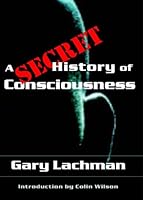
Paracelsus’s “direct knowledge” sounds very much like the kind of “direct perceiving” Stan Gooch suggests our Neanderthal ancestors enjoyed and which allowed them “a real knowledge of aspects of human life and human biology, of some of the functions of the planet’s geology and perhaps some knowledge even of atomic and molecular structure.” It is also reminiscent of Schwaller de Lubicz’s “intelligence of the heart,” Bergson’s “intuition,” and the other variants of these we have come across in this book.

The problem with all this is that, in reality, nation-states are not that much like individual people. It would be much more accurate to say that, like any large-scale polity, they are complex systems. As such, they are not governed by the same broadly Gaussian rules as individual members of our species.

But at the beginning of the modern period Da Vinci and Bacon stand together as illustrating the various strains which have combined to form the modern world, namely, legal mentality and the patient observational habits of the naturalistic artists.

The logical statements entered into the notebook are broken down into six categories: (1) statement of the problem, (2) hypotheses as to the cause of the problem, (3) experiments designed to test each hypothesis, (4) predicted results of the experiments, (5) observed results of the experiments and (6) conclusions from the results of the experiments.


Wednesday, January 26, 2022

Thoughts 26 Jan. 2022

Dictator currently threatening to invade the Ukraine


[I]t’s worth noting the words of Dmitry Muratov, the courageous Russian journalist who remains one of the few independent voices standing up to Mr. Putin and who just received the Nobel Prize for Peace. At a news conference after the awards ceremony in Oslo, as Russian troops and armour were massing on Ukraine’s borders, Mr. Muratov spoke of the iron link between authoritarianism and war. “Disbelief in democracy means that the countries that have abandoned it will get a dictator,” he said. “And where there is a dictatorship, there is a war. If we refuse democracy, we agree to war.”

Thomas Homer-Dixon, "The American Polity Is Cracked, and Might Collapse. Canada and the World Must Prepare" 18 Jan. 2022

A couple of comments. First, read the Homer-Dixon article. It's sobering. He advises the Canadian government to contemplate the collapse of responsible government in the U.S. (By the way, Homer-Dixon is an MIT-trained political scientist and a "scholar of violent conflict. . . .  I’ve studied and published on the causes of war, social breakdown, revolution, ethnic violence and genocide," as well as an expert on the repercussions of climate change & other forms of ecological degradation. Note also that this Muratov spoke his words in early December. Americans should ask themselves, do we want our own Putin? 


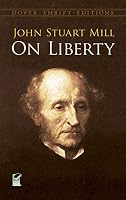
There is a limit to the legitimate interference of collective opinion with individual independence; and to find that limit, and maintain it against encroachment, is as indispensable to a good condition of human affairs, as protection against political despotism.

Attention changes the world. How you attend to it changes what it is you find there. What you find then governs the kind of attention you will think it appropriate to pay in the future. And so it is that the world you recognise (which will not be exactly the same as my world) is ‘firmed up’ – and brought into being.

What, then, is attention? Is it really just another ‘cognitive function’ of that supposed ‘machine’, the brain? It’s clearly something pretty special if it takes part in the creation of the only world we can know. Is it a thing? Hardly. Is it something we do? Nearer, but not exactly. Perhaps a manner of doing? Or even a manner of being?
The best way I can put it is that it is the manner in which our consciousness is disposed towards whatever else exists. The choice we make of how we dispose our consciousness is the ultimate creative act: it renders the world what it is. It is, therefore, a moral act: it has consequences. ‘Love’, said the French philosopher Louis Lavelle, ‘is a pure attention to the existence of the other’.

Instead of harmonizing socially mediated interests, an increasingly industrialized economy created class antagonisms and gross inequalities – an outcome that none of the salon philosophes could have anticipated in their own pre-industrial age.

Any policy of withdrawal would have required what critics—and the troops in the field—would call meaningless sacrifice and needless deaths. There was no “correct” or “just” policy, only bad choices.
N.B. This is written about Viet Nam, but it no doubt applies to Afghanistan as well. In both, we lost long before we left, making for a messy end. (Although to be fair, while Kabul looked in many ways like Saigon in 1975, on the whole, the exit was much less blotched & traumatic for the U.S. and to the locals.

“You look at where you’re going and where you are and it never makes sense, but then you look back at where you’ve been and a pattern seems to emerge. And if you project forward from that pattern, then sometimes you can come up with something.


Tuesday, January 4, 2022

Thoughts 4 Jan. 2022


Truly a magnum opus


[W]e take the success we have in manipulating it as proof that we understand it. But that is a logical error: to exert power over something requires us only to know what happens when we pull the levers, press the button, or utter the spell. The fallacy is memorialised in the myth of the sorcerer’s apprentice. It is hardly surprising, therefore, that while we have succeeded in coercing the world to our will to an extent unimaginable even a few generations ago, we have at the same time wrought havoc on that world . . . .


[A]s the great physicist Erwin Schrödinger put it in Science & Humanism, it seems plain and self-evident, yet it needs to be said: the isolated knowledge obtained by a group of specialists in a narrow field has in itself no value whatsoever, but only in its synthesis with all the rest of knowledge and only inasmuch as it really contributes in this synthesis toward answering the demand, τίνες δὲ ἡμεῖς; ‘Who are we?’


When analytic thought, the knife, is applied to experience, something is always killed in the process.

What would (or does) McGilchrist think of Pirsig's work?


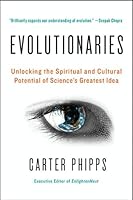
The evolution of this world is the goal of spiritual life. And by “world” I mean the manifest cosmos of time and space, both the interior and exterior realms—consciousness, culture, and cosmos. The action is here—in this time, in this place, in the possibilities that lie in the near and distant future of this culture, this world, this universe. Yes, there still may be spiritual transcendence of the most radical, sublime, and subtle forms, but transcendence is in the service of evolution, not the other way around. And that difference is everything.

Keynes explained his own methods in The General Theory: “The object of our analysis is, not to provide a machine, or method of blind manipulation, which will furnish an infallible answer, but to provide ourselves with an organised and orderly method of thinking out particular problems….Too large a proportion of recent ‘mathematical’ economics are mere concoctions, as imprecise as the initial assumptions they rest on, which allow the author to lose sight of the complexities and interdependencies of the real world in a maze of pretentious and unhelpful symbols.”

The example of gay marriage cited in the previous section shows how a political cause that embodies values from across the spectrum can succeed by virtue of its own inherent rightness. The agreeable quality of the cause of gay marriage was not achieved through political horse trading or by attempts at coalition building, rather, its political power was baked into its very nature by dint of the diversity of values it embodied.

Thinking in its non-cognitive, non-specialized sense as a natural need of human life, the actualization of the difference given in consciousness, is not a prerogative of the few but an ever-present faculty in everybody; by the same token, inability to think is not a failing of the many who lack brain power but an ever-present possibility for everybody—scientists, scholars and other specialists in mental enterprises not excluded. Everybody may come to shun that intercourse with oneself whose feasibility and importance Socrates first discovered. Thinking accompanies life and is itself the de-materialized quintessence of being alive; and since life is a process, its quintessence can only lie in the actual thinking process and not in any solid results or specific thoughts. A life without thinking is quite possible; it then fails to develop its own essence—it is not merely meaningless; it is not fully alive. Unthinking men are like sleepwalkers.

Thursday, December 23, 2021

Thoughts 23 Dec. 2021


In 1965, Adlai Stevenson managed to give a more poetic treatment, in an address before the United Nations Social and Economic Council in Geneva:
We travel together, passengers on a little space ship, dependent on its vulnerable reserves of air and soil; all committed for our safety to its security and peace; preserved from annihilation only by the care, the work, and, I will say, the love we give our fragile craft. We cannot maintain it half fortunate, half miserable, half confident, half despairing, half slave—to the ancient enemies of man—half free in a liberation of resources undreamed of until this day. No craft, no crew can travel safely with such vast contradictions. On their resolution depends the survival of us all.

If the transhumanist [e.g., Ray Kurzweil] represent one extreme in the diversity of evolutionary visions in this book—the transcend-at-all-costs, techno-positive, biology-is-for-wimps, let’s-engineer-the-universe sense of optimism—then [Thomas] Berry represents perhaps the other side of the picture, a corrective argument for a radically biocentric approach to the future, a deconstruction of human arrogance, and a deeper embrace of our immanent spiritual connection with the natural world.

In the last few years, the conventional wisdom has emerged that eating animal products results in a greater contribution to greenhouse warming of the planet than does eating plants. Because we worry with good reason that global warming is a major threat to planetary health and humanity’s future, we believe we should do whatever we can personally to mitigate it. This has led newspapers to publish analyses of “how to shop, cook and eat in a warming world,” as The New York Times did in April 2019, and to suggest that the fewer animal products we consume (and certainly the less beef, lamb, and dairy, as these seemingly have the greatest climate footprints), the healthier the planet will be.
This may indeed be true. While acknowledging that livestock can be raised in ways that are relatively climate friendly and much of it is (in the United States, for instance, more, say, than in Brazil), the implication is that the most climate-friendly eating pattern is one that omits these foods—a vegan diet—and that that’s how we should eat. For those who don’t think they can become a vegan, the Times suggests, then “another approach would be to simply eat less meat and dairy, and more protein-rich plants like beans, legumes, nuts and grains.”
The problem, of course, is that this thinking once again assumes that the conventional healthy diet—or even an unconventional and arguably unnatural diet, per Geoffrey Rose’s thinking, like the vegan diet—is indeed healthy for all of us. It builds on a foundation of the bad science in nutrition research of the past fifty years, and it shows little concern for the absence of clinical trials that might actually test it. It’s also the lean person’s perspective. If those of us who are predisposed to be insulin resistant, obese, and/or diabetic in the modern food environment get fat or stay fat eating beans, legumes, and grains, we have a conflict that must be resolved.

“Censorship has always been on the side of authoritarianism, conformity, ignorance, and the status quo,” write Erwin Chemerinsky and Howard Gillman in their book Free Speech on Campus, “and advocates for free speech have always been on the side of making societies more democratic, more diverse, more tolerant, more educated, and more open to progress.”

The past exists only in our memories, the future only in our plans. The present is our only reality.

“It is because we know happiness that we want to be happy, and since nothing is more certain than our wanting to be happy (beatum esse velle), our notion of happiness guides us in determining the respective goods that then became objects of our desires.”

Tuesday, December 21, 2021

Thoughts 21 Dec. 2021


2021 publication


But to turn the story of COVID-19 into a morality play—The Populists’ Nemesis—is to miss the more profound systemic and societal failure that occurred, in a way that future historians will surely see as facile.

These ills of government are an American, not a democratic, disease. Many other democracies handled this pandemic effectively, better than any dictatorship.

As the Christian scholar N. T. Wright explains, worldviews “are like the foundations of a house: vital, but invisible. They are that through which, not at which, a society or an individual normally looks.”

Process goals encouraged me to enjoy the present moment. They are brief and achievable. I set up process goals and fun tasks and projects so that I never had to worry about future “outcome” goals. The best futures get created in the present moment.

The statement “To travel is better than to arrive” comes back to mind again and stays. We have been traveling and now we will arrive. For me a period of depression comes on when I reach a temporary goal like this and have to reorient myself toward another one.
Compare Pirsig's comment with the immediately preceding quote from Steve Chandler.

But if I were to put it [the current sorry state of American politics] in a single sentence, I would say: Inequality undermined the common faith that Americans need to create a successful multi-everything democracy. The postindustrial era has concentrated political and economic power in just a few hands and denied ordinary people control of their own lives. Overwhelmed by unfathomably large forces, Americans can no longer think and act as fellow citizens. We look for answers in private panaceas, fixed ideas, group identities, dreams of the future and the past, saviors of different types—everywhere but in ourselves. When none of these sets us free, we turn against one another.

Call its ["Progressives," "Social Justice Warriors"] narrative Just America. It’s another rebellion from below. As Real America [~the Trump crowd] breaks down the ossified libertarianism of Free America [libertarian, pro-business], Just America assaults the complacent meritocracy of Smart America [high educated]. It does the hard, essential thing that the other three narratives avoid, that white Americans have avoided throughout our history. It forces us to see the straight line that runs from slavery and segregation to the second-class life so many Black Americans live today—the betrayal of equality that has always been the country’s great moral shame, the dark heart of its social problems.

The self-assertive shrillness of protest arises because the facts of incommensurability ensure that protestors can never win an argument; the indignant self-righteousness of protest arises because the facts of incommensurability ensure equally that the protestors can never lose an argument either. Hence the utterance of protest is characteristically addressed to those who already share the protestors’ premises. The effects of incommensurability ensure that protestors rarely have anyone else to talk to but themselves. This is not to say that protest cannot be effective; it is to say that it cannot be rationally effective and that its dominant modes of expression give evidence of a certain perhaps unconscious awareness of this.


Monday, December 13, 2021

Thoughts 13 Dec. 2021


Our proclivity to evolve our culture (and hence our consciousness) can thus be seen as an essential part of our “nature.” We are deeply cultural creatures and as we evolve our civilization, we arguably evolve our essential human nature along with it. While consciousness can sometimes regress when subjected to severe survival pressures, or when civilizing cultural restraints become removed, the character of most twenty-first century Americans has clearly grown beyond our original “state of nature.”

Writing of the “magical” effects of Nazi mass propaganda, Morris Berman remarks, “Once we recognize that the human being has five (or more) bodies, and that these can get activated in such a way as to generate spiritual or psychic energy (‘consciousness’) that can actually float . . . , then continuity via the history of ideas becomes unnecessary. . . . Consciousness is a transmittable entity . . . and . . . an entire culture can eventually undergo very serious changes as the result of the slow accumulation of enough psychic or somatic changes on an invisible level” (my italics).

Modern liberalism—what the philosopher Karl Popper and subsequently others have called the open society—is defined by three social systems: economic, political, and epistemic. They handle social decisionmaking about resources, power, and truth. The epistemic system is often analogized to the economic system, through the metaphor of the marketplace of ideas. But the parallels between the epistemic and political systems, although less well developed, are in important respects more revealing.


Certainly ‘moral’ is the etymological descendant of ‘moralis’. But ‘moralis’, like its Greek predecessor ‘êthikos’—Cicero invented ‘moralis’ to translate the Greek word in the De Fato—means ‘pertaining to character’ where a man’s character is nothing other than his set dispositions to behave systematically in one way rather than another, to lead one particular kind of life.


In all of the Oriental religions great value is placed on the Sanskrit doctrine of Tat tvam asi, “Thou art that,” which asserts that everything you think you are and everything you think you perceive are undivided. To realize fully this lack of division is to become enlightened. 


The Greek genius was philosophical, lucid and logical. The men of this group were primarily asking philosophical questions. What is the substratum of nature? Is it fire, or earth, or water, or some combination of any two, or of all three? Or is it a mere flux, not reducible to some static material? Mathematics interested them mightily. They invented its generality, analysed its premises, and made notable discoveries of theorems by a rigid adherence to deductive reasoning. Their minds were infected with an eager generality. They demanded clear, bold ideas, and strict reasoning from them. All this was excellent; it was genius; it was ideal preparatory work. But it was not science as we understand it. The patience of minute observation was not nearly so prominent. Their genius was not so apt for the state of imaginative muddled suspense which precedes successful inductive generalisation. They were lucid thinkers and bold reasoners.

Fame is a social phenomenon; ad gloriam non est satis unius opinio (as Seneca remarked wisely and pedantically), “for fame the opinion of one is not enough,” although it is enough for friendship and love. And no society can properly function without classification, without an arrangement of things and men in classes and prescribed types. This necessary classification is the basis for all social discrimination, and discrimination, present opinion to the contrary notwithstanding, is no less a constituent element of the social realm than equality is a constituent element of the political.

“To live a self-depriving life committed to a fixed view of the good is to live with “resentment,” which disguises the fact that one is too weak to fully express one’s creative urges. This urge to create is what Nietzsche called the Will to Power. The healthiest life is one that does not hold back or fear the freedom of living without ultimate truths. A person capable of living such a life is what Nietzsche called the Übermensch or “higher man.”