Showing posts with label Sam Leith. Show all posts

Saturday, October 17, 2020

Thoughts of the Day: Saturday 17 October 2020


                                            Fukuyama; more than just "The End of History"
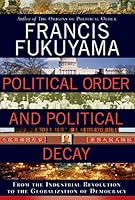

Democracies exist and survive only because people want and are willing to fight for them; leadership, organizational ability, and oftentimes sheer good luck are needed for them to prevail.

Lister had said to his friend, “My dear Pasteur, every great benefit to the human race in every field of its activity has been bitterly fought in every stage leading up to its final acceptance.”
Young people, he says, are impatient, changeable, and appetitive—“and of the bodily appetites they are especially attentive to that connected with sex and have no control over it.”
Glucose consumption will make your pancreas release more insulin and make you gain weight, while fructose consumption will drive the accumulation of liver fat, causing insulin resistance, leading to chronic metabolic disease.
Professor Howard Fulweiler, in his essay, "The [Other] Missing Link: Owen Barfield and the Scientific Imagination," delivered at the 1983 Los Angeles MLA seminar on Owen Barfield, opens with a reference to Thomas Berger's novel, Little Big Man, in which the old Indian, Lodge Skins, tells his adopted grandson "that the Indians believe everything in the world is alive, while the white men think everything is dead." Had Barfield been there, he would have said that such mechanical thinking on the part of the white men was new, the result of something called the Scientific Revolution, which began a few centuries ago and which has given rise to philosophical and scientific hypotheses which separated mind from matter, man from nature, and doomed the reality of the spirit-world.
For each of these four kinds of mental balance, we will identify the “middle way” of homeostasis as the freedom from three kinds of imbalance: deficit, hyperactivity, and dysfunction.
We live in a world saturated with information. We have virtually unlimited amounts of data at our fingertips at all times, and we’re well versed in the arguments about the dangers of not knowing enough and not doing our homework. But what I have sensed is an enormous frustration with the unexpected costs of knowing too much, of being inundated with information. We have come to confuse information with understanding.
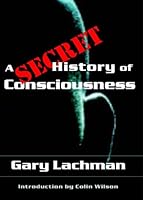
As William James and Henri Bergson would argue around the same time, without the selective activity of the mind there would be no “world,” only a formless chaos.

Sunday, February 15, 2015

How the Mighty Hath Fallen: Rhetoric: A Very Short Introduction by Richard Toyes & Words Like Loaded Pistols: Rhetoric from Aristotle to Obama


More scholarly work
Lots of good examples, relaxed narrative


Rhetoric, the art and practice of persuasion through language, was once the cornerstone of Western political, legal, and educational systems. The Greeks invented it, the Romans refined it, the Middle Ages put it at the pinnacle of the educational system, and the Moderns updated into the world of print and democracy. But today, few people use the term “rhetoric” without adding the prefix “mere”. President Obama, starting back when he was only candidate Obama, received frequent derision (by opponents) for his outstanding oratory. “Just words”“, all talk, no action”, and so on. What is rhetoric that it once was the crowning jewel of an educated person, but now is more often the subject of derision? 

Both of these books address the nature, substance, and history of rhetoric. The Toyes book examines rhetoric from a more academic perspective (it’s part of the Oxford University Press “Very Short Introduction” series), and Lieth’s book approaches the topic in a more relaxed style. In fact, both books cover much the same territory, especially in their narrative about the history of rhetoric. Toyes spends more time on contemporary thinkers and permutations of rhetorical practice while Leith devotes more time to breaking down the sub-topics of the discipline and discussing prominent examples. Leith's examples include Satan (channeled by John Milton), Lincoln, Churchill (does anyone writing about rhetoric not discuss Churchill?), Hitler (not all popular speakers are good guys), Martin Luther King, Jr. (like Churchill, a must), Obama, and the anonymous (to the public) speechwriters of politicians in the modern era.

Each book provides numerous examples of rhetoric in action, and each provides a great deal of ammunition to those like me who believe rhetoric a useful art and discipline of the highest order. As someone whose profession involves “pleading” on behalf of others and “arguing” cases, I only wish that I’d had a deeper and more practiced introduction and study of rhetoric much earlier in my education. So to me, both books are preaching to the choir. However, even now, after having made up some ground of early deficiencies in my learning, I gained a good deal from these two works. Toyes, for instance, really focuses on rhetoric in the broader context of the contemporary world, touching on how, for instance, Kenneth Burke’s work changes the focus of rhetoric from “persuasion” to “identification”. He also brings in the work of J.L. Austin, whose How to Do Things WithWords brings a new classification scheme into use that enhances our understanding of rhetoric and language. Leith, on the other hand, focuses more on the nuts and bolts of rhetoric, things like invention, figures of speech, the occasions of rhetoric, and the means of persuasion set forth in Aristotle’s foundational work (ethos, logos, and pathos). 

I enjoyed both books and learned a good deal from each. For beginners, I’d definitely recommend the Leith book with its numerous examples and consideration of the fundamental tenants of rhetoric. For those more acquainted with the topic, Toyes book puts rhetoric into a larger context, especially in the contemporary world.