Thursday, November 4, 2021

Thoughts: 4 November 2021


It’s a grim reality today that many of humanity’s emerging global problems— like climate change and biodiversity loss— produce the conditions for market failure in stunning abundance.
In other words, markets aren't self-sustaining or perfect. If the conditions--cultural, social, political, or natural--aren't aligned & operative, markets will fail.


The best you can do, whether with a prince or a landscape or the past, is to represent reality: to smooth over the details, to look for larger patterns, to consider how you can use what you see for your own purposes.

“The best that we have from history,” Goethe says, “is the enthusiasm that it stimulates.”
Disagree, Goethe. Per Collingwood, the highest use of history is self-knowledge.

For Samuelson and his followers, physics was the foundation of knowledge, and mathematics was its language. Where The General Theory had proclaimed “uncertainty” to be the bedrock analytical concept for economic thinking, Samuelson and his protégés sought not only certainty but precision.
Excessive physics-envy is the bain of the social sciences.
Z
THE OUTRAGES OF financialisation provide a specific example of a more general tendency that’s always been problematic in our culture, but it’s now accelerating with frightening speed. Knowledge and information throughout our economy and society are being degraded on an immense scale.
From Australian economist Nicholas Gruen. This suggests that information & knowledge are forms of energy that suffer from entropy. They need constant inputs to remain valuable.

On October 27, within hours of Trump declaring that it would be “totally inappropriate” if ballots were still being tallied after election day, eight business organizations, led by the U.S. Chamber of Commerce and the Business Roundtable, took the unusual step of issuing a joint statement, rebutting the president and calling for “peaceful and fair elections,” the counting of which might, quite legitimately, extend over “days or even weeks.” Jamie Dimon, chairman and chief executive of JPMorgan Chase, emailed the bank’s staff, stressing the “paramount” importance of respecting the democratic process. Two hundred and sixty leading executives signed a statement “warning that the health of the US economy depended on the strength of its democracy.”
I derive some hope that even Wall Street, with its infatuation with the bottom line, realizes that it, too, will lose of democracy & the rule of law go down the drain.

Once upon a time on the family farm, the feed was made on site (dried grass called hay), and cow manure was a combination fertilizer/pesticide—essentially a GHG break-even process. But now, with monoculture farming, the feed is on the factory farm in Iowa, and the manure is left on the concentrated animal feeding operation (CAFO) in Kansas (there’s triple the animal manure versus human feces produced each day in the US). Furthermore, on the CAFO, the manure isn’t repurposed as fertilizer. Instead it decomposes into methane and other pollutants—including nitrogen, phosphorus, antibiotics, and metals—which leech into groundwater when manure storage facilities inevitably leak.
We don't need to kill all the cattle; we need sustainable agriculture.

Self-organizing systems are intrinsically stable and resilient—but only up to a point. Chronic, low-grade stress sickens them, and once stressed beyond a certain threshold (sometimes called a tipping point), they can fall out of equilibrium and enter a regime of positive feedback in which a self-destructive process feeds on itself.
See my comment on the Homer-Dixon quote at the beginning.

A number of these themes come together in some remarks of Guicciardini, which explain why legal thinking is a natural matrix for a wide range of conceptual advances in applicable reasoning. “Common men find the variety of opinions that exists among lawyers quite reprehensible, without realizing that it proceeds not from any defects in the men but from the nature of the subject. General rules cannot possibly comprehend all particular cases. Often, specific cases cannot be decided on the basis of law, but must rather be dealt with by the opinions of men, which are not always in harmony. We see the same thing happen with doctors, philosophers, commercial arbitrators, and in the discourses of those who govern the state, among whom there is no less variety of judgement than among lawyers.”
Take it from a lawyer: so true.
If there is anything that could be called progress in the religious history of mankind, it resides in the gradual preference for the self over the other as the primary sacrificial victim. It is precisely in this that the Christian religion rests its moral claim.
I believe that Scruton is channeling Rene Girard here.

[Colin] Wilson felt something of the same [transported to a different time & place] while writing his book on Shaw. Writing of Shaw’s breakthrough after years of overwork as a music and theater critic, he [Wilson] had a “sudden feeling of intense joy,” as if his “heart had turned into a balloon” and was “sailing up into the air.” He had become aware, he said, of the “multiplicity of life.” He was back in Edwardian London, as the hero of The Philosopher’s Stone was back in Shakespeare’s day or Proust back in Combray. But he could just as easily be in “Goethe’s Weimar or Mozart’s Salzburg.” The experience, he points out, was not one of empathy; it was, as William James had said of his own mystical experience, perceptual. It was not merely a matter of feeling but of seeing, of perceiving a reality of which we are usually blind, or toward which we are usually indifferent. It was a moment of seeing from the bird’s-eye view rather than from our usual close-up perspective. Or, in other words, it was a moment of non-robotic consciousness.
Such moments are important because they renew us. They connect us to our source of power, meaning, and purpose, and fill us with new vitality. As Wilson came to see, the right brain is in charge of our power supply. It holds the purse strings on our strength.
Wilson knew that it was precisely such moments as these that the Romantics craved: the sense that distant realities are as real as the present moment—more real, in fact—and that life is infinitely interesting.
A sort of deja vu experience?

Tuesday, November 2, 2021

Thoughts: 2 Nov 2021


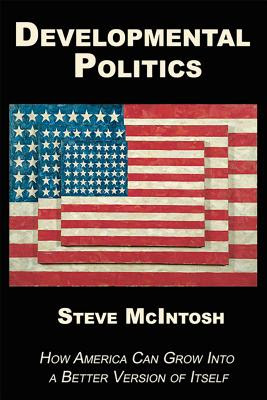
2021 publication


America’s political dysfunction is ultimately a cultural problem whose solution lies at the level of values. So as we come to discover new methods for promoting the growth of values, the collective goal of cultivating cultural evolution on every front of its development will begin to seem increasingly desirable and achievable.
True but not at all easy or guaranteed to take-off.


The past two centuries have been a period of astonishing material and social progress for much of humanity—why should the future be different from the past? As the late Julian Simon, one of the optimists’ standard-bearers, wrote in 1995, “Almost every absolute change, and the absolute component of almost every economic and social change or trend, points in a positive direction, as long as we view the matter over a reasonably long period of time. That is, all aspects of material human welfare are improving in the aggregate.”
But has the neo-Malthusian Paul Ehrlich really been defeated (in his bet with Simon)? Homer-Dixon argues that we may very well face ingenuity gaps that we will not quickly or certainly close. Carbon capture, anyone?

Because American progressivism is, alongside French conservatism, the most schismatic of all faiths, with lifelong resentments governing everyone in turn and new schisms springing up every minute, Rustin had to exert a full court press to bring everyone together.
See the current Democratic Congress as a reference.

A body politic is a non-social community which, by a dialectical process also present in the family, changes into a society.
RGC sees a "society" as a voluntary group composed of consenting individuals, as a social contract theory and business law.

What had taken its place was logic, and logic was the weapon of the totalitarians, who began with a fundamental premise from which everything else followed. (“If you believe A, then it necessarily follows that you must believe B . . . ,” and so on, down to the deaths of millions.)
Channeling Hannah Arendt in the quote.

Karl Popper, described, “The method of science is the method of bold conjectures and ingenious and severe attempts to refute them.”

Aretê implies a respect for the wholeness or oneness of life, and a consequent dislike of specialization. It implies a contempt for efficiency—or rather a much higher idea of efficiency, an efficiency which exists not in one department of life but in life itself.


Friday, October 29, 2021

Thoughts: 29 October 2021


[T]he gap between infinite human desires and finite biological resources is at root a moral problem—How and where shall we place a controlling power on human will and appetite?—not something that can be bridged by merely technical or material measures. Hence the solution must be spiritual or religious lest it be nakedly political. 

Many will balk at this bald statement, believing along with the Enlightenment philosophes that religion has no place in the political realm. But in fact we do have a guiding myth of eternal progress through technological prowess and a tacit religion in the form of a secular ideology tantamount to a religion—namely, an absolute faith in the efficacy of instrumental rationality. The problem is that this “faith” lacks a moral core—in other words, anything that would moderate human self-seeking or the insatiable quest for more wealth and power. Its credo is that humankind must use rational means to become the master and possessor of nature and then use that power to achieve personal and national wealth. The overly rationalized and morally unrestrained world in which we find ourselves was created by this quasi-religion and cannot be reformed with more of the same, only by metanoia. That is, by a conversion to a radically different metaphysical stance that restores humanity’s relation to the infinite and provides guidance and practical support for living well on the earth without devouring it.

My initial reaction to reading this? To yell "Amen! Amen! Amen!" We can't heal our political divisions until we have a sense of the common good, a morality, a new sense of being in the world. Truly, a "metanoia," a "conversion"--a change in our heart-mind-- is required if we are to survive, let along thrive.


Morris Berman and Stephen E. Toulmin chronicle the development of the modern mindset: Berman sees revived participation as the necessary response to the disenchantment of the world; Toulmin’s revisionist history suggests that we would have done better to ground modern science on Montaigne rather than Descartes, for this would have lead us earlier to an ecological worldview.
Where Western Civ too a wrong turn.

Although it was rarely clearly articulated or even fully realized by the contrarian artists and intellectuals themselves, the liberal values of modernity were deemed unacceptable because they lacked a strong vision of the transcendent—a form of ultimate meaning that is more important than the needs of the individual self.
Compare to the first Ophuls quote above.

Physical energy is the obvious source of power in biological organisms and human economies, but consciousness, and the agreements that constitute human culture, are not physical or material. While the domain of culture is closely connected to physical things and transactions in the exterior objective world, like consciousness itself, culture is largely an interior phenomenon which can only be fully known by participating in the subjective agreements that give it life.
Also compare to the first Ophuls quote. Our culture needs a metanoia.

If a “community of rational interests and values” existed on the domestic front, then why not in the international community as well?
Because, [Hans] Morgenthau answered, there was no such thing as an international community. Domestic disputes could be resolved—not solved—through discussion and negotiations, or when negotiation failed, by appeals to the sovereignty of the state and the authority of the law. In the relatively benign context of the Western democracies, even those who disagreed with particular outcomes were willing to accept them so that they could live to dispute another day. Only small, knuckle-dragging minorities resorted to violence, and they were vastly outnumbered by the overwhelming law-abiding majority. Consensus was possible because within national borders people agreed to disagree. This was the very meaning of “legitimacy.” “Disputants could not fail to realize that what they had in common was more important than what they were fighting about. They met, indeed, on the common ground of liberal rationality, and their conflicts, since they arose under the conditions and within the framework of the liberal society, could all be settled through the instrumentalities of liberal rationality.”
Query: per this re-statement of Morgenthau's contention, can we say that current American politics, government, and law have lost their legitimacy--at least among Trumpists who are more than ready to overthrow democracy to remain in power?

The experience [of losing a great deal of money in the stock market] left a deep impression on Keynes. Financial markets, he had discovered, were very different from the clean, ordered entities economists presented in textbooks. The fluctuations of market prices did not express the accumulated wisdom of rational actors pursuing their own self-interest but the judgments of flawed men attempting to navigate an uncertain future. Market stability depended not so much on supply and demand finding an equilibrium as it did on political power maintaining order, legitimacy, and confidence.
My conclusion: all economics (or at least macroeconomics) is political economics. "The economy" (a major league abstraction) is a function of groups, individuals, mores, interests, beliefs, culture, institutions, etc., and not a neat system of intersecting curves.

Europe, it appears, offered the perfect degree of environmental difficulty, challenging its inhabitants to rise to greater civilizational heights, even as it still lay in the northern temperate zone, fairly proximate to Africa, the Middle East, the Eurasian steppe, and North America; thus its peoples were able to take full advantage of trade patterns as they burgeoned in the course of centuries of technological advancements in navigation and other spheres.

It comes back, then, to the question of the self-image. Miseries, humiliations, embarrassments, accidents, have the effect of creating partial self-images—self-images which, since they present themselves as complete, are bound to be false.  Consciousness narrows, and my self-image becomes as false and distorted as if I was seeing myself in a trick mirror at a fairground. But a trick mirror at least shows you your whole self, from head to foot; the partial self-image is a pocket-size distorting mirror.

I propose that Michael Pollan’s seven words for healthy eating ["Eat food, not too much, mostly plants"] can be re-stipulated into these six words: 1) protect the liver, 2) feed the gut. This includes animals.

Thursday, October 28, 2021

Thoughts: 28 October 2021


The great danger of equality is atomization. If we’re all side by side on the same level and constantly in motion, there’s no fixed relation between us. “Aristocracy links everybody, from peasant to king, in one long chain,” Tocqueville wrote. “Democracy breaks the chain and frees each link.” Equal and independent people will satisfy their own desires with no obligation to others outside their narrow circle. The chance to be anything or anyone gives them the idea that they don’t owe anything to anyone. They grow indifferent to the common good and withdraw from others into the pursuit of personal happiness, especially wealth. Tocqueville called this “individualism.” It explains how the American passion for equality can lead to extreme inequality, even a new aristocracy, but one without links between people.
This quote and the following one from William Ophuls direct our attention to the shadow side of democracy, it's inherent defects that must receive our continuing attention and course corrections. Also, consider this quote in light of our failure to take actions for the common good in response to the pandemic.


As in a Greek tragedy, democracy’s virtue is also a fatal flaw. For it is in the nature of democratic polity to foster increased freedom, and as freedoms compound they eventually produce an unstable, ungovernable society in which anything goes.

Our politics, religion, news, athletics, education and commerce have been transformed into congenial adjuncts of show business, largely without protest or even much popular notice. The result is that we are a people on the verge of amusing ourselves to death.
Consider in light of the preceding quotes from Packer & Ophuls. Since Postman published this book in the early 1980s, the American people (never a majority) voted in sufficient numbers to elect an utterly unqualified, undignified rich kid (old at the time, but still . . .) made most famous by "reality" (staged) TV. How prescient--sadly.

The real cycle you’re working on is a cycle called yourself. The machine that appears to be “out there” and the person that appears to be “in here” are not two separate things. They grow toward Quality or fall away from Quality together.

This truth—a-lētheia, that which is disclosed (Heidegger)—can be conceived only as another “appearance,” another phenomenon originally hidden but of a supposedly higher order, thus signifying the lasting predominance of appearance. Our mental apparatus, though it can withdraw from present appearances, remains geared to Appearance. The mind, no less than the senses, in its search—Hegel’s Anstrengung des Begriffs—expects that something will appear to it.

Heidegger’s philosophical vision may have been cogent and powerful, but it was time-bound and partial, and so too was his notion of humanity itself—which [Leo] Strauss called “narrow.” There was neither tenderness to his thought, nor a consideration of love or charity, or any of the other finer impulses in humanity. Heidegger appealed to anyone who embraced a “tragic sense of life” as the only, or at least the most sophisticated, outlook, but he had nothing to say, Strauss observed, about “laughter and the things which deserved to be laughed at.”
One doesn't read Heidegger (if at all) for laughs, for humor, for kindness, or a sense of human warmth. A sound critique from Leo Strauss.

Calculations done by scientists from Fred Hoyle to F. B. Salisbury consistently show that twelve billion years isn’t even enough to produce a single enzyme by chance.

A simple first-pass way to define intuitions is to say that they are judgments (or decisions, which can also be quite intuitive) that we make and take to be justified without knowledge of the reasons that justifies them. Intuition is often characterized as “knowing without knowing how one knows.” Our conscious train of thought is, to a large extent, a “train of intuitions.” Intuitions play a central role in our personal experience and also in the way we think and talk about the mind in general, our “folk psychology.”

“Once man loses his faculty of indifference he becomes a potential murderer; once he transforms his idea into a god the consequences are incalculable. We kill only in the name of a god or of his counterfeits: the excesses provoked by the goddess Reason, by the concept of nation, class, or race are akin to those of the Inquisition or of the Reformation”
Cioran was a mid-20th century Romanian writer.

The student of historical method will hardly find it worth his while, therefore, to go closely into the rules of evidence, as these are recognized in courts of law. For the historian is under no obligation to make up his mind within any stated time. Nothing matters to him except that his decision, when he reaches it, shall be right: which means, for him, that it shall follow inevitably from the evidence.
So long as this is borne in mind, however, the analogy between legal methods and historical methods is of some value for the understanding of history; of sufficient value, I think, to justify my having put before the reader in outline the above sample of a literary genre which in the absence of any such motive it would, of course, be beneath his dignity to notice.
An intriguing point if one is, like me, a lawyer and a student of history. I find a lot of overlap. Both deal with the past when the lawyer is involved in resolving--as opposed to trying to avoid--disputes.