Sunday, November 21, 2021

Thoughts: 21 November 2021


This 2018 publication becomes more relevant and timely with each passing day


Bluntly put, when democracy no longer delivers the goods, it will be consigned to the dustbin of history by an angry mob.
January 6, anyone?


We face a stark choice. We can expend our waning stocks of fossil fuels, our scarce capital, and our limited political will in a vain attempt to maintain industrial civilization as it exists, or we can use those same resources to effect a necessary transition to a radically different type of civilization. But we cannot do both, and we must choose reasonably soon.
Does anyone contend that we're still not trying to have our cake & eat it, too?

Byzantine art was monotonously sensuous even as it was austere, and with an irresistible splendor that “dumbfounded,” revealing a civilization that encompassed at once stirring liturgies and fierce doctrinal debates over the nature of Christ and the possession of the True Cross.
Having viewed a great deal of Byzantine (Orthodox) art in Romania, Turkey, Venice, and Sicily, I can confirm Kaplan's observation. It is at once simple, patterned, and predictable, but also awesome & inspiring.

And by reflecting on it we can perhaps detect one more characteristic which art must have, if it is to forgo both, entertainment-value and magical value, and draw a subject-matter from its audience themselves. It must be prophetic.
Most art is either "entertainment-value" or of "magical value" (subtly didactic & conformist), so the prophetic is rare indeed. Examples of "prophetic" art?

Imagination is indifferent to the distinction between the real and the unreal.

In art, religion, science, and history the true object is always the mind itself it is only the ostensible object that is other than the mind. That is to say, art and the rest are themselves philosophy, but implicit philosophy. Their true nature is to be philosophy, but this nature is concealed beneath an error in self-knowledge whose peculiar character produces the peculiar facies of the artistic or other consciousness. Art and the rest are the unconscious philosophies of a mind nescientis se philosophari; and this ignorance, which is the difference between the artist and the philosopher, is what prevents art, religion, and so forth from consciously studying their real object, the mind, and compels them to believe that their true aim is to contemplate those images and abstractions which are their ostensible objects.
But could the value of art and religion ever lie in the strictly articulate? The mind prefers the articulate, but the soul (psyche) responds to the symbol.

The professor stood at his lectern and noted that all autoimmune illnesses conform to a similar pattern. They all start with an insult to the body’s sense of homeostasis. That insult could be a virus, bacterial infection, splinter, transplant organ, whole-body hypothermia, fever or allergen that triggers an immune response, and, for reasons we barely understand, that immune response never turns off.
Our understanding of autoimmune disease is indeed limited, yet it is perhaps becoming more common. But then we tend to seek pallatives more eagerly than true cures. (Which would likely require changes in how we live and care for our environment.)

Until the invention of antibiotics in 1928, Western medicine couldn’t deliver much better results than indigenous medicine anywhere else in the world. In many cases, going to a shaman or witch doctor offered just about the same likelihood of recovery as seeing a Western doctor.
Wait! Didn't life expectancy expand rapidly before this date? Yes, but not so much because of medical practice but because of public health practices (sanitary sewers, potable water, etc.) and improved nutrition.

A stimulus is nothing else than a suggestion for a mental act (or any other kind of act), and an enriched consciousness contains its own suggestions within itself.

We can't control outcomes in any sphere of life. All you can do – and therefore the only responsibility you have – is to put in the time and effort: into relationships, parenting, finding happiness, whatever. The actual result, in a profound sense, is none of your business.
Control? No. But influence? Yes. In the end we must follow the path revealed to Arjuna by Krishna: "“Let your concern (or focus) be on your action, let it not be on the outcome of the action. Do not act only out of expectation of a result, but then do not slip into inactivity.”


Saturday, November 20, 2021

Heather Cox Richardson Juxtaposing the Gettysburg Address & Current Events.

 As Heather Cox Richardson does so often and so well, she puts current events within the context of history, in this instance, the anniversary of Lincoln's Gettysburg Address. The current events: the Rittenhouse verdict & reactions to it; the passage of the Build Back Better bill in the House, and efforts in Wisconsin to trash the electoral system. Important reading.

thoughts: 20 November 2021


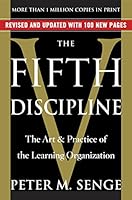
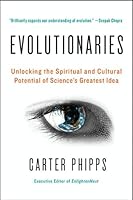
Currently reading

People tend toward inertia and homeostasis, just like any complex adaptive system. But if you apply a little pressure from life—say, a health crisis, an economic crisis, or an emotional challenge—then the dynamics of the system change. Suddenly that human being is thrown into some subtle or gross form of disequilibrium. It could even be a positive challenge—a career promotion, or an unexpected windfall. All of these will disturb the human system to such a degree that new behaviors, new leaps of positive evolution, or higher forms of order may come into existence. Life may self-organize at a new level. So it is right at the edge of chaos that the system has its greatest potential for change, its ripest moment for evolution.
Can we say that it can pay to be a little edgey?

So who is responsible for this overwhelming fecundity of fragmentation? Scapegoats abound, but the person most frequently cited is a six-hundred-year-old philosopher—René Descartes. Truth be told, Descartes is guilty only of articulating an important breakthrough that characterized the changes occurring in his own time period. It was Descartes who announced the radical split between subject and object that the world has been struggling to come to terms with ever since.
Don't take away from the quote that Phipps is another to paint Descartes as a bad guy who let us astray, into the worst aspects of Modernity. Phipps goes on, it's more complex than any simple labeling.

This deprivileging of private revelation may be hard for some more spiritually inclined readers to accept. Indeed, [Michael] Dowd’s science-inspired faith might not satisfy those who like their religious infusions laced with a little more mystical import. His approach to evolutionary spirituality tends to focus on those forms of knowledge that are the current strengths of the sciences—astrophysics, biology, chemistry, psychology—an emphasis that can bypass the subtler interior landscapes of consciousness and culture, which have been late to the party of empirical investigation.

America’s contemporary political dysfunction is primarily a cultural problem, and worldviews are the basic units of culture.

In a sense, it's this simple. 


Every sensation I feel bonds with my emotional state to create a library of neural symbols that my lizard brain uses to make sense of the world at large. I’ve found how I can use this underlying mechanism to transform fear into joy and see the world from the perspective of flow.

GROWTH EQUALS FREEDOM. History shows that societies with economies that don’t grow tend to become sclerotic. The inhabitants of pre-modern agrarian empires, for example, had few opportunities to change their status and economic and social roles.
"Growth Equals Freedom" is one of what Homer-Dixon labels "The Three Equivalances" that encapsulate why so many are so enamored with the ideology of economic growth. And as Homer-Dixon acknowledges, not without some reason.

Breaking with the past is part of our past. Leaving tradition behind runs all the way through our tradition.
A key American irony.

Still, the Chile episode has to be seen in terms more complicated than white hats and black hats. It remains an important and never-ending touchstone of debate because it represents with the utmost clarity the possible conflict that can exist between the promotion of democracy and the demands of national security, surely one of the most unnerving, most painful tensions in the conduct of foreign policy.
The story may not be as simple as some (like me) had believed.

Instead of separately considering theology on one side and natural science on the other, or Christianity on one side and Platonic paganism on the other, Ficino and Jung would read all statements whatever the compartment from which they come, for their significance for soul, the “bond and juncture of the universe.”

The idea [of Zen practice] is not to reduce the human mind to a moronic vacuity, but to bring into play its innate and spontaneous intelligence by using it without forcing it.

In this situation past and future are equally present precisely because they are equally absent from our sense; thus the no-longer of the past is transformed by virtue of the spatial metaphor into something lying behind us and the not-yet of the future into something that approaches us from ahead (the German Zukunft, like the French avenir, means, literally What comes toward).

The basic distinction between the individual and the crowd is that the individual acts after reasoning, deliberation, and analysis; a crowd acts on feeling, emotion, and impulses.
Think juries and electorates. Also, it's very hard to separate the "individual" from the crowd. And even without the "crowd" at hand, individuals aren't always to hot at "reasoning, deliberation, and analysis." The deployment of "reasoning, deliberation, and analysis " is always a struggle in any context.

[Burnham writing about Alfredo Pareto's sociological scheme.]
Individuals marked by Class II (Group-Persistences) residues are Machiavelli’s “Lions.” They are able and ready to use force, relying on it rather than brains to solve their problems. They are conservative, patriotic, loyal to tradition, and solidly tied to supra-individual groups like family or Church or nation. They are concerned for posterity and the future. In economic affairs they are cautious, saving and orthodox. They distrust the new, and praise “character” and “duty” rather than wits.
In Steve MacIntosh's Developmental Politics classification, these folks would be archetypal Traditionalists.

[Y]our great-grandmother was as much of a historical person as was President Dwight David Eisenhower; and her remnant “records” are but one proof of that. In sum: there is no difference between a historical source and a “non-historical” source, because there is no difference between a “historic person” and a “non-historic person.” (Shakespeare, in Henry V: “There is a history in all men’s lives.”)
Let me reformulate this: All men’s lives are historic. It is not only that there is some history in their lives. They are components of the history of their times. Now, this is a relatively recent recognition.
Let us now see how we got there.


Thursday, November 18, 2021

Thoughts 18 November 2021


“Is it too late? Is it hopeless now?” [Audience member question at a book talk.] . . . .
Whether a situation has moved past the point of no return and is therefore hopeless— truly never-to-be-recovered-from hopeless— partly depends on what we hope will come to pass— that is, on our hope’s object. For instance, we’re not past the point of no return, if we’re hoping that some kind of life will continue on Earth. Even if humanity produces, as the science predicts, a sixth great extinction this century and next— one that eliminates from half to 95 percent of all species— life itself will likely survive in multiple forms (although it could take tens of millions of years for Earth’s panorama of species to recover to today’s levels, if it ever does). Or if we’re merely hoping that our own species will persist, we can be sure that somewhere some people will survive problems like the climate crisis, given that homo sapiens are incredibly adaptable and resilient. But it’s plausibly too late if we’re hoping that human civilization this century and beyond will be just, peaceful, and prosperous.
“Yes,” my fellow author replied gently. “I think it is too late.” The difficulty, he argued, of changing our energy systems, people’s appetites for material things, the commitment of governments worldwide to endless economic growth that gobbles resources and spews out waste, and damage from climate change ensured that by the end of this century societies will be far poorer, more violent, and less free. In fact, he concluded, the widespread collapse of human civilization is a real possibility.
On the surface, I [Thomas Homer-Disxon] couldn’t find a lot to dispute in his answer. After all, when it comes to humanity’s prospects, I’m not generally known as a fount of feel-good optimism. But all the same, something in my colleague’s fair response didn’t seem quite right. In light of my two decades’ study of the behavior of complex systems, I felt his answer implied an omniscience we simply don’t have. When it came time for me to answer, I hesitated for a moment and then said: “I agree…mostly. But I’m not sure that we can say definitively it’s too late— or hopeless— because we simply can’t predict the future behavior of the systems that we’re part of accurately enough to know one way or the other.”
Sobering, but a fair assessment in my estimation.

Mocked by trolls and mobbed by cancelers, denounced from the left for racism and colonialism and from the right as a deep-state conspiracy, the reality-based community feels besieged and looks fragile. Too many of its members may come to believe that disinformation is invincible, that objectivity is indefensible, that viewpoint diversity harms minorities, that words are violence, that canceling is merely criticism.
I fear an accurate characterization: reasoned argument & nuance do seem to be swimming against an especially strong current.

In our context, the peculiar and ingenious replacement of common sense with stringent logicality, which is characteristic of totalitarian thinking, is particularly noteworthy. Logicality is not identical with ideological reasoning, but indicates the totalitarian transformation of the respective ideologies. If it was the peculiarity of the ideologies themselves to treat a scientific hypothesis, like “the survival of the fittest” in biology or “the survival of the most progressive class” in history, as an “idea” which could be applied to the whole course of events, then it is the peculiarity of their totalitarian transformation to pervert the “idea” into a premise in the logical sense, that is, into some self-evident statement from which everything else can be deduced in stringent logical consistency.
Beware of faux-logic! Remember that logic is a tool; it's like a computer in the sense of "garbage in, garbage out." You can logically proceed from most any premise, but what have you gained if your premise is false? Logical baloney!

Conservative realism, on [British conservative Noel] Malcolm’s neo-Hobbesian account could maintain, whereas Christian Democracy could not, a “clear or workable distinction between politics and morality.” By morality, Malcolm had in mind the social-justice thinking of Catholics such as Emmanuel Mounier and Jacques Maritain, which was given papal encouragement in the 1930s. When taking economic liberalism for an illness, the Roman church in the 1890s had judged socialism worse. The encyclical Quadragesimo anno (1931), by contrast, put “economic individualism and the collectivism of expropriation and state ownership,” in Malcolm’s words, into “deeply misleading” symmetry. The later encyclical, that is, took each as bad as the other. That falsified the facts in Malcolm’s view.

The later Greek dialectical schools, especially the Cynics and Pyrrhonists, felt themselves to be based ultimately on the attitude of Heraclitus (supported by the method of Parmenides and Zeno), as the [Buddhist] Madhyamikas felt themselves based on the early Buddhist doctrines of impermanence and not-self. In both cases the antecedent philosophy was one critical of essences. Heraclitus, like Siddartha, recognized a middle position, between A and not-A, that would escape the rigorous closure of an exclusively two-valued logic, which the dichotomy-and-dilemma method shows to be inadequate.


Wednesday, November 17, 2021

Thoughts: 17 November 2021


Published in 2012 & current still today

Does evolution have a direction? Was human-level intelligence the inevitable, or at least a likely, result of the evolutionary process? And, most interestingly, if evolution has a direction, where is it headed? These questions are alive again in the intellectual currents of culture.
Great intriguing questions. Query: is this topic considered differently today?

Dynamic Quality is the pre-intellectual cutting edge of reality, the source of all things, completely simple and always new.
An evolutionary view?

Designing institutions to force (or nudge) entirely self-interested individuals to achieve better outcomes has been the major goal posited by policy analysts for governments to accomplish for much of the past half century. Extensive empirical research leads me to argue that instead, a core goal of public policy should be to facilitate the development of institutions that bring out the best in humans.

Elinor Ostrom, Nobel Lecture, 2009

Courtesy of Nicholas Gruen, an Australian economist with broad interests. Ostrom won the Nobel for Economics as a political scientist. A return to "political economy"? 


Elite overproduction leading to intraelite competition and conflict is, thus, one of the chief causes of political instability. Two other causes are popular discontent resulting from falling living standards, and fiscal crisis. These three causes interact in producing conditions ripe for political violence.
Sound familiar?

It [stress that’s having a major effect on humanity’s collective mood . . . called by some scholars “normative threat”] arises partly from economic inequality and insecurity and perhaps from the arrival in one’s homeland of large numbers of migrants, but also from rapid urbanization and greater information connectivity, both of which allow ideas to propagate quickly, especially new beliefs and values about traditionally contentious issues like sexuality, religion, and women’s status. Together, these changes can make some people feel as if their society’s essential fabric of culture, moral values, and shared beliefs, myths, and practices— the fundamental “normative order” that constitutes their society’s continuity— is being torn apart.
This is one of four major stressors identified by Homer-Dixon. My summary: the human herd is spooked--by more than one source. It's like a lightning strike, attacking wolves, gunshots, and drunken rustlers all hitting the herd at once. You're gonna have a stampede. Not good.

A meme is said to be a replicator of cultural information that one mind transmits (verbally or by demonstration) to another mind, examples being ‘tunes, ideas, catch-phrases, clothes fashions, ways of making pots or of building arches’9 and other concepts, ideas, theories, opinions, beliefs, practices, habits, dances and moods, ultimately, and inevitably, including the idea of God – the Dawkins delusion.

He employed neither logic nor reason but sheer passion, while physically embodying the feelings of his audience like a medium.
Who is "he"? Take a wild guess. Hint: he's not alive. He died in a bunker in Berlin in 1945. But who might this description apply to today?

Missing from the hard right’s appeal or well down its list of promises are liberalism’s twin demands for protection from power and respect for all, whoever they are. Order and security have always mattered to conservatives, but for liberal conservatives, not at any price.

There are two distinct types of feedback processes:  reinforcing  and balancing.  Reinforcing  (or amplifying) feedback processes are the engines of growth. Whenever you are in a situation where things are growing, you can be sure that  reinforcing  feedback is at work.  Reinforcing  feedback can also generate accelerating decline—a pattern of decline where small drops amplify themselves into larger and larger drops, such as the decline in bank assets when there is a financial panic.

A  man-made border that does not match a natural frontier zone is particularly vulnerable.

The superheroes you have in your mind (idols, icons, titans, billionaires, etc.) are nearly all walking flaws who've maximized 1 or 2 strengths.