Saturday, January 1, 2022

Thoughts New Year's Day 2022 Happy New Year!


"The active intellect [Left Hemisphere of the brain] … cannot entertain two images together, it has first one and then the other. [But] … if God prompts you to a good deed … whatever good you can do takes shape and presents itself to you together in a flash [RH=right hemisphere], concentrated in a single point." [Quoting Meister Eckhart.]

To be specific, goodness is the essence of the moral dimension of human experience, truth defines the focus of the rational domain, and beauty can be broadly defined as the capstone quality of the aesthetic dimension of value.

We’ve all seen the map of election results depicted according to this red-blue color scheme. This simplistic bipolar framing is understandable given that our national politics continue to be dominated by a two-party system. But this historically engrained conception of left and right, which is habitually used to characterize our contemporary political condition as a two-way contest taking place along a horizontal continuum, is woefully inadequate to our present situation. America’s political dysfunction is not simply the result of an exacerbated divide between the Democratic and Republican parties. Rather, we are now engaged in a three-way struggle between America’s three major cultural worldviews: the modernist worldview, the traditional worldview, and what can best be described as the “progressive postmodern worldview.”
George Packer adds a fourth group, but the point remains the same.

It was the Green New Deal that had squarely addressed the urgency of huge environmental challenges and linked it to questions of extreme social inequality.
Whatever one may think of any particular program in the Green New Deal, the need to realistically address both climate change & extreme inequality is real, and getting two birds with one stone is a very attractive potential.

No European mind since Newton had impressed himself so profoundly on both the political and intellectual development of the world. When the Times wrote Keynes’ obituary, it declared him “the greatest economist since Adam Smith.” But even praise so high as this sold Keynes short, for Keynes was to Smith as Copernicus was to Ptolemy—a thinker who replaced one paradigm with another. In his economic work he fused psychology, history, political theory, and observed financial experience like no economist before or since.
Let's all keep Keynes in mind for this new year!

Let us begin by asserting what is unquestionable: only human beings are historical beings. All other living beings have their own evolution and their life span. But we are the only living beings who know that we live while we live—who know, and not only instinctively feel, that we were born and that we are going to die.
Despite my assessment that Lukacs misreads Collingwood in some ways, in this quote--that humans are "historical beings" --Lukacs echos a key Collingwood theme.

We can't control outcomes in any sphere of life. All you can do – and therefore the only responsibility you have – is to put in the time and effort: into relationships, parenting, finding happiness, whatever. The actual result, in a profound sense, is none of your business.
Sounds to me very much like Krishna's counsel to Arjuna.

If those who escaped from the totalitarian hell have brought back nothing from their experience but the very truisms, moral or otherwise, from which they escaped twenty or thirty years ago—escaped for the very good reason that they had found them no longer sufficient either to explain the world we live in or to offer a guide for action within it—then we may, morally speaking, indeed be caught between pious banalities which have lost their meaning and in which nobody believes any longer and the vulgar banality of homo homini lupus ["man is wolf to man"], which as a guide for human action is also utterly meaningless even though quite a number of people do believe in it as they have always believed in it.

Doubts have a purpose, and by means of them we step backwards to take a better jump.

The most practical and realistic of the Founders were Franklin and Washington—and of the two, Washington had the more important role, military and civilian, in the new government. He had the most hands-on experience of the possibilities and difficulties of the people he was dealing with—in the day-to-day efforts of the war, in the resistance to greater central authority, in the pitfalls of setting up a new government and keeping it on course, in the problem of freeing slaves in his will and providing for their support long after he died.

Kant reflected the two traditions, one upon the other. Kant was a scientist, but the schools derivative from Kant have had but slight effect on the mentality of the scientific world. It should be the task of the philosophical schools of this century to bring together the two streams into an expression of the world-picture derived from science, and thereby end the divorce of science from the affirmations of our aesthetic and ethical experiences.

“The general idea with most memory techniques is to change whatever boring thing is being inputted into your memory into something that is so colorful, so exciting, and so different from anything you’ve seen before that you can’t possibly forget it,”

Thursday, December 30, 2021

Thoughts 30 Dec. 2021


A money economy takes the disconnection, and therefore the failure, one step further. The higher the level of economic development, the more money tends to become an abstraction rather than a counter for something concrete. Thus the economy can boom as the ecology disintegrates. This is particularly true if the society resorts to currency debasement or loose credit as a way to evade encroaching physical limits and foster an artificial prosperity, for then the economy becomes completely unhinged from concrete ecological reality. Overshoot and collapse is the inevitable result.


Propaganda is a campaign to influence public opinion without regard for truth, often (but not always) conducted by a state actor seeking some political outcome. It can exploit misinformation (false information), disinformation (deliberate falsehoods), and what has recently been called mal-information (information which is true but used misleadingly). Although the means vary widely, the end is this: to organize or manipulate the social and media environment to demoralize, deplatform, isolate, or intimidate an adversary.

As America has become more unequal over the past five decades, its levels of trust have declined sharply. African Americans feel, with great justification, that they live in a separate and unequal world, one that is subject to different laws, standards, and attitudes than the world of White Americans.

The amount of ingenuity we require to achieve a given goal depends critically on two things: first, the intrinsic difficulty of achieving the goal and, second, the kinds and amounts of resources that we have available and that we can manipulate to achieve the goal.

Any food is a dessert if any form of sugar is one of the first three ingredients. Trader Joe’s Beef and Broccoli (32 grams of sugar) is a dessert. Chinese chicken salad is a dessert. We, and especially our kids, are eating and drinking dessert all day long. It captivates our brain’s reward center . . . , similar to drugs, so kids get hooked on sugar early.

The Fed was a competent, high-functioning piece of the U.S. state apparatus. As such, it had unsurprisingly attracted Trump’s ire in the years prior to 2020.

Many ancient authors extolled the virtues of experiment and observation.9 But the Alexandrians, for all their research grants, found it a good deal harder to learn from experience than to praise doing so. The fields in which the careful recording of observational data perhaps went furthest in antiquity were divination and astrology. Cicero reports the Stoic arguments for divination and their replies to the Skeptics. It is an important passage both for its suggestion that in sciences without certainty a reasonable level of mistakes can be tolerated without that making the science worthless, and also for its use of random phenomena similar to dice throwing as a model of uncertainty.

Wednesday, December 29, 2021

Thoughts 29 Dec. 2021


Disconfirmation. The system does all sorts of things, but it is tuned for what Greg Lukianoff and Jonathan Haidt in their 2018 book, The Coddling of the American Mind, call “institutionalized disconfirmation.” Individuals, of course, work hard to confirm their own viewpoints, and try hard to persuade others. But they understand that their claims will and must be challenged; they anticipate those challenges and respond; they subject their scholarship to peer review and replication, their journalism to editing and fact-checking, their legal briefs to adversarial lawyers, their intelligence to red-team review.

Madison was aware of the general problem, which he knew had sunk democracies of the past. He called it the problem of factions—what today we often call special interests. “By a faction,” he wrote in Federalist No. 10, “I understand a number of citizens, whether amounting to a majority or a minority of the whole, who are united and actuated by some common impulse of passion, or of interest, adverse to the rights of other citizens, or to the permanent and aggregate interests of the community.”

What, then, is the best course for the real experts? To help the public understand how their field works, in particular how science works. Most Americans think of science by its endpoints—a discovery or breakthrough or invention. They look at dazzling pictures of galaxies and read of miracle drugs. But science is really all about the process of learning and discovering, with many failures and disappointments.

But fundamentally Just America ["progressives;" "social justice warriors;" "anti-racists"] is about race. Everything else is adjunct.

Spread across priorities ranging from childcare to the energy transition, that was far too little to effect a transformation of American society or to put the United States on course to climate stabilization. Especially with regard to the energy transition, they appeared to rest on optimistic assumptions about the private investment that would be triggered by modest public stimulus combined with regulatory change. When it came to long-term policy, Bidenomics was a continuation of the public-private, blended finance, Frankenstein policies that had been so typical of the crisis-fighting in 2020.


Tuesday, December 28, 2021

Thoughts 28 Dec. 2021


Published in November 2021; one of my Christmas presents! 


The journey matters – because it is the arrival. This means that while, for some, every succeeding view will disclose some new aspect of an always changing landscape with which at every turn they become better acquainted, for others the landscape will appear to be, unrewardingly, always the same landscape.

Get used to reading quotes from this book; I'm just getting into it & it's excellent. 


McGilchrist argues [in his book The Master & the Emissary] that since the Industrial Revolution, this power-sharing agreement has broken down, with the left brain assuming an increasingly dominant position. It was at this point that the “Emissary” usurped power from the “Master.” The situation is rather like that of the Gnostic creation myth, in which the demiurge, or craftsman, employed by the “true God” to create the world, comes to believe that it is really in control, that it is the supreme deity, and enacts a coup d’état, with disastrous consequences. The left brain likes to deal with what is familiar, with what it knows, and in modern times it has been busy turning the world around it into what it knows best: a machine.
From McGilchrist's first great work.

The old saying I learned as a child, “Sticks and stones may break my bones, but names will never hurt me,” is not literally true, as even a child knows; what it teaches is that we have agency in reacting to words. When someone says I am sick or sinful or shameful, I can steer myself toward feeling tedium rather than trauma.


As evolution proceeds, complexity increases. It’s a fascinating piece of data, but why is it true?

Scientists master nature in their laboratories so that engineers can build arsenals and factories, manufacturers can make arms and goods, and soldiers and merchants can dominate the lands and markets of the world.

Alfred North Whitehead once remarked that “the major advances in civilization are processes which all but wreck the societies in which they occur.”
Compare with the quote above.

If the experts tell us that our modern economic and social system is systematically generating disease risk, what do we do about it?
The answer, I fear, is "not much."

Nutrition is not the same as food science. Nutrition is what happens to food between the mouth and the cell. Food science is what happens to food between the ground and the mouth.

Friday, December 24, 2021

Thoughts 24 Dec. 2021


Criticism seeks to engage in conversations and identify error; canceling seeks to stigmatize conversations and punish the errant. Criticism cares whether statements are true; canceling cares about their social effects. Criticism exploits viewpoint diversity; canceling imposes viewpoint conformity. Criticism is a substitute for social punishment (we kill our hypotheses rather than each other); canceling is a form of social punishment (we kill your hypothesis by killing you socially). Criticism reflects the values of the Constitution of Knowledge, seeking to inquire and learn. Canceling reflects the values of propaganda, seeking to manipulate the information environment.

If the differences that are bitterly dividing American politics are ultimately about bedrock values and core identities, what could possibly induce these opposing camps to compromise with each other? Why, for example, would postmodernists want to compromise with fiscally conservative modernists who are seen as destroying the environment and oppressing workers? Or why would traditionalists want to compromise with liberal modernists who are seen as suppressing religious freedom and murdering innocent fetuses? Indeed, why would socialistic postmodernists and theocratic traditionalists ever deem to compromise with each other when their respective moral systems seem to be diametrically opposed?
The answers to these questions are vital to our collective well-being.

What general lessons can we learn from the historical study of catastrophes? First, it may simply be impossible to predict or even attach probabilities to the majority of disasters. From earthquakes to wars to financial crises, the major disruptions in history have been characterized by random or by power-law distributions. They belong in the domain of uncertainty, not risk.

Callousness has always been the besetting sin of Realpolitik, and it is not difficult to find examples of almost brutal coldness in Kissinger’s record. “It’s none of our business how they treat their own people,” he said of Moscow’s policy toward Soviet Jews. “I’m Jewish myself, but who are we to complain?” Actual human beings could get lost as power was being balanced.

Happiness is something you notice you are feeling later… after you’ve been in action for a while.

Taoism concerns itself with unconventional knowledge, with the understanding of life directly, instead of in the abstract, linear terms of representational thinking.

Thursday, December 23, 2021

Thoughts 23 Dec. 2021


In 1965, Adlai Stevenson managed to give a more poetic treatment, in an address before the United Nations Social and Economic Council in Geneva:
We travel together, passengers on a little space ship, dependent on its vulnerable reserves of air and soil; all committed for our safety to its security and peace; preserved from annihilation only by the care, the work, and, I will say, the love we give our fragile craft. We cannot maintain it half fortunate, half miserable, half confident, half despairing, half slave—to the ancient enemies of man—half free in a liberation of resources undreamed of until this day. No craft, no crew can travel safely with such vast contradictions. On their resolution depends the survival of us all.

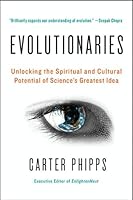
If the transhumanist [e.g., Ray Kurzweil] represent one extreme in the diversity of evolutionary visions in this book—the transcend-at-all-costs, techno-positive, biology-is-for-wimps, let’s-engineer-the-universe sense of optimism—then [Thomas] Berry represents perhaps the other side of the picture, a corrective argument for a radically biocentric approach to the future, a deconstruction of human arrogance, and a deeper embrace of our immanent spiritual connection with the natural world.

In the last few years, the conventional wisdom has emerged that eating animal products results in a greater contribution to greenhouse warming of the planet than does eating plants. Because we worry with good reason that global warming is a major threat to planetary health and humanity’s future, we believe we should do whatever we can personally to mitigate it. This has led newspapers to publish analyses of “how to shop, cook and eat in a warming world,” as The New York Times did in April 2019, and to suggest that the fewer animal products we consume (and certainly the less beef, lamb, and dairy, as these seemingly have the greatest climate footprints), the healthier the planet will be.
This may indeed be true. While acknowledging that livestock can be raised in ways that are relatively climate friendly and much of it is (in the United States, for instance, more, say, than in Brazil), the implication is that the most climate-friendly eating pattern is one that omits these foods—a vegan diet—and that that’s how we should eat. For those who don’t think they can become a vegan, the Times suggests, then “another approach would be to simply eat less meat and dairy, and more protein-rich plants like beans, legumes, nuts and grains.”
The problem, of course, is that this thinking once again assumes that the conventional healthy diet—or even an unconventional and arguably unnatural diet, per Geoffrey Rose’s thinking, like the vegan diet—is indeed healthy for all of us. It builds on a foundation of the bad science in nutrition research of the past fifty years, and it shows little concern for the absence of clinical trials that might actually test it. It’s also the lean person’s perspective. If those of us who are predisposed to be insulin resistant, obese, and/or diabetic in the modern food environment get fat or stay fat eating beans, legumes, and grains, we have a conflict that must be resolved.

“Censorship has always been on the side of authoritarianism, conformity, ignorance, and the status quo,” write Erwin Chemerinsky and Howard Gillman in their book Free Speech on Campus, “and advocates for free speech have always been on the side of making societies more democratic, more diverse, more tolerant, more educated, and more open to progress.”

The past exists only in our memories, the future only in our plans. The present is our only reality.

“It is because we know happiness that we want to be happy, and since nothing is more certain than our wanting to be happy (beatum esse velle), our notion of happiness guides us in determining the respective goods that then became objects of our desires.”