Showing posts with label Ian Kershaw. Show all posts

Monday, December 6, 2021

Thoughts 6 Dec. 2021


The goal of the Wedge is to separate stimulus from response.

When an ecosystem functions well, it’s homeostasis; if it’s in decline or in the midst of unsustainable growth (as with cancer), then it’s heading into trouble. The system could end up in a state of constant vigilance and, to use [Justin] Feinstein’s term, become allostatic [attempting to return to a prior state of homeostasis] and never return to normal.
"The economy" (that most dangerous of abstractions) can be seen as a sub-ecosystem. But then like all such systems, it's never static, completely "in balance." And for the last ~200 years or so it's behaved much like a cancer, has it not?

So if the immune system uses the same chemical hardware that creates feelings in our brains and influences our behavior in the world, then how much of a stretch is it to say that our immune system is conscious? What if instead of assuming that the immune system is just a machine, we give it a chance to have a semblance of cognition? Obviously the immune system can’t have the sort of complex emotions or thoughts that you or I experience, but even a shard of that subjectivity is powerful.

Alas, in 2020, one story about our collective future that’s becoming increasingly ubiquitous— and maybe even appealing to those inclined to resignation— starts with the opening line “we’re doomed” (or, in the vernacular, that we’re “fucked” or “screwed”). I hear this kind of declaration from a substantial and rapidly growing proportion of the students I teach. I respond to these young people by saying, as I say to Ben and Kate, that humanity is in fact doomed only if we collectively choose to be doomed. [My italics.]

Society therefore needs ingenuity to get ingenuity, which means it is both an input to and output of the economic system. (Surprisingly, this claim often perplexes people. But a moment’s reflection shows that many economic factors are both input and output—for example, physical and human capital.

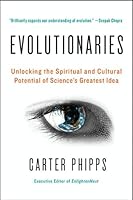
Might humans, or intelligent life in whatever form, play that same role in the cosmological, universal evolutionary scheme of development? Might we in some way represent this feedback loop for the universe itself? Could our reflection on the evolutionary process itself be an essential element not only in fulfilling the next stage of our own development but in creating the next novel stage of cosmogenesis? [James N.] Gardner’s hypothesis is one of the most original—and compelling—evolutionary speculations that I have come across in some time.

Bluntly put, when democracy no longer delivers the goods, it will be consigned to the dustbin of history by an angry mob.
And this was written before January 6. The "angry mob," encouraged by ambitious politicians and special interests, remains in waiting. The outcome--whether democracy and the rule of law will survive in the U.S.--remains open.

Ian Kershaw, has said, “Hitler was no tyrant imposed on Germany. Though he never attained majority support in free elections, he was legally appointed to power as Reich Chancellor just like his predecessors had been, and became between 1933 and 1940 arguably the most popular head of state in the world.” The historian John Lukacs shares this view: Hitler “may have been the most popular revolutionary leader in the history of the modern world. The emphasis is on the word popular because Hitler belongs to the democratic, not the aristocratic, age of history.”
A reminder: Germany went from a democratic state with a model (in many ways) constitution to one of the worst political regimes in history, all without a coup or violent revolution, as Kershaw notes.

In 1949 the average life expectancy [in China] was thirty-six, and the literacy rate was 20 percent. By 2012,  life expectancy (2 words) was seventy-five, and the literacy rate was above 90 percent.
These figures go a long way in explaining why China is feeling its oats these days.

It is a key sign of danger when we expect that others should change in response to our change. This signals a lapse on our part, back into self-absorption. Why so? Because the moment we begin to feel that we need others to change before we can be free of our troubled, afflicting thoughts and feelings, we have either lost the joy we felt when we experienced our change of heart or else we never experienced that change at all. We’re back in our self-absorbed condition or we never got out of it. Anyone free of that condition enjoys an emotional freedom that no external circumstance can destroy—including the reactions of other people.

Re-enactment, in other words, includes counter-factual discussion as well as the delineation of what actually occurred.


Monday, May 29, 2017

Fateful Choices: Ten Decision That Changed the World 1940-1941 by Ian Kershaw

Ian Kershaw’s Fateful Choices: Ten Decision That Changed the World 1940-1941 is an outstanding history of a time of immensely influential but not necessarily obvious decisions made by dictatorships and democracies. There are many dangers in the study and writing of history, such as navigating the risk of hindsight bias—of course, someone acted in such and such a way because of this and that reason compelled the decision. We better understand the reasons and compulsions that affected the decision-makers because we know how the decisions turned out and we can know the simultaneous acts of others that affect the outcome. On the other hand, when titanic forces are on the move, the importance—even the reality—of individual decisions can become mere chimeras in comparison to the great impersonal forces that shape the course of events. Kershaw’s book shows how historians can understand and appreciate the decisions of actors in the face of profound change and uncertainty. Individual decisions do make a difference, although all human decisions are constrained. The constraints may arise from within the individual, such as his [sic] values, goals, and beliefs (true and false); from the effects of other actors in a strategic game; or from the effects of Nature’s whims. The historian—and I think I’m following Collingwood here, as I believe Kershaw implicitly does—must “re-enact” (Collingwood’s term) the thoughts (and perceptions) of the actors as they sought to act in their worlds. Of course, such as undertaking of “re-enactment” is at best partial and incomplete. Any representation of reality, no matter how concurrent it may be, must always result in “reality-lite” in any re-telling. Yet, despite the limitations, some efforts are more successful, more edifying, that others and Kershaw’s work fits this description.

The ten decisions that Kershaw addresses were momentous and did change the course of history (if we can say that history has a course; perhaps we should say that it unfolds willy-nilly like the weather—somewhat predictable only in the shortest run). For instance, Kershaw opens with the decision of the British cabinet to continue the war against Hitler even as France is falling. Here, of course, we see the importance of a single individual, Winston Churchill, who has only just assumed the post of Prime Minister. Under the lead of Lord Halifax, the British contemplated cutting a deal with Hitler that some hoped would preserve the Empire and guaranty of freedom of the seas for them. Indeed, Hitler hoped that Britain would take just such a course. In this account—also brilliantly relayed in John Lukacs’s Five Days in London: May 1940—Kershaw reveals the uncertainty, yet underlying value, of the reasoned arguments required by the British parliamentary democracy. In contrast, for instance, consider another decision that Kershaw recounts: that of Stalin to ignore the numerous sources that warned him of Hitler’s impending attack. Stalin’s refusal to act on the warnings he received allowed the Soviet Union to come perilously close to falling in the face German onslaught. (The fascinating question is what combination of wishful thinking, outright denial, or strategic miscalculation (Stalin thought Hitler wouldn’t dare open a second front with the British fighting on) took place in Stalin’s mind, but Kershaw is not, nor is any historian, a mind-reader.)

Kershaw also includes chapters on the Japanese decision to attack Pearl Harbor and engage the U.S. in a war in the Pacific; Mussolini’s reckless and ill-fated decision to enter actively into the war; and the evolution of the Final Solution from the circumstances of the conquest of Eastern Europe with its huge Jewish population. For Americans, Kershaw details Roosevelt’s decisions to come—slowly, hesitantly—to Britain’s aid, and then his eventual decision to risk war in the North Atlantic by engaging German U-boats. In another chapter, Hitler, a couple of days after Pearl Harbor, declares war on the U.S., relieving Roosevelt from the need to make a case for a war in both Europe and the Pacific. Kershaw details the rationality of this decision that might, at first glance, seem quite irrational.


Whether one is a student of WWII history (as I am) or just an occasional history reader, this is a first-class work of history that will entertain (well, if you like narratives of political decisions) and instruct. We all see through a glass darkly, but some put on darker glasses than others. Kershaw helps us see more clearly. 

Saturday, September 24, 2011

June 1941: Hitler & Stalin by John Lukacs

Published in 2006 and weighing in at only 164 pages, this is another John Lukacs gem. While in a recent post I pondered the incredible evil of these two totalitarian dictators and how difficult it would be to weigh the relative evils of themselves and their systems, this book provides a different perspective. Lukacs notes that both men were "statesmen," not in a laudatory sense, but in the sense that each of them ran great states that had goals of securing and aggrandizing their positions. They each had goals, and they cooperated in dividing Poland between them in 1939. Then, in June 1941, Hitler launched Operation Barbarossa, invading the Soviet Union. Stalin, who had received numerous warnings from varied sources, refused to believe the warnings. He nearly suffered a nervous breakdown when the invasion began and German forces cut through the Soviet defenses like a hot knife through warm butter.

Lukacs recounts the events with his usual skill, and he draws upon recently released Soviet archives. The relationship between the two leaders and their regimes is a complex one. Of course, Hitler's National Socialism was vehemently anti-Communist (and garnered some support from abroad for this), and Stalin's regime was anti-fascist (a term they used loosely). But in 1939, rather hastily, the two regimes entered into a "friendship" pact that promoted trade, mostly raw materials flowing into Germany to help meet its economic needs. Another pact, secret, was also agreed to at that time that divided Poland and other parts of Eastern Europe between the two regimes. The Second World War broke out a few days after the pact was signed. The pact shocked partisans of each regime as well as embassies around the globe. Stalin was delighted. He believed that the Red Army, which he'd recently decimated with purges, wouldn't be ready to fight the Germans until 1943, so peace, for now, was welcome, in addition to gaining the cash from trade and some territory. Hitler, on his part, slapped his thigh in delight upon learning that the pact had been approved. Hitler had his eye on the territories of the Soviet Union, but his immediate aim was Poland, and this gave him a virtual cart blanche. (Great Britain and France protested and went to war against the Nazi regime's conquest of Poland, but to no effect on the invasion and division of Poland or the Nazi-Soviet relationship.)

As the war proceeded, very much in favor of Hitler's regime, events came to the point, after the relatively easy conquest of France, that only Churchill-led Britain stood against Nazi domination of Europe. Hitler knew that the Soviet Union was a British hope, along with America, for finding an ally to counter the Germans. This, along with Hitler's obsession with lebensraum (living room) allowed Hitler to turn his attention to attacking the Soviet Union after it became clear that he could not successfully conquer Britain by an invasion. In  mid-1940 Hitler informed his generals of his intention to invade the Soviet Union, and plans were shaped near the end of that year. Originally planned for May 1941, the invasion began on 22 June of that year. 

But one can't plan and stage a major invasion without others noticing, and many did. Warnings were sent to Stalin by his own spies and by foreign nations, including G.B. and the U.S. But Stalin refused to heed these warnings, always finding an excuse to discount them. Even as German reconnaissance flights into Soviet territory increased in frequency and intrusiveness, Stalin told his commanders to do nothing to provoke the Germans.

Lukacs does not directly answer the question of why Stalin refused all of the warnings. Perhaps no one can. It seems a matter of wishful thinking more than rational calculation. Stalin didn't believe that Hitler would begin a two-front war, which has some reason behind it, but it pales in comparison to all of the growing evidence to the contrary that was provided to him.  But the failure to find a definitive explanation is one that is likely to elude historians forever. Who can truly fathom the workings of another's mind, especially one as dark and secretive as that of Stalin?

This is a compelling account of the two leaders who cooperated and then crossed one another as told by a master historian. Hitler's decision to invade the Soviet Union led to his eventual downfall. What if he had succeeded? He came close to winning the Second World War. On the other hand, Stalin succeeded eventually (with the aid of G.B. and the U.S.) and ended up controlling virtually all of Eastern Europe for nearly 36 years. Great forces may set the stage for history, but individual human decisions still create the action.


NB: This review was originally posted on 24 September 2011 after I first (?) read the book. I have edited and expanded it a bit after reading it again in April 2017. While discussing local history, C asked why Hitler invaded the Soviet Union. This sent me back to this book and Ian Kershaw's excellent Fateful Choices: Ten Decisions That Changed the World 1940-1941 and its chapter on the formulation of Hitler's plan to invade the Soviet Union and another about Stalin's response to reports of an upcoming attack. 


Friday, September 4, 2009

Ian Kershaw, Fateful Decisions & Beyond

I’m reading (among other things) Ian Kershaw’s Fateful Choices, his history of ten key events at the beginning of the Second World War. I finished his chapter about the Japanese and their decision leading to the confrontation with the U.S., which a number (but not enough) of Japanese leaders knew would prove disastrous (and thus the willingness to gamble on Pearl Harbor). I’m now into Mussolini’s decision-making up to Italy's entry into the war. Mussolini was weak actor in a weak country with aspirations of warrior culture and empire that received little support from the reality of his military capability and which lacked popular support. Kershaw asks crucial questions and then attempts to understand the decision-making processes of the actors. An earlier chapter dealt with Hitler’s decision to attack the Soviet Union, and thereby open a two front war. Part of the answer, of course, lies in the fact that Hitler always (from the 1920’s) wanted to move east and confront “Jewish-Bolshevism”. Anyway, it’s quite an interesting book to consider as look back on the 70th anniversary of “the last European war” (John Lukacs). This also ties in with reading Niall Ferguson’s summary of history of thinking (in his Virtual History) about historical causation (determinism v. individual decision-making, in a general sort of divide). Ferguson looks to chaos theory as a way to see stochastic events with in a (somewhat) deterministic framework. Also, reading up on complexity theory, which may prove event more insightful for historical and social science thinking.