Showing posts with label Karl Jaspers. Show all posts

Tuesday, June 15, 2021

Thoughts for the Day: 15 June 2021


Sorel wrote prolifically, but he is remembered chiefly for Réflexions sur la violence (Reflections on Violence, 1906) and Illusions du progrès (Illusions of Progress, 1908). The first was a collection of essays on liberalism and socialism, the second a history of progress as a political idea. They shared powerful common themes: politically, the derision of liberal-democratic trust in public reason, elections, and parliamentary government; and socially, the castigation of middle-class flabbiness on which liberal-democratic politics rested. In the hostility of the working class, Sorel saw both a means for unmasking the liberal-democratic sham and an energy-source to reinvigorate a decadent society.
N.B. This received a highlight because I wrote two undergrad papers about Sorel, one of which was a comparison of him and Frantz Fanon (of Wretched of the Earth fame). Both saw violence as a means of purgation, cleansing, & energizing. The 20th century displayed how well that plan worked. (#irony, #sarcasm).

Another way of dealing with a tangled problem is simply to do nothing, or at least nothing large, centralized, and carefully planned.
And how well does this work? (Not that THD is endorsing it.)

Capitalists had to listen to clerics during sermons, and courts could find a loan usurious and declare that it need not be repaid. The many deathbed “restitutions” of profits show at least a partial acceptance of the content of the sermons. It is a further question whether the usury laws impeded or assisted the economy. A number of the many discussions of this topic have been vitiated by the assumption that any attempts to restrict business for moral reasons must impede the development of capitalism. Plainly this is not so in general: if everything is for sale, then bribery, slavery, the sale of judicial decisions, of industrial secrets and misinformation, and so on, will flourish, none of which is likely to encourage economic growth.

[Addressed to Arendt's teacher & friend Karl Jaspters] What I have personally never forgotten is your attitude—so difficult to describe—of listening, your tolerance that is constantly ready to offer criticism but is as far removed from skepticism as it is from fanaticism; ultimately, it is simply the realization of the fact that all human beings are rational but that no human being’s rationality is infallible.

The Stoic system overall is like a miniature version of Brahminical Hinduism. Still, there are differences: The Stoics did not teach reincarnation; their successive cycles of manifestation, unlike those of India, are exact repetitions; they did not teach a period of quiescence exactly equal in length to the period of cosmic activity (for when the cosmos ends, in the Stoic view, there is no longer anything to measure); finally, and most importantly, the Stoics seem no more than other Greek schools to have taught meditation and bodily discipline in anything like the Indian yogic manner.

The parallelism between these traditions in Greece and in India is intimate and thoroughgoing. The cumulative heritage of seven hundred years of Greek dialectic was summed up in handbooks in and before the time of Sextus, and the contents of such a handbook, or their equivalent, may all be found in the Madhyamika texts.

Wealth, pleasures, rank, and power are all sought for the sake of happiness. But as we strive, we forget the goal and spend our time pursuing the means for their own sake. In so doing, we miss the point and remain deeply unsatisfied. This substitution of means for ends is one of the main traps lying across the pursuit of a meaningful life.

“Perhaps the feelings that we experience when we are in love represent a normal state. Being in love shows a person who he should be.”
— Anton Chekhov

Friday, May 7, 2021

Thoughts for the Day: Friday 7 May 2021


In their different modes, Hodge and [Nathaniel] Hawthorne were conservative counterinstances to the callow picture of the early American national spirit as liberal, democratic, and optimistic.

[Gustav] Le Bon divided crowds into heterogeneous (with mixed membership) or homogeneous (the same sort of members). The first kind could be “anonymous” (street crowds) or “non-anonymous” (juries or parliaments, both prone to groupthink). Homogeneous crowds included sects and castes (for example, priests, judges, military officers, or factory workers), as well as social classes (the peasantry, the middle-classes). When crowd-thinking seized a social caste, it tended to crystallize and last. The caste then listened only to itself and sought to capture authority in order to control the masses.

Communicability itself therefore becomes one of the central issues of this philosophy. In [Karl] Jaspers’s view, communication is the pre-eminent form of philosophical participation, which is at the same time communal philosophizing whose purpose is not to produce results but to “illuminate existence.” The similarity of this method to Socrates’s maieutic method is obvious, except that what Socrates would have called maieutic method, Jaspers calls appeal.

The secret was probably the appearance of fiction. Large numbers of strangers can cooperate successfully by believing in common myths.

“There is only one way to avoid criticism. Do nothing. Be nothing. Say nothing.” —Aristotle

"My working habits are simple: long periods of thinking, short periods of writing."

— Ernest Hemingway

The quickest to be offended are the easiest to manipulate. (Anon.)

“People think focus means saying yes to the thing you’ve got to focus on. But that’s not what it means at all. It means saying no to the hundred other good ideas that there are. You have to pick carefully. I’m actually as proud of the things we haven’t done as the things I have done."

— Steve Jobs

"Those who choose the lesser evil forget very quickly that they chose evil."

— Hannah Arendt


Wednesday, March 24, 2021

Thoughts for the Day: Wednesday 24 March 2021


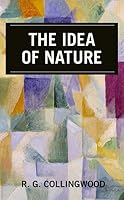
R.G. Collingwood at middle-age


High-grade thinking means thinking energetically instead of idly: thinking hard instead of allowing your mind to drift.

The point to which I refer is concerned with the significance of time. Modern cosmologies are in general based on the idea of evolution, and represent the development not only of one natural species or order as a development in time, but also the development of mind from nature as a development in time.

Once when he [Gottfried Lessing] was attempting to explain to himself the source of “tragic pleasure,” he said that “all passions, even the most unpleasant, are as passions pleasant” because “they make us . . . more conscious of our existence, they make us feel more real.” This sentence strikingly recalls the Greek doctrine of passions, which counted anger, for example, among the pleasant emotions but reckoned hope along with fear among the evils.

I always mention that there is a vital tension between philosophy and politics. That is, between man as a thinking being and man as an acting being, there is a tension that does not exist in natural philosophy, for example.

[German philosopher Karl] Jaspers sees the historical meaning of existential philosophy as a struggle to awaken in the individual the possibilities of an authentic and genuine life, in the face of the great modern drift toward a standardized mass society.

Now, thirty years later, the most recent unbiased review of this evidence [claiming that saturated fat is unhealthy]—from the Cochrane Collaboration, an international organization founded to do such impartial reviews—concluded that clinical trials have failed to demonstrate any meaningful benefit from eating low-fat diets and so, implicitly, any harm from eating fat-rich foods. The Cochrane review described the evidence as only “suggestive” that avoiding saturated fat specifically might avert a single heart attack, and said it’s even “less clear” whether this would lengthen anyone’s life.

Where the doubting game tests an idea by helping us see its weaknesses and shortcomings, the believing game tests an idea by helping us see the strengths of competing ideas.

Curiosity creates possibilities; the need for certainty narrows them. Curiosity creates energy; the need for certainty depletes. Curiosity results in exploration; the need for certainty creates closure. Curiosity creates movement; the need for certainty is about replaying events.


Tuesday, February 2, 2021

Thoughts for the Day: Tuesday 2 February 2021


"When people reflect on what it takes to be mentally fit, the first idea that comes to mind is usually intelligence. The smarter you are, the more complex the problems you can solve— and the faster you can solve them. Intelligence is traditionally viewed as the ability to think and learn. Yet in a turbulent world, there’s another set of cognitive skills that might matter more: the ability to rethink and unlearn.

Mental horsepower doesn’t guarantee mental dexterity. No matter how much brainpower you have, if you lack the motivation to change your mind, you’ll miss many occasions to think again. Research reveals that the higher you score on an IQ test, the more likely you are to fall for ste­reotypes, because you’re faster at recognizing patterns. And recent experiments suggest that the smarter you are, the more you might struggle to update your beliefs.

The curse of knowledge is that it closes your mind to what you don’t know. Good judgment depends on having the skill— and the will— to open your mind. A hallmark of wisdom is knowing when it’s time to abandon some of the most cherished parts of your identity."

— Adam Grant in Think Again


“The dead outnumber the living 14 to 1, and we ignore the accumulated experience of such a huge majority of mankind at our peril.”

--Niall Ferguson


"I am not at all sure that I am right in my hopefulness, but I am convinced that it is as important to present all of the inherent hopes of the present as it is to confront ruthlessly all its intrinsic despairs." — Hannah Arendt


What interests Collingwood is not history consisting of statements which can be tested against scientific criteria, but the idea of history itself.

“In the long run, we are all dead” was more than a clever turn of phrase. It distinguished Keynes from other contemporary monetarists, and those in the years to come who would affiliate themselves with right-wing politics. Like the monetarist Milton Friedman, Keynes looked to price stability as a way to shore up classical economic thinking. For the most part, he believed, laissez-faire economics worked. Supply and demand did bring society to a prosperous equilibrium. They just needed a few pieces of basic economic architecture to work: property rights, the rule of law, and price stability. But unlike Friedman, Keynes had arrived at monetarism as a creative way to expand the power of the state to fight the uncertainties and anxieties of postwar life.

What, as a thinking subject closed in behind the brain’s pane of glass, do any of us know about what is really going on inside anyone else? What storms rage within them? Or perhaps there is nothing at all happening in there—is there really complete and permanent calm?

Conservatives were facing the difficult truth that, as the American scholar Harvey Mansfield put it, they were “no longer the hardy few.” Used to presenting themselves as intellectual outs, conservatives were now the ins. How, though, would conservatives know who they were and what they stood for without an orthodoxy to oppose? Who was the right to argue with?

Using the border situations as his point of departure, he [Karl Jaspers] attempts to develop a new type of philosophizing based on Kierkegaard and Nietzsche. The primary mission of this philosophizing is not to instruct; it consists of a “perpetual agitation, a perpetual appeal [author's italics] to the life force in oneself and in others.” This is Jaspers’s way of participating in that revolt against philosophy with which modern philosophy began. He attempts to transform philosophy into philosophizing and to find ways by which philosophical “results” can be communicated in such a way that they lose their character as results.


Monday, January 18, 2021

Thoughts for the Day: Monday 18 January 2021


Fear, the inspiring principle of action in tyranny, is fundamentally connected to that anxiety which we experience in situations of complete loneliness. This anxiety reveals the other side of equality and corresponds to the joy of sharing the world with our equals.

The chief point with respect to the “scientific attitude” seems to be that it belongs to the very essence of science, which is primarily interested in facts, that our factual information is not only limited but that the answers to the most important factual questions concerning the human condition as well as the existence of Being in general are beyond factual knowledge and experience.

You will recall Kant’s opinion that the touchstone for determining whether the difficulty of a philosophical essay is genuine or mere “vapors of cleverness” may be found in its susceptibility to popularization. And Jaspers, who in this respect, as indeed in every other, is the only successor Kant has ever had, has like Kant more than once left the academic sphere and its conceptual language to address the general reading public.

Certainly, for Collingwood, human actions take place in contexts, and reference to context is often necessary to understand and get a feel for what is going on, but the relation between action and context is not like the relation between the instance and the law which governs it.

Shame is one of the “gifts reserved for age,” according to Eliot. He goes on to describe shame as
… the rending pain of re-enactment
Of all that you have done, and been; the shame
Of motives late revealed, and the awareness
Of things ill done and done to others’ harm
Which once you took for exercise of virtue. [Eliot, Four Quartets, IV.2]

Saturday, October 3, 2020

Commanding Hope: The Power We Have to Renew a World in Peril by Thomas Homer-Dixon


                                                            Published September 2020 


I am a big fan of the work of Thomas Homer-Dixon, especially of his two prior works intended for the public, The Ingenuity Gap: How Can We Solve the Problems of the Future (2001) and The Upside of Down: Catastrophe, Creativity, and the Renewal of Civilization (2008). So when I received notice that Homer-Dixon had just published another work, I purchased and read it immediately, no weak signal of my expectations given my chronic reading backlog. I read the book, which consists of 459 pages--a weighty tome in both the material terms (as were his early two books that I've mentioned above), but more importantly, in terms of its content. That is, it contains a great deal of gravitas without being ponderous (or "weighty" in a negative sense). Quite the contrary, Homer-Dixon writes in a personal voice that draws the reader in by the use of his almost conversational tone, whether he's writing about his family (and his two young children in particular) or he's writing about social science research relevant to the issues of persuasion and decision-making about climate change. In short, Homer-Dixon is easy--indeed pleasant--to read without resorting to any fluff. 

This is another book about climate change, to put it simply, but this description would be too simple.  To be more accurate, it's a book about hope and climate change. And as Homer-Dixon acknowledges, probably no one has accused him of being a Pollyanna about climate change. On the contrary, Homer-Dixon acknowledges that some folks have dubbed him "Dr. Doom." I imagine that Homer-Dixon wouldn't object to my suggesting that he holds out hope from within the doom. But he devotes a lot of pages near the beginning of the book explaining his understanding and vision of hope, which he credits to his desire to see a worthwhile future for his son and daughter (ages 15 and 12 at the time of writing). It's for them and their future that he wrestles with the topic of hope. Homer-Dixon even reaches back to the Greek myth of Pandora's box--or as he clarifies the ancient Greek, Pandora's jar--to ponder whether "hope" is the last the plagues to be released and therefore of the greatest threat because it lulls us into the lassitude of wishful thinking, or it was a gift to humankind that might later escape to provide humankind relief from the evils released before it. Homer-Dixon explains: 

For the ancient Greeks, hope was the personified spirit, or daemon, Elpis. She carried a bundle of positive and negative connotations, some like our modern understanding of hope but others resembling today’s expectation and foreboding. Classicists and other scholars have debated back and forth intensely whether the fact that Elpis stayed trapped in the jar was intended as a boon or bane for humanity, an eternal gift left behind to ease the pain of the escaped ills or, maybe, a perpetually taunting source of illusion and emotional trauma. My guess is that the parable is saying that hope is both: the ancient Greeks— or Hesiod, at least— understood that hope is ambiguous in its very essence.

Homer-Dixon, Thomas. Commanding Hope (p. 77). Knopf Canada. Kindle Edition. 

Homer-Dixon's attention to the reality or seductive illusions of hope provides the keynote of the entire book. Homer-Dixon carefully distinguishes between the hope of illusion, no better than wishful thinking, which he labels "hope that" as distinguished from "hope to." "Hope to" entails a sense of agency, quite the opposite of the passive implication of wishful thinking implied by the "hope that." Homer-Dixon is in effect supplementing the more technical-scientific the analysis in The Ingenuity Gap (2001), wherein he questioned the assumption that we humans could always rely on our ability to innovate ourselves out of any jam we get ourselves into. Homer-Dixon shuts the door on wishful thinking disguised as confidence in nearly infinite human capabilities ("we have the market!"). And if there was any lingering doubt, he nailed that door shut in The Upside of Down (2008), which details the history of decay and decline in earlier civilizations. And today, we live in the first truly global civilization (national differences notwithstanding), and we have nowhere to escape to (migrate to) to avoid the consequences of our mismanagement of our global home. Homer-Dixon rightly mocks the wealthy who believe that they can sequester themselves in some remote redoubt to withstand the consequences of ecological, economic, social, and political collapse. Homer-Dixon likens them to those who would sit farthest from the leak in the lifeboat hoping that its consequence will somehow not engulf them. So, yes, hope is no small thing. And in addition to his own reflections and observations, he brings in a variety of heavy-hitters to weigh in on the subject. 

Once Homer-Dixon has provided his readers with his argument about what a legitimate sense of hope might accomplish, he turns to the topic of climate change more directly. I immediately began to miss all that the talk of hope. Homer-Dixon is an MIT-trained political scientist who began his career researching the political aspects (and violence implicit) in an environment of scarcity. True, he's not a physicist or climate scientist, but he knows the relevant science and whereof he speaks. I won't belabor the point, but suffice it to say that our outlook is not rosy, to put it as mildly as I can. For all the writing about hope, any sense that Homer-Dixon will allow us to hope our way out of dire straits is completely dispelled. But Homer-Dixon doesn't ever abandon hope either. He argues that climate is a complex system, which, simply put, means that despite our best efforts, it remains subject to a good deal of uncertainty; to wit, we can't predict with (mechanical) certainty what will happen within a climate system. Take note, however, that Homer-Dixon is not denigrating the science of climate change, he's only acknowledging the uncertainty inherent in complex systems. And, as he's quick to note, the uncertainty can break either way: in favor of we humans, our foolishness notwithstanding, or against us, dragging us more quickly and more deeply into the pit than we'd expected. 

                                                                            Gandalf

It is this uncertainty that allows Homer-Dixon to draw on two quite unexpected authorities in a work that otherwise cites to cutting-edge social and natural science along with some of the deepest thinkers in the humanities. One of these two unexpected authorities is Gandolf, the wizard at the heart of J.R.R. Tolkien's The Lord of the Rings trilogy. As I mentioned earlier, Homer-Dixon's son and daughter make appearances in this book, but to state it more accurately--at least with greater emotional accuracy--they are the heart of the book. As it turns out, Homer-Dixon reads The Lord of the Rings to his then eight-year son, and Homer-Dixon, who hadn't read this work before, and contrary to his expectation, he finds himself quite taken with the tale. Gandalf, it turns out, provides some deep insights about hope as Gandalf's rag-tag group of reluctant allies engage in a project to destroy the Ring in the fires of Mordor. As they progress, however, they suffer growing trepidation about their fate as they undertake this almost unthinkable feat. But then Gandalf offers this insight for his shaken comrades: "Despair is only for those who see the end beyond all doubt."  

Homer-Dixon's second unexpected authority is Stephanie May, who, if you're like me, you've not heard of before. I doubt many readers will be acquainted with her before reading this book. Stephanie May was a "Connecticut housewife" who read about the effects of nuclear fallout in the late 1950s, especially its effect upon children, who are most suspectable to it (such as childhood leukemia). Her knowledge led to concern (starting with her own children) and her concern led her to take action. Single-handedly, she initiated a letter-writing campaign to urge a halt to nuclear testing. She was belittled by most, yelled at, called a commie sympathizer, and so on, but in the end, after several years, she and her growing anti-testing campaigners prevailed over the incredible odds against them when an atmospheric nuclear test ban treaty was signed between the U.S. and the U.S.S.R. May's exemplary tale pops up throughout the book almost as a talisman to urge on the most urgent task before us today to save the world. It's a heartening story and one that demonstrates what can happen with perseverance and a righteous cause. Of course, similar campaigns are now underway, such as the School Strike movement led by the Swedish teen-ager Greta Thunberg. Even in the U.S., the tide is turning, albeit ever so slowly. 

Although the theme of hope remains alive throughout the book, and the reality of climate change and its implications are a constant theme as well, what I'll term the third part of the book is about how we can act. Here Homer-Dixon addresses the task of making a global concern for all humankind into an actionable personal and political project. Homer-Dixon probably appreciates as much as anyone (even William (Patrick) Ophuls), how much change in our lives that dealing with climate change will require of us. And I am not even referring foremost to changes in our material life. Homer-Dixon (and I) are referring to how much change must occur inside our minds. 

Drawing upon the works of other scholars as well as his own, Homer-Dixon discusses our "worldviews, institutions, and technologies" as the fundamental ways by which we perceive and act in the world. Belief in "infinite economic growth," and even "sustainable economic growth," to mention two widely-held worldviews, will be called into question. Ditto our contemporary consumer, capitalist economic system. And if we don't plan and act to the contrary, Homer-Dixon fears that we will lapse into a "Mad Max" world (referring to the post-apocalyptic films starring Mel Gibson that originated in 1979). But Homer-Dixon has already considered the various scenarios of collapse and system change more thoroughly in his earlier book, The Upside of Down, and so he doesn't devote a great deal of effort to those topics here. Instead, he focuses on the how of changing people's minds. 

The time and effort that Homer-Dixon devotes to considering how we persuade people (and not simply coerce them) is valuable, no doubt. He promotes social scientific research and various schema about how we can get inside the heads (and hearts) of individuals to effect the necessary change. But I'm not convinced that all of this research and thinking will prove all that helpful. Having been a professional in the persuasion business (law) for most of my life, despite my quests, I've never found a magic bullet. Even propaganda and the purposeful distortion and manipulation of truth have limits, not to mention honest efforts that adhere to ethical constraints. In short, I'm not sure that all of the social science gets us very far beyond Aristotle's ideas about rhetoric based on logos, ethos, and pathos and the standard injunction to know your audience. That a change in people's minds can occur and sometimes amazingly quickly, such as shown by the public perception of gay marriage, is real. And, alas, changes in the climate of public opinion can also cascade downward as well, as we can see in the decline of political discourse and the rise of anti-political (i.e., violent) movements similar to the fascist and violence left-wing movements. I suspect that the project of changing minds in a way that will deal effectively with climate change that is moving slowly but surely in the right direction. (Although whether we will attain a critical mass in time remains an open question.) I believe that the necessary changes of mind (and heart) will be gained primarily in the mouth-to-mouth combat--or to put it more politely, conversation--among families, neighbors, townsfolk, and then legislative chambers. That this campaign of education must be vigorously conducted and must use the best tools available is without a doubt a must, but I don't believe there's a magic wand of persuasion that we can wield the get everyone on board. The best we can hope for in this particular is something less than a magic wand and better than a cattle prod. 

This book, I believe, represents a culmination of Homer-Dixon's great project, a summary of most of what's he's been seeking to accomplish in his professional career. But it's also a very heartfelt book because, in a very real way, it's about his kids and ours (even as mine are much older). There is no greater risk to the well-being of all those who will live on this small planet in the 21st century and beyond the challenge of climate change. And although Homer-Dixon doesn't use this term, I believe it will require a metanoia for humanity as a whole. Metanoia is the New Testament Greek word often translated as "conversion," but probably more accurately is considered a "change in the heart-mind." A deep change, a change in the orientation of one's internal compass. Homer-Dixon alludes to this level of change in his referencing the "Axial Age" as identified by Karl Jaspers and more recently deployed by religious scholar Karen Armstrong. It was during this period of history that human thinking--the collective "worldview"--underwent a profound change in several existing civilizations. The Axial Age saw the rise of the Hebrew prophets, Jesus, Buddha, Confucious, and later Muhammad. In short, it gave rise to new forms of religious consciousness and being (and acting) in the world. Homer-Dixon suggests that this is what we need, and this is what I'm suggesting when I refer to a metanoia. We need to consider how we should change our minds, our hearts, and the conditions of our physical existence. We cannot continue down the road we're on and survive as a species, not at least at the level of sophistication and well-being that we now enjoy. Homer-Dixon argues that we must "command hope" to our side and undertake the process of change required of us. And if not for ourselves, then for our children. 

Wednesday, September 2, 2020

Reflections on Gary Lachman's "Trickle Down Metaphysics: From Nietzsche to Trump"

 I posted the following as a "comment" (one heck of a long comment) on Gary Lachman's website where he posted "Trickle Down Metaphysics: From Nietzche to Trump." He also posted it at Academia.edu, a website for posting academic papers. Take your pick: Word doc or HTML. Either way, it's an important read. I recommend you pick your format and read Lachman's piece first. 

Gary, 

Thank you for posting your excellent paper, "Trickle Down Metaphysics: From Nietzche to Trump". As usual, you've provided an excellent map of some intellectual high-country for those of us like me who've not explored it in the detail that you have. In this, your account prods me toward wanting to explore more of this terrain, although I must say that you only reinforced my standing conclusion that it's not worth the coin to attempt to summit Mt. Heidegger and some of the other terrain that you discuss. But regardless of my attitude toward some of the thinkers that you discuss, I found your paper helpful and provocative. As to the provocative (in the good sense), I'd like to share some random thoughts and observations that occurred to me as a result of reading this paper, although some of these thoughts--perhaps more in the way of hunches or suspicions--have been brewing in the back of my mind for some time. 

The most prominent thought that your article arises from the implication in your article that certain trains of thought can be traced from Nietzche to Heidegger to Sartre to Derrida to Trump, although you--I'm sure accurately--point-out that Trump probably hasn't the foggiest about who most of these individuals are or what ideas they propounded. While some of the influences in this chain are unquestionable and well-documented (such as Nietzche on Heidegger and Heidegger on Sartre), the question arises for me about the extent that these highly literate, sophisticated (and sometimes obtuse) high-culture ideas exert an influence on popular culture down to the rungs at which Donald Trump, Trumpists, and his supporters reside. I fear that those of us who explore and value ideas may overestimate their importance in the wider world. And yet, all humans are full of ideas of one sort or another, many of which have no doubt filtered down from "on high." For example, the "literary elite" who wrote the Gospels and other writings in the New Testament and then Christian writers and theologians on down through history provide compelling examples of the power of ideas filtered down to the less educated public. 

I don't subscribe to the Marxist contention that all ideas are ideologies that arise from the economic substructure of society, Instead, it seems to me that there is a dance undertaken between the world of ideas and the material world--economic, social, and political--in which these ideas are spread like seeds. Some sprout while others seem to wither or remain dormant for long periods. Indeed, much of your career and efforts have been spent exploring the Secret History of Consciousness," The Secret Teachers of the Western World, Caretakers of the Cosmos, and The Lost Knowledge of the Imagination. Why did these many ideas, which admittedly run from the far-out-there to the mainstream, not create a greater effect upon society and popular thought? While I don't find the concept of "causes" in history very useful (too mechanical, too certain, too direct), I do contend that we can identify tributaries that contribute to the flow of history, the rivers of historical events and realities. In this river metaphor, the terrain, the mountains, plains, forests, and so on, constitute the material and social base through which streams of ideas must flow; some flows are cut off from the mainstream, creating solitary lakes, perhaps deep and beautiful, but outside of the flow of time. Other ideas end up in backwaters that stagnate in whirlpools that go nowhere until some random event--an earthquake, a storm--releases those waters to flow back into the mainstream. Or, in some cases, the rain never comes and those isolated ideas simply dry-up into oblivion. 

Thus, I think that we must be careful not to blame the train of thought that you've identified for Trump and Trumpism. That these ideas in some ways help water the trends and instincts that guide Trump and his followers (we can't really contend that he has "ideas" can we?), the stream of contribution is probably quite small. Trump has many forebearers: tyrants, dictators, demagogues, authoritarians, fascists, and grifters. He draws on them not so much for their ideas but instinctively, as a huckster-salesman, a flim-flam man models himself on the traits of others of his ilk. Indeed, I suggest that we all should give thanks daily that this man is so politically naive and ignorant. A person with a will to political power and a modicum of knowledge about politics combined with Trump's refined reptilian instincts would prove a much greater disaster. Someone with ideas--even crack-pot ideas--like white supremacy, anti-Semitism, or religious fundamentalisms--could (and have) done much, much worse to the world that Trump has (so far, anyway). Trump and his camp followers aren't especially new or unique in American history, or in the history of the wider world. So why did his "ideas" (such as they are) catch on now? Here I think that we have to look at the current environment, economic, social, and political, that allows such a deadly virus of ideas (or more accurately, attitudes, prejudices, cliches) to spread sufficiently to allow this man to gain and keep power. Here's where I think that developments such as economic inequality, fear of loss of status, wide-spread economic insecurity, and cultivated resentments all come into play (and this is just to round-up the usual suspects). Also, we should note that the themes and appeals that Trump and Trumpists play upon, such as racism, white supremacy, and resentment of elites, have existed within the U.S. for most of its history. Not all of U.S. history, not everywhere, not everyone, but nevertheless there, sometimes dormant, sometimes active. Yes, like a virus that we can't seem to irradicate but against which we must develop herd immunity. 

Now for a few nit-picky items. 

You identify Norman Vincent Peale, as you did in Dark Star Rising, as an influence on Trump. (And for anyone else reading this, if you haven't read this Dark Star Rising, you really should.) Peale is "the power of positive thinking" and Trump--at least at his father's behest--did attend Peale's church and no doubt heard Peale preach his blend of New Thought positive thinking and Christianity. And while New Thought, with its emphasis on the imagination and creating reality certainly could have influenced Trump's outlook, the New Thought movement on the whole, and Peale in particular (I believe), remained close to traditional Christianity and traditional values. These values would have put a brake--if he was really listening--on Donald's less seemly (i.e., greedy, lusty) aspirations. (Query: Did Trump ever have any admirable aspirations? Anyone? Anyone?)  The true artist of the dark arts that effected Trump was Roy Cohn, the man who creates one degree of separation between Trump and Joe McCarthy. Cohn was a seething bag of contradictions and a man who thrived in the underside world of politics, money, and fame and who provides the template for Trump's modus operandi. 

Also, referring back to Heidegger, you mentioned his student and lover, Hannah Arendt. I admit that I've held an intellectual crush on Hannah Arendt since I was introduced to her work as an undergraduate (oh, so many years ago!). Arendt was a student of Heidegger, and for a period, his lover. But they parted ways, both personally--and more importantly--in their thinking. Arendt was Jewish, and Heidegger did have a period of infatuation with the Nazi cause in the early 1930s while Arendt was forced to flee Germany after having been arrested early in the Hitler regime. Arendt went her own way in the ensuing years and had no contact with Heidegger until after the war. Even then, she remained respectful but wary. After leaving her studies (and personal relationship) with Heidegger, she studied with Karl Jaspers, another German existentialist, although much less well known than Heidegger. Arendt never missed an opportunity to praise Jaspers and his influence upon her. Although I've not explored his thought, based on her high praise, and my high estimation of her, I suspect that exploring Jasper's work might prove worth the time and effort. 

But all of the above is not the most important point about Hannah Arendt. Unlike Heidegger, whose head remained in the clouds (or buried in arcane poetry), Arendt went on the become one of the most--and in my opinion--the most important political theorist of the twentieth-century. Unlike Heidegger, Arendt used her career to delve deeply into the political world and to provide a vision of politics that provides some dignity to this most human endeavor. (after having plumbed the depths of totalitarianism, a new phenomenon in politics that arose in the twentieth-century). And while Arendt doesn't make for light or easy reading--I think of reading her as reading by lightning flashes of insight--she's not the convoluted writer and obtuse thinker that Heidegger is noted for Being. And in the age of Trump, there is no single thinker that we can turn to for more insight and guidance than Arendt. If we can think of Heidegger as a Trump-precursor or enabler, we can think of Arendt as the anti-Trump, the inoculation that we so desperately need. 

I also want to note that your article addresses only continental thinkers. Where are the Brits and their English-speaking off-spring? My conjecture is that such an inquiry shows that English-speaking philosophy, on the whole (and with a lot of help from the Austrians), became rather shallow with their "realism," "logical positivism," "analytic philosophy," and "ordinary language " takes upon philosophy. Not that these endeavors had no value or purpose, but these developments were aimed short and small, concerned more with the technical, the empirical, and the quotidian. Reading much of English-speaking philosophy for succor and insight during the twentieth-century would be like anticipating a high-tech weapons display and getting only firecrackers. But of course, my genealization is not universally true, and as the realist-logical positivist-analytical-linguistic analysis branch was coming into ascendency, there were others outside of this trend, such as Samuel Alexander, Alfred North Whitehead, Michael Oakshott, and my personal favorite, R.G. Collingwood. Collingwood is sometimes classed as the last of the British idealists (Green Bosanquet, Bradley), but this inaccurate, as Collingwood made quite clear to "Ryle" in an exchange of letters about an article in which Gilbert Ryle described Collingwood as an "idealist." Indeed, Collingwood is hard to classify--and the more power to him for it. He left no school of thought, but his mind ranged widely and with great insight. He's best known (and rightly so) for his work in the philosophy of history, but his work also addressed ethics, politics, metaphysics, and art (including language) in useful and imaginative ways. The final work published before his untimely death at age 53 in 1943, was The New Leviathan, a work about politics built from the ground-up modeled on (but not so pessimistic as) the Hobbes original. It was a work intended to provide an intellectual grounding for what the Allies were fighting for and against in fascism. Like Arendt, Collingwood provides guidance and insight into our time of troubles. (For an initial (and as yet uncompleted) comparison of Collingwood and Arendt, go here. 

I'll conclude these reflections with a "what if?" reference, and how the flow of ideas might have taken a different course. Ray Monk, a biographer of Wittgenstein, Bertrand Russell, and J. Robert Oppenheimer, wrote an insightful and tantalizing piece about Collingwood and what might have transpired in the world of philosophy--and the analytical versus continental divide in philosophy--had Collingwood been able to continue is work and remained in his influential position at Oxford (where he was succeeded by Gilbert Ryle.) One can't argue that had Collingwood lived long enough to complete all his projects and to continue to explore his thoughts that the world, even the world of philosophy, would have now been all hunky-dory, but . . . . what might have been is always tantalizing. But to borrow a rare coherent thought, "it is what it is." But at least we have thinkers like Collingwood, Arendt, and Lachman (and those he champions), to provide us guidance, the self-knowledge of history, with which we can light our way.