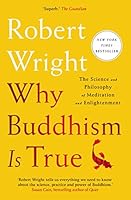
Showing posts with label Robert Wright. Show all posts

Tuesday, May 11, 2021

Thoughts for the Day: Tuesday 11 May 2021


[B]y calming yourself when you are excited by restlessness and energizing yourself when you are dulled by inertia, you exercise and strengthen two of the Seven Factors of Enlightenment—tranquility and energy. You also strengthen your equanimity and metta. Similarly with the other three energies: you exercise all your enlightenment muscles, thereby allowing your buddha nature to manifest more strongly.

“Americans who live in metropolitan areas with more than a million residents are, on average, more than 50% more productive than Americans who live in smaller metropolitan areas. These relationships are the same even when we take into account the education, experience, and industry of workers. They’re even the same if we take individual workers’ IQs into account.” Globally we see the same effect: the world’s 300 biggest metropolitan areas produce half of global GDP and two-thirds of GDP growth.
But beyond their productivity, are these people healthy & happy? Perhaps productivity isn't the single or even most important metric that we should use to judge.

To understand this model of relentless action and reaction, think about the three great crises of the twenty-first century—9/11, the financial crash, and Covid-19—one political, one economic, and one natural. In the first, 9/11, we saw that the supposedly unstoppable march of capitalism, democracy, and American hegemony had produced an angry, violent reaction in parts of the Muslim world.
The divisions "political, economic, and natural" are too neat, especially in looking back at the financial crisis (very political in origin) and the Covid-19 crisis: financial & political & cultural norms were more significant than the virus itself.

[N]atural selection didn’t design your mind to see the world clearly; it designed your mind to have perceptions and beliefs that would help take care of your genes.

In a technocracy, tools play a central role in the thought-world of the culture. Everything must give way, in some degree, to their development. The social and symbolic worlds become increasingly subject to the requirements of that development. Tools are not integrated into the culture; they attack the culture. They bid to become the culture. As a consequence, tradition, social mores, myth, politics, ritual, and religion have to fight for their lives.


Thursday, November 19, 2020

Thoughts for the Day: Thursday 19 November 2020


In this book I’ll argue that the complexity, unpredictability, and pace of events in our world, and the severity of global environmental stress, are soaring. If our societies are to manage their affairs and improve their well-being they will need more ingenuity—that is, more ideas for solving their technical and social problems. But societies, whether rich or poor, can’t always supply the ingenuity they need at the right times and places.
The above quote--published in 2020--is even more astute now than when it was first published. We ignore this question at our peril.

This flip-flopping—breathing all-out, then not at all, getting really cold and then hot again—is the key to Tummo’s magic. It forces the body into high stress one minute, a state of extreme relaxation the next. Carbon dioxide levels in the blood crash, then they build back up. Tissues become oxygen deficient and then flooded again. The body becomes more adaptable and flexible and learns that all these physiological responses can come under our control. Conscious heavy breathing, McGee told me, allows us to bend so that we don’t get broken.
A wonderfully interesting and informative book. My review here.

Freud recognized the first circuit as the oral stage, the second as the anal stage and the fourth as the genital stage. He did not notice the third, semantic circuit — perhaps because as an obsessive Rationalist he was so absorbed in verbal and conceptual programs that they were invisible to him, as water may be to fishes.
This book is "out there" and delightful for it.

Montaigne’s most famous saying was, after a lifetime of learning, que sçaisje? The saying that ‘the more you know, the more you know that you don’t know’ is attributed both to the Buddha and to Socrates. St. Paul wrote: ‘And if any man think that he knoweth any thing, he knoweth nothing yet as he ought to know’ (1 Corinthians 8: 2).

This is a reminder that natural selection didn’t design your mind to see the world clearly; it designed your mind to have perceptions and beliefs that would help take care of your genes.


Tuesday, June 5, 2018

180605 Readings & Comments

Today I'm initiating an experiment. I'm going to share some readings (shorter) that I find worth commenting upon. Somewhat like Tyler Cowen does at Marginal Revolution, and a bit like Robert Wright's Mindful Resistance Newsletter and WTFJustHappenedToday, only with more comment. (And not in the least to presume that I'll replace or even compete with any of those sites.) I'll mostly cover current legal and political news (plenty of that even today) and foreign affairs, but also anything else that catches my fancy that I read or listen to (lots of podcasts are excellent sources of information). You know, basketball, meditation, sex (Hah! Just trolling!).  Anyway, here goes.

1. "Intellectuals, Politics and Bad Faithby Paul Krugman, NYT 180604. I usually agree with Krugman, but I'm not convinced of his argument here. Nor do I buy Niall Ferguson's assertion that "the campus left the “biggest threat to free speech in Donald Trump’s America." Sorry, Professor Ferguson, you can't take that away from #45--he's by far the greatest threat. But that being said, the campus left, so-called "social justice warriors," are a matter of concern. Authoritarianism on the left and on the right poses a threat. I used to pooh-pooh claims of alarm about leftists on campus, but a bit of investigation has led me to worry more, especially in these polarized times. Few people make a distinction between "free speech" and First Amendment rights (which limit only government regulation of "expression) and social coercion. And given the fact that we have a right to avoid and even boycott those with whom we vehemently disagree and to suggest that others join us in doing so, I don't support any claim of right that someone else can censor my right to any information I want to receive by preventing a speaker from speaking (and implicitly my ability to hear and experience this person). Ferguson's alarm and then Krugman's counter-alarm were set off by actions against Charles Murray, a social scientist and author of--as Krugman describes it--a "much-debunked book" about race and IQ. That book is quite old, I believe, and Murray, I think, has published much else since then. In short, if Murray needs further "de-bunking," that should occur by debate and evidence, not student protests. I have no opinion on the validity of Murray's works or arguments. I have only a passing acquaintance.  But if I should disagree with him--even strongly so--that doesn't give me the right to gag him. 

2. Trump and His Lawyers Embrace a Vision of VastExecutive Power  by Charlie Savage, NYT, 180604. Is anyone else alarmed that a president claims that he could pardon himself? I can't cite any chapter and verse off the top of my head, but isn't it fundamental that one can't be a judge of one's own case--assuming you're making a pretext of following the rule of law. This is an essential, deep-seated, beyond-question conflict-of-interest. Yes, kings and tyrants do it, but American presidents? The Founders must be rolling over in their graves--or they're screaming, "We told you so!"  And I must say that #45 makes Nixon seem like a royal piker for arguing so modestly for regal prerogatives. 

3. The Flaw in Trump's Obstruction-of-Justice Defense by Benjamin Wittes, The Atlantic, 180604. Wittes is a fellow lawyer and go-to guy on issues of #45's legal antics and arguments (and he writes for the Lawfare blog). Anyway, he cools the jets on obstruction of justice issues. He doesn't address a royal pardon of the royal person. 

4. On the topic of tyrants and scoundrels, but not our current batch necessarily, Peter Turchin, an evolutionary biologist and originator of Cliodynamics, the study of historical trends, offers this piece in his blog. Entitled "The New Machiavelli," Turchin critiques rational choice theory (from its heyday) as promoted by Bruce Bueno de Mosquita and Alastair Smith in a recent book that applies the theory tout court to national political rulers. In brief, Turchin rejects outright a theory of power based only on self-regarding behavior. Turchin, the biologist and historian, notes the reality of altruistic leadership as well. These traits lie on a spectrum, not on an either/or switch. In fact, I would add the Machiavelli realized this. I believe its a mistake to consider Machiavelli only from the viewpoint of "The Prince." To understand Machiavelli and his values, one must also explore his republican side. And much of what is attributed to The Prince is a caricature of Machiavelli's beliefs and values. 


Monday, September 15, 2014

Chicago-style Buddhism: A Review of Why I Am a Buddhist: No-Nonsense Buddhism with Red Meat and Whiskey by Stephen T. Asma, Ph.D.


What questions would I like to have addressed concerning Buddhism? What perspectives would I find most helpful in better understanding Buddhist tradition and practice? What do the author and I share on our paths toward Buddhism? Let me offer a checklist and apply it to this book. 

How did the author first come into contact with Buddhism? 

Like many Western Buddhists, I first came to understand the fundamentals of the dharma by reading books. Most Western Buddhists have grown up in families that were monotheistic, culturally speaking, and we discovered our Buddhism via the printed word rather than at the neighborhood temple or war or shrine.

Stephen T. Asma. Why I Am a Buddhist: No-Nonsense Buddhism with Red Meat and Whiskey (Kindle Locations 45-46). Kindle Edition.

Check.

How does the author perceive Buddhism? 

Buddhism is not a set of beliefs to be adopted by faith, but a set of practices and beliefs to be tested and then employed in our pursuit of the good life.

Id. 64-66
Check.

How does the author address the issue of temptation? 

The trained mind can rise above distraction and craving, but the normal mind is fraught with temptations, agitations, and diversions. The idea of not looking at a beautiful woman (or man) when we are clearly drawn in that direction may sound rather puritanical. But the point of the simile is not to denigrate beauty, but to isolate the tension between natural inclination and discipline. It is perfectly natural to look at beautiful people, and Buddhism doesn't require the forfeit of such trouble-free pleasures. I suspect that our very biology ensures that we'll take a quick gander at any attractive prospect, and such radar abilities probably had some evolutionary advantages for our ancestors. But if I simply cannot help myself from gawking at a stunning model on the street, then I have overturned a division of labor inside myself. I have become the servant of my desire, rather than being the master of my desire. I am being led, rather than leading.

Id. 90-95

Check. (And would I ever have such a problem? Please, no speculations here. I disavow any admissions against interest.) For mere mortals, the issue of desire is the crucial issue in life, is it not? How do we attain our desires? Should we attain our desires? How much should we pay for our desires, not just in terms of money, but also in terms of time, energy, effect on relationships, and so on? 

Does this author share a perspective with Robert Wright and me that Buddhism (and aspects of other traditions as well) is intended to overcome inheritances from natural selection that don’t work in a civilized society? 

Buddhism attempts to give us a second nature-one that writes over the old genetic and psychological code.

Id. 98
Check. 

Does the author come from a religious tradition that I can identify with? 

I was ripe for such communion because I had been raised as a devout Catholic. Some people think that the conventional and conservative experience of Catholicism and the eccentric, lefty spiritualism of hippy culture are worlds apart. But, in fact, Catholics have a deep sense of mystery in the very belly of their religion. Unlike most Protestants, Catholics give themselves over to the irrational mystery, miracle, and authority. There is an undeniably conventional and institutional aspect of Catholicism, but beneath its traditionalism is a robust mystical approach to God. When I was in primary and middle school I was an altar boy and even a lector. When I began to ask philosophical questions in my early teens, my blue-collar parents knew of no other outlet for such precocious intellectualism except perhaps the priesthood. I was dutifully driven to the local seminary to meet with priests and be interviewed to see if I had the calling. I didn't.

Id. 157-163

Check. Indeed, one of my friends was once a candidate for the priesthood and now finds himself in the Buddhist camp. (N.B. Perhaps because of my Presbyterian father, or perhaps the local priest sensed that I’d was far too randy, I was never recruited. After all, the priest heard my confessions: one impure thought after another.)

Did the author explore traditions other than his native Catholicism and Buddhism? 

I . . .  graduated to a tougher-minded mysticism, reading Aldous Huxley, Krishnamurti, and Thomas Merton.

Id. 191-192 

Check. Merton, by the way, was a Catholic monk who explored the Buddhist and Daoist traditions and wrote eloquently about his encounters with them from his position as a Trappist monk.

If we reject the metaphysics of the monotheistic religions, is there another path that shows the way to a good life and that provides some sense of spiritual wholeness? 

Many people like myself come to Buddhism through the arts, because crafts, arts, and even meticulous chores can be expressions of spirituality. The secular and the sacred are collapsed in Zen, and that is a very attractive integration for many of us who are dissatisfied with the two-world thesis of most religions.

Id. 324-325
Check. 

Can the author explain the different types and processes of Buddhist mediation?
Check. He does. 

Does the author recognize the affinity between Buddhism and some of the Western tradition, such the thought of Spinoza? 

The Dutch/Jewish philosopher Baruch Spinoza (1632-1677) offered a very Buddha-like theory (despite having never heard of the Buddha) of human happiness through intellectual enlightenment. In his famous Ethics (part V), he says that when the mind comes to understand the real causes of things—how some things could not have been otherwise and simply lie outside the realm of our control—then we cease to worry and fret over them.

Id. 724-725

Check. 

Does the author recognize the affinity between Buddhism and Stoicism?

Buddhism, like Stoicism in the West, seeks to reduce suffering, in part, by managing human emotions. There are several tactics for getting one's emotions under control. One tactic that both Buddhism and Stoicism recommend is the adoption of the long-range perspective. I'll refer to this as eon perspective. When we are feeling overwhelmed by anger, or despair, or fear, the Buddha asks us to think about the impermanence of our problems and ourselves. Similarly, Stoic philosopher Marcus Aurelius asks us to contemplate the human drama of families, cities, and even nations that lived hundreds of years ago. They all did just as we do. They married, worked jobs, had children, loved and lost, felt great joys, killed each other, and engaged in every other emotional human endeavor. But, Marcus Aurelius reminds us, "Of all that life, not a trace survives today." It will be no different with the dramas of our own generation.

Id. 869-874

Check. Asma also notes an affinity with Epicurus, so gets even more points on my score chart. I’ve yet to find a careful, book-length exposition about the correlations between Buddhism and Classical philosophy, which someone with more skills and knowledge (and time and money) than me ought to write. 

All of these thinkers can be very austere. I cherish my loved-ones, my family, my friends. Do I have to surrender all of these relationships and go live in a forest monastery to avoid all attachments? 

Does this mean that I cannot be attached to my son? Well, if that's what it means, then I wouldn't call myself a Buddhist. No, I think the Buddha is pointing out something that we all understand at some level. He means, rather, that I cannot possess my son.

Id. 784-786

Check. I understand that. 

I know that modern science gives us the most concrete, tangible knowledge of nature. It’s far from complete, and it’s imperfect, but between a belief taken on faith, custom, or an ancient metaphysics, and natural science, I’ll take natural science. So do I have to surrender that choice to follow a Buddhist path? 

One of the reasons why I'm a Buddhist is because Buddhism makes friends of the sciences, and the sciences are the best methods we have for understanding nature.
. . . .
For Buddhism and for science, the mind is a natural rather than a supernatural entity.
. . . .
Buddhism and science share a similar approach to phenomena, an approach that can be called naturalism. Naturalism rejects (or at least brackets) supernatural explanations of the world and its occupants (e.g., us). Unlike many other religions, Buddhism does not find itself in the awkward position of having to reconcile the metaphysical assertions of faith with the experimental findings of science.
Id. 879-881; 988-989; 1064-1066

Check. The natural world doesn’t make sense without Darwin, Einstein, and the quantum thinkers, to mention just a few fields of investigation. 

What about karma and reincarnation? That stuff seems pretty spooky to me, at least in some sense. 

[T]he only really compelling interpretation of karma—one that doesn't conflict with science—is the radical reinterpretation that asks us to think about karma as a psychological fact rather than a metaphysical one. For example, it is possible to say that one's early lack of mental control and discipline results in a later batch of suffering—perhaps I never disciplined my cravings for fast food as a young man, and now I'm an obese older man who lives like a slave to French-fries. Or my younger taste for drama and negative attention has resulted in a later relationship pattern wherein I only try to date married women. This more naturalized version of karma is the only one that seems reasonably defensible.

Id. 1123-1128

Check. Although some Western Buddhist thinkers, I believe, would argue with this limited conception of karma and reincarnation, such as B. Alan Wallace. However, this more conservative approach is the easiest to accept and incorporate into our life and thought. 

Let’s go back to the austerity and detachment thing for a moment—such scary words! What about some of the good things in life, like art? Must we surrender our appreciation for beauty and meaning to non-attachment? 

Appreciating art and making art are meditations that liberate us from self-absorption.
….
I think the role of art is especially important in Buddhism, because Buddhism embraces a nondualistic metaphysics. In some supernatural religious frameworks art is a gateway or communication to a divine realm, but in Buddhism the artistic experience is "naturalized" like everything else. This is why Buddhists have always been more interested in the psychology of art. Art is a meditation that brings one in contact with the formless nondiscursive mind. So, it's not a mere communication with a transcendent reality, it is a transcendent reality. As an analogy, I think "memory" becomes more important in the secular Confucian framework of the Chinese, because there is no supernatural immortality—only an "afterlife" in the memories of your descendants.

Id. 1064-1066; 1173-1177

Check. In fact, Buddhist art runs a gamut from the detailed intricacy of the Tibetan tradition to the negative fields of a Zen garden. As Asma notes: 

Mandalas, for example, are wonderful examples of the Indian idea (in both Hinduism and Buddhism) that the macrocosm can be found inside the microcosm. To paraphrase Gottfried Leibniz, "every single substance is a perpetual living mirror of the universe." And in Tibetan Buddhism the mandalas also convey the Buddhist teaching of impermanence (anicca), because when the elaborate and agonizing sand-paintings are finally finished, they are immediately and intentionally swept away and destroyed. . .  . [T]he Far Eastern traditions of Daoism and Zen Buddhism, on the other hand, have turned away from the spiraling complexity of forms. Negative space and the aesthetics of minimalism help to convey the equally powerful emptiness.
 
Id. 1189-1192

Check. 

Can Buddhism help me deal with the difficult people (or chose your more apt and colorful description) that I struggle with? I need help!

If I don't feel genuine kindness (metta) toward the bully who's browbeating me, that's understandable—but I can still act as if I feel it. There's nothing disingenuous about this. We're so hung up by our Romantic ideas about acting from our authentic feelings, and expressing ourselves authentically, that we forget how new habits of behavior can slowly transform our internal habits of the heart.
. . . .
Spinoza noticed the same thing and gave the same reasons for recommending the goodwill strategy. "He who lives according to the guidance of reason strives, as far as he can, to repay the other's hate, anger, and disdain toward him, with love or nobility" (Ethics IV.46).

Id. 1419-1421; 1458-1459

Can that work? 

Spinoza, like the Buddha, adds that a kind and noble person will be more joyful (because joy is a harmonic state of the healthy psyche), so such a person will be more powerful and effective in pursuit of his goals.

Id. 1461-1462

Check. It seems like it can work--most of the time.

But what if either on a personal level or on a political level, returning loving-kindness to mistreatment or exploitation doesn’t stop profound harm, even death? 

[T]he overall critique-Buddhism is too peaceful-is worth examining. . . . The Buddha and the dharma also represent sources of strength. Power is necessary, because life is struggle. Even the ultimate goal of detached equanimity can only come after substantial struggle.

Id. 1740-1741; 1748-1749

Stop! Only half-credit (I don’t know how to give a “half-check”). Buddhism, even less than Christianity, doesn’t have a complete and compelling theory of politics to govern political actors on issues of war and peace. This challenge isn’t unique to Asma. As far as I know, Buddhism simply doesn’t have an articulated theory of politics. Islam melds politics into religion, and this can lead to great problems, as we see around the world today. Christianity skirts the issue with the doctrine of the Two Swords (sacred and secular) and the Two Cities (St. Augustine), which are based on a couple of sayings in the Gospels that provide a shaky foundation for any definitive doctrines. Among those who call themselves Christians, we see a spectrum that runs from pacifist to warmonger. I believe that the tragic, ironic, and realist views of Reinhold Niebuhr and Max Weber (commenting from a secular perspective) provide the most compelling responses to these ethical concerns, but no easy answers. I don’t know that Buddhism offers any authoritative answers. Someone, help me here! (I will be investigating the work of William (Patrick) Ophuls, Western political scientist-philosopher and Buddhist practitioner-teacher. I will report what I find in his work The Buddha Takes No Prisoners, which includes an essay on “The Politics of Meditation”.) 

The author came to my attention in the NYT writing an article about John Dewey’s pragmatism and its reception in China, where the Asma has lived and taught. So how does contemporary China relate to Buddhism? 

In previous ages, one would, if gripped by a philosophical mood, simply turn to the great indigenous works of Chinese intellectual culture: Kongzi's (Confucius's) Analects, Laozi's Daodejing, the Buddha's Sutras, and so forth. But these days such fountains of wisdom are like trickling rivulets in the landscape of religious competition, and the Christian Bible is often more readily available to the average spiritual searcher.

Id. 1823-1825

Check, but I’d like more. I suspect an entire book—or more—could be written about culture, ethics, and religions now afield in China and how these are changing—as the very landscape is changing—at a dizzying speed. What ethics work for hyper-capitalism, hyper-consumerism with Chinese characteristics?  

But can I retain what’s valuable in my Western Christian-liberal tradition if I take this Buddhist path? 

Buddhism, like Christianity, pushes us away from the natural biases of human nature-it pushes us beyond the usual concentric circles of value that surround our own families and seeks to expand the circle to include all people, all animals, all beings. The West has been pursuing this same model, in secular form, for several centuries now. We can trace the development from Luther's Reformation up through Enlightenment Kantian morality that asked us to treat all people equally as "ends in themselves" rather than "means" to some end. And after Immanuel Kant, we have the utilitarian tradition that asked us to maximize the greatest happiness for the greatest number of people, and finally the "fairness" philosophy of John Rawls and the rejection of personal bias, nepotism, favoritism, preferential treatment, and partiality. Discordant on almost every other point of comparison, Buddhism, Christianity, and Western liberalism all make strange bedfellows on this one point of egalitarianism.

Id.1859-1860
Check. 

Finally, I like red meat and I cannot lie. Must I limit myself to rabbit food if I want to follow the Buddhist path? Can I follow a Chicago diet of brats and beer? 

Animal suffering is to be avoided at all costs. But the idea that Buddhists have always been, and always should be, vegetarians is pure myth. The historical Buddha, Siddhartha Gautama, ate meat—he even died eating meat.[SNG: not a great plug for Buddhist meat-eating.] My Buddhist friends in Cambodia eat meat. Most Tibetan Buddhists eat meat. Meat, contrary to popular opinion, is not the problem for Buddhists. The problem is causing unneeded pain to animals, so if we can kill them humanely, then the ethical transgression is averted. In the West these days, you will meet many Buddhists who are smug lettuce-nibblers, and that's fine. But be assured, it is not Buddhism per se that compels their diet.

Id. 300-304

Check, thankfully. I didn’t see anything about whiskey except in the title, but I take the ban on intoxicants to be a ban on intoxication, so a beer or glass of wine—or whiskey if you’re made of sterner stuff than I am—seems to me okay.

I trust that it comes as no surprise that at the end of this review I say that I enjoyed and benefited from this book a great deal. It’s always nice to meet a fellow seeker exploring the same paths.

Thursday, May 15, 2014

Buddhism & Modern Psychology taught by Robert Wright for Coursera

After years of listening to lectures from The Teaching Company that I enjoyed greatly while driving here and there, I decided to give my first MOOC (Massive Open On-Line Course) a try. I opted for Robert Wright's course on Buddhism & Modern Psychology taught from Princeton, where Wright holds a position. My long-running interest in Buddhism & my acquaintance with Wright led me to this choice. Wright is not a traditional academic (I don't think that he holds a doctorate), but he's written a lot of interesting things and has been active on the internet with bloggingheadstv.com/wrighshow and other endeavors. He's about my age (okay, like most people, a bit younger), and he's curious about and committed to topics that attract me.

So the MOOC  experience: pretty good. Best of all: I can play back Wright's talks at faster than normal speech (usually 1.75x). I'm kidding? No. Even if a talking head is talking about something that interests you (it does), it can still seem way too slow when you're only looking at a computer screen (not much in the way of visuals here). When driving, regular speed is fine because of the (partially) split attention, but looking at the screen and listening to a talk that you know the basics about (vocabulary, terms of art, etc; i.e., not too much drastically new), you can go faster. 

The other thing I conclude is that MOOCs can't replace the live classroom for serious learning. Rote information: okay; but for discussion (thinking aloud with others), the discussion forums (of which there were several) don't work that well. Too many threads for me. Too slow. This is not the fault of the participants, but of the medium. The comments that I did track where sound and worthwhile, but there were so many and so many different threads. It was an overload. 

As for content, I definitely got something out of the course. I'm going to post my two essays (peer-reviewed) below to give you an idea of what I took away. Each essay garnered some criticism for wandering too far from the questions posed and that seems fair. But I decided to write about what I could synthesize and take-away, not show off knowledge of what we learned in the course (not that I'm necessarily above that). Here's the first questions and essay:

Question 2: The Buddha makes the claim, which may draw some support from modern psychology, that the self does not exist. Describe the self that the Buddha says does not exist and explain the Buddha's principal argument against it. Do you agree or disagree with the Buddha’s argument that this kind of self doesn’t exist? Or are you unable to take a position? Give two specific reasons for your view, and explain your reasons support either the existence of the self or the non-existence of the self, or why they explain why you are unable to take a position on the question.

Question 2

Self or No-Self? Does it matter? An answer to the second question must come first. The Buddha told the tale of the man shot with an arrow. Do we first inquire about the arrow before treating the injury? Thus, Buddha deflected most metaphysical inquiry. Are we and the Buddha ignoring this teaching if we go down the rabbit-hole of the Self? While dangerous, the venture is necessary.

The doctrine of No-Self is important because it relates to the fundamental doctrines of impermanency and causality. The “unsatisfactoriness”  (dukkha) of life identified in the First Noble Truth stems from impermanency. Impermanency prompts humans to grasp at experience. If the Self is real and (implicitly) permanent in a way that other experience or objects are not, then we humans will cling to the Self as our anchor against misfortune. But if the Self is as impermanent as the rest of reality, then humans will have grasped in vain in the hope of negating suffering. Buddha’s deconstructs of the Self imagined by the Upanishads. He proposes instead the Five Skandhas (sheaths) as creating the illusion of a Self. Buddha formulates a self that is created and disbursed from moment to moment just like every other form of reality. We can’t cling (successfully) to what doesn’t exist.

While the Buddha’s formulation makes some sense, so does the formulation of the Upanishads. The atman (Self) exists outside of the particular manifestations of a person. The atman represents a Self behind the person. Given the sense of continuity that most humans enjoy, this makes intuitive sense. Whether we posit a Self like the Upanishads or we follow St. Augustine in finding that the seat of the soul [or mind] is in the memory, we experience a fundamental continuity that most humans enjoy and that identifies each person to himself (or herself) and to others. (E.B. White: “Old age is a special problem for me because I've never been able to shed the mental image I have of myself - a lad of about 19.”) It is this remembered self, along with the “I” (or Freudian ego), that marks our day-to-day lives. To what extent can the Buddha’s formulation alter or end these conceptions, and to what extent should it?

Consider the problem formulated by Heraclitus: can we step into the same river twice? To break down the question, are we concerned about the water, the place, or the function (moving water from here to there)? We may think of the self as a river, a channel of experiences that tends to follow the same course, although it changes from time to time—constantly but subtly most of the time; abruptly and drastically at other times. In the course of time, a river comes into being and disappears; so with this entity we call the self. Also, the No-Self doctrine reflects that a person, like the river, is not subject to a unitary command-and-control entity. Nature, in the form of winds, rains, animals, floods, droughts, etc., changes the river. So with humans: we have only limited control over our lives (our bodies, our thoughts, our consciousness) and in such a situation we cannot identify a Self to which we can give allegiance.

The No-Self doctrine challenges Buddhism internally because of the belief in karma and reincarnation. If there isn’t a Self, then what reaps the effects that constitute karma, especially those effects thought to extend beyond a lifetime? And how does reincarnation work if not via a Self? What entity acts to create karma and to reincarnate? For these answers, we return to doctrines of change (impermanence) and causality. Our No-Self is an aggregate of shifting patterns, and it creates a dharma moment-to-moment within its space-time locale. To extend the metaphor borrowed from Heraclitus, the perceived self is the river of that delivers the water (karma) downstream (a later time). Extending the metaphor even further, we can say that our younger self sends water (karma) downstream to our older self. Our image of the self is the river that appears to have continuity. But we know that the river dries up with old age, sickness, and death. Borrowing from Augustine again, we can see that memory—whether genetic material passed down over eons or the recollections of a younger self—provides the seeming and functional continuity that we experience. We can think of the functional self as a collection of habits. Like any habit, it comes into being (time), functions within a context, and then disappears, if for no other reason than death. Would Buddha disagree that we are a collection of habits that me may notice and change from time to time? Isn’t that the point of meditation? Therefore, we cultivate our meta-awareness to influence the channels of our life.
At the end of the course lectures I wrote the following in response to two questions posed: 

3. Does modern science lend support to the logic behind Buddhist meditation practice?
4. Does modern science lend support to the moral validity of Buddhism?

 Re: Questions 3&4

First, let's stipulate that "modern science" includes the systematic, empirically-based study of shared phenomena. To participate in science, one must share a vocabulary and a set of skills. In evaluating Buddhism in light of contemporary thinking, we should include not just evolutionary psychology, but all manner of contemporary science and philosophy. With this understanding in mind, we find a great deal of support for Buddhist contentions about meditation and morality.

Buddhism for our purposes posits some key points:

The doctrine of No-Self (interior) (anatman), supports the idea that we humans have no central command and control in our brains. Plato's tripartite division of the mind (the cultural manifestation of the brain) posits that Reason controls Will & Appetite. EP  (evolutionary psychology) & modular thinking in particular reject the existence of a command and control center in our brains (and in the self that appears to the outside world). Whether we focus on the modular model or (as I prefer), we focus on McGilchrist's account of the division of the hemispheres, we agree that our brains are not built (by natural selection) with a final, authoritative center to arbitrate and rule upon conflicts within the brain/mind. The modular and hemispheric models of the brain help resolve issues of self-deception (akrasia) and self-control that plague more "rational" models of human thinking. EP argues persuasively that the brain is an environment in which different needs and values compete for resources. Sometimes a perspective "wins"; sometimes it losses. (Think of RW's doughnuts.) We are not singular, unified decision-makers contra much of classical economic thinking. Much of neuroscience and contemporary psychology strongly supports the conclusion that we don't have an ultimate decision-making function and therefore an idea of our Self as singular, constant, and essential fails.

Emptiness/sunyata. The concept of emptiness (or nothingness or formlessness) counters the concept of essentialism, the idea of an unchanging essence lurking behind a phenomena. Buddhism posits that all of reality is the result of co-dependent origination, more process than substance. This perspective, based on a radical empiricism, is one that Buddhism shares with American pragmatism (no surprise that RW cites William James), process philosophy, and even quantum mechanics. Indeed, post-modernity as a cultural phenomena provides a view of the fluidity of reality (along with its share of nonsense).

The doctrine of No-Self (exterior) as Prof. Wright describes it involves a reduction of barriers between ourselves and the world "out there". This perspective sees a fundemental unity of reality. Reports of this perspective by the meditators RW interviewed seem common. As an outgrowth of meditation, which involves perceiving the mind as an impermanent and changing reality, alters our relation to the world in which we live. This melting away of distinctions based on verbal and conceptual habits gives way to a new, unencumbered sense of reality. Concepts are habits of mind that may have been (or that may remain) useful, but in a fundamental sense, we now appreciate them as arbitrary. The seemingly fundamental perspective of Self vs. Other fades away. This, too, jibes with the best contemporary thinking: we have gained a perspective during the course of modernity that our world (the earth) is not the center of the universe, that our species was not created specially by God (thank you, Darwin), and that even space and time are relative (not to mention th mind-boggling perpsectives of quantum theories and the like). These shifts in perspective, which meditation encourages, allows us to see the world in a new light. The "us vs. them" no longer holds as great a sway as it once did. More limited worldviews become less attractive because they become less believable. In this sense, the scientific (in the broad sense) study of meditation supports a new, wider view of morality.

We can now appreciate and transcend our evolutionary heritage, something that religious and (some) philosophical traditions have been seeking to do for several millenia, especially since the Axial Age. We now better understand the evolutionary pressures and mechanisms that affect human behavior and that in our current environment may prove counter-beneficial. Indeed, we humans may serve as the first conscious creators of human life and culture on earth--if we're very wise and very lucky (longshots). This has been a millennial dream--of heaven on earth--but we can move closer to it. Buddhism, as a praxis, a way of life and understanding, draws on centuries of radical empiricism and acute conceptual thinking to help humans lead better lives. Buddhist adepts are curators of a meditative practice based on recognized principles of practice. When we combine practices of meditation with deep investigation, we perceive the world much differently. Buddhists should continue to join with scientists, trained adepts in a different field of experience, to better guide humanity into our future. 

And on peer evaluations:  About one-half of the evaluations were of little value (minimal comment) and other half were about equally divided between praise and marked criticism. Thus, it's hard to gauge what I should be doing differently. Essays by others that I read were more direct in answering the questions, and I marked them high. On the other hand, I didn't perceive much original thought in them. Nevertheless, it's worth doing and an appropriately humbling exercise.