Climate change will accelerate two trends already undermining that promise of growth: first, by producing a global economic stagnation that will play, in some areas, like a breathtaking and permanent recession; and second, by punishing the poor much more dramatically than the rich, both globally and within particular polities, showcasing an increasingly stark income inequality, unconscionable already to more and more.
Think of the of how this is playing out.

As a child, Keynes celebrated the British Empire as a humaynitarian, democratic force in world affairs. When the Great War and the Paris Peace Conference taught him an uglier truth, he began an intellectual project to create a new global order that would fulfill the ideals of his youth, hoping to transform an international system founded on predation into a scheme of justice, stability, and aesthetic brilliance—without resorting to war. If nineteenth-century empire couldn’t do it, Keynes would devise a system that would.
Can Keynes's dream be realized in light of what Wallace-Wells argues in the preceding paragraph? I doubt it. Cf. William Ophuls.

Each time society, through unemployment, frustrates the small man in his normal functioning and normal self-respect, it trains him for that last stage in which he will willingly undertake any function, even that of hangman.
Consider Arendt's contention in light of what Wallace-Wells said & Carter on Keynes above. This bodes trouble ahead.
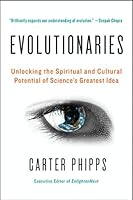
While there are many examples of the kind of creative leaps [Howard] Bloom described, consciousness certainly qualifies as Exhibit A on the how-the-heck-did-evolution-come-up-with-that? list. You don’t have to spend too much time at conferences where people are trying to explain human consciousness before you understand the appeal of the “God created it” point of view.

The reality is that science does not yield one simple answer, especially not with a new phenomenon like the coronavirus.
Factory farms are also ground zero for new, antibiotic-resistant bacteria, as animals are bombarded with antibiotics that kill most bacteria but leave those that survive highly potent. Johns Hopkins professor Robert Lawrence calls antibiotic-resistant bacteria “the biggest human health risk of factory farms.”

The real purpose of scientific method is to make sure Nature hasn’t misled you into thinking you know something you don’t actually know.

The prophecy of Francis Bacon has now been fulfilled; and man, who at times dreamt of himself as a little lower than the angels, has submitted to become the servant and the minister of nature.

Nixon campaigned from the right but governed (with a Democratic Congress) from the center. His administration brought in affirmative action in federal hiring, big increases in spending and borrowing, wage and price controls, a dollar devaluation, détente with Soviet Union, and the opening of China, as well as disengagement from Vietnam, however grudging and brutal.